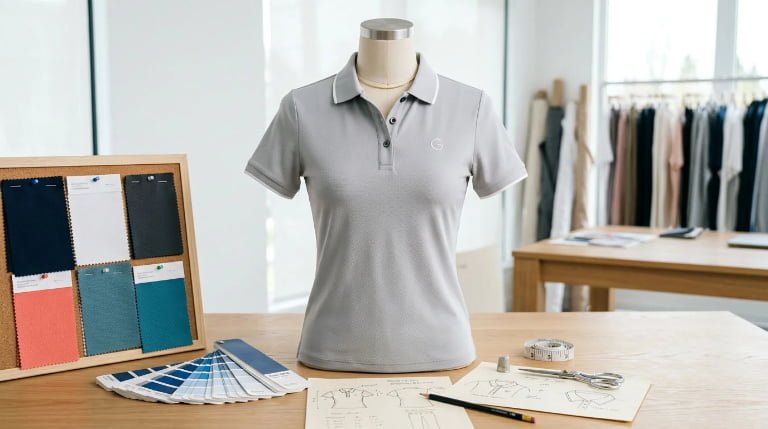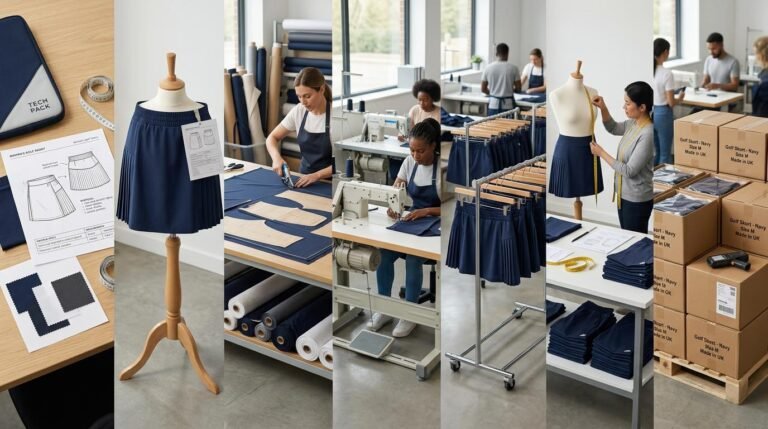
You have a killer idea for a golf brand, but the path from concept to customer seems like a minefield of hidden costs, technical jargon, and manufacturing hurdles.
Starting a golf apparel brand involves more than just a cool logo. Success requires defining a clear niche, mastering product fundamentals like fabric performance, finding a reliable manufacturing partner, and understanding the unit economics that make your business viable from day one.
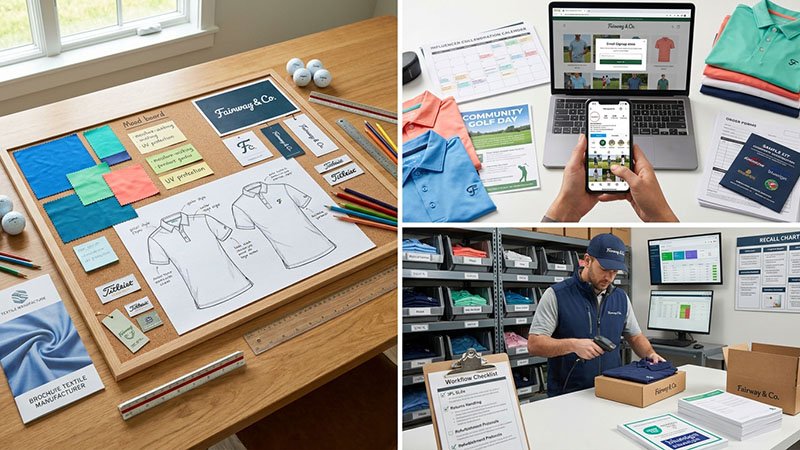
As someone who has helped countless brands go from a sketch on a napkin to a product in a pro shop, I can tell you this: starting a golf apparel brand is not a design project—it's a supply chain bet. Your first production run determines your profit margin. Your fabric's real-world performance determines whether customers become fans or demand refunds. The biggest mistake I see new founders make is optimizing for the wrong things: looks over performance, low quantity over viable cost, and speed over compliance. This guide is built to help you avoid those traps.
What Key Numbers Should a Founder Know From Day One?
| Question | Quick Answer |
|---|---|
| How much capital do I need? | $30k–$200k+, depending on scope. Start lean with 1–2 hero products and consider pre-orders to reduce inventory risk. |
| Typical MOQs/lead times? | Expect 200–800 pieces per color. Development takes 4–8 weeks, and bulk production takes 45–90 days, plus transit time. |
| Core golf polo fabric? | A 150–180 gsm polyester/elastane piqué or micro-mesh. It must have wicking, quick-dry, anti-snag properties, and a lab-tested UPF 50+ rating. |
| Must-have lab tests? | At minimum: wicking (AATCC 197), UPF (AS/NZS 4399), colorfastness, pilling (ASTM D4970), snag resistance, and shrinkage. |
| AQL for premium polos? | Set an Acceptance Quality Limit (AQL) of 2.5 for major defects and 4.0 for minor defects, with inspections at key stages. |
| Embellishment choice? | For performance fabrics, use a lightweight silicone heat transfer for stretch or a fine embroidery with a soft backing. |
| Dress code basics? | A collared shirt or a mock neck of at least 1 inch is standard. Avoid large graphics. Ensure women's styles meet club modesty rules. |
| Pricing and margins? | Aim for a 60–70% direct-to-consumer (DTC) gross margin. Your Cost of Goods Sold (COGS) should be about 25–35% of your target retail price. |
| Launch timeline? | 6–12 months for a fully custom-developed product. If you use a private label (ready-made blanks), it can be as fast as 1–3 months. |
| Sustainability claims? | Back up every claim. Use credible certifications like OEKO-TEX, keep all your test reports on file, and have a lawyer review your marketing language. |
How Do You Build a Brand That Actually Stands Out?
The golf apparel market is incredibly crowded. You’re worried that your great idea will just get lost in a sea of other brands with cool logos and slick websites.
To stand out, you must go beyond aesthetics and define a specific niche and a clear value proposition. Your strategy must pinpoint who you are for, who you are not for, and how your product is genuinely different and better for that target customer.
The first question I always ask new founders is not "what do you want to make?" but "who are you making it for, and why should they care?" A brand is a promise. If your promise is the same as everyone else's, you're forced to compete on price—a race to the bottom you will lose.
Segment and value proposition—performance vs lifestyle, men vs women, price tiers
Your first big decision is where to play. Are you a high-performance brand focused on the serious athlete? A casual, lifestyle brand for wearing on and off the course? Do you cater to men, women, or both? Are you opening at a premium, mid-tier, or value price point? You cannot be everything to everyone. Be specific.
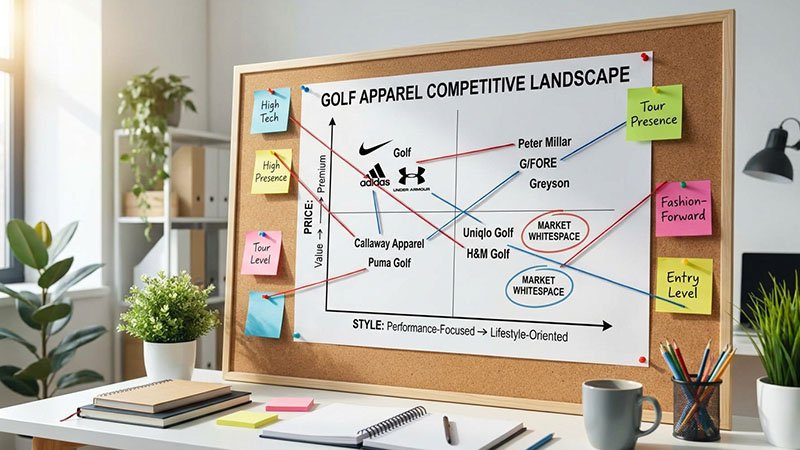
Competitor and whitespace mapping—who you beat and where you play
Make a list of your top 10 competitors. Analyze their products, pricing, and marketing. Where are they strong? Where are they weak? This exercise will help you find the "whitespace"—an underserved customer or an unmet need that your brand can own.
Brand identity—name, logo, tone; trademark and domain checks
Once you know your niche, build your identity. Choose a name, design a logo, and define your brand's tone of voice. Before you fall in love with a name, do a thorough trademark search and check if the domain name and social media handles are available. This simple step can save you a huge legal headache later.
Assortment strategy—hero polos, bottoms, outerwear; capsule drops and seasonality
Don't try to launch with 50 different items. Start with a "hero" product—usually one or two amazing polo shirts. Nail that first. Then you can build out your assortment with complementary items like shorts, pants, or a mid-layer. Plan your launches in "capsules" or seasonal "drops" to create excitement and manage inventory.
Pricing architecture and MAP policies
Set your Manufacturer's Suggested Retail Price (MSRP). If you plan to sell through wholesale channels like pro shops, you'll also need a wholesale price. Many brands implement a Minimum Advertised Price (MAP) policy to prevent retailers from discounting their products too heavily and devaluing the brand.
What Makes a Golf Polo a Performance Golf Polo?
You have a design you love, but you're not sure if it will actually hold up on the course. What are the non-negotiable features that separate a fashion polo from a true performance garment?
A performance golf polo is an engineered product. It's defined by technical fabric with tested UPF 50+ and moisture-wicking, a pattern built for an athletic swing, and construction that meets on-course dress codes. These details are your product’s resume.
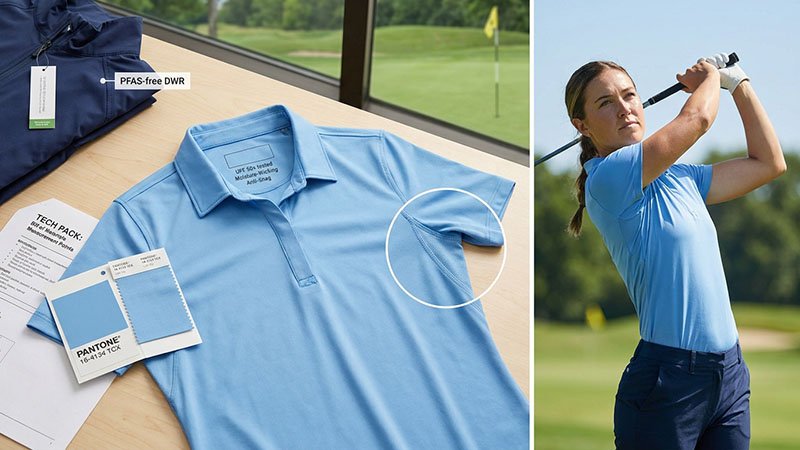
Many new brands fall into the trap of thinking performance features are a bonus. They are not. They are the absolute price of entry in the modern golf market. Customers expect their shirts to keep them cool, dry, and protected from the sun. Relying on a supplier's description without seeing a lab report is one of the fastest ways to get a flood of customer returns for "doesn't breathe" or "uncomfortable."
Fabrics and finishes—UPF 50+, wicking, anti-snag; PFAS-free DWR for outerwear
The heart of your polo is the fabric. It must be a performance knit (polyester/elastane) with verified moisture-wicking. Your number one functional requirement is a lab-tested UPF 50+ rating to protect your customer's skin. Anti-snag and anti-pill properties are also crucial for durability. For outerwear like windbreakers, demand a PFAS-free DWR (Durable Water Repellent) finish.
Fit and pattern—swing mobility, gussets, shoulder slope; men’s vs women’s blocks
A golf polo can't be restrictive. The pattern must be engineered for a full, athletic swing. This often means including features like an underarm gusset for better range of motion. You also need separate pattern "blocks" for men and women—a woman's polo is not just a smaller man's polo; it requires different shaping for the bust, waist, and hips.
Dress-code compliance—collars, plackets, lengths, modesty and graphics
Your product has to be allowed on the course. This means adhering to dress codes. Most clubs require a collar or a mock neck of a certain height. The length must be appropriate for tucking in, and graphics are often restricted. For women's sleeveless styles, ensure the armholes and neckline provide enough coverage to be considered modest by conservative club standards.
Tech packs and PLM—BOM, measurement points, tolerances, test matrix
A "tech pack" is the blueprint for your product. It is a detailed document that tells the factory exactly how to make your garment. It includes the Bill of Materials (BOM) for all fabrics and trims, precise measurement points with tolerances (e.g., chest width can be +/- 1 cm), and a list of required lab tests. This document is your primary tool for ensuring quality and consistency.
Color management—Pantone lab dips, ΔE tolerances, migration/sublimation risks
Provide your factory with a specific Pantone TCX color code. Before they dye all your fabric, they must send you a "lab dip"—a small swatch of your fabric dyed to your color for approval. You must also test for color migration, especially for dark colors on white, to ensure the colors don't bleed into each other during washing.
How Do You Find a Manufacturer You Can Actually Trust?
You've searched online and are overwhelmed with options. How do you find a reliable factory that can deliver a quality product on time, without taking advantage of a new founder?
Vetting a manufacturer goes beyond price. You must evaluate their expertise with performance fabrics, check their social and chemical compliance certifications, and run them through a rigorous multi-stage sampling process before committing to a bulk order.
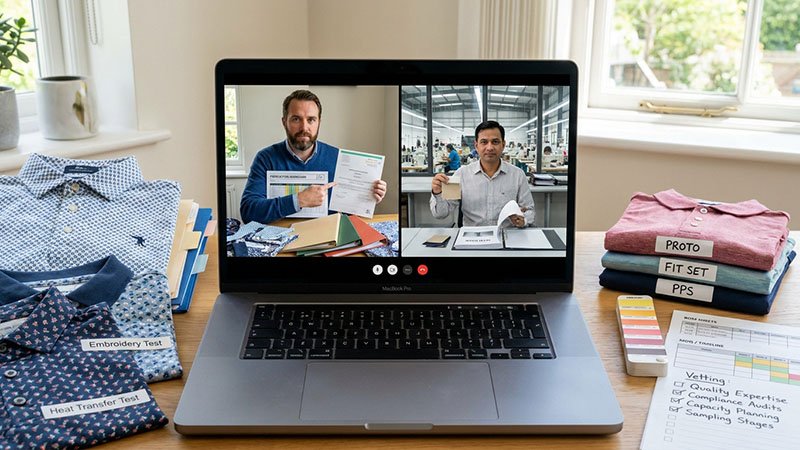
This is where you'll encounter the "50-piece trap." Many new founders want to start with a very small order. But factories have structural costs—fabric minimums, machine setup times—that make tiny batches extremely expensive per unit. A quote for 50 pieces might be 50% higher per shirt than a quote for 300 pieces, making your product un-sellable at a profit. A trustworthy partner will be transparent about these price breaks.
Supplier models—OEM vs ODM vs private label; domestic vs overseas
- Private Label: The fastest way to start. You buy ready-made "blank" polos and add your logo.
- ODM (Original Design Manufacturer): The factory has existing designs you can modify. Faster than full custom, but less unique.
- OEM (Original Equipment Manufacturer): You provide a full tech pack, and the factory builds your unique design from scratch. This offers the most control and brand identity but has the longest lead time.
Vetting vendors—quality, capacity, RSL/MRSL, social compliance
Create a scorecard for potential partners. Do they specialize in performance sportswear? Ask for examples of their work. Request copies of their social compliance audits (like BSCI or WRAP) and their chemical compliance certifications (like OEKO-TEX or bluesign).
Sampling stages—proto, fit/size set, PPS; approvals and change control
Never go straight to bulk production. The sampling process is your quality gate.
- Proto Sample: The first attempt to bring your tech pack to life.
- Fit/Size Set Samples: To check the fit across your whole size range.
- PPS (Pre-Production Sample): The final, perfect sample made with all the actual bulk materials and trims. You must approve this before the factory starts cutting your main order.
MOQs and lead times—fabric booking, color counts, capacity planning
Discuss Minimum Order Quantities (MOQs) and lead times upfront. Understand that the MOQ is often driven by the fabric mills, not the sewing factory. If you plan a large order, you may need to book production capacity at the factory months in advance.
QC and AQL—PPS, inline, FRI; defect taxonomy and rework loops
You are responsible for your own quality control. Implement inspections at multiple stages: check the PPS, conduct an "inline" inspection during sewing, and perform a "Final Random Inspection" (FRI) before the goods ship. Use an AQL standard to define what is an acceptable level of defects.
Embellishment partners—embroidery vs heat transfer; press parameters
If your apparel manufacturer doesn't handle your logo application in-house, you'll need to vet a separate embellishment partner. Test their embroidery quality on your specific fabric to check for puckering, and get the exact heat press parameters (time, temperature, pressure) for any heat transfers to ensure durability.
How Do You Price Your Products to Actually Make Money?
You've received a cost quote from your factory, but you're not sure how to translate that into a retail price that covers all your expenses and leaves you with a healthy profit.
To build a sustainable business, you must master your unit economics. Calculate your full 'landed cost' per unit, set your retail price to achieve a target gross margin of 60-70%, and manage your cash flow vigilantly, especially around production deposits.

This is pure business fundamentals, and it’s where many passionate founders get into trouble. A great product with bad margins is a hobby, not a business. You have to work backward from your target retail price to determine the maximum cost you can afford, and then find a way to manufacture the product at that cost.
Cost breakdown—fabric, trims, CMT, testing, packaging, freight, duties
Your "landed cost" is the total cost to get one unit into your warehouse, ready to sell. It's not just the factory price. It includes the fabric, the trims (buttons, zippers), the CMT (Cut, Make, Trim) labor, any lab testing fees, packaging, freight/shipping, insurance, and import duties.
Margin models—DTC vs wholesale; keystone pricing; promo planning
- DTC (Direct-to-Consumer): Selling on your own website. You keep the full retail price, so your gross margin should be high (60-70%+).
- Wholesale: Selling to retailers. You'll sell it to them at a lower price (e.g., 50% of MSRP), so your margin will be lower. A common model is "keystone pricing," where the retailer doubles the wholesale price to get their retail price.
Cash flow and funding—deposits, payment terms, PO financing, crowdfunding
Cash is king. Factories typically require a deposit (often 30-50%) to start production and the remaining balance before they ship. This means your cash is tied up for months before you can sell anything. Plan for this. Options for funding include personal savings, loans, or creative approaches like crowdfunding or Purchase Order (PO) financing.
Demand and buy planning—size curves, preorders, open-to-buy, safety stock
How many of each size should you order? For a new brand, this is tough. You can look at competitor data or start with a standard bell curve (more M and L, fewer XS and XXL). Using pre-orders is a great way to gauge demand before placing your full factory order.
KPI dashboard—gross margin, sell-through, returns, OTD, CAC/LTV
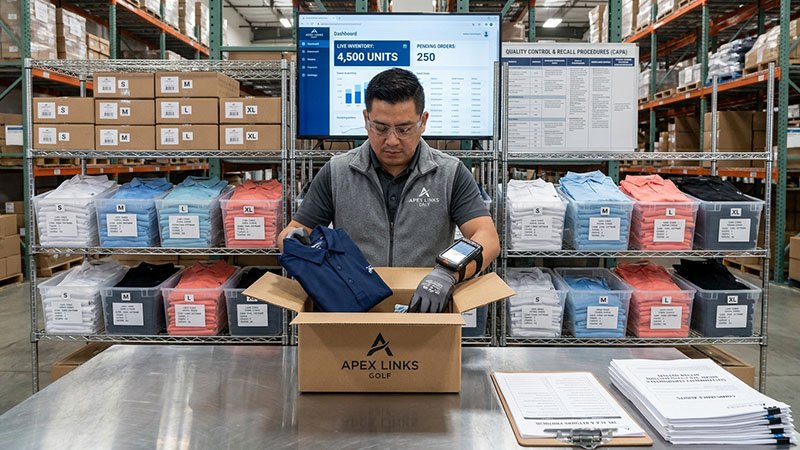
Track your business with data. You need a dashboard for your Key Performance Indicators (KPIs). This should include your gross margin, sell-through rate (what % of inventory you've sold), return rate (a high rate can signal a fit or quality problem), and your Customer Acquisition Cost (CAC) vs. Lifetime Value (LTV).
How Do You Get Your First Customers?
Your product is finally in your warehouse, ready to ship. Now comes the hard part: getting people to actually find your brand and make a purchase.
A successful launch requires a multi-channel strategy. Build a high-converting DTC website, collaborate with authentic golf influencers to build trust, and create a launch calendar that generates excitement and urgency through planned product drops and events.
You can have the best product in the world, but if no one knows it exists, you have no business. Your go-to-market strategy is how you tell your brand's story to the right people through the right channels. For a modern DTC brand, this means being digital-first, social-savvy, and community-focused.
DTC stack—Shopify, PDPs, UGC, onsite merchandising, email/SMS
Your website is your digital flagship store. Platforms like Shopify make it easy to set up. Your Product Detail Pages (PDPs) must be amazing, with high-quality photos, detailed descriptions, and a clear size guide. Encourage and feature User-Generated Content (UGC)—real customers wearing your gear. Build an email and SMS list from day one; this is a direct line to your most loyal customers.
Social and influencer—golf creators, seeding, affiliates, community events
Find authentic golf creators on platforms like Instagram, TikTok, and YouTube whose audience matches your target customer. Start by "seeding" product—sending it to them for free to get their feedback and hopefully a post. You can then move to paid collaborations or affiliate programs. Sponsoring a local tournament or hosting a community event can also be a powerful way to get your product into people's hands.
Wholesale/pro-shop—rep networks, line sheets, terms, EDI, trade shows
Getting your product into green-grass pro shops is a huge credibility builder. You can hire independent sales representatives who have existing relationships with these shops. You'll need professional line sheets (your product catalog for wholesale buyers) and be prepared to offer payment terms (e.g., Net 30).
Corporate and tournaments—team kits, customization, lead times
This can be a lucrative channel. Companies and tournament organizers often need bulk orders of customized apparel for their events. This requires a streamlined process for adding logos and managing tight deadlines.
Launch calendar—drops, preorders, collabs, limited editions
Don't launch everything at once. Plan your year with a series of exciting "drops." Use pre-orders to build hype and fund production. Collaborating with another brand or a popular creator can introduce your brand to a whole new audience. Limited editions can create scarcity and drive immediate sales.
What Happens After You Make the Sale?
A customer has just clicked "buy" on your website. Your job isn't done; it's just beginning. How do you ensure a smooth delivery, handle returns gracefully, and build a compliant, scalable operation?
Efficient operations are the invisible backbone of a great brand. This means choosing the right logistics partner (a 3PL), ensuring all your product labeling is legally compliant, and having systems in place to manage inventory, risk, and sustainability claims.
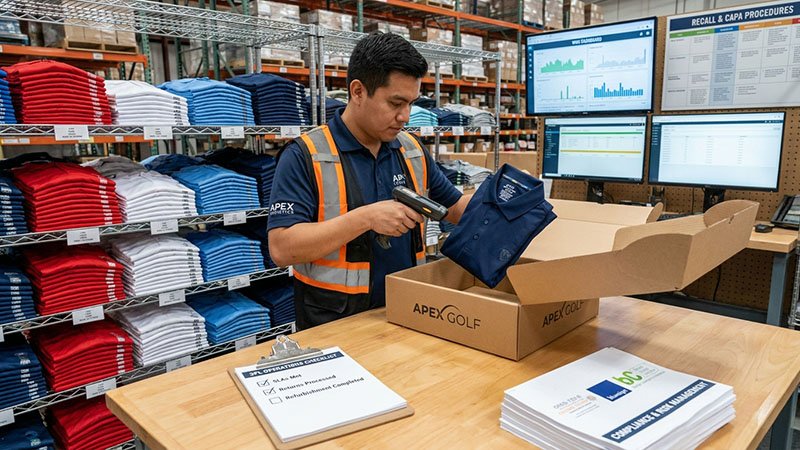
Operations are not glamorous, but they are critical. A bad post-purchase experience—a late shipment, a difficult return process—can ruin a customer's perception of your brand, no matter how great the product is. Getting this right from the start will save you countless headaches as you grow.
3PL vs in-house—SLAs, packaging, returns, refurbishment
You can either pack and ship orders yourself (in-house) or hire a Third-Party Logistics (3PL) company. A 3PL can handle warehousing, picking, packing, and shipping. They can also manage returns. Define a clear Service Level Agreement (SLA) with them that outlines their performance targets.
Labeling and product compliance—fiber/care/COO/UPF; region rules
Your products must have legally compliant labels. In the US, this means listing the fiber content, country of origin (COO), and care instructions. If you make a performance claim like "UPF 50+", you must have the test reports to prove it, and some regions have specific labeling rules for it.
Sustainability and traceability—OEKO-TEX, bluesign, Better Cotton, Higg
If you make a sustainability claim, you must be able to back it up. This means holding the actual certificates (like an OEKO-TEX certificate for a specific fabric) in your files. These are not optional upsells from your supplier; they are essential risk management tools. Skipping an $800 test can expose you to huge liability if your product is flagged by a platform or challenged by a customer.
Risk management—supplier diversification, QC escapes, recall and CAPA
Don't put all your eggs in one basket. As you grow, aim to have more than one approved supplier for your key products. Have a plan for what to do if a quality issue "escapes" your QC process and reaches the customer. This includes having a recall plan and a Corrective Action and Preventive Action (CAPA) process to fix the root cause.
Data and systems—PLM, inventory/WMS, analytics, accounting
As you scale, you'll need systems to manage complexity. A Product Lifecycle Management (PLM) system helps you manage your designs and tech packs. An Inventory or Warehouse Management System (WMS) tracks your stock. These systems provide the data you need to make smart business decisions.
Conclusion
Building a successful golf brand isn't about one great design. It's about executing a solid supply chain strategy, mastering your numbers, and creating products that genuinely perform for your niche audience.