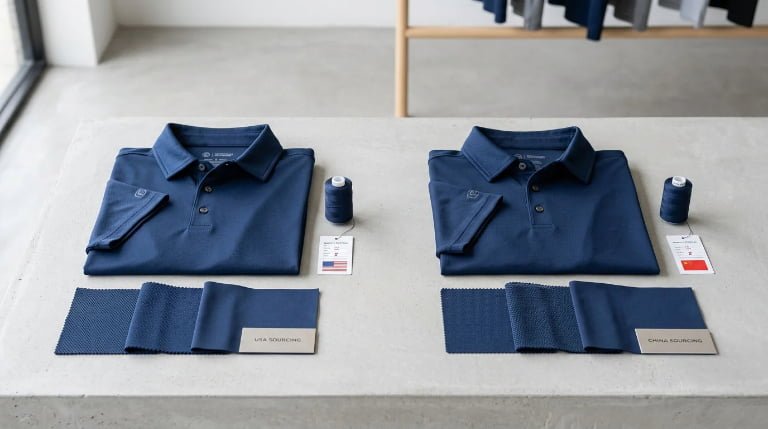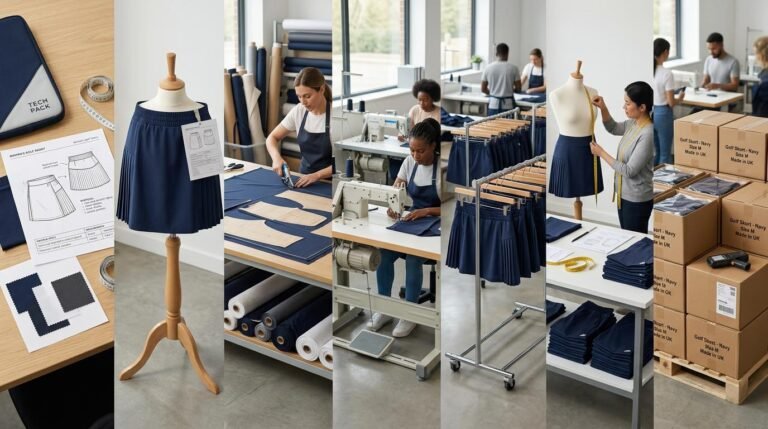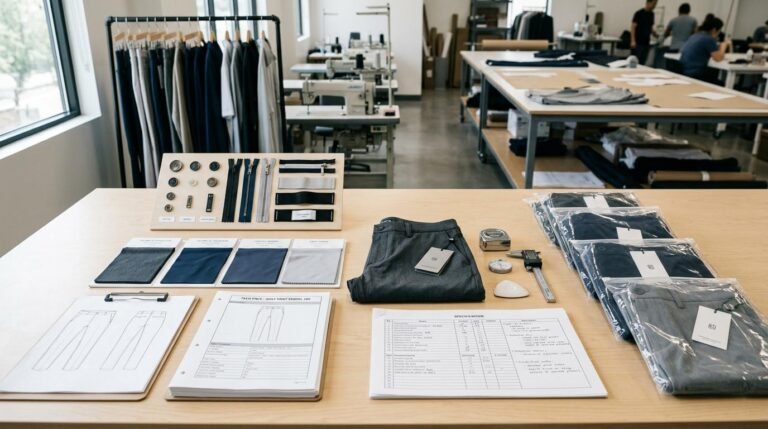
Choosing a golf apparel factory is not just about price, certificates, or one good sample. To evaluate whether a factory is right for long-term partnership, you need to assess its technical capability, quality control system, compliance standards, production capacity, lead-time transparency, communication style, and problem-solving process. A strong factory is not the one that looks perfect on audit day—it is the one that can stay reliable when orders grow, materials run late, or quality issues appear.
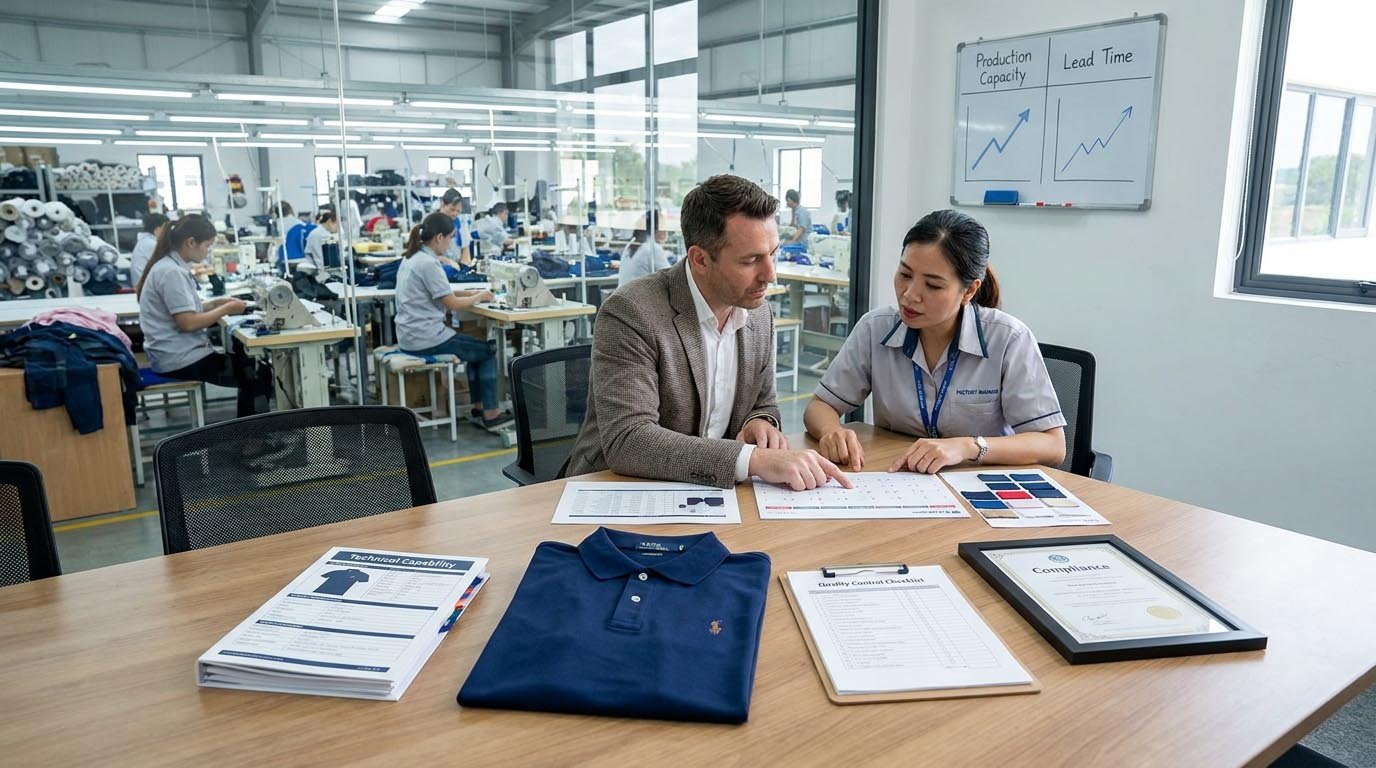
I have seen many golf brands choose factories based on sample quality and initial pricing, only to face delays, inconsistent bulk production, or poor communication a few months later. The factories that work well over time are usually not the ones that say “yes” to everything. They are the ones that ask questions, challenge unclear specs, and show how they manage risk before problems happen.
Quick Answers: How to Evaluate a Golf Apparel Factory
What is the biggest mistake brands make when choosing a golf apparel factory?
They focus on certificates and samples, but fail to check real production capacity, in-line quality control, and how the factory handles problems during bulk production.
How do I know if a factory can support my growth?
Ask how they would handle a 30–50% increase in order volume, whether they have backup capacity, and what percentage of their current production is already booked.
What makes a factory transparent about quality?
A reliable factory can show defect logs, explain PP and TOP approvals, share testing procedures, and discuss how issues are corrected during production—not just claim low defect rates.
Should I prioritize certifications or communication?
Both matter, but communication often matters more in long-term cooperation. A certified factory that responds slowly or hides problems can create more risk than a responsive factory with fewer marketing-friendly certificates.
How long should a proper factory audit take?
At least half a day. If a visit only includes the showroom and machine area, without seeing the production floor, QC checkpoints, warehouse, and planning process, the evaluation is incomplete.
Why Long-Term Factory Evaluation Matters More Than Sample Quality
A sample only proves that a factory can make one product under controlled conditions. It does not prove they can repeat that quality across 1,000 or 10,000 pieces while meeting your delivery window.
For golf apparel, this matters even more because products often involve:
- moisture-wicking performance fabrics
- stretch construction for swing movement
- UV-resistant colors and prints
- stable sizing across repeat orders
- trim consistency for collars, plackets, and branding
A factory that performs well on one sample but struggles with planning, testing, or communication can still become a costly supplier.
Before committing to long-term cooperation, evaluate the factory in five areas:
- Technical capability for golf apparel
- Quality control and testing system
- Compliance and sustainability management
- Capacity, MOQ, lead time, and costing
- Communication, IP protection, and risk control
How to Check a Golf Apparel Factory’s Technical Capability
The first question is simple: can this factory actually make the kind of golf apparel your brand needs?
Many factories say they produce “sportswear” or “polos,” but golf apparel has different technical demands. Stretch recovery, moisture management, collar stability, print durability, and refined fit all matter more in golf than in basic casualwear.
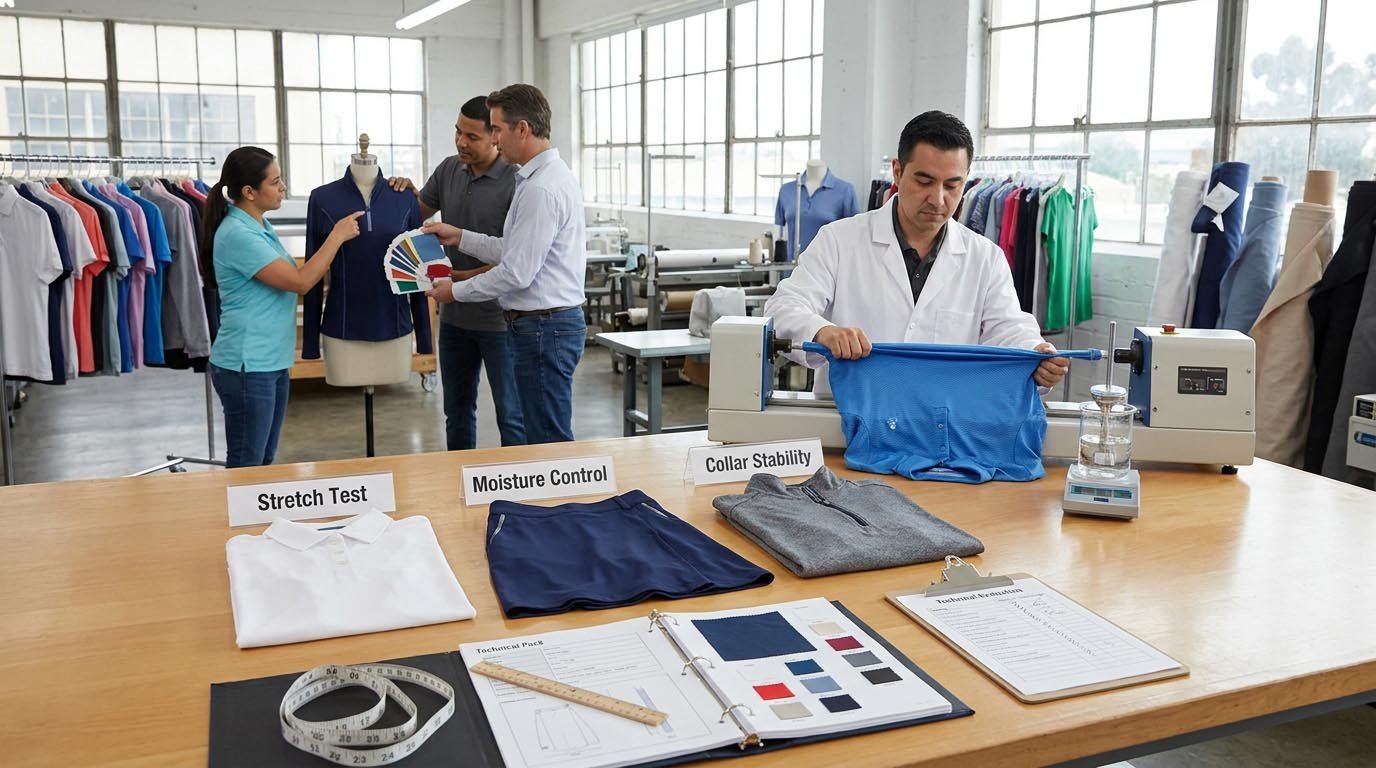
What to Evaluate in Technical Capability
| Capability Area | What to Check | Red Flag |
|---|---|---|
| Fabric knowledge | Can they explain fabric structure, weight, stretch, and finishing options? | They accept every fabric request without feedback |
| Process matching | Do they explain why specific seams, stitches, or finishing methods fit your product? | Generic answers like “we can do it” |
| Golf product experience | Can they show golf polos, skorts, quarter-zips, or other similar products? | No relevant category samples |
| Development ability | Can they improve fit, construction, or fabric choice based on your target market? | No technical suggestions at all |
Questions to Ask During the Audit
Ask the factory:
- What golf apparel categories do you produce most often?
- Can you show me fabric options suitable for golf polos, skorts, or layering pieces?
- What stitch types do you recommend for stretch fabrics?
- How do you manage moisture-wicking or UV finishes?
- How many sample rounds do you typically need before bulk approval?
A strong technical team should not only answer these questions—they should ask you questions too, such as:
- Who is your target customer?
- What climate will the garments be worn in?
- Do you prioritize softness, performance, or price point?
- How many washes should the garment maintain performance?
That kind of pushback is usually a good sign. It shows they are thinking beyond sample execution and toward product-market fit.
Signs the Factory Can Support Product Development
A factory is more suitable for long-term partnership if it can:
- recommend better fabric alternatives
- identify construction risks before sampling
- explain fit trade-offs between sizes
- improve your cost-performance balance
- support repeatable bulk production, not just one-off development
If the factory agrees with every request immediately, that is not always professionalism. Sometimes it means they are saying yes before understanding what your product really needs.
How to Evaluate Quality Control in a Golf Apparel Factory
Quality management is one of the clearest differences between a short-term supplier and a long-term manufacturing partner.
The goal is not zero defects. The goal is a system that catches problems early, records them clearly, and prevents the same issue from happening again.
What to Check in the Quality System
You should verify whether the factory uses:
- PP samples (pre-production samples)
- TOP samples (test of production samples made on the actual line)
- in-line inspections
- final AQL inspections
- fabric and garment lab testing
- fit block and grading control
- corrective action records for recurring defects
Why PP and TOP Samples Matter
One common mistake is approving a sample made in the sample room and assuming bulk production will match it.
In reality, sample-room garments are often made with extra attention. Bulk production involves different operators, different line speeds, and different pressure points.
A reliable golf apparel factory should provide:
- a PP sample before bulk starts
- a TOP sample using actual bulk fabric, trims, and production conditions
- clear approval checkpoints before full production proceeds
If the factory skips TOP approval, bulk consistency becomes much harder to control.
Key Tests That Matter for Golf Apparel
| Test Type | Why It Matters | Suggested Frequency |
|---|---|---|
| Moisture management | Checks wicking performance for active wear | Every fabric lot |
| Colorfastness to washing, light, perspiration | Golf apparel faces sun, sweat, and repeated washing | Every new color/fabric |
| Dimensional stability | Prevents size changes after washing | Every style before bulk |
| Pilling resistance | Protects appearance under wear and bag friction | Each fabric structure |
| Stretch recovery | Maintains fit during swing and repeated use | Development and bulk validation |
| Seam strength | Prevents seam failure in motion areas | Before bulk approval |
Questions to Ask About Quality Management
Ask these directly:
- Can I see your defect log from the past 3 months?
- What are the most common defects in golf polos or performance tops?
- How do you handle a failed test result before bulk production?
- How is in-line QC reported back to the sewing floor?
- Who approves measurement tolerances if garments are slightly off spec?
- Can I see your AQL inspection process?
If the answers are vague, or if the team cannot show real records, the quality system may be more presentation than practice.
How to Spot a Real QC System
A factory with real quality control will usually show:
- defect categories by production stage
- rework or rejection data
- measurement reports
- test reports tied to actual styles
- corrective action notes after defects
- clear approval flow from lab to floor
That is much more valuable than hearing “our defect rate is very low” without evidence.
What Certifications and Compliance Standards Should a Golf Apparel Factory Have?
Certifications are important, but they are only useful if the factory maintains them consistently and applies them in daily operations.
A golf apparel factory serving export markets should usually have some combination of:
- BSCI, WRAP, or Sedex for social compliance
- OEKO-TEX or bluesign-related material standards where relevant
- GRS or recycled material certifications if sustainability claims are made
- internal or third-party testing standards for fabric and trim compliance
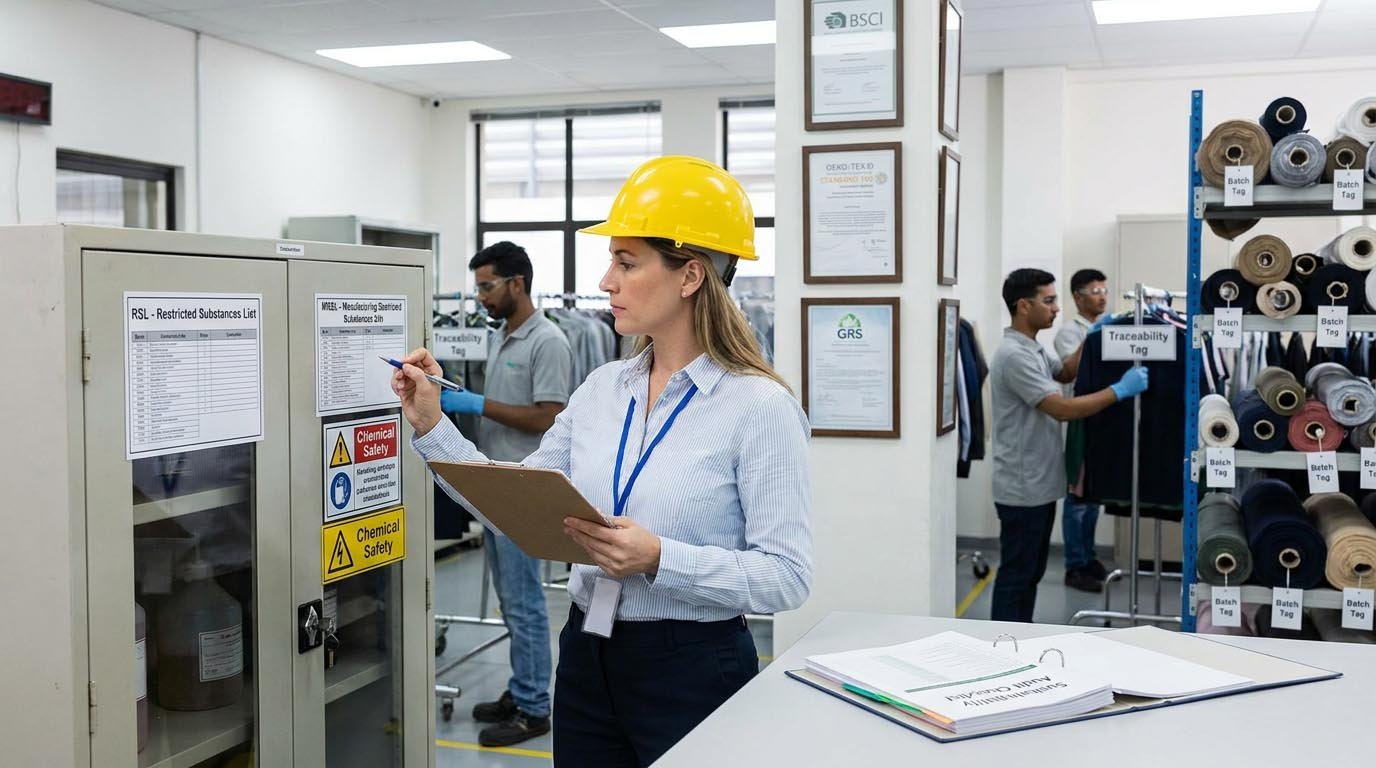
RSL and MRSL Matter More Than Many Brands Realize
If you sell to North American or European markets, chemical compliance matters.
You should ask how the factory manages:
- RSL (Restricted Substances List) for finished garments
- MRSL (Manufacturing Restricted Substances List) for chemicals used in production
- incoming fabric and trim screening
- chemical inventory and safety documentation
- supplier compliance from dye houses and mills
Questions to Ask About Compliance
- Which compliance certifications are currently valid?
- Can I see the expiry dates?
- How do you manage RSL and MRSL compliance with fabric mills?
- Do you test incoming materials or only final garments?
- What is the biggest compliance challenge you face during peak season?
- How do you prepare for customer or third-party audits?
A transparent answer is often better than a polished one. If a factory claims perfect conditions all year with zero compliance pressure, be careful.
What to Check Beyond Certificates
Do not stop at the certificate file. Also look at:
- chemical storage areas
- worker safety practices
- labeling and traceability systems
- overtime management during peak months
- housekeeping and maintenance standards
- whether the daily conditions match the audit narrative
A compliant factory should be able to explain how it stays compliant between audits, not just during audit week.
How to Assess Capacity, MOQ, Lead Time, and Cost Transparency
This is where many factory relationships break down. A supplier may look strong during development but become unreliable when order volume increases or production schedules tighten.
How to Evaluate Capacity Realistically
Do not ask only for monthly capacity. Ask how full that capacity already is.
| Factor | What to Ask | Why It Matters |
|---|---|---|
| Capacity utilization | “What percentage of your capacity is booked now?” | Over 90% leaves little room for delays or urgent orders |
| Customer concentration | “How much volume comes from your top 3 clients?” | Smaller brands may be deprioritized |
| Planning system | “Can you show how production is scheduled?” | Reveals whether planning is controlled or reactive |
| Peak season handling | “How do you manage busy months?” | Shows if they use overtime, subcontracting, or backup lines |
How to Know If a Factory Can Grow With You
Ask the factory this directly:
- If my order volume increases by 50%, how would you handle it?
- Do you have backup sewing lines or partner facilities?
- What order size range fits your current operation best?
- Have you supported any brands through growth from small to medium volume?
The answer should be specific. “No problem” is not enough. A better answer includes lead-time impact, staffing, material planning, and line allocation.
MOQ Evaluation for Golf Apparel
MOQ is not just a price issue. It reflects how the factory is set up operationally.
Typical MOQs vary by product complexity:
- 300–500 pieces per design for sublimation or simpler custom programs
- 500–800 pieces per style for stock fabrics with embroidery or standard trims
- 1,000–1,500 pieces per colorway for fully custom fabrics and trims
If a factory offers very low MOQs for highly customized work, ask how they absorb setup cost and whether hidden charges will appear later.
Lead Time Transparency
A reliable factory should break lead time into clear stages, such as:
- fabric sourcing: 15–45 days
- sample approval: 10–15 days
- bulk production: 25–35 days
- inspection and packing: 3–5 days
For many custom golf apparel programs, a realistic total lead time is 60–90 days.
Ask:
- Is the quoted lead time from order confirmation or deposit receipt?
- Does it include fabric lead time?
- Does it include PP and TOP approval?
- What was your OTIF rate last quarter?
- How early do you notify customers when delays happen?
Why OTIF Matters
OTIF means On Time In Full. It tells you whether the factory delivers the right quantity by the agreed date.
But factories define this differently, so ask:
- Do you count shipment departure date or customer receipt date?
- Do partial shipments count as on-time?
- Can you show historical OTIF performance?
A factory that tracks OTIF seriously is usually more disciplined in planning.
Cost Transparency Checklist
A trustworthy factory should be able to explain the major cost components in your quote:
- fabric
- trims
- cut-make-trim labor
- printing or embroidery
- packaging
- overhead
- margin
If the quote is only one bundled number, it becomes harder to understand where future increases are coming from.
How to Evaluate Factory Communication, IP Protection, and Risk Management
Long-term cooperation depends heavily on how the factory communicates under pressure.
Many problems in manufacturing are manageable. What damages partnerships is late communication, vague updates, and lack of ownership.
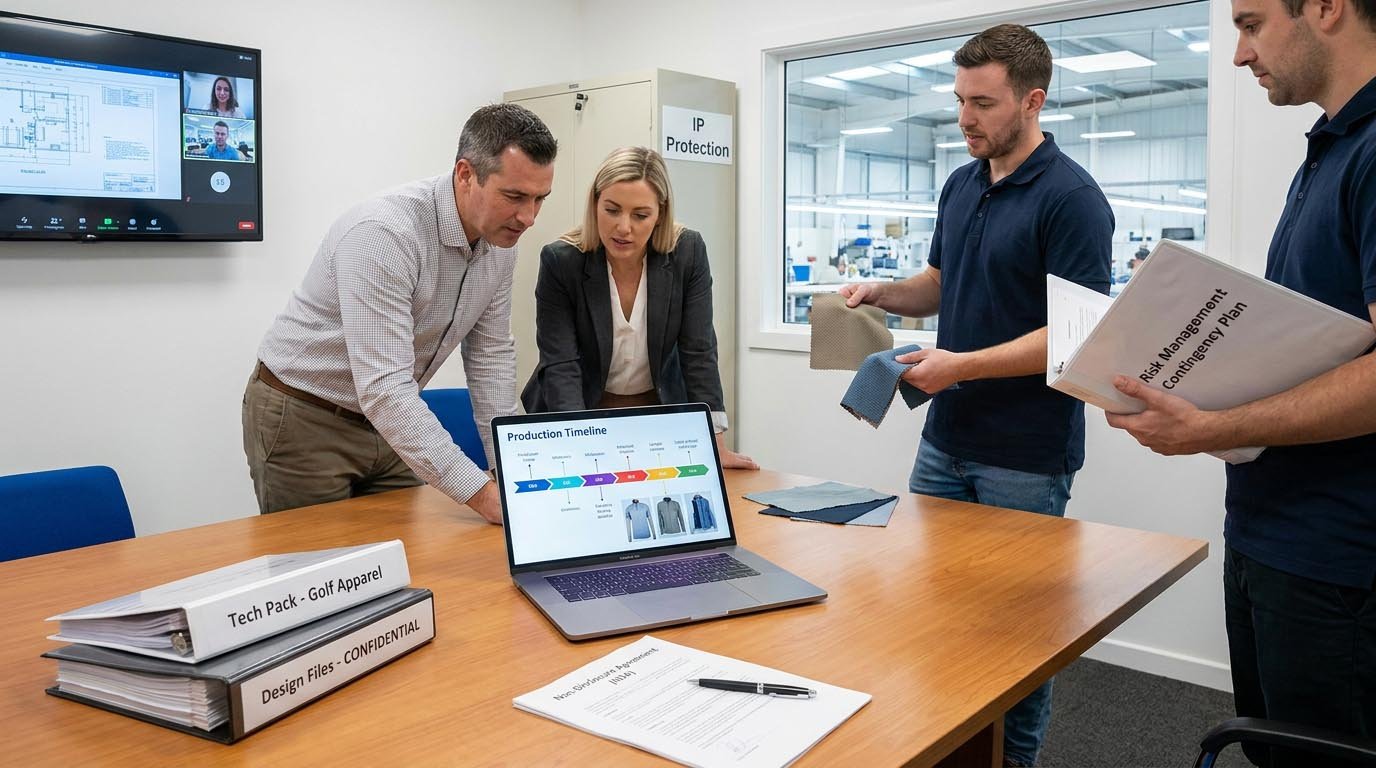
What Good Communication Looks Like
A reliable golf apparel factory should provide:
- weekly production updates
- clear timelines and milestone tracking
- photos or videos when issues happen
- practical alternatives when a material or trim is unavailable
- honest warnings if your request may create quality risks
Fast replies are useful, but clear and proactive replies matter more.
Questions to Ask About Communication
- Who will be my day-to-day contact after the order is placed?
- How often will you send production updates?
- What happens if a fabric mill misses the delivery date?
- How do you communicate quality issues during production?
- Can you support technical discussions by video call if needed?
A good partner does not wait for you to chase updates. They create a system for visibility.
IP and Data Protection
If you share tech packs, original fits, logo placements, or custom developments, your factory should have clear confidentiality practices.
Ask:
- Will you sign an NDA and IP protection clause?
- How do you store customer tech packs and design files?
- Who can access those files internally?
- Can your team show our samples to other customers?
- Do you mark tooling, patterns, or developments with customer ownership?
Contingency Planning Questions
Strong factories usually have thought through common disruptions.
| Risk Scenario | What to Ask | What You Learn |
|---|---|---|
| Fabric delay | “What if the fabric mill is 2 weeks late?” | Whether they have alternative sourcing plans |
| Bulk quality failure | “What if 20% of units fail inspection?” | Their rework and replacement ability |
| Capacity overload | “What if I need an urgent repeat order?” | Their backup planning and flexibility |
| Shipping disruption | “How do you handle sudden shipment delays?” | Their coordination with logistics partners |
The best answers come from real past examples, not generic promises.
Golf Apparel Factory Audit Checklist Before Long-Term Cooperation
Use this checklist before deciding whether to move forward with a factory partnership.
Technical and Product Capability
- Do they have real experience with golf apparel or similar performance categories?
- Can they explain fabrics, construction, and finishing methods clearly?
- Can they suggest better options instead of simply agreeing?
Quality Control
- Do they use PP and TOP approvals?
- Can they show defect logs and testing reports?
- Do they have fit blocks and grading control for repeat consistency?
Compliance
- Are certifications current and relevant?
- Do they manage RSL and MRSL properly?
- Do factory conditions match audit claims?
Capacity and Delivery
- What is their current utilization rate?
- Can they support order growth?
- Do they track OTIF and explain lead times clearly?
Communication and Partnership Fit
- Do they communicate clearly and proactively?
- Are they honest about risks and limitations?
- Do they have contingency plans?
- Do they respect IP and confidentiality?
If a factory scores well in all five areas, it is much more likely to be a strong long-term partner.
FAQ: Choosing the Right Golf Apparel Manufacturer
How many golf apparel factories should I evaluate before choosing one?
It is best to compare at least 3–4 factories. That gives you enough perspective on pricing, communication style, technical strength, and risk level.
Should I work only with factories that specialize in golf apparel?
Not always. A factory with strong experience in sportswear, tennis, running, or athleisure may still be excellent if it understands performance fabrics, stretch construction, and fit consistency.
How do I know if a factory can support my brand as it grows?
Ask how they would manage a 30–50% increase in order volume, whether they have backup lines, and what percentage of current capacity is already booked.
What is more important: certifications or responsiveness?
Both matter, but responsiveness often affects daily execution more. A certified factory that communicates poorly can still create serious problems.
How long should I test a factory before committing long term?
Ideally through 2–3 orders, including at least one reorder or seasonal shift. One successful order does not always prove long-term consistency.
Can I work with more than one golf apparel factory at the same time?
Yes. Dual sourcing can reduce risk and improve flexibility. But do not split volume so much that you become too small for either factory to prioritize.
What is a red flag during a factory visit?
Be cautious if the visit focuses only on the showroom, avoids active production lines, or skips detailed discussions about quality issues, planning, and problem handling.
Conclusion
To evaluate a golf apparel factory for long-term partnership, look beyond certificates, pricing, and showroom samples. Focus on technical capability, quality management, compliance discipline, real production capacity, communication quality, and risk control. The right factory is not just one that can make your product today—it is one that can support your brand consistently as your business grows.
If you are comparing factories now, use this framework to audit them more deeply before you commit. That decision will affect not just your next order, but your brand’s stability over the next few years.