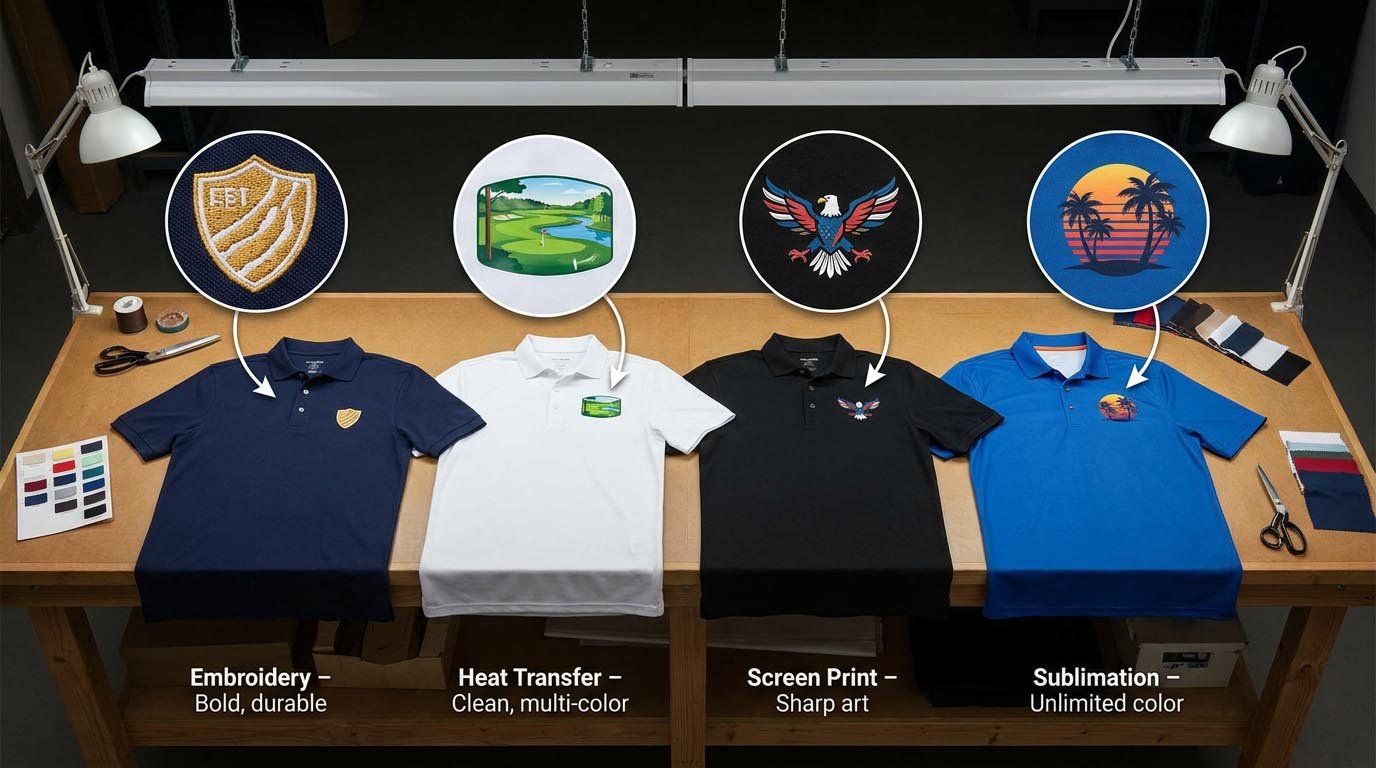
The best logo method for golf apparel is the one that matches your design's technical requirements to production constraints. Embroidery handles simple, bold designs on stable fabrics. Heat transfer and screen printing work for detailed graphics on varied substrates. Sublimation requires polyester but offers unlimited color complexity.
I manage logo application at FUWAY's production line. My job is to review client designs and tell them whether their chosen technique will physically work. Most logo failures I see happen before production even starts—clients select a technique based on how a sample looks without understanding what their specific design requires. A logo with five colors might work beautifully in screen printing but become impossible in embroidery because thread color matching is limited. A design on a mesh fabric might distort under embroidery but apply cleanly as a heat transfer. This guide walks through the matching logic I use every day to prevent sampling failures.
Quick Answers: Logo Methods for Golf Apparel
What is the main difference between these four methods?
Embroidery stitches thread through the fabric. Heat transfer applies a pre-printed graphic using heat and pressure. Screen printing pushes ink through a mesh screen directly onto fabric. Sublimation uses heat to turn dye into gas that bonds with polyester fibers. Each method has different design limits, fabric compatibility, and durability characteristics.
Which method is most durable?
It depends on the fabric and wash conditions. Embroidery on structured fabrics (piqué, twill) lasts 200+ washes. Heat transfer on performance polyester lasts 50-100 washes before peeling starts. Screen printing durability varies by ink type—plastisol lasts longer than water-based. Sublimation is permanent on polyester but only works on polyester.
Can you embroider detailed logos with small text?
Not reliably. Embroidery has a minimum detail resolution of about 3-4mm for readable text. Letters smaller than that blur or become illegible. If your logo has fine lines, small text, or intricate details, heat transfer or screen printing will render them more clearly.
What happens if you use the wrong technique for a fabric?
Common problems: embroidery on lightweight mesh causes puckering and distortion; heat transfer on cotton may not adhere properly and peels quickly; sublimation on non-polyester fabrics does not bond at all; screen printing on high-stretch fabrics cracks during wear.
Which method is cheapest for small orders?
Heat transfer and simple screen printing have the lowest setup costs, making them better for orders under 100 pieces. Embroidery requires digitizing fees (typically $50-150 per design) but the per-unit cost drops significantly on larger orders. Sublimation requires minimum run sizes of 100-200+ pieces to be cost-effective.
Can you mix techniques on the same garment?
Yes, and we do it often. For example, embroidered chest logo for durability and premium feel, heat transfer sleeve logos for complex multi-color designs, and screen printed large back graphics. Each placement can use the technique that best suits its design requirements.
How do you choose between heat transfer types (vinyl, silicone, TPU)?
Vinyl is for simple, solid-color designs with sharp edges. Silicone offers a soft, flexible feel and works well on stretch fabrics. TPU (thermoplastic polyurethane) handles detailed graphics and photo-realistic images. Your design complexity and fabric type determine which transfer material works best.
How Does Each Method Work and What Are Its Design Limits?
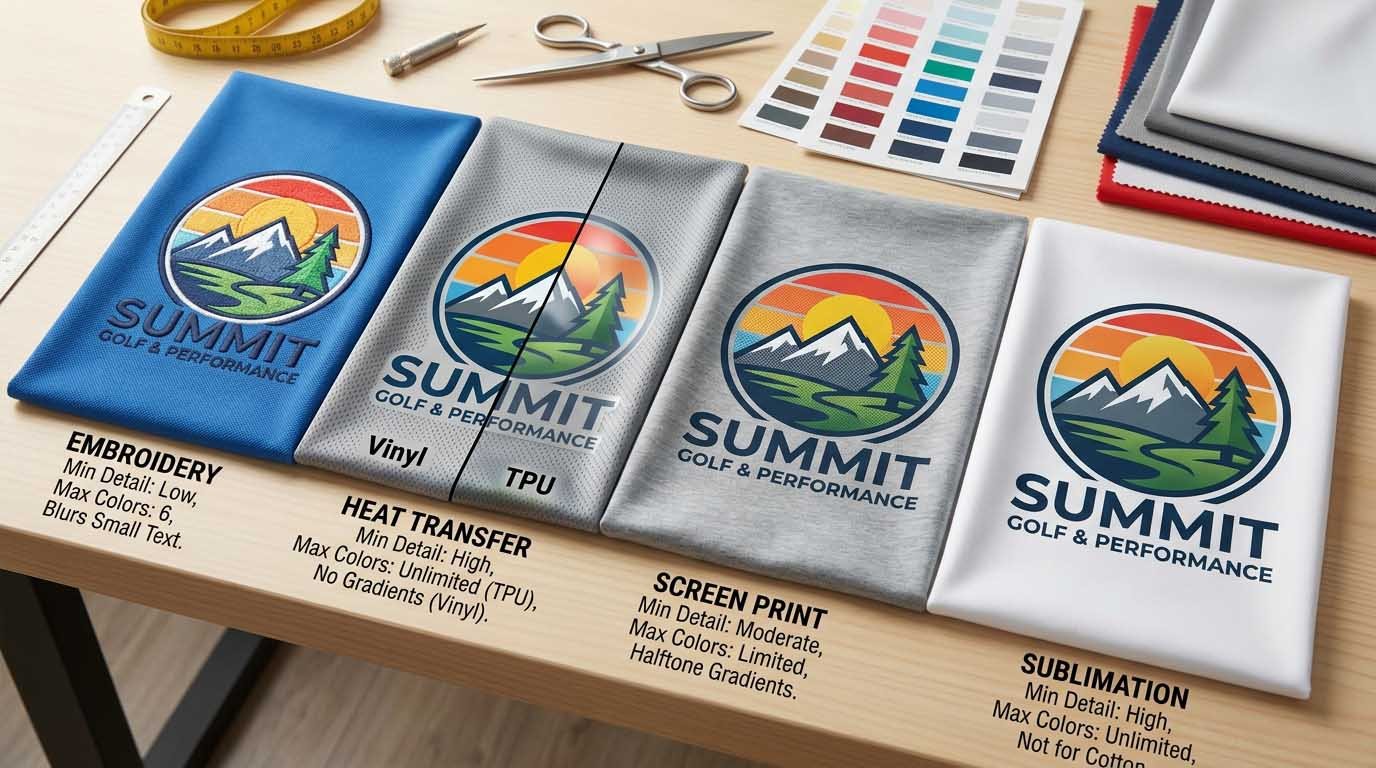
Each decoration method has structural limits on detail resolution, color count, and design complexity. Embroidery excels at bold, simple graphics. Heat transfer and screen printing handle moderate detail and color gradations. Sublimation offers unlimited color complexity but only bonds to polyester fabric.
Embroidery: Thread Stitched Through Fabric
Embroidery uses a needle to stitch thread through the fabric in patterns that form your logo. A digitizer converts your artwork into a stitch file—a set of instructions for the embroidery machine.
Design limits I enforce in sampling:
- Minimum line width: 1.5-2mm (anything thinner becomes irregular or disappears)
- Minimum text height: 3-4mm for readability (smaller text blurs into an unreadable blob)
- Color count: Typically limited to 6-8 thread colors per design (more colors increase cost and production time significantly)
- Detail resolution: Low compared to printing methods; fine details like photo realism, gradients, or intricate patterns cannot be rendered
When embroidery works:
Your logo has clean, bold shapes. Text is large and simple. Color count is low. The fabric is stable and structured (piqué, twill, woven fabrics over 160 GSM).
Common failure I see:
Client wants to embroider a logo with a tagline in 8pt font. At production size (6cm logo), the text is maybe 3mm tall. The letters merge together into a stitched smudge. I reject it at sampling and recommend heat transfer with the text, embroidery for the main logo mark only.
Heat Transfer: Pre-Printed Graphic Applied with Heat
Heat transfer involves printing your logo onto a transfer material (vinyl, silicone, TPU film), then using a heat press to bond it to the fabric. The graphic sits on top of the fabric surface rather than being stitched through it.
Design limits:
- Detail resolution: High—can handle fine lines, small text, and complex graphics
- Color count: Virtually unlimited for full-color transfers (sublimation transfer, DTF); limited to solid colors for vinyl
- Substrate: Works on most fabrics, but adhesion strength varies by fabric type and transfer material
Types of heat transfer:
- Vinyl (PVC or PU): Solid colors, clean edges, durable. Best for simple logos with few colors. Feels slightly stiff on the fabric.
- Silicone: Soft, flexible, stretchable. Works well on performance fabrics. Good for logos that need to move with the fabric.
- TPU (Thermoplastic Polyurethane): Can print full-color, photo-realistic graphics. Thinner and softer than vinyl. Good detail resolution but less durable than vinyl or embroidery.
Common failure I see:
Client chooses vinyl transfer for a 10-color gradient logo. Vinyl does not do gradients—it is for solid color shapes. They need TPU transfer or sublimation transfer instead. I send back the design with a note explaining the material limits.
Screen Printing: Ink Pushed Through a Mesh Screen
Screen printing creates a stencil (screen) for each color in your design. Ink is pushed through the screen onto the fabric. Each color requires a separate screen, which affects setup cost.
Design limits:
- Detail resolution: Good—can handle fine lines and moderate detail, but not as fine as digital heat transfer
- Color count: Typically limited to 4-6 colors for cost reasons (each color adds a screen setup fee)
- Color gradations: Achievable through halftone screens, but not as smooth as digital printing methods
When screen printing works:
Large graphics (back prints, full chest panels). Solid color designs with good contrast. Medium to large order quantities (100+ pieces) where the screen setup cost is spread across units.
Common failure I see:
Client wants a 3-color chest logo on 25 pieces. Screen setup fees make the per-unit cost higher than heat transfer. I recommend heat transfer for small batches and reserve screen printing for their larger reorder.
Sublimation: Dye Gas Bonded to Polyester
Sublimation uses heat to convert solid dye into gas, which then penetrates and bonds with polyester fibers. The image becomes part of the fabric rather than sitting on top of it.
Design limits:
- Substrate: Only works on polyester (or polyester-coated substrates). Does not work on cotton, nylon, or natural fibers.
- Color fidelity: Excellent—can reproduce photo-realistic images, gradients, and unlimited colors
- Detail resolution: Very high—matches the resolution of the printed transfer
When sublimation works:
Full-color, complex designs. Photographic images. Designs covering large areas or entire garments. The garment must be 100% polyester or have a polyester coating.
Common failure I see:
Client specifies sublimation for a cotton polo. I explain sublimation dye only bonds to polyester. If they want the design on cotton, they need screen printing or a different heat transfer method. Many clients do not realize sublimation has this hard fabric limit.
Which Method Works Best for Different Golf Garment Types?
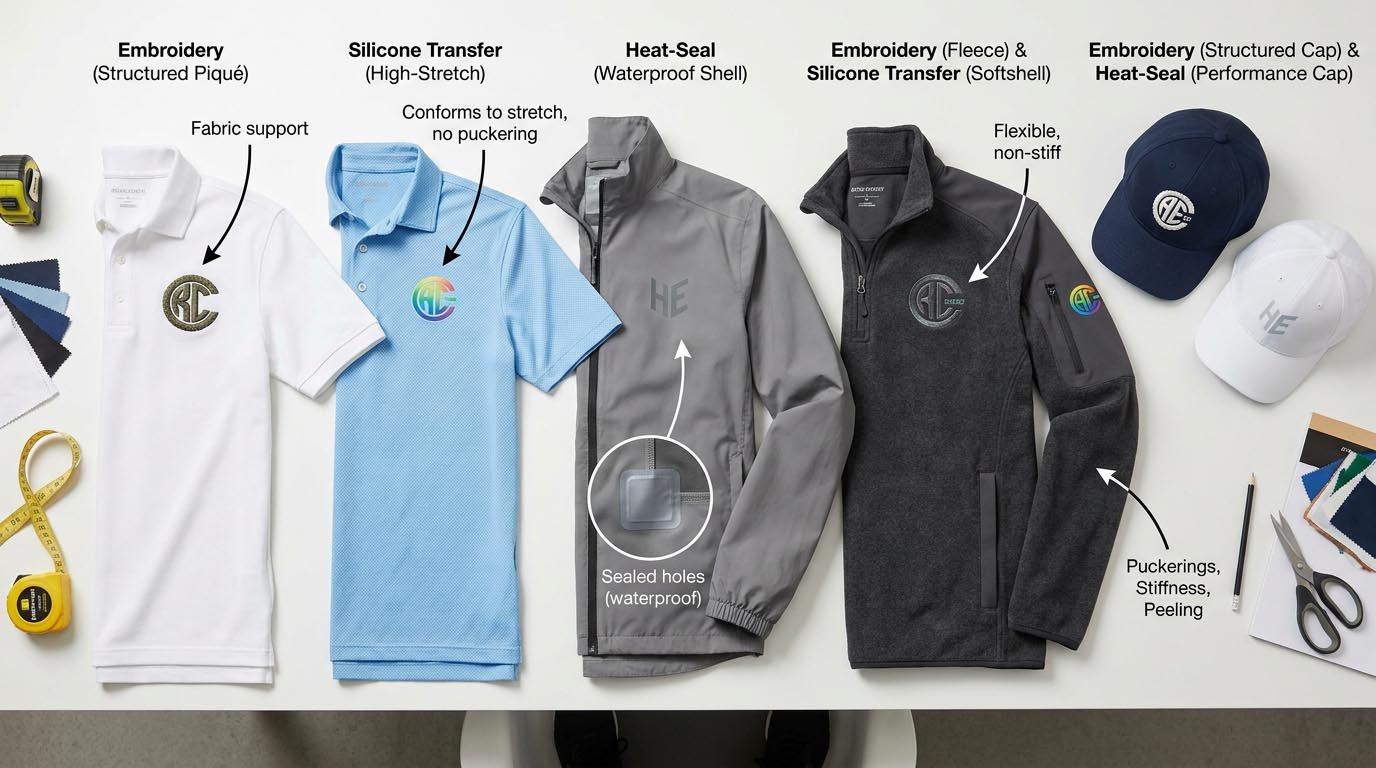
Fabric type determines technique compatibility more than garment type does. Structured knits (piqué, interlock) support embroidery. Lightweight or stretch fabrics need heat transfer or screen printing. Waterproof shells require heat-seal transfers. Each fabric-technique pairing has predictable performance outcomes.
Performance Polos (Piqué, Jersey, Mesh)
Structured piqué (160+ GSM):
Embroidery is the traditional choice and works well. The fabric is thick enough to support dense stitching without puckering. Heat transfer and screen printing also work but are less common because embroidery is associated with quality polo shirts.
Lightweight mesh or jersey (under 150 GSM):
Embroidery often causes puckering and fabric distortion. I recommend heat transfer (silicone or TPU) for these fabrics. The transfer sits on the surface and moves with the fabric's stretch without creating stiffness. Screen printing can work if the ink is thin and flexible.
High-stretch performance knits (10%+ elastane):
Heat transfer is the best choice. Embroidery resists the fabric's stretch, creating stiff spots that can restrict movement. Silicone transfers are particularly good here because they stretch with the fabric.
Rainwear and Windbreakers (Waterproof/Water-Resistant)
DWR-treated fabrics:
These fabrics have a water-repellent coating that can interfere with ink adhesion in screen printing. Heat-seal transfers (vinyl or TPU) bond mechanically through heat and pressure, bypassing the coating. Embroidery works but creates needle holes that can compromise water resistance. We often seal embroidery from the inside with a backing patch.
Fully waterproof laminates (Gore-Tex, eVent):
Do not embroider unless you seal every needle hole. Heat-seal transfers are standard. The transfer must use a lower temperature to avoid damaging the membrane.
Mid-Layers (Fleece, Softshell)
Fleece fabrics:
Embroidery works well because fleece is thick and stable. The stitching blends into the texture. Heat transfer can work but may peel if the fleece has a high-pile surface that does not provide a flat bonding area. We test adhesion during sampling.
Softshell (stretch woven):
Heat transfer or screen printing. Embroidery can work but adds stiffness to a fabric designed for mobility. Silicone transfers are a good compromise—durable but flexible.
Caps and Headwear
Structured caps (cotton twill, polyester mesh):
Embroidery is the standard. The fabric and backing structure support dense stitching. The 3D texture of embroidery looks premium on caps. Heat transfer is rare on caps because the curved surface makes application difficult and the transfer can peel from flexing.
Performance caps (ultra-lightweight, high-stretch):
Some performance caps use fabrics too thin for embroidery. In these cases, we use a flat-embroidery technique (lower stitch density) or small heat-seal logos. Screen printing is possible but less durable on caps due to the flexing and friction during wear.
What Are the Trade-Offs: Durability, Stretch and Breathability?
Every decoration method changes the fabric's physical properties. Embroidery adds weight, stiffness, and can block airflow. Heat transfers can reduce stretch and breathability. Screen printing can crack on high-stretch areas. The technique you choose must match the garment's intended use case.
Embroidery: Durable but Adds Weight and Stiffness
Durability:
Excellent on structured fabrics. The stitching is mechanically locked into the fabric and does not peel or fade. In our experience, embroidered logos on piqué polos last 200+ washes without visible degradation.
Stretch impact:
Embroidery does not stretch. On a stretch fabric, it creates a stiff spot that resists movement. For logos on high-stretch areas (sleeve, side panel), I recommend keeping embroidery small or switching to a stretchable heat transfer.
Breathability impact:
Dense embroidery stitches can block airflow, especially on mesh or open-knit fabrics. A 6cm embroidered logo on a mesh ventilation panel might cover 30-40% of the mesh holes, reducing airflow. If ventilation is critical, use a heat transfer with a perforated or mesh backing.
Heat Transfer: Flexible but Variable Durability
Durability:
Depends heavily on the transfer material and fabric type. Vinyl transfers on polyester can last 50-100 washes. TPU transfers might show edge peeling after 30-50 washes. Silicone transfers on stretch fabrics last longer because they move with the fabric rather than fighting it.
Common failure mode:
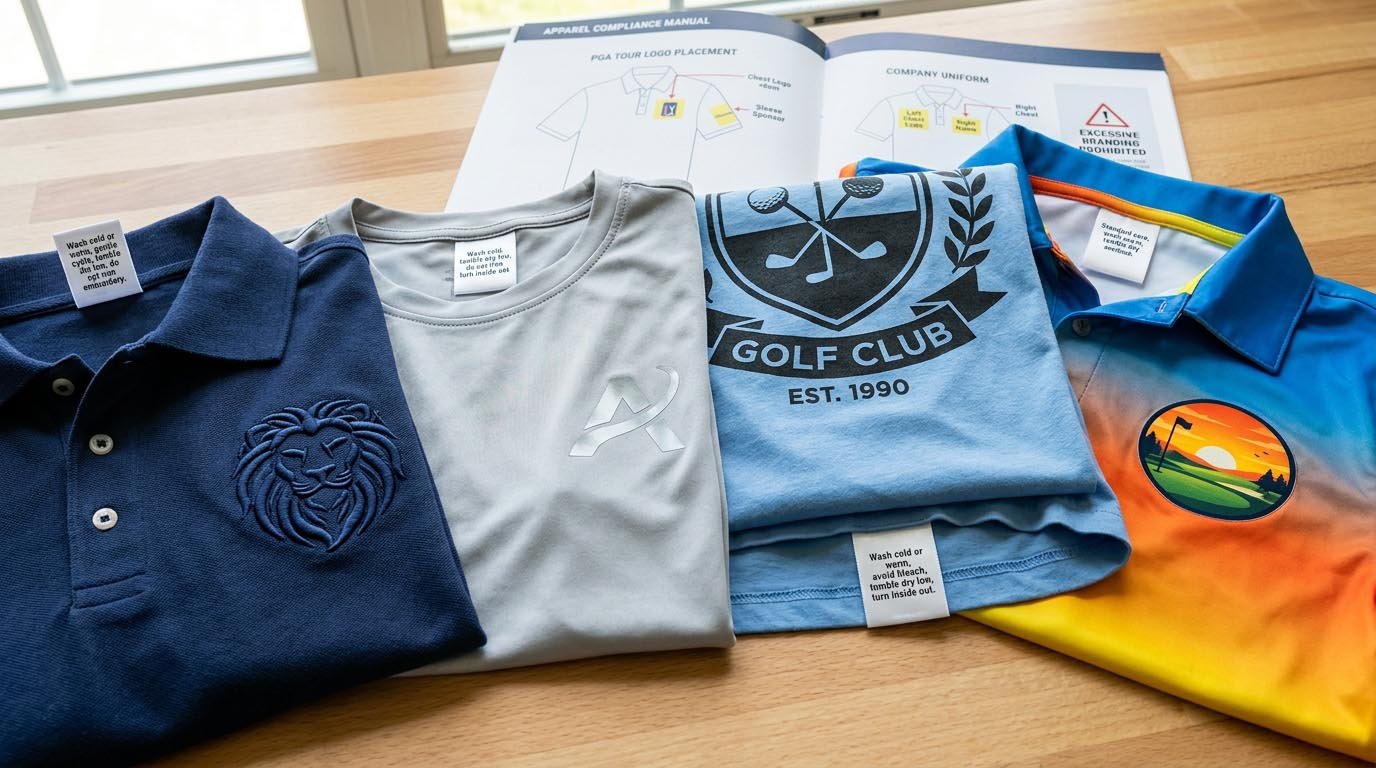
Peeling at the edges, especially after high-temperature washing or drying. I always advise clients to specify care instructions: wash cold, tumble dry low or air dry.
Stretch impact:
Silicone and TPU transfers stretch with the fabric. Vinyl is less flexible and can crack on high-stretch areas. If the logo is on a stretch zone, I specify silicone or a thin TPU transfer.
Breathability impact:
Solid transfers block airflow completely. For performance fabrics where breathability matters, we use perforated transfers or keep logos small and off ventilation zones.
Screen Printing: Good Durability, Moderate Stretch
Durability:
Plastisol ink (the most common screen printing ink) is very durable—comparable to embroidery if applied correctly. Water-based inks are less durable but feel softer. In our sampling, plastisol screen prints last 100+ washes before noticeable fading or cracking.
Stretch impact:
Ink does not stretch. On fabrics with more than 10% elastane, screen printed logos can crack along fold lines during wear. We recommend using stretch inks or switching to heat transfer on high-stretch fabrics.
Breathability impact:
Similar to solid heat transfers—ink sits on the fabric surface and blocks airflow. Not ideal for mesh panels or ventilation zones.
Sublimation: Permanent but Polyester-Only
Durability:
Sublimation is the most permanent method because the dye is inside the fiber, not on top. It cannot peel, crack, or fade from washing. The lifespan is essentially the lifespan of the garment itself.
Stretch impact:
Zero impact. The dye is part of the fiber, so the fabric retains its full stretch and recovery. This is a major advantage for performance apparel.
Breathability impact:
Zero impact. The fabric's structure is unchanged. Sublimation is the only method that does not reduce breathability at all.
What About Look and Feel: Thickness, Color and 3D Texture?
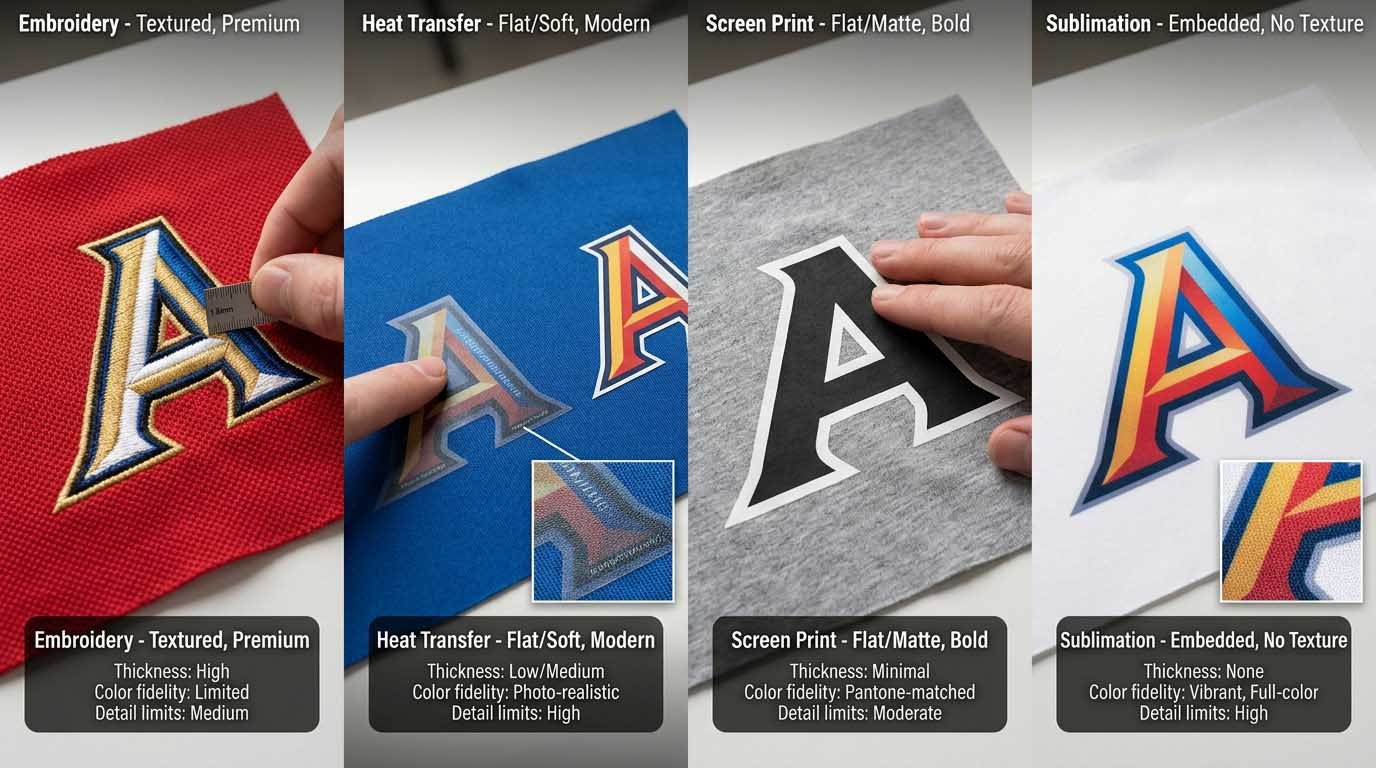
Each method has a distinct look and feel. Embroidery is raised and textured. Vinyl transfer is flat with slightly hard edges. Silicone transfer is soft and flexible. Screen printing looks flat and matte. Sublimation is completely embedded with no texture. Your choice depends on the visual identity you want.
Embroidery: 3D Texture, Traditional Premium Look
Embroidery is raised above the fabric surface. You can see and feel the individual stitches. This 3D texture is associated with quality and tradition—it is the default for corporate polos, team uniforms, and classic golf apparel.
Thickness:
Embroidery adds 1-2mm of thickness to the fabric. On thin fabrics, this is very noticeable. On thick fabrics, it blends in.
Color fidelity:
Limited by thread availability. Most thread manufacturers offer 200-400 standard colors. Matching a specific Pantone color can be difficult. Gradients and color blending are not possible.
Fine detail:
Poor. Small text and intricate lines do not render cleanly.
Heat Transfer: Flat or Slightly Raised, Modern Look
Heat transfers sit on the fabric surface. They can be completely flat (thin TPU) or slightly raised (thicker vinyl).
Thickness:
Vinyl transfers add 0.3-0.8mm thickness and can feel slightly stiff. TPU and silicone transfers are thinner (0.1-0.3mm) and softer.
Color fidelity:
Excellent for full-color transfers (TPU, sublimation transfer). Can reproduce photo-realistic images, gradients, and complex color blends. Vinyl is limited to solid colors.
Fine detail:
Very good. Can handle small text (2-3mm height) and fine lines cleanly.
Screen Printing: Flat and Matte, Bold Look
Screen printing creates a flat layer of ink on the fabric. It has a matte finish (unless you use a gloss ink) and feels smooth to the touch.
Thickness:
Minimal—0.1-0.2mm. Screen printing feels the least intrusive of all methods.
Color fidelity:
Good for solid colors. Pantone matching is possible. Gradients and blends require halftone screens and do not look as smooth as digital printing.
Fine detail:
Good, but not as fine as digital heat transfers. Can handle moderate detail but not photo realism.
Sublimation: Embedded, No Texture
Sublimation has no texture at all. The design is inside the fiber, so the fabric surface remains unchanged. It looks like the logo was woven into the fabric rather than applied afterward.
Thickness:
Zero. The fabric is the same thickness with or without the logo.
Color fidelity:
Excellent. Can reproduce any color, gradient, or photo with high accuracy.
Fine detail:
Excellent. Matches the resolution of the printed transfer.
When Does Cost, MOQ and Lead Time Determine Your Choice?
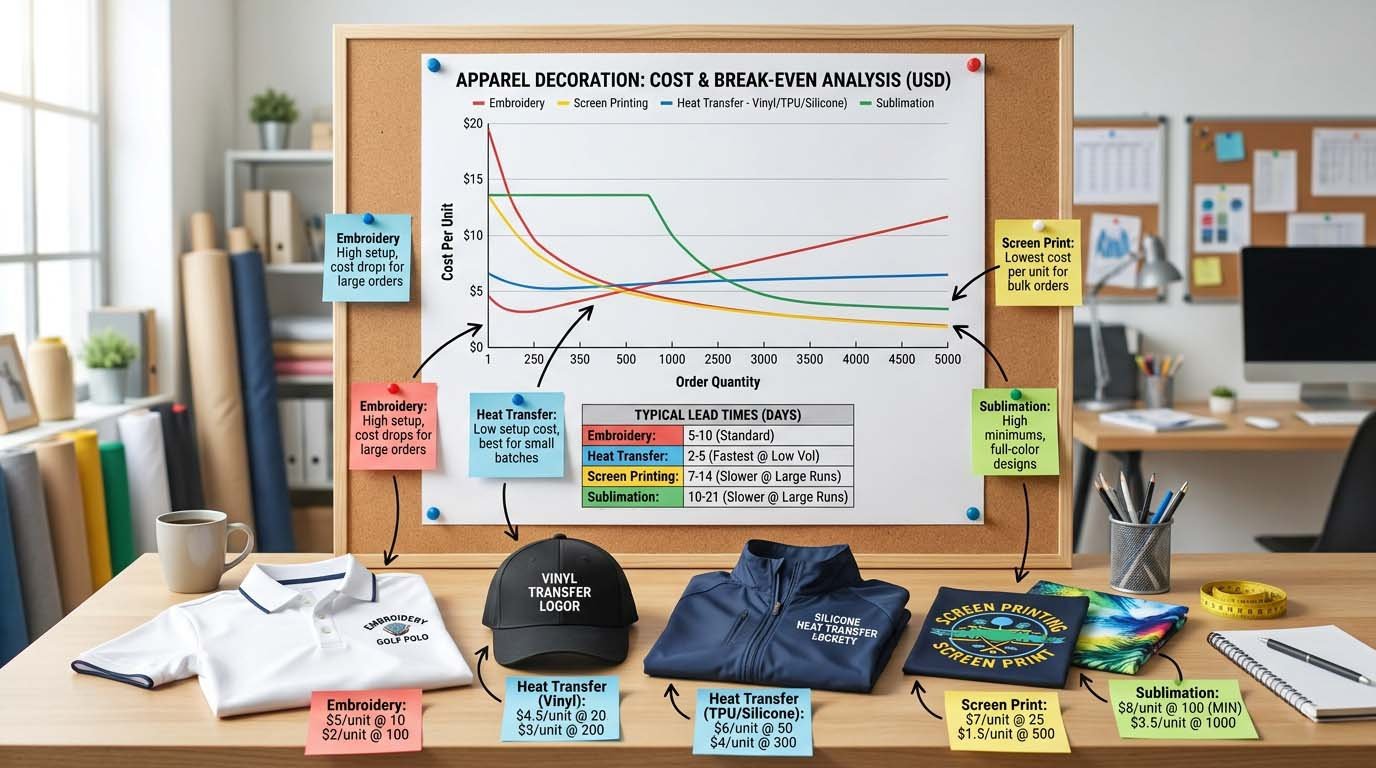
Setup costs, minimum order quantities, and production timelines vary dramatically by method. Embroidery and screen printing require higher setup investments but lower per-unit costs at scale. Heat transfer has minimal setup but higher per-unit costs. Sublimation requires large minimums. Your order size determines which method is economically feasible.
Cost Structure by Method
I walk clients through cost structures during quoting because many assume the cheapest sample cost will be the cheapest production cost. This is rarely true.
Embroidery:
- Setup: $50-150 digitizing fee (one-time per design)
- Per-unit cost: $2-5 for a standard chest logo, depending on stitch count and colors
- Break-even: Around 50-100 units. Below this, setup costs make embroidery expensive per piece.
Heat Transfer (Vinyl):
- Setup: $30-80 for design setup (cutting file preparation)
- Per-unit cost: $1.50-4, depending on size and color count
- Break-even: Good for small batches (10-50 units) where embroidery setup is too expensive.
Heat Transfer (Silicone/TPU):
- Setup: $50-100 for screen or digital file preparation
- Per-unit cost: $2-6, depending on complexity and size
- Break-even: Similar to vinyl, but slightly higher cost per unit.
Screen Printing:
- Setup: $25-60 per color (screen creation fee)
- Per-unit cost: $0.50-2 per location, very low at high volumes
- Break-even: 100+ units. Screen setup makes small batches uneconomical.
Sublimation:
- Setup: $100-300 for design file preparation and transfer printing setup
- Per-unit cost: $3-8, depending on coverage area
- Minimum order: Often 100-200 pieces because transfer sheets are printed in bulk
- Break-even: Only cost-effective at large volumes or for full-garment designs where other methods are not feasible.
Lead Time Considerations
In our production schedule, lead times vary by method complexity and current workload.
| Method | Typical Lead Time | Factors That Extend Lead Time |
|---|---|---|
| Embroidery | 7-14 days | Complex digitizing, high stitch count, large order volume |
| Heat Transfer | 5-10 days | Custom color matching, small batch production |
| Screen Printing | 10-15 days | Multiple colors, screen preparation, large order volume |
| Sublimation | 10-18 days | Transfer sheet printing, large coverage area, fabric pre-treatment |
For rush orders, heat transfer is often the fastest because it requires the least setup.
What Care Instructions and Compliance Rules Apply?
Every decoration method has specific care requirements to maximize lifespan. Heat transfers need low-temperature washing and drying. Embroidery needs gentle agitation. Screen printing should avoid bleach. Compliance with decoration placement rules (PGA Tour, corporate uniforms) affects where and how large logos can be applied.
Care Instructions I Specify for Each Method
Embroidery:
- Wash cold or warm (not hot)
- Gentle cycle or normal cycle (avoid heavy agitation)
- Tumble dry low or air dry
- Do not iron directly on the embroidery (use a pressing cloth)
Heat Transfer:
- Wash cold (hot water weakens adhesive)
- Tumble dry low or air dry (high heat causes peeling)
- Do not iron directly on the transfer
- Turn garment inside out before washing to reduce friction on the logo
Screen Printing:
- Wash cold to warm
- Avoid bleach (degrades ink)
- Tumble dry low
- Turn inside out before washing
Sublimation:
- Standard care (wash warm, tumble dry medium)
- Sublimation is the most care-tolerant method because the dye is inside the fiber
Placement Compliance for Golf Events and Corporate Use
Professional golf tournaments and corporate uniform policies often restrict logo placement, size, and quantity. When I prepare samples for clients targeting these markets, I verify placement rules upfront.
PGA Tour and professional golf events:
- One manufacturer logo on the chest (typically 5-6cm maximum)
- Additional sponsor logos allowed on sleeves, back neck, and back hem with size and placement restrictions
- All placements must be pre-approved
Corporate uniforms:
- Company logo on left chest (specific size mandated by brand guidelines)
- Employee name or title placement (right chest or back yoke)
- No personal branding allowed
Golf course dress codes:
- Most courses have no logo size restrictions
- Private clubs may limit "excessive branding" (multiple large logos)
When a client plans to sell into these markets, I recommend conservative logo placement—single chest logo, standard size (5-6cm)—to ensure broad acceptability.
Conclusion
Logo method selection is a matching problem. Your design's detail level, color count, and fabric substrate determine which techniques are structurally compatible. Test samples on the actual production fabric and specify care instructions to avoid post-production failures. There is no universal "best"—only the right match for your specific requirements.