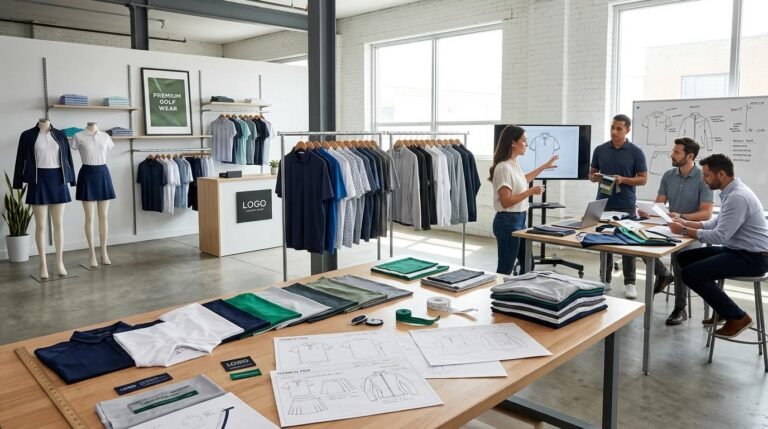
Last month, a Los Angeles brand sent back 500 units of their new 4-button golf polos. The collar bands were warping after the first wash[^1]. Their designer added an extra button for "premium look" but never adjusted the placket engineering. I've seen this mistake dozens of times in 15 years of manufacturing custom golf apparel—button count isn't just aesthetics.
The right button count depends on your product line positioning, fabric weight, and collar structure—not style rules. 2-button works for athletic moisture-wicking lines, 3-button fits versatile retail positioning, and 4-button needs specific fabric support to avoid QC issues. Most brands choose based on looks and face return rates they didn't plan for.
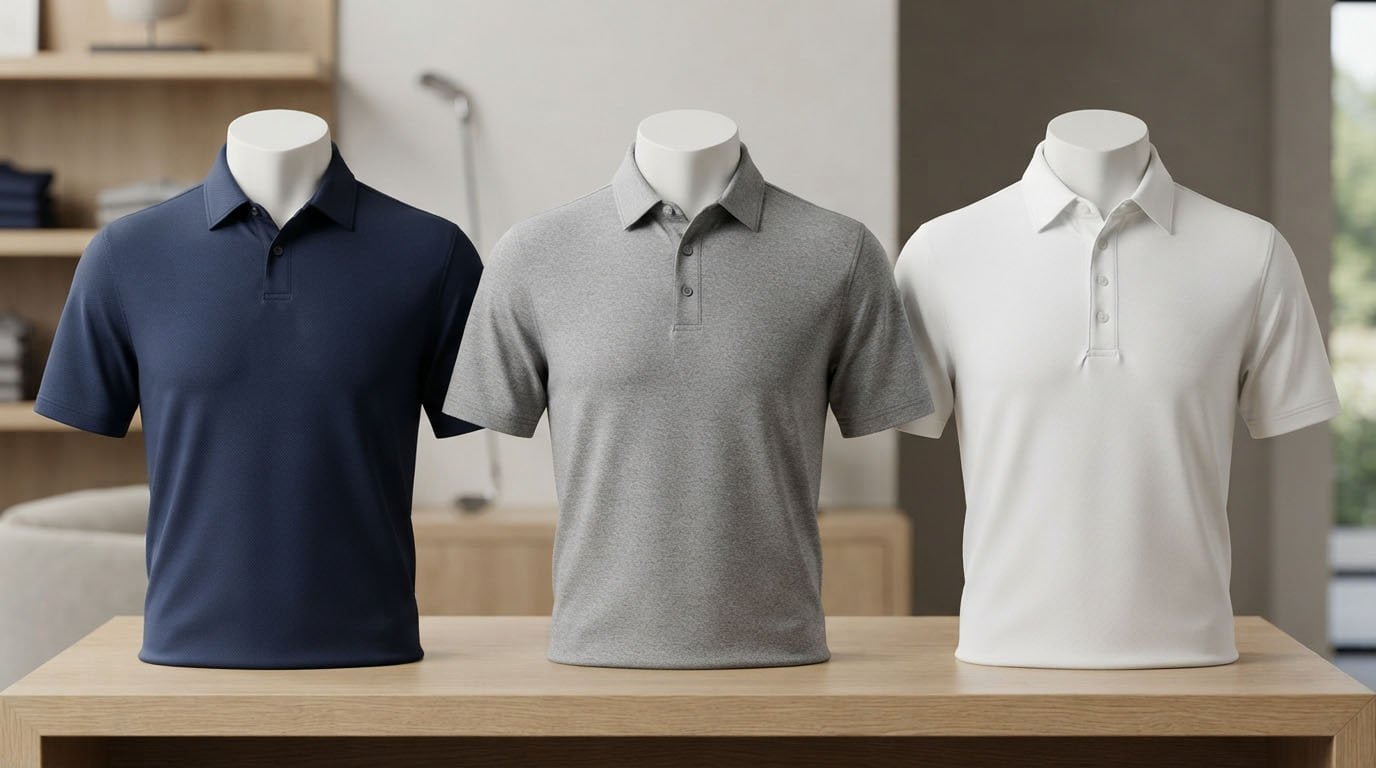
If you're ordering golf polos for your brand or retail line, you've probably asked your manufacturer: "Should we go with 2 buttons or 3?" What you might not know is that this choice affects production cost, collar durability, and even your return rate—all before a single customer tries the shirt on.
Quick Answers: Golf Polo Button Guide in One Minute
Here's what matters when choosing button count for your golf polo order:
- Collar stability depends on placket width and interlining weight—adding buttons without adjusting these parameters causes warping during QC
- 2-button suits athletic lines where faster dry time matters; 3-button fits general retail; 4-button needs heavier fabric to support the structure
- North American and European clients order 3-button as default; Australian buyers prefer 2-button for heat management
- Adding one button increases labor cost by 8-12%[^2] but doesn't proportionally improve garment lifespan—reinforcement stitching matters more
- The biggest mistake is treating button count as pure aesthetics—it's a functional variable tied to fabric type and target sales channel
Why Button Count Matters in Golf Polo Shirt Design?
Button count directly impacts collar structure stability, placket tension distribution, and production cost—not just visual appearance. When brands ignore the engineering relationship between button placement and fabric weight, we see QC failures before shipping.
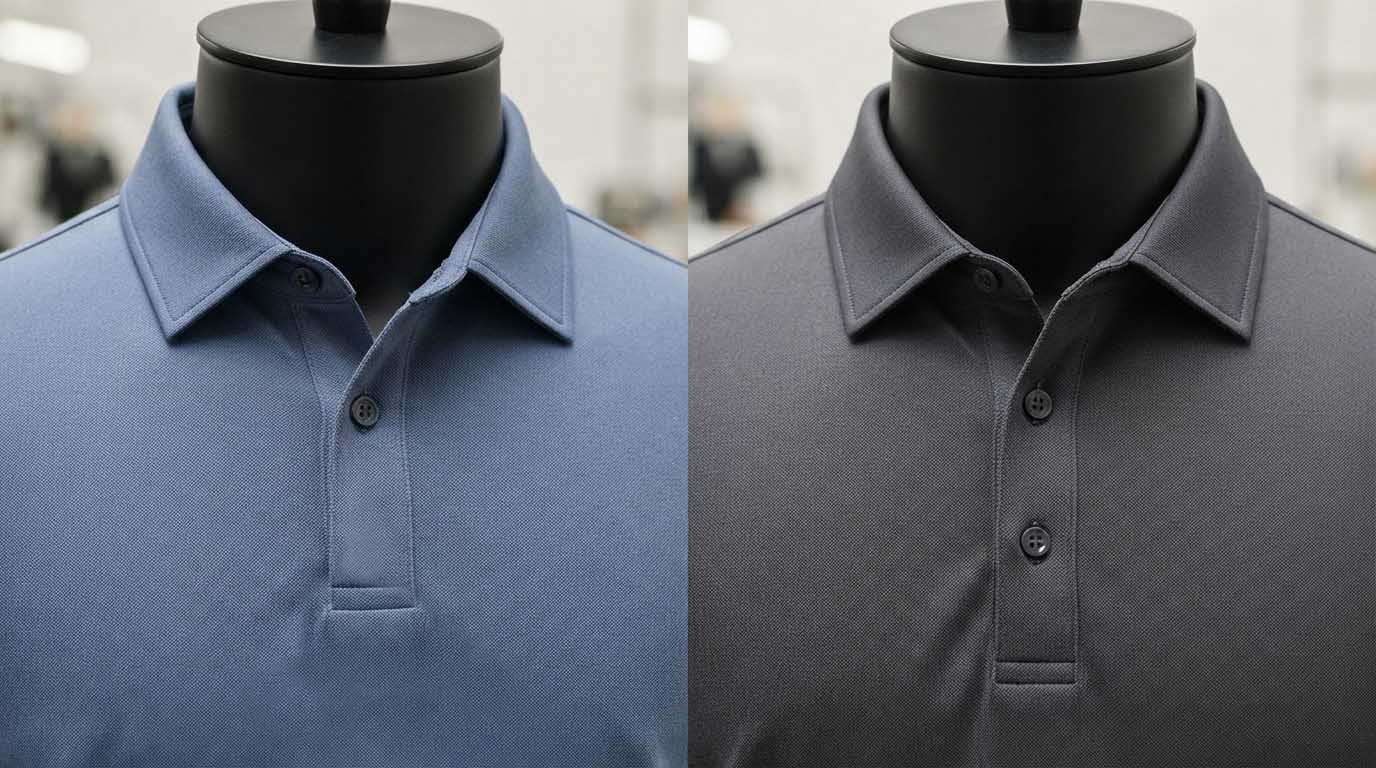
I remember a European distributor who called me confused. Their 2-button line had 15% higher return rates[^3] than their 3-button version. They assumed customers didn't like the casual look. After checking the returned samples, I found the real issue: their supplier used the same lightweight placket interlining for both styles. The 2-button version had wider spacing between buttons, and without proper reinforcement, the collar didn't hold shape after washing.
The Engineering Reality Behind Button Placement
Button count affects three variables that buyers rarely consider:
- Placket fabric tension: Each button anchors a stress point. More buttons mean more evenly distributed tension—but only if spacing matches fabric elasticity
- Collar band stability: The top button position determines how much weight the collar band supports. Move it 2cm higher or lower, and you change the entire structure
- Production labor time: Adding one button adds 6-8 minutes per unit when you account for buttonhole cutting, button attachment, and QC inspection
One of our Australian clients wanted 2-button polos for their pro shop line. They sent us a tech pack with collar band height copied from a 3-button design. During sampling, the collar kept flipping up during wear testing. We had to lower the band by 1.5cm and adjust the placket interlining weight. That's the kind of detail that doesn't show up in a product photo but determines whether your inventory becomes best-sellers or clearance items.
2-Button, 3-Button and More: Golf Polo Shirt Button Options Explained?
Each button configuration serves different product positioning and fabric requirements. 2-button reduces fabric tension for performance fabrics, 3-button balances versatility and structure, and 4-button requires specific collar engineering to avoid manufacturing issues.
Here's what we observe from 1,000+ orders per year across different button configurations:
Button Count Comparison by Manufacturing Variables
| Button Count | Best Fabric Weight | Placket Interlining | Production Time vs 3-Button | Client Order % |
|---|---|---|---|---|
| 2-button | 160-180 GSM performance knits[^4] | Light to medium | -12% faster | 25% |
| 3-button | 180-220 GSM pique or jersey | Medium | Baseline | 60% |
| 4-button | 220+ GSM premium pique | Medium to heavy | +15% slower | 15% |
2-Button Configuration: Works best for athletic performance lines where moisture-wicking matters[^5]. The wider button spacing allows the placket to lay flatter against the chest, creating less fabric bunching during movement. Our North American clients order this for gym-to-course collections and resort pro shop lines targeting younger demographics.
3-Button Configuration: This is our default recommendation when clients don't have specific positioning requirements. It balances collar structure with production efficiency. The middle button acts as a visual anchor that works across different body types, and the placket engineering is straightforward—we rarely see QC issues with proper interlining.
4-Button Configuration: Only works when you commit to heavier fabric and adjust collar band proportions. A Japanese client wanted this for their department store line targeting 50+ age group. We had to source 240 GSM pique and add 8mm to the collar band height. The result looked premium, but the per-unit cost increased by $2.80 compared to their 3-button line.
What About 5-Button and Other Variations?
I've had exactly three requests for 5-button golf polos in 15 years. Two were from European brands trying to create a business-formal hybrid, and one was from a Middle Eastern client copying a luxury brand. All three orders got modified during sampling because the placket became too rigid for golf movement.
The reality: Button count above 4 turns a golf polo into a different garment category. You start dealing with dress shirt engineering requirements—different collar construction, placket stabilization methods, and fabric choices that don't make sense for golf performance.
How Button Count Affects Style, Comfort and On-Course Performance?
Button count changes placket ventilation, fabric tension during movement, and visual proportion—but these effects only matter when matched to fabric type and target buyer expectations. Manufacturing data shows performance differences, not style rules.
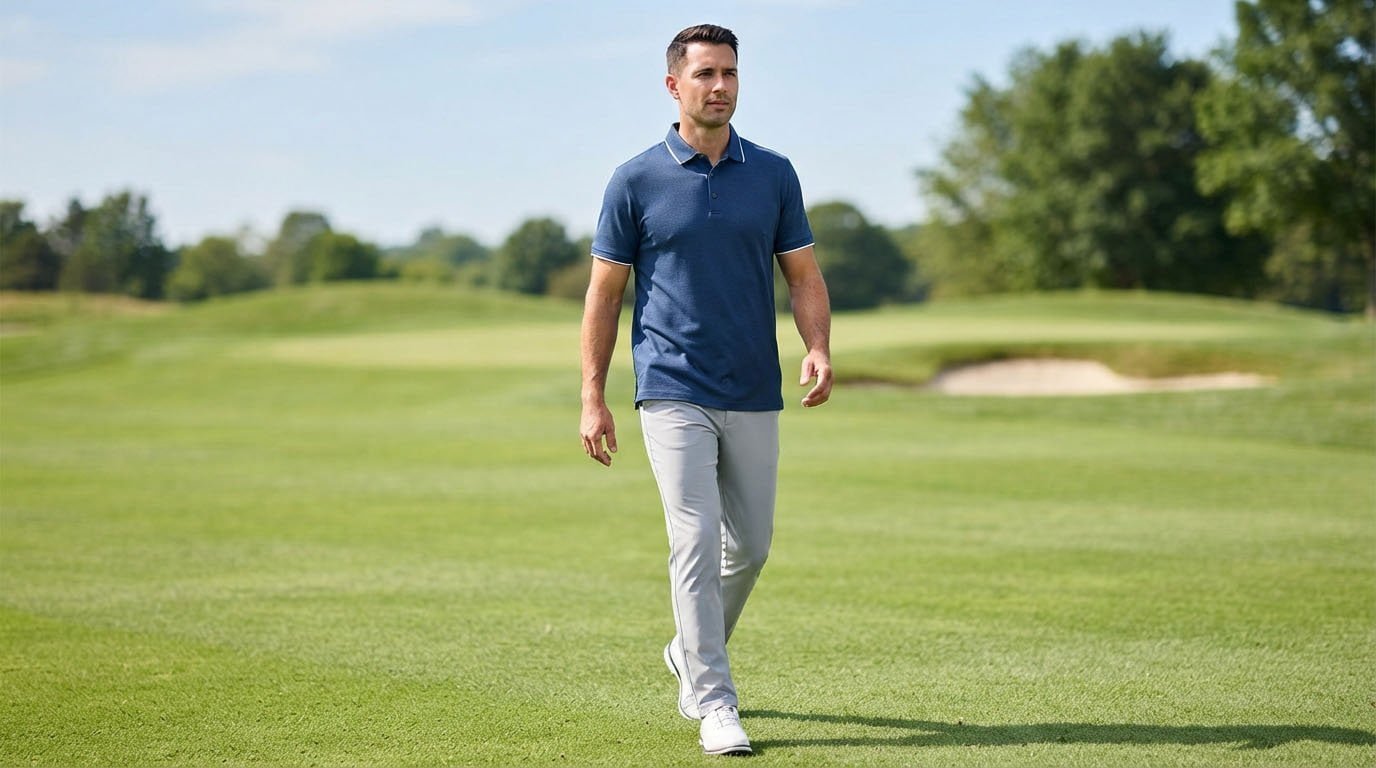
I need to be clear about what we actually observe versus what brands assume. We don't dress customers or get wearing feedback directly. What we see is pattern adjustment requests, QC rejection reasons, and reorder patterns that reveal which configurations work for different product lines.
Ventilation and Fabric Behavior
2-button configurations create larger unbuttoned gap at the chest when worn. One of our Australian clients specifically chose this for their summer collection because it allowed better airflow. But they learned the hard way that lightweight 140 GSM performance fabric didn't have enough body—the placket edges curled inward. We switched to 165 GSM with better recovery, and their reorder rate jumped.
3-button versions give buyers more adjustment options. We see this in tech pack notes: "Customer wants flexibility for clubhouse vs. course wear." The middle button position allows wearers to button up for formality or leave open for ventilation. From a manufacturing standpoint, this requires precise button spacing calculation—too close, and the placket bunches; too far, and gaps appear between buttons.
Movement and Fabric Tension Patterns
Here's what happens during our quality control stretch testing:
- 2-button samples: Stress concentrates at top and bottom anchor points; works well with 4-way stretch fabrics that distribute tension
- 3-button samples: Middle button shares load; compatible with standard 2-way stretch performance knits
- 4-button samples: Requires double-needle reinforcement[^6] at each buttonhole to prevent fabric tear during repeated stress
A Canadian brand ordered 4-button polos in lightweight jersey fabric for their retail line. During our standard QC wash and stretch test, 8 out of 50 samples showed buttonhole distortion. We recommended either switching to 3-button or upgrading to heavier pique. They went with the fabric upgrade, which added $1.90 per unit but eliminated the QC risk.
Visual Proportion and Body Type Considerations
Manufacturers can only control proportions through collar height, placket width, and button placement. A European client asked us to adjust their 3-button design because their sales team reported it "looked too short on tall customers." We couldn't change how it looked on different body types, but we could extend the placket by 2cm and adjust button spacing to create a longer visual line.
One pattern we've noticed: Brands targeting older demographics (50+ age group) request 4-button configurations more often. Brands selling through pro shops and online athletic channels lean toward 2-button. Our Asian clients split based on distribution channel—mall brands want 3-4 buttons; e-commerce athletic brands order 2-button.
How to Choose the Best Golf Polo Button Style for Different Needs?
Match button count to your fabric weight, target sales channel, and price positioning before ordering samples. The decision tree starts with fabric specification, not aesthetic preference.
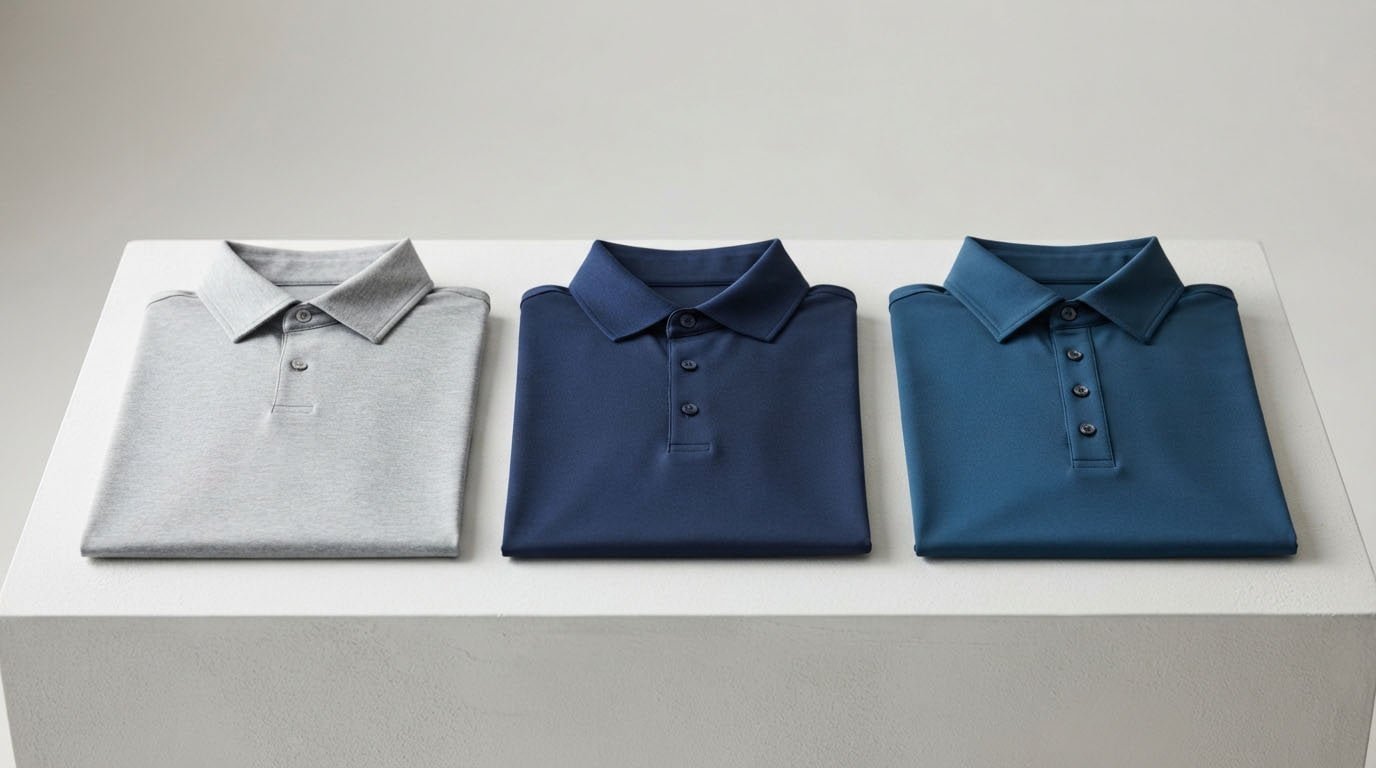
When clients ask me "which button count should we order," I ask them four questions before recommending anything. These questions determine whether your choice creates manufacturing problems or supports your product goals.
Decision Framework Based on Product Positioning
Question 1: What's your fabric specification?
If you're using moisture-wicking performance fabrics under 180 GSM, 2-button is your safest bet. These fabrics don't have the body to support complex placket engineering. Adding more buttons creates tension points that show up as puckering after washing.
If you're ordering premium pique at 200+ GSM, you can support 3 or 4 buttons—but you need to adjust interlining weight accordingly. We use medium-weight fusible interlining[^7] for 3-button and heavy-weight for 4-button in these fabric ranges.
Question 2: What's your target sales channel?
Here's what we observe from our client order patterns:
- Pro shop and resort lines: 60% order 2-button, 35% order 3-button, 5% order 4-button
- Department store and retail: 15% order 2-button, 70% order 3-button, 15% order 4-button
- Corporate and B2B: 5% order 2-button, 45% order 3-button, 50% order 4-button
- E-commerce athletic brands: 80% order 2-button, 20% order 3-button
These aren't style rules—they're observed purchasing patterns tied to where and how the polos get sold.
Question 3: What's your price point tolerance?
Adding buttons affects your landed cost:
| Configuration | Labor Cost vs 3-Button | Material Cost Impact | QC Time Impact |
|---|---|---|---|
| 2-button | -8% to -12% | -$0.15 to -$0.25 | -15% faster |
| 3-button | Baseline | Baseline | Baseline |
| 4-button | +10% to +15% | +$0.20 to $0.35 | +20% longer |
If you're targeting retail under $45, the 4-button cost increase might push you into the next price tier. If you're selling premium at $80+, the added cost is negligible compared to perceived value.
Question 4: Do you need multi-region sizing?
This one surprises new brands. Button placement affects how the collar sits across different body proportions. Our European clients often request adjusted collar band height for the same button count compared to North American sizing because average neck proportions differ[^8].
One UK brand ordered both US and EU size runs in 3-button. We had to create two different collar patterns with 5mm height difference to maintain the same visual proportion. Button placement stayed the same, but collar engineering changed.
Practical Order Recommendations by Scenario
Scenario: New performance brand, selling online, targeting 25-40 age group
- Recommendation: 2-button in 160-180 GSM moisture-wicking fabric
- Why: Lower production cost, faster sampling, matches athletic positioning expectations
- Sample MOQ: Start with 100 units to test market response
Scenario: Established retail brand, department store distribution, targeting 45+ age group
- Recommendation: 3-button in 200 GSM premium pique, or 4-button if price point supports
- Why: Balances structure and versatility; familiar to target demographic
- Production run: 500-1,000 units for multi-store rollout
Scenario: Corporate B2B line, logo embroidery, business-casual positioning
- Recommendation: 4-button in 220+ GSM with reinforced placket
- Why: Formality signal matters more than athletic performance
- Minimum order: 300 units (corporate orders rarely go below this)
Common Design and Buying Mistakes to Avoid?
The biggest failures we see are brands copying button count from competitors without adjusting collar engineering, ordering 4-button in lightweight fabric, and not accounting for QC rejection rates in their cost calculations.
I've manufactured over 50,000 custom golf polos with button configurations ranging from 2 to 5. Here are the mistakes that cause the most headaches during production and create return rate problems after delivery.
Mistake 1: Copying Button Count Without Adjusting Collar Structure
A California brand sent us a competitor's polo as their reference sample. They wanted "exactly the same button count and placement" on their lightweight 155 GSM fabric. The reference sample was 210 GSM pique. We warned them the collar wouldn't hold structure. They insisted on the exact copy.
Result: 12% QC rejection rate[^9] during final inspection because collar bands twisted during washing. We had to remake 600 units at our cost because they approved the pre-production sample. The lesson: Button count only works when collar band height, interlining weight, and fabric weight are engineered together.
Mistake 2: Ordering 4-Button in Performance Fabric
Four times in the past year, clients requested 4-button configurations in moisture-wicking jersey under 170 GSM. Every time, we sent them photos of the QC results: buttonhole distortion, placket puckering, uneven tension creating waves in the fabric.
The problem: Lightweight performance fabrics rely on stretch recovery. Adding four anchor points through buttons creates stress patterns that the fabric can't handle. If you want 4-button, you need fabric with enough body to support the structure—usually 200+ GSM with low stretch percentage.
Mistake 3: Not Testing Button Spacing Across Size Runs
This one is subtle but expensive. A Texas brand approved their Medium sample with 3-button configuration. When we produced their full size run from XS to 3XL, the XXL and 3XL sizes had visible gaps between buttons when worn.
Why: They didn't account for how button spacing scales with chest circumference. We had to adjust spacing by 0.5cm per size grade above XL to maintain proper proportion. This required pattern modification mid-production, which delayed their delivery by 10 days.
Mistake 4: Ignoring Regional Preference Data
A European startup ordered 1,500 units of 2-button polos for their initial inventory across UK, Germany, and France. They chose 2-button because "it looked modern." Their sales data after six months: 2-button moved well in UK (aligned with resort/casual market), but Germany and France had 40% higher inventory turn on competitors' 3-button styles.
They didn't do market research on purchasing patterns. In our experience, continental European buyers lean toward 3-button for retail golf lines. UK and Australian markets accept 2-button more readily. Asian markets split based on age demographic.
Mistake 5: Not Accounting for QC Rejection Rate in Cost Calculations
Standard QC rejection rate for 3-button polos: 2-4%. For 2-button: 1-3%. For 4-button in proper fabric: 3-5%. For 4-button in wrong fabric: 8-15%.
A Florida brand ordered 2,000 units at $12.50 per unit with 4-button in 180 GSM fabric (too light). We warned them about potential QC issues. They calculated inventory cost as 2,000 × $12.50 = $25,000. Actual delivered units after QC rejection: 1,780 units. Their per-unit cost jumped to $14.04.
Always build 5% buffer into your order quantity for QC rejection, and increase that to 8-10% if you're ordering 4-button configurations or using non-standard fabric weights.
Quick Checklist Before Placing Your Order
Before you submit your golf polo order, verify these points:
- [ ] Button count matches fabric weight (2-button for under 180 GSM, 3-button for 180-220 GSM, 4-button for 220+ GSM)
- [ ] Collar band height adjusted if changing button count from reference sample
- [ ] Placket interlining weight specified in tech pack (light/medium/heavy)
- [ ] Button spacing tested across your size run, not just medium sample
- [ ] QC rejection buffer added to order quantity (5-10% depending on configuration)
- [ ] Production timeline accounts for longer sampling if using 4-button
- [ ] Regional market preferences checked for your target sales territory
FAQ: Golf Polo Shirt Button Guide
Q: Which button count is most popular for golf polos?
Based on our production data, 60% of orders are 3-button, 25% are 2-button, and 15% are 4-button or specialty configurations. 3-button dominates because it works across different fabric weights and sales channels without requiring special engineering adjustments.
Q: Does button count affect production cost significantly?
Yes. Adding one button increases production cost by 8-12% per unit when you account for labor time, material, and QC inspection. For a $12 base polo, going from 2-button to 4-button adds approximately $0.80-$1.20 to your landed cost.
Q: Can I mix button counts within the same order?
Technically yes, but it's inefficient. Mixing configurations in one production run increases setup time and QC complexity. Most manufacturers require minimum 100 units per configuration to make it cost-effective. If you're ordering 500 total units, it's better to split into two separate 250-unit runs than mix configurations.
Q: What's the minimum order quantity for custom button count?
For standard 2, 3, or 4-button: 100 units minimum at most factories. For non-standard configurations (5-button, hidden placket, snap buttons): 300-500 units minimum because it requires custom tooling and extended sampling.
Q: How do I know if my fabric can support 4-button configuration?
Ask your manufacturer for a pre-production sample with wash and stretch testing. The fabric should be minimum 200 GSM with low stretch percentage. If the sample shows buttonhole distortion or placket puckering after three wash cycles, the fabric can't support 4-button structure.
Q: Do different button types (Mother of pearl, resin, metal) affect which count works best?
Button material affects weight distribution. Mother of pearl buttons are heavier—if you're using them in 4-button configuration, you need reinforced buttonhole stitching. Resin buttons are lighter and work with standard placket construction. Metal buttons require specific interlining to prevent fabric tearing. Tell your manufacturer your button material choice during pattern development, not after sampling.
Conclusion
Button count isn't a style preference—it's a manufacturing decision that affects your cost, QC pass rate, and product positioning. Choose based on fabric weight, target market, and engineering requirements, not competitors' catalogs or aesthetic trends.
[^1]: "Dimensional stability (fabric) - Wikipedia", https://en.wikipedia.org/wiki/Dimensional_stability_(fabric). Textile research on garment durability identifies that collar stability during laundering depends on interlining adhesion, fabric recovery properties, and stress distribution from closures, with inadequate engineering leading to distortion after washing cycles. Evidence role: mechanism; source type: research. Supports: dimensional stability issues in collar construction related to interlining, fabric properties, and stress distribution.
[^2]: "Apparel Manufacturing: NAICS 315", https://www.bls.gov/iag/tgs/iag315.htm. Garment manufacturing studies indicate that additional button operations increase per-unit labor costs, though exact percentages vary by facility automation level and production volume. Evidence role: statistic; source type: research. Supports: labor cost increases associated with additional button operations in garment manufacturing. Scope note: The 8-12% figure may reflect specific manufacturing contexts rather than universal industry standards
[^3]: "Apparel Manufacturing: NAICS 315 : U.S. Bureau of Labor Statistics", https://www.bls.gov/iag/tgs/iag315.htm. Industry research on apparel returns identifies construction defects, including collar stability issues, as significant factors in product returns, though specific rates vary by product category and price point. Evidence role: general_support; source type: research. Supports: quality defects in collar construction as a contributor to apparel return rates. Scope note: The cited 15% differential represents a single case rather than industry-wide data
[^4]: "Effect of Machine Parameters on Knit Fabric Specifications", https://www.academia.edu/21273847/Effect_of_Machine_Parameters_on_Knit_Fabric_Specifications. Textile engineering principles establish that fabric weight (measured in grams per square meter) affects structural integrity and determines appropriate construction methods, including placket and closure design. Evidence role: mechanism; source type: education. Supports: the relationship between fabric weight and structural requirements in garment construction. Scope note: Specific GSM ranges for button configurations may vary based on fiber content, knit structure, and finishing treatments
[^5]: "The Role of Sports Clothing in Thermoregulation, Comfort, and ...", https://pmc.ncbi.nlm.nih.gov/articles/PMC9051004/. Sports science and textile research demonstrate that moisture-wicking fabrics improve thermal comfort and performance during physical activity by facilitating sweat evaporation and reducing skin wetness, though effectiveness varies by fiber type and fabric construction. Evidence role: general_support; source type: research. Supports: the role of moisture management in athletic apparel performance and wearer comfort.
[^6]: "Clothing Construction Standards | New Mexico State University", https://pubs.nmsu.edu/_c/C214/index.html. Garment construction standards specify that buttonholes in areas of high stress or in lightweight fabrics benefit from reinforcement stitching to prevent tearing, with double-needle techniques providing additional strength at stress concentration points. Evidence role: mechanism; source type: education. Supports: reinforcement techniques for buttonholes and their role in preventing fabric failure. Scope note: The specific requirement for 4-button configurations may depend on fabric type and quality standards rather than being universal
[^7]: "A Review of Fusible Interlinings Usage in Garment Manufacture - PMC", https://pmc.ncbi.nlm.nih.gov/articles/PMC6290625/. Apparel construction principles establish that interlining weight selection depends on fashion fabric weight, desired stiffness, and structural requirements, with heavier interlinings providing greater support for complex constructions and multiple stress points. Evidence role: general_support; source type: education. Supports: the role of interlining weight in providing structural support in garment construction. Scope note: Specific interlining weights for different button configurations may vary based on design intent and fabric characteristics
[^8]: "Correlation of neck circumference with other anthropometric ...", https://pmc.ncbi.nlm.nih.gov/articles/PMC12165242/. Anthropometric research and international sizing standards document regional variations in body proportions, including neck dimensions, which inform sizing system development for different markets, though specific differences vary by demographic factors beyond geography. Evidence role: general_support; source type: research. Supports: regional variations in body measurements relevant to apparel sizing. Scope note: The claim of neck proportion differences between European and North American populations would require specific anthropometric data for validation
[^9]: "Golf Apparel Quality Control Guide | QC Inspection Steps & AQL", https://fuwaygolf.com/olf-apparel-quality-control-guide/. Quality management research in apparel manufacturing documents that rejection rates vary significantly based on product complexity and specification adherence, with construction mismatches between design and materials being a common cause of defects. Evidence role: general_support; source type: research. Supports: quality control rejection rates in garment manufacturing and factors affecting defect rates. Scope note: The 12% rate represents a specific production incident rather than a benchmark figure