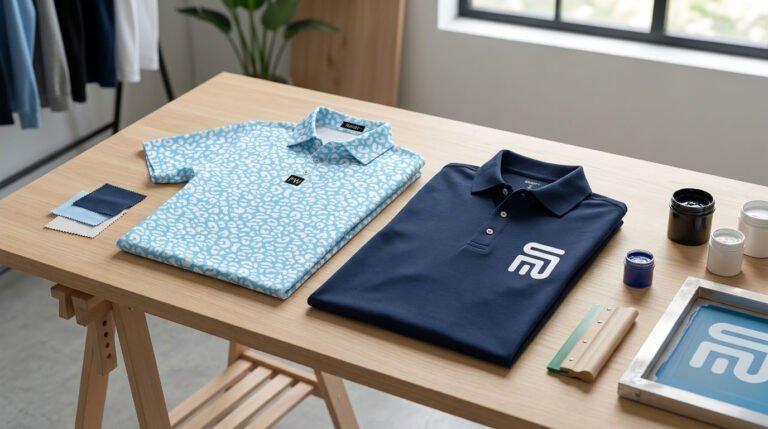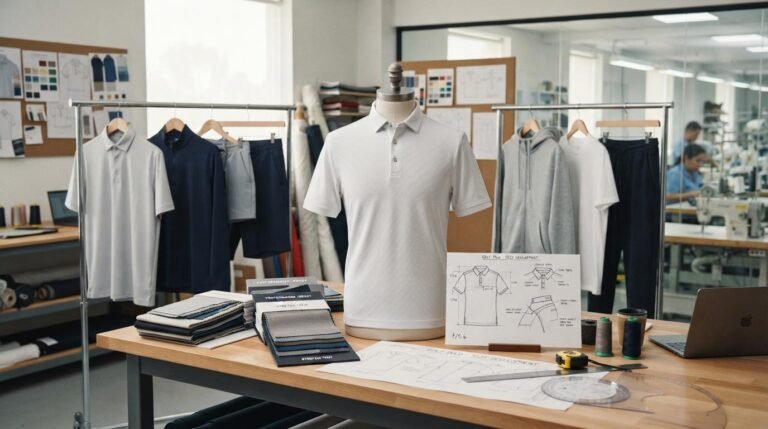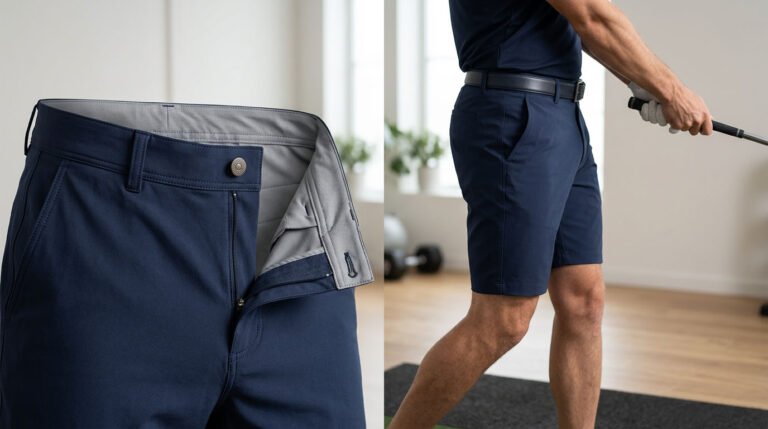
The best logo method for golf apparel depends on how your artwork, fabric, garment construction, placement and production requirements work together.
In general:
- Embroidery suits simple, premium logos on stable fabrics.
- Heat transfer works well for detailed graphics and lightweight or stretch performance fabrics.
- Screen printing is effective for larger graphics and repeated production.
- Sublimation is ideal for full-color designs on compatible polyester fabrics.
There is no universal "best" decoration method. The right choice is the one that reproduces your artwork reliably without compromising the garment's fit, stretch, appearance or performance.
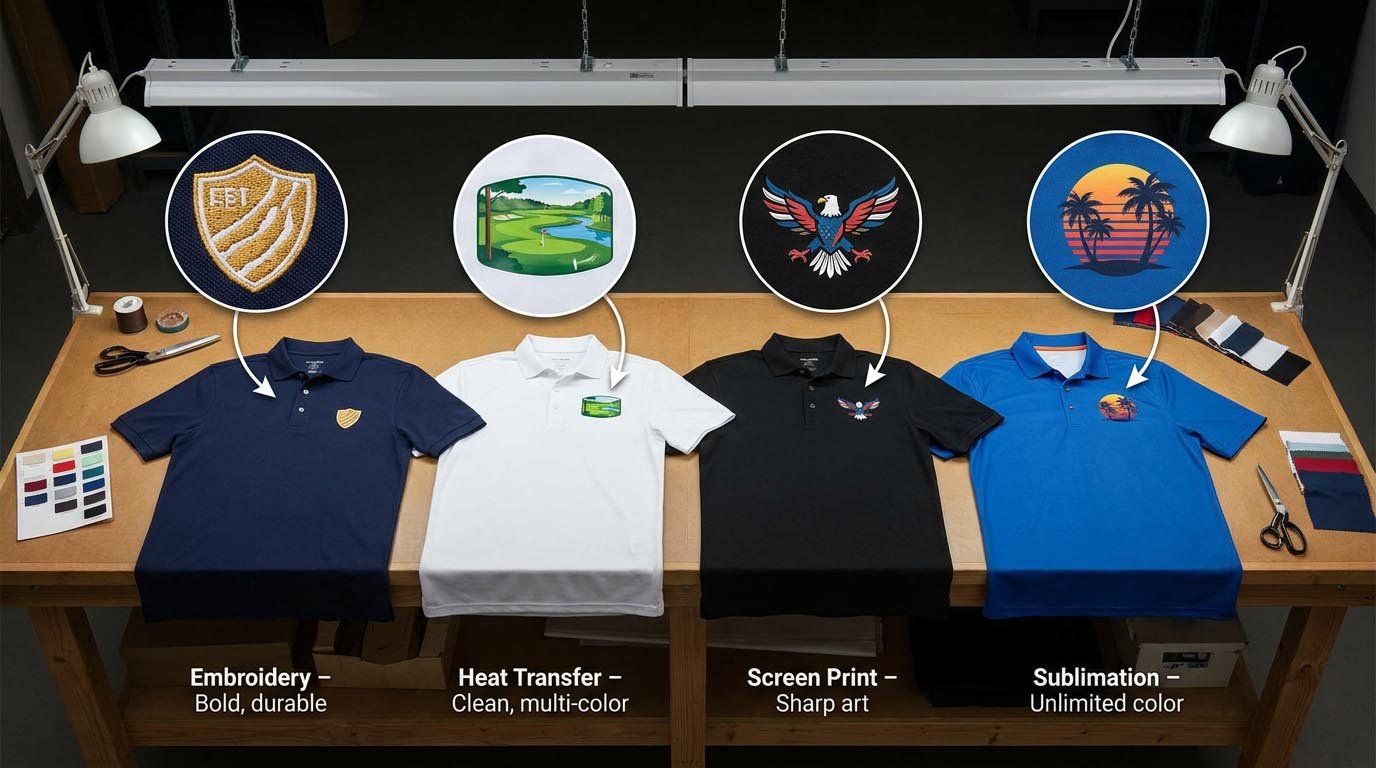
Quick Comparison: Which Golf Apparel Logo Method Should You Choose?
| Method | Best For | Detail Level | Stretch Compatibility | Best Fabric Fit | Main Limitation |
|---|---|---|---|---|---|
| Embroidery | Premium small logos | Medium | Low–Medium | Piqué, interlock, fleece, twill | Adds weight and stiffness |
| Heat Transfer | Detailed logos, performance wear | High | Medium–High | Jersey, mesh, stretch knits | Adhesion must be tested |
| Screen Printing | Larger graphics, repeat production | Medium–High | Medium | Stable knit fabrics | Setup increases with colors |
| Sublimation | Full-color and all-over graphics | Very High | Excellent | Compatible polyester | Fabric dependent |
A simple rule is:
Stable fabric + premium simple logo → Embroidery
Lightweight or stretch fabric + detailed logo → Heat Transfer
Large repeated graphic → Screen Printing
Full-color polyester design → Sublimation
Final approval should still be made on the actual production fabric.
How Does Each Golf Apparel Logo Method Work?
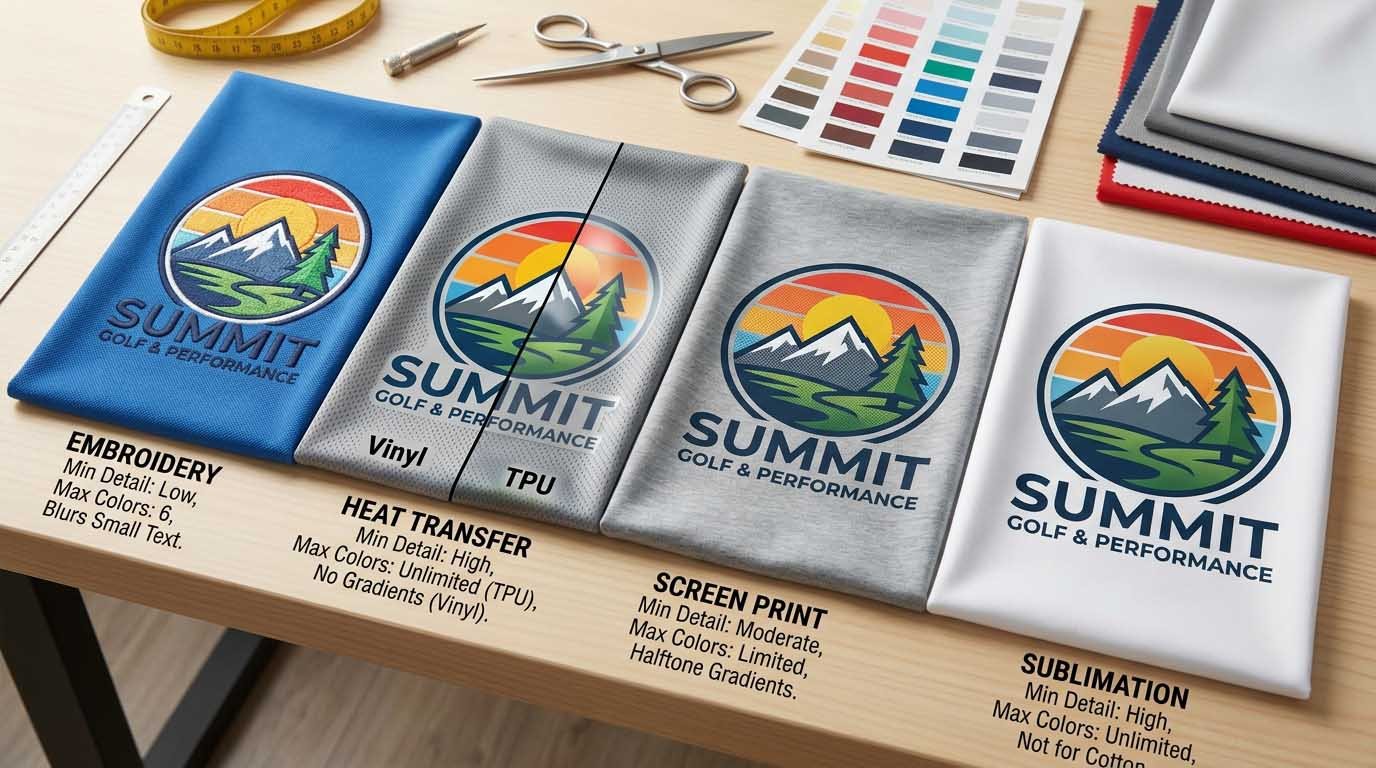
Each method applies artwork differently, which affects detail, stretch, weight, breathability and production feasibility.
Embroidery
Embroidery converts artwork into a stitch file and uses thread to build the logo directly into the garment.
It works best for:
- clean shapes,
- larger readable text,
- limited colors,
- chest or sleeve logos,
- structured golf polos,
- caps,
- fleece and mid-layers.
Very small text, thin lines, gradients and photographic details are difficult to reproduce accurately.
For more information, see FUWAY's Golf Polo Embroidery service.
Common Embroidery Failure
A logo may include a clear main icon but a very small tagline underneath it.
The main logo may embroider well while the small lettering becomes unreadable.
In this case, the better solution may be to enlarge the text, simplify the artwork, embroider only the main mark, or use heat transfer for the detailed portion.
Heat Transfer
Heat transfer applies prepared artwork to the fabric using controlled heat and pressure.
It is particularly useful for:
- lightweight golf polos,
- stretch jerseys,
- detailed logos,
- multi-color graphics,
- sponsor marks,
- and areas where embroidery could cause distortion.
Common options include:
- Vinyl: simple solid-color graphics.
- Silicone: soft, flexible logos on stretch fabrics.
- TPU-type transfers: thin, detailed and multi-color artwork.
If you have already narrowed the choice to these two methods, see our Embroidery vs Heat Transfer for Custom Golf Polos guide for a deeper comparison of digitizing, transfer testing, artwork detail and fabric compatibility.
Common Heat Transfer Failure
The most common problem is not the heat-transfer process itself, but choosing the wrong transfer material.
For example, a basic solid-color vinyl system is not suitable for complicated gradients or photographic graphics.
The exact transfer material should therefore be confirmed during sampling.
Screen Printing
Screen printing pushes ink through prepared screens directly onto the fabric.
It is especially suitable for:
- larger graphics,
- back prints,
- bold typography,
- event uniforms,
- and repeated production using the same artwork.
Each additional color may require additional setup, so screen printing often becomes more efficient as production quantity increases.
Learn more about FUWAY's Screen Printing service.
Common Screen Printing Failure
A buyer may choose screen printing for a very small order because the decoration itself appears inexpensive.
However, once screen preparation is included, heat transfer may be more practical for smaller runs.
Screen printing is usually strongest when its setup cost can be spread across repeated production.
Sublimation
Sublimation uses heat to transfer dye into compatible polyester fibers.
The design becomes part of the fabric rather than creating a separate layer on top.
It is ideal for:
- full-color graphics,
- gradients,
- photographic artwork,
- repeating patterns,
- and all-over golf shirt designs.
See FUWAY's Sublimation Printing service.
Main Limitation
Sublimation depends heavily on fiber composition.
It is best suited to compatible polyester-based fabrics and is not a universal option for cotton, nylon or every blend.
For sublimated golf apparel, fabric and graphic development should be considered together.
FUWAY can also assist with Fabric Sourcing when decoration affects material selection.
Which Logo Method Works Best for Different Golf Apparel Fabrics?
Fabric usually matters more than garment category.
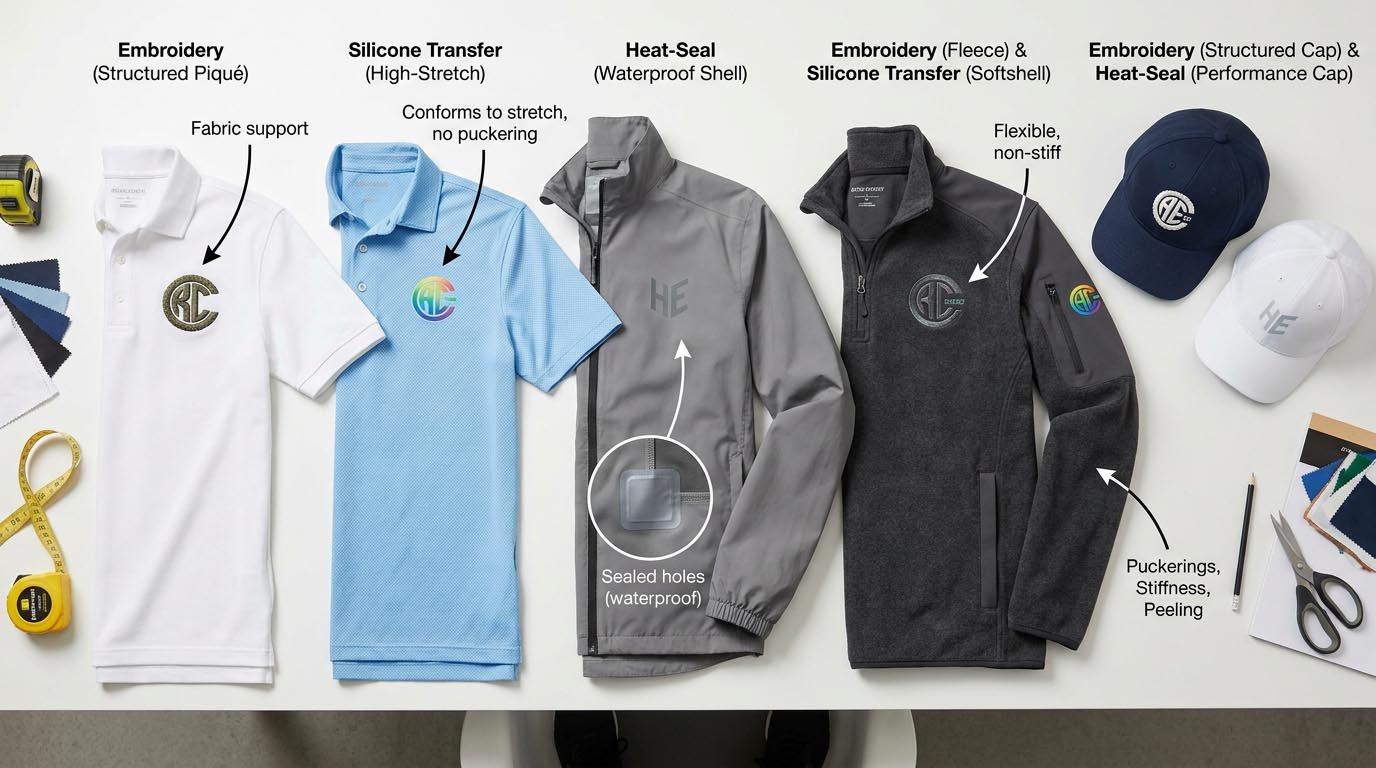
The same logo may perform well on one polo fabric and cause stiffness, puckering or poor adhesion on another.
Structured Piqué and Interlock Polos
Stable piqué and interlock fabrics generally support embroidery well.
Possible options include:
- embroidery,
- heat transfer,
- screen printing.
For classic premium golf branding, embroidery is often the first choice.
Lightweight Jersey and Mesh
Lightweight fabrics require more caution.
Dense embroidery may create:
- puckering,
- distortion,
- stiffness,
- or poor drape.
Flexible heat transfer is often better for thin, breathable or highly mobile performance fabrics.
Small embroidery may still work, but it should be confirmed during sampling.
High-Stretch Performance Knits
Stretch changes the decoration decision.
A rigid logo can restrict movement even if it looks correct while the garment is flat.
Flexible silicone or TPU-type transfers are often better on high-stretch areas.
If screen printing is used, the ink system should also be compatible with the fabric's stretch.
Windbreakers and Water-Resistant Jackets
Outerwear may use coatings or laminated fabrics that react differently to heat, pressure and needle penetration.
Heat-seal or transfer logos can be useful where reducing needle holes is important.
However, coated fabrics also require temperature and adhesion testing before bulk production.
Fleece and Mid-Layers
Fleece and thicker mid-layer fabrics generally support embroidery well.
Heat transfer can also work, although high-pile surfaces may reduce bonding area.
The actual material should be tested before approval.
Golf Caps
Embroidery remains one of the most common choices for structured golf caps.
For lightweight or stretch caps, a smaller flat embroidery design or lightweight transfer may be more suitable.
How Do Logo Methods Affect Stretch, Breathability and Feel?
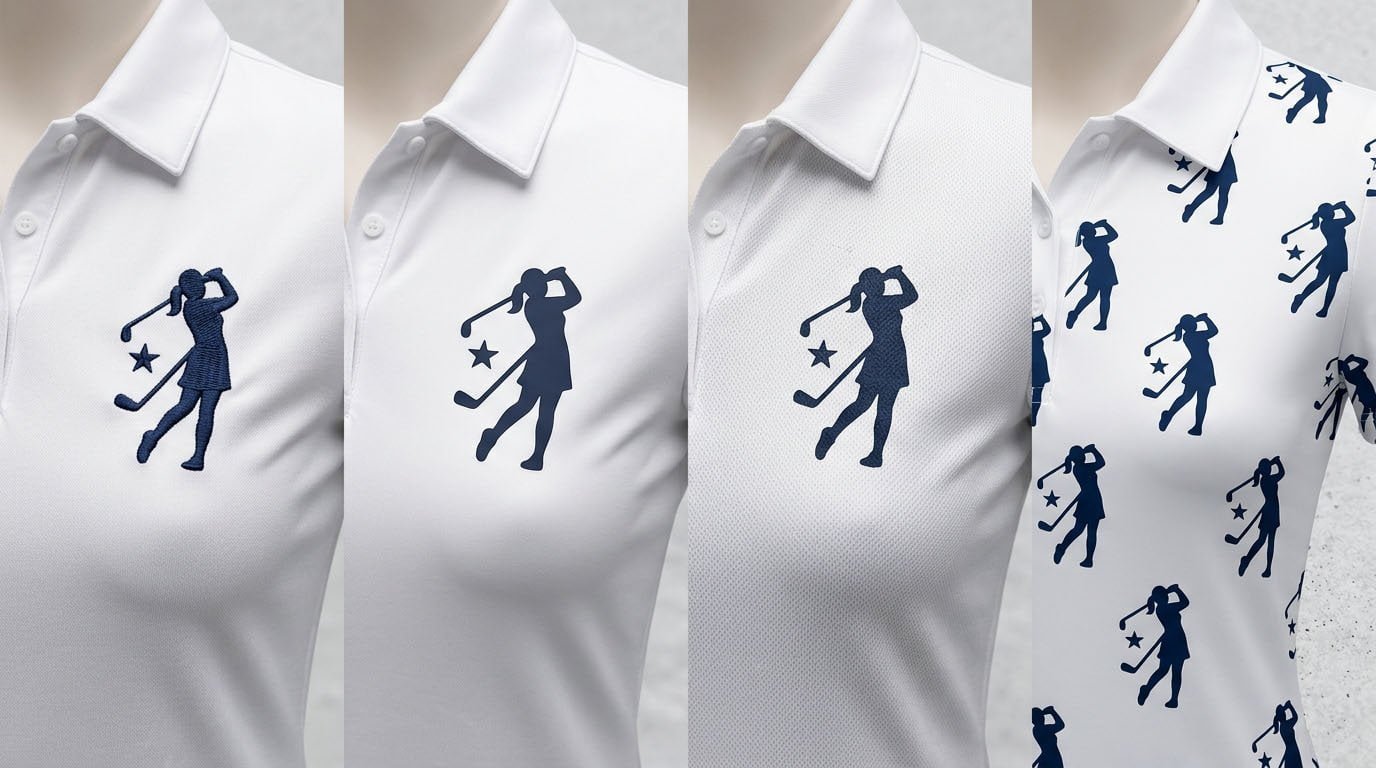
Different decoration methods change the garment in different ways.
| Method | Stretch Impact | Breathability Impact | Feel |
|---|---|---|---|
| Embroidery | Can restrict stretch locally | Dense stitching may reduce airflow | Raised, structured |
| Heat Transfer | Depends on transfer material | Solid transfers cover airflow zones | Flat to slightly raised |
| Screen Printing | Moderate on stretch fabrics | Ink covers part of fabric surface | Flat, graphic |
| Sublimation | Minimal | Minimal | No added surface layer |
Embroidery
Embroidery adds thread and backing, which can create local stiffness and reduce stretch around the logo.
This is usually acceptable on stable chest areas but can be noticeable on mesh or high-mobility zones.
Heat Transfer
Flexible systems such as silicone and thin TPU transfers can move more naturally with stretch fabrics.
However, large solid transfers may reduce airflow in the decorated area.
Screen Printing
Screen printing creates less bulk than embroidery, but the ink still changes the fabric surface.
On highly elastic fabrics, the ink system must be selected carefully to reduce cracking or distortion.
Sublimation
Sublimation has very little structural effect because no separate layer is added.
This allows the fabric to retain most of its original hand feel, stretch and airflow characteristics.
Which Method Gives the Best Look and Feel?
Embroidery: Premium and Traditional
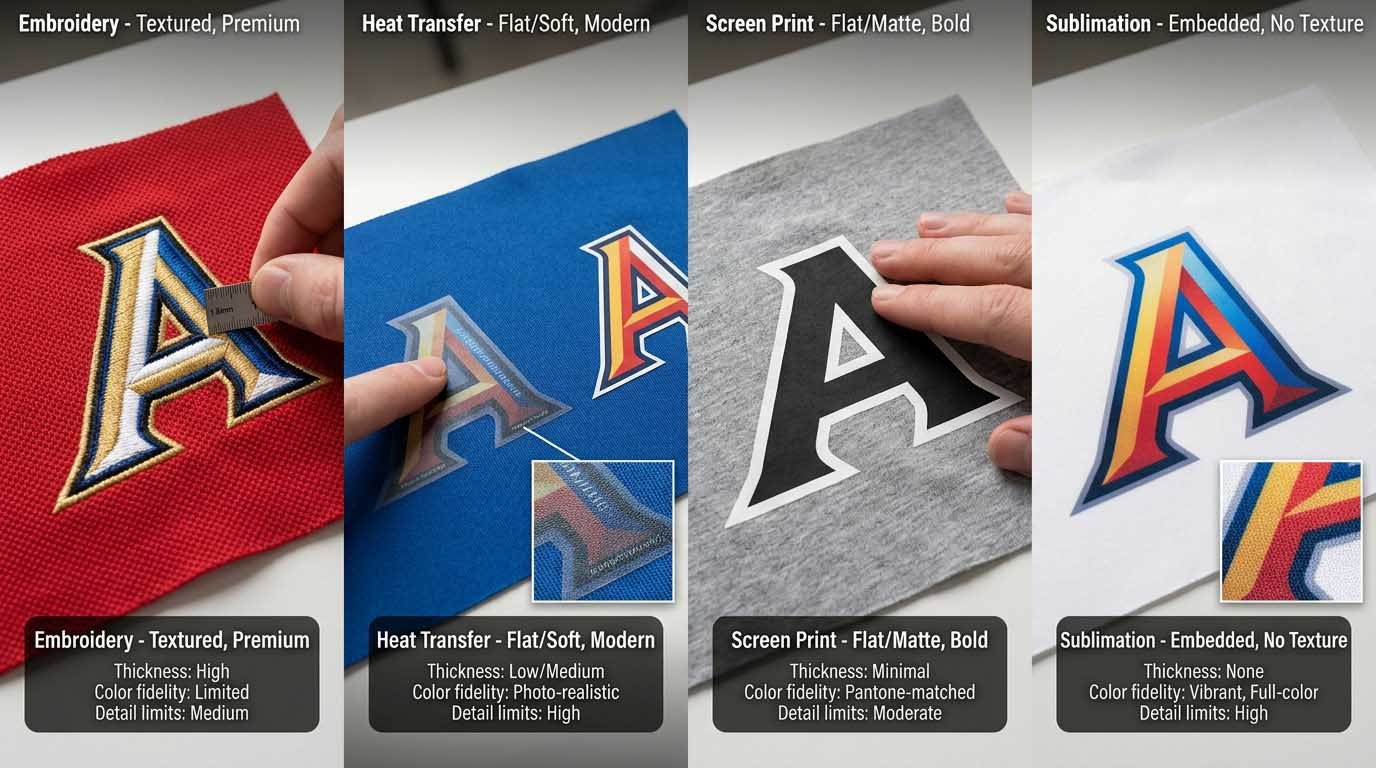
Embroidery creates visible stitched texture and is strongly associated with classic golf polos, corporate uniforms and premium branding.
Its main limitation is fine detail.
Heat Transfer: Clean and Modern
Heat transfer creates a flatter, more technical appearance.
It works especially well for contemporary performance collections, detailed logos and sponsor branding.
Screen Printing: Bold and Graphic
Screen printing suits larger artwork, typography, event graphics and casual golf collections.
Sublimation: Fully Integrated
Sublimated artwork becomes part of the garment itself.
It is ideal when graphics are a major part of the garment design rather than simply a small logo.
How Do Production Volume and Setup Complexity Affect Your Choice?
There is no universal decoration MOQ.
Each method has a different production structure.
| Method | Setup Complexity | Best Commercial Use |
|---|---|---|
| Embroidery | Medium | Premium logos, repeat production |
| Heat Transfer | Low–Medium | Samples, smaller runs, detailed graphics |
| Screen Printing | Medium–High | Larger repeated runs |
| Sublimation | Medium–High | Polyester garments with complex coverage |
Embroidery cost is influenced by stitch count, logo size, colors and placement.
Heat transfer usually has lower setup complexity and is useful when graphics change frequently.
Screen printing becomes more efficient when the same artwork is repeated across higher quantities.
Sublimation should be evaluated as part of the entire garment construction because fabric, artwork and panel layout are closely connected.
For FUWAY projects, overall MOQ is discussed at the garment style and configuration level rather than assigning a universal MOQ to each decoration method.
Does the Logo Method Affect Lead Time?
Yes, but logo decoration is only one part of the garment production timeline.
Other stages may include:
- tech pack review,
- fabric sourcing,
- pattern development,
- sampling,
- cutting,
- sewing,
- decoration,
- quality control,
- packing,
- and shipment preparation.
Instead of using fixed decoration lead times, it is more useful to compare setup complexity.
| Method | Setup Complexity | What Can Add Time |
|---|---|---|
| Embroidery | Medium | Digitizing, stitch complexity, multiple placements |
| Heat Transfer | Low–Medium | Custom materials and color matching |
| Screen Printing | Medium–High | Multiple screens and colors |
| Sublimation | Medium–High | Artwork preparation and panel alignment |
Total lead time depends on the complete garment specification.
What Should You Test Before Bulk Production?
A logo that looks correct on a screen may behave differently once applied to the actual production fabric.
Before bulk approval, check the following.
Artwork Clarity
Confirm:
- small text remains readable,
- fine lines reproduce correctly,
- colors are acceptable,
- and proportions remain accurate.
Fabric Distortion
Check for:
- puckering,
- pulling,
- curling,
- stretching,
- or unwanted stiffness.
This is especially important for embroidery.
Adhesion
For transfers, inspect:
- edges,
- corners,
- bonding consistency,
- stretch behavior,
- and wash performance.
Stretch and Recovery
Stretch the garment as it will move during actual wear.
Look for cracking, lifting or excessive stiffness.
Placement
Logo placement should be measured rather than judged only by eye.
Define:
- logo size,
- placement reference points,
- orientation,
- and acceptable tolerance.
For more detail, see FUWAY's Golf Polo Logo Placement Guide.
Wash Performance
When decoration durability is important, test the approved sample under representative laundering conditions.
The correct question is not simply:
"Is this decoration durable?"
It is:
Does this decoration perform acceptably on this exact production fabric?
You can also review FUWAY's Test Reports for broader material and garment verification.
Can You Mix Logo Methods on the Same Garment?
Yes.
In many projects, combining methods gives a better result than forcing every logo to use the same technique.
For example:
- embroidered chest logo,
- heat-transfer sleeve sponsor mark,
- screen-printed back graphic,
- or sublimated polyester panels.
This approach is useful for:
- tournaments,
- team apparel,
- sponsor programs,
- corporate uniforms,
- and multi-brand collaborations.
Evaluate each placement separately according to:
Artwork + Fabric + Placement + Performance Requirement
Embroidery vs Heat Transfer vs Screen Printing vs Sublimation: Decision Guide
Choose Embroidery When:
- the logo is simple,
- you want a premium traditional appearance,
- the fabric is stable,
- the logo is relatively small,
- and extreme stretch is not required.
Choose Heat Transfer When:
- the artwork contains fine detail,
- the fabric is lightweight or stretchy,
- sponsor logos are involved,
- or embroidery may distort the garment.
Choose Screen Printing When:
- the graphic is larger,
- the design uses relatively simple colors,
- the same artwork will be repeated,
- and a flat graphic look suits the collection.
Choose Sublimation When:
- the fabric is compatible polyester,
- many colors or gradients are required,
- the design covers a large area,
- or maintaining fabric stretch and hand feel is important.
What Are the Most Common Logo Decoration Mistakes?
Mistake 1: Choosing the Method Before the Fabric
The same artwork behaves differently on piqué, mesh and stretch jersey.
Approve the decoration against the actual fabric.
Mistake 2: Forcing Detailed Artwork Into Embroidery
Tiny text and complicated graphics may need simplification or another process.
Mistake 3: Using a Rigid Logo on a Stretch Zone
Sleeves and athletic-fit panels often require more flexible decoration systems.
Mistake 4: Ignoring Placement Specifications
A good logo can still look wrong if its position varies between garments.
Mistake 5: Approving Only the Appearance
A production-ready sample should also be checked for:
- stretch,
- adhesion,
- distortion,
- placement,
- and wash performance.
How Should You Specify Logo Decoration in a Tech Pack?
Avoid writing only:
"Add logo on left chest."
A stronger specification includes:
- artwork file,
- decoration method,
- logo dimensions,
- color reference,
- placement point,
- tolerance,
- backing or stabilizer requirements where relevant,
- and approved sample reference.
For example:
Left chest logo — embroidery — approved artwork file — specified thread colors — placement measured from defined garment reference points — final appearance to match approved sample.
This gives the factory much clearer production instructions.
Brands developing complete custom polos can also review FUWAY's Custom Golf Shirts service.
What About Logo Placement Rules for Golf Events and Corporate Apparel?
Some tournaments, teams, companies, sponsors and licensing programs may have their own requirements for:
- logo position,
- size,
- quantity,
- and sponsor hierarchy.
There is no single placement rule that applies to all golf apparel.
Confirm relevant branding requirements before approving production artwork.
FAQ
What Is the Best Logo Method for a Golf Polo?
For traditional structured polos with simple logos, embroidery is often the first choice.
For lightweight or stretch performance polos, heat transfer may be more suitable.
The final decision should be confirmed on the production fabric.
Is Embroidery Better Than Heat Transfer?
Neither is universally better.
Embroidery provides a premium traditional appearance, while heat transfer handles detail and stretch fabrics more easily.
Can Screen Printing Be Used on Golf Polos?
Yes.
It works well for larger graphics, bold designs and repeated production, provided the fabric and ink system are compatible.
Is Sublimation Good for Golf Shirts?
Yes, especially for compatible polyester performance shirts requiring gradients, full-color graphics or all-over patterns.
Should You Test the Logo Before Bulk Production?
Yes.
The safest approval combination is:
Actual artwork + actual production fabric + intended decoration method + intended placement
Conclusion
The best logo method for golf apparel depends on five things:
Design + Fabric + Placement + Performance + Production
Embroidery is ideal for premium traditional branding on stable fabrics.
Heat transfer is highly effective for detailed graphics and modern stretch performance apparel.
Screen printing works well for larger graphics and repeated production.
Sublimation offers maximum design freedom when used with compatible polyester fabrics.
Before bulk production, evaluate:
- artwork complexity,
- fabric construction,
- garment stretch,
- logo placement,
- desired appearance,
- production volume,
- and sample performance.
Then test the selected method on the actual production fabric before approval.
If you are developing a golf apparel collection and are unsure whether your logo should use embroidery, heat transfer, screen printing or sublimation, contact FUWAY to review your artwork, fabric and garment specification before sampling.