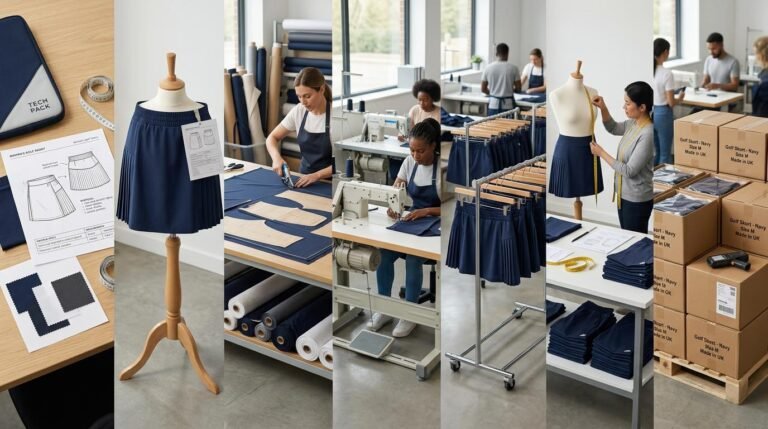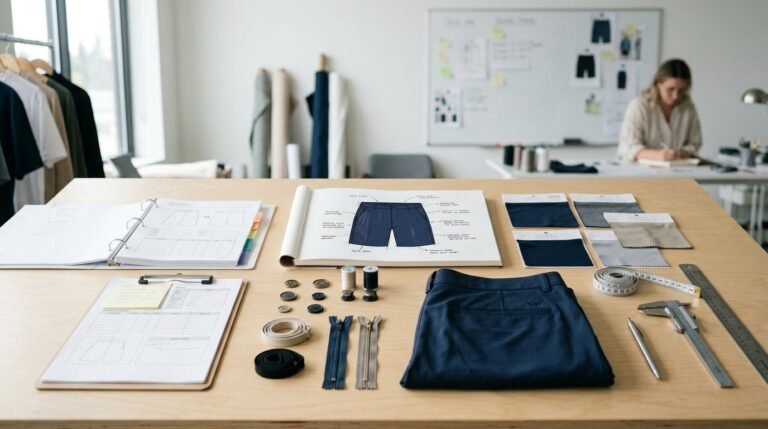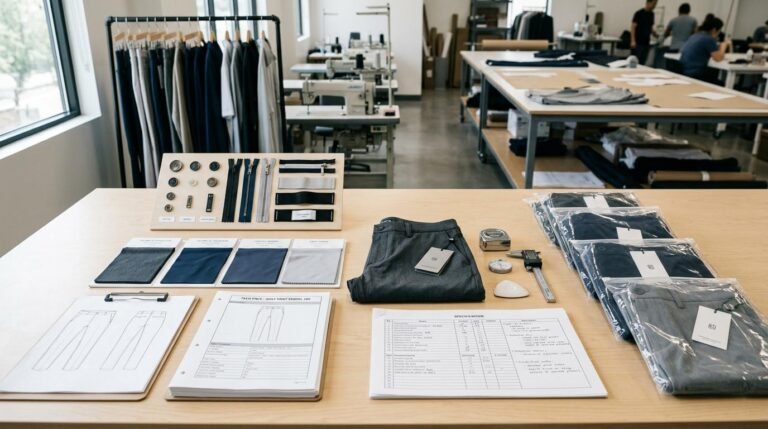

Golf apparel manufacturing sits at a unique intersection: it demands the technical performance of activewear (moisture-wicking, UV protection, 4-way stretch) with the refined aesthetic and construction standards of premium casualwear. This dual requirement makes choosing the right manufacturing partner particularly challenging—and particularly important.
The global golf apparel market is projected to grow from USD 9.89 billion in 2026 to USD 14.83 billion by 2034, exhibiting a CAGR of 5.19%[4]. This growth is fueled by rising golf participation worldwide, the increasing popularity of golf tourism, and growing demand for eco-friendly performance fabrics. Yet many brands make critical sourcing mistakes that cost them time, capital, and market opportunity.
Common Sourcing Mistakes by Brand Stage:
- Startup mistake: Partnering with large-scale manufacturers optimized for 5,000+ unit runs when you need 300-500 pieces to test market fit. Result: You're stuck with excess inventory or can't get started at all.
- Growth-stage mistake: Staying with a low-MOQ agile factory past the point where you need 2,000+ units per style with consistent quality systems. Result: Quality inconsistencies between production runs and inability to scale efficiently.
- Established brand mistake: Prioritizing price per unit over fabric sourcing transparency and technical execution. Result: Collar curling, shade-lot inconsistencies, stretch degradation, and expensive returns.
Strategic Framework by Brand Stage:
-
Pre-launch/Startup (0-$500K revenue): Prioritize MOQ flexibility (100-500 units/style), fast sampling (7-10 days), golf-specific pattern expertise (collar construction, placket stability, swing ease). Accept 15-25% higher unit costs for speed and learning.
-
Growth stage ($500K-$5M revenue): Transition to manufacturers with proven golf apparel experience, capable of 1,000-3,000 units/style with documented QC systems. Look for BSCI/WRAP compliance, established fabric mill relationships, and 60-75 day production windows.
-
Established ($5M+ revenue): Focus on manufacturers with vertical integration (fabric development to finished goods), proven grading systems across extended size runs, AQL sampling protocols, capacity for 5,000+ units/style, and sustainability certifications (GRS, OEKO-TEX Standard 100, bluesign).
This guide analyzes manufacturers across the spectrum—from agile low-MOQ technical specialists to large-scale vertical integrators serving global brands—with emphasis on verifiable capabilities, not marketing claims.
Tip: If you’re still building your product mix, budget, or launch plan for your golf apparel brand, we highly recommend reading our complete step-by-step guide to starting a golf apparel line before shortlisting manufacturers. Well-planned product strategy will help you choose the right factory, avoid costly mistakes, and move faster from idea to first shipment.
Manufacturer Overview List
- FUWAY Golf – Technical golfwear specialist with low MOQ and craftsman-led production
- Qiandao Apparel – Full-service OEM/ODM with golf-specific pattern development and performance fabric expertise
- JOYORD – Premium custom golfwear manufacturer with sustainable fabric focus
- Callaway Apparel – OEM/ODM division of major golf brand with scalable production systems
- Ningbo Shenzhou Knitting – Vertical giant supplying premium sportswear brands globally
- Sansan Sports – Pakistan-based technical sportswear OEM with cost advantages
- Thygesen Textile Vietnam – Heritage OEM/ODM with Massive Capacity
- Alanic Global – Large-scale private label manufacturer with extensive golf catalog
- Lefty Production Co. – US-based full-service production house for premium, low-MOQ development
- Tack Apparel – USA-based custom golf clothing factory for fast turnarounds
Top 10 Golf Clothing Manufacturers in The World
1. FUWAY (GolfShirtsFactory.com) – Technical Golfwear Factory for Performance Fit
Introduction:
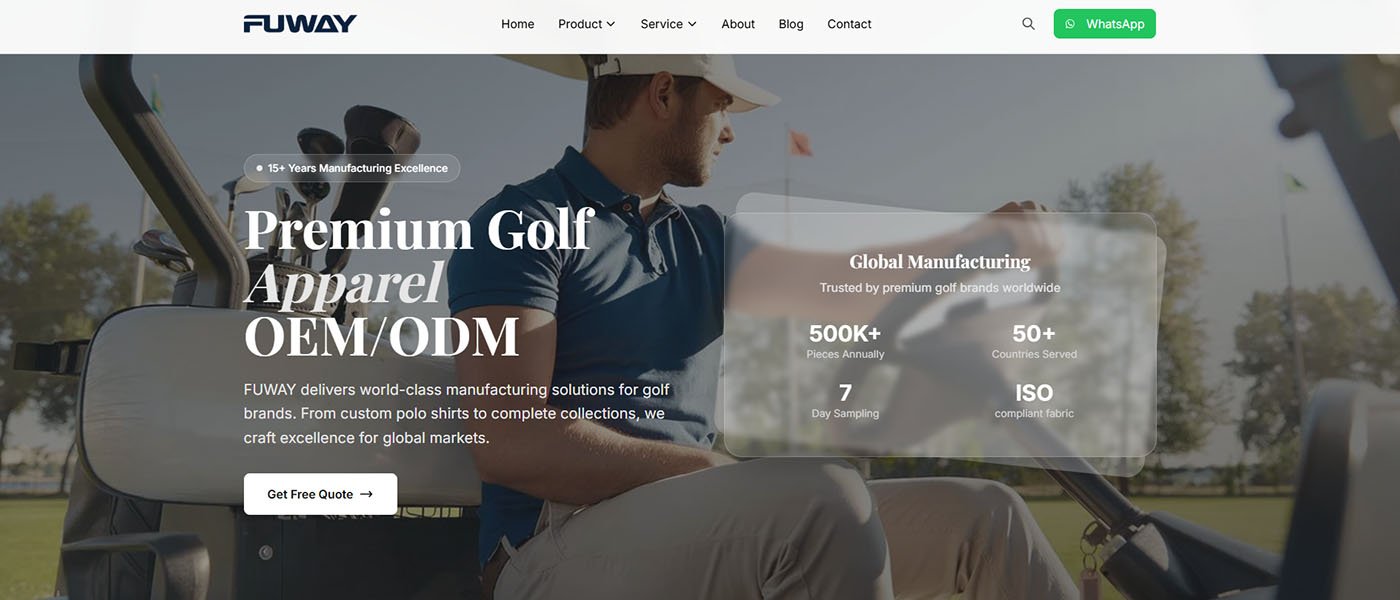
FUWAY represents the ideal middle ground for growth-stage golf brands: agile enough for low MOQs, sophisticated enough for complex technical construction. Based in China with 16+ years in technical sportswear, they've carved a niche in golf-specific pattern development and collar/placket craftsmanship—the two areas where most manufacturers quietly fail. Their craftsman-led model retains veteran artisans who understand the difference between a collar that looks good in sampling and one that stays sharp after 20 washes. With six automated production lines and ISO 9001 certification, they offer quality assurance without the rigidity of larger facilities[2].
Key Products:
- High-performance golf polos (pique, jersey, jacquard knits)
- Technical mock necks and layering tops
- Stretch woven golf pants and shorts
- Custom team and tournament apparel
- Windbreakers with moisture-wicking properties
Pros:
- Extremely low MOQ: 50-100 units per style (ideal for market testing)[2]
- Superior craftsmanship on critical details: collar construction, placket stability, underarm gussets
- Fast sampling: 3-7 days for initial prototypes[2]
- Direct access to production managers (no account manager layers)
- Full OEM/ODM capabilities with tech pack refinement support
- 60-70 day production lead times
- Expertise in moisture-wicking, UV protection, and anti-microbial fabrics
Cons:
- Not optimized for ultra-high-volume commodity orders (max efficient capacity ~5,000 units/style)
- Limited ODM design services (best when you provide detailed tech packs)
Website: https://fuwaygolf.com/
2. Qiandao Apparel – Full-Service OEM/ODM Golf Polo Specialist
Introduction:
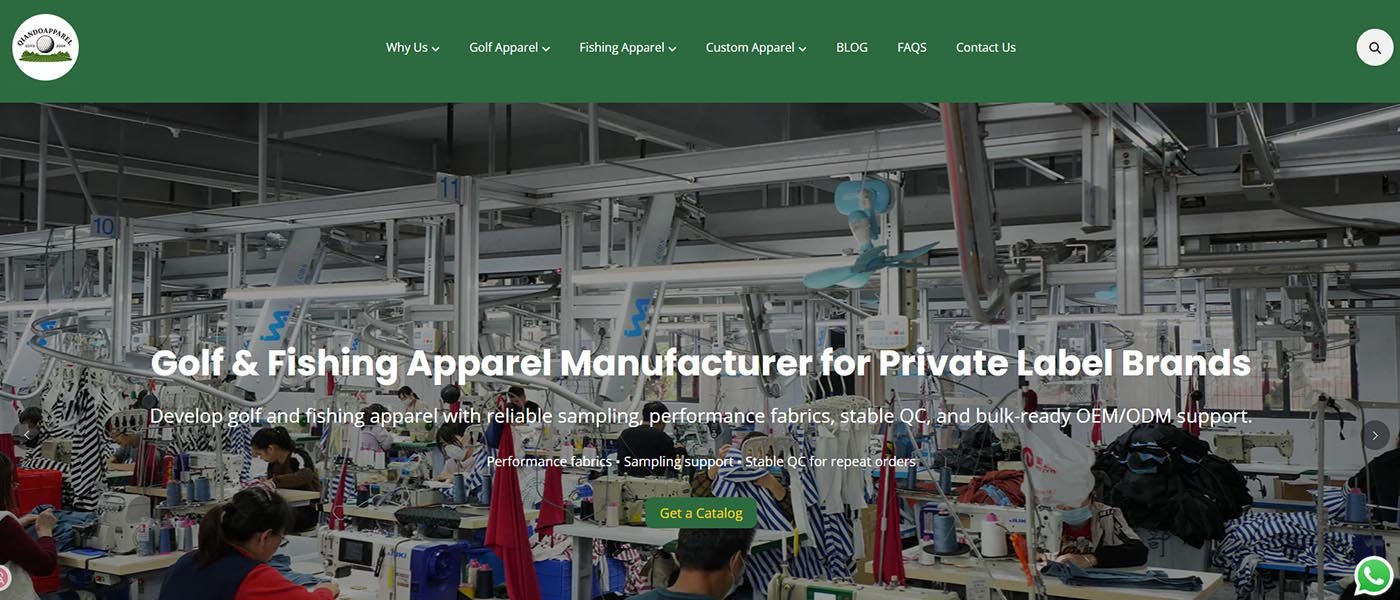
Qiandao Apparel positions itself as a true OEM/ODM partner for brands building private-label golf apparel lines. Their strength lies in full-service development: from design alignment and fabric selection through sampling and bulk production. Unlike private-label wholesalers offering generic catalog items, Qiandao focuses on custom pattern development for golf-specific needs—swing ease in back panels, reinforced stress points, collar stand stability. They understand the difference between making a polo shirt and making a golf polo that performs through 18 holes[3].
Key Products:
- Custom golf polos (pique, micro-pique, jersey, interlock)
- Performance golf pants with 4-way stretch
- Golf skorts and dresses with moisture management
- Technical layering pieces (quarter-zips, vests)
- UV-protection and quick-dry apparel
Pros:
- Low to moderate MOQ: 50-100 units for light customization, 100+ for full custom development[3]
- Expertise in performance fabrics: moisture-wicking tested to AATCC standards, UV protection, stretch recovery
- Structured quality control with documented QC systems and compliance infrastructure[3]
- Strong communication with English-speaking merchandisers
- Experience with extended size grading and fit consistency across colorways
- Can coordinate fabric testing through SGS, Intertek, Bureau Veritas
Cons:
- MOQ increases significantly for custom fabric development (300+ units)
- Limited capacity for brands requiring 10,000+ units per style
- Production lead time 65-80 days during peak season
- Certifications portfolio needs verification for specific buyer requirements
Website: https://qiandaoapparel.com/
3. JOYORD – Premium Custom Golfwear with Sustainability Focus
Introduction:
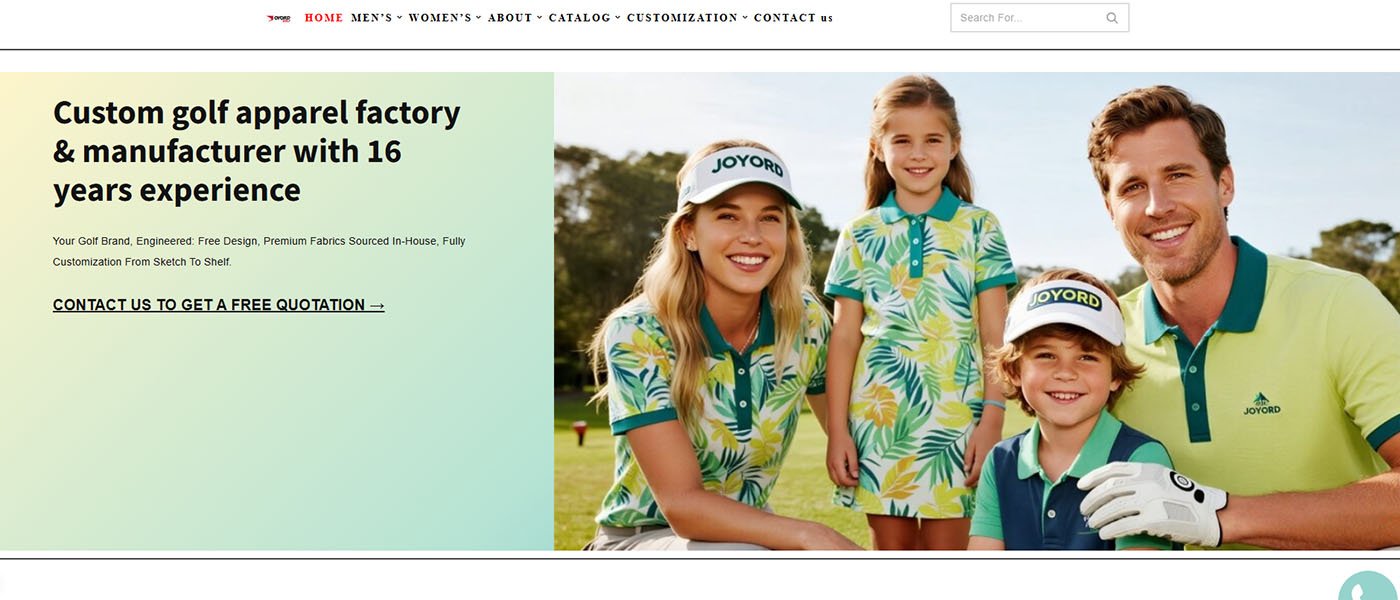
JOYORD has built its reputation on three pillars: technical fabric innovation, low-MOQ flexibility, and sustainability credentials. With 16+ years in premium sportswear manufacturing, they serve brands targeting the intersection of performance and eco-consciousness. Their digital printing capabilities, recycled performance fabrics (recycled polyester, bamboo blends), and PGA-inspired design support make them particularly valuable for brands launching premium collections with environmental positioning[1].
Key Products:
- Digital-printed performance polos
- Recycled fabric golf apparel (GRS-certified options)
- UV-protection layering pieces
- Resort-style golf shorts and trousers
- Moisture-wicking polo shirts with anti-odor finish
Pros:
- Low MOQ with design support (flexible for startup testing)[1]
- Expertise in sustainable materials: recycled polyester, bamboo viscose, organic cotton
- Fast sampling and flexible private label solutions
- BSCI and OEKO-TEX certifications available[1]
- Factory-direct pricing with fully managed production
- Ships worldwide with established logistics partnerships
- 7-10 day average sampling turnaround[1]
Cons:
- Premium positioning translates to higher unit costs (15-20% above commodity manufacturers)
- Limited capacity for ultra-large seasonal programs
- Custom fabric development adds 30-45 days to timeline
- Best suited for brands willing to invest in sustainable premium positioning
Website: https://www.joyordcn.com/
4. Callaway Apparel – OEM/ODM Division of Established Golf Brand
Introduction:
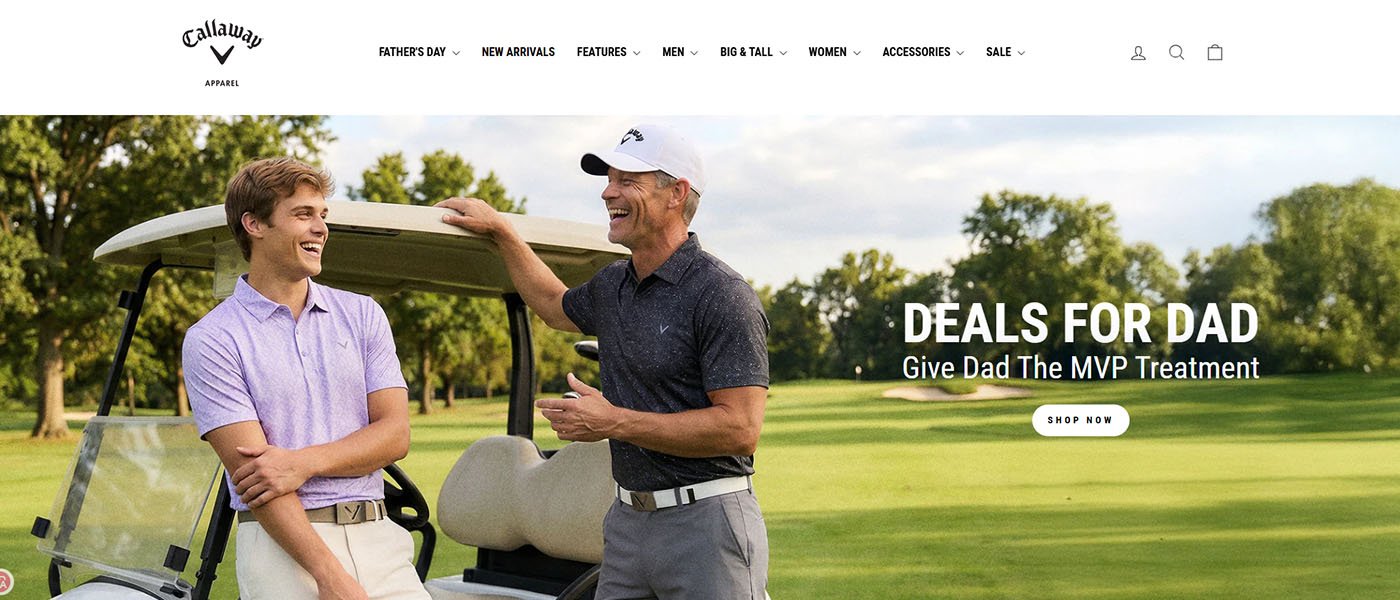
Callaway Apparel operates as both a branded line and an OEM/ODM partner for growing golf brands. Their established manufacturing systems are designed to handle mid-to-large volume production (3,000-10,000+ units per style) with proven quality control protocols. What sets them apart is direct access to the fabric innovations and technical standards developed for their own Callaway-branded products. They're ideal for brands ready to scale beyond startup MOQs but not yet large enough to command attention from vertical giants[2].
Key Products:
- Classic and performance golf polos
- Private label golf apparel programs
- Corporate and event merchandise
- Stretch woven golf pants
- Sustainable collections (30% recycled polyester)[1]
Pros:
- Scalable production for growing brands (3,000-15,000 units/style)
- Established quality control with AQL sampling and inline inspection
- Experience managing branded programs and private label simultaneously
- Access to performance fabric innovations (moisture-wicking, cooling technology)
- Strong relationships with fabric mills for consistent shade matching
- ISO 9001 certified with regular audit compliance
Cons:
- MOQ 3,000-5,000 units per style (not suitable for startups or testing)
- Less flexible with rapid design iterations once production begins
- Production lead time 75-90 days during peak season (Feb-May)
- Communication through account managers rather than direct production access
Website: https://www.callawayapparel.com/
5. Ningbo Shenzhou Knitting – Vertical Giant for Premium Golf Apparel
Introduction:
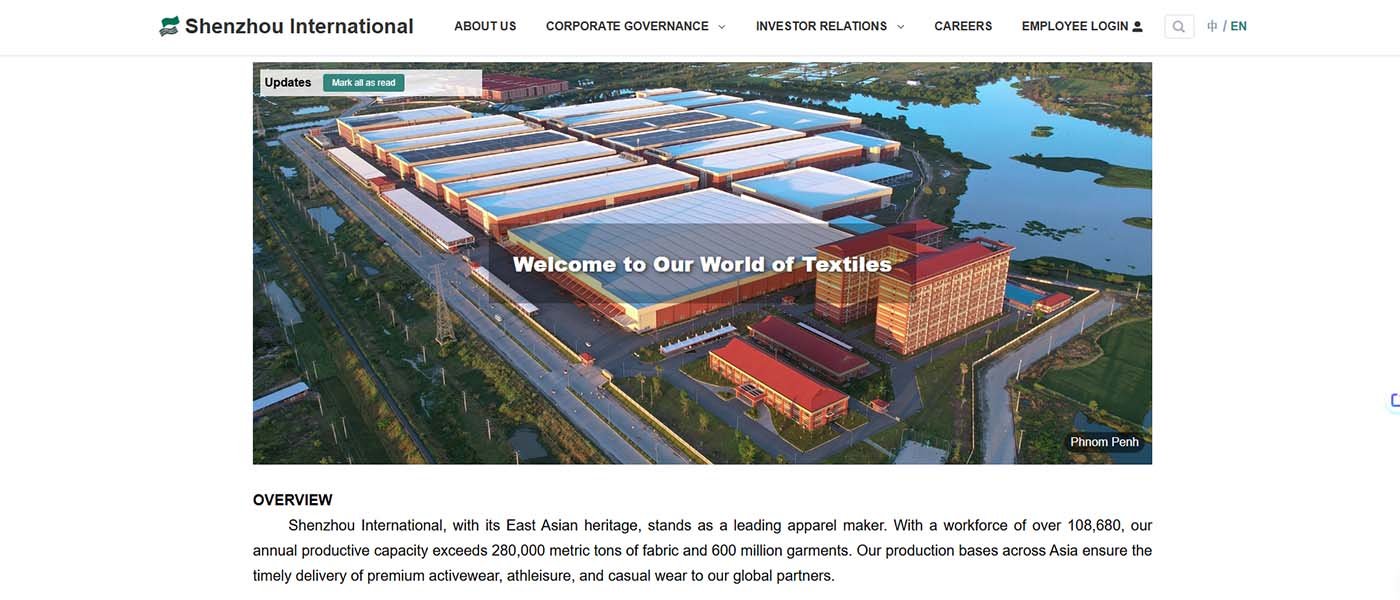
Shenzhou is one of Asia's largest vertical apparel manufacturers, supplying Nike, Adidas, Puma, and Under Armour. Their vertical integration—yarn spinning, fabric knitting/dyeing, garment production—delivers unmatched consistency for technical knit fabrics essential to golf polos. For established brands with $10M+ revenue requiring 10,000+ units per style, Shenzhou offers fabric R&D capabilities that can develop custom moisture-wicking constructions, cooling yarns, and stretch recovery specifications unavailable elsewhere. The trade-off: extremely high barriers to entry[2].
Key Products:
- High-performance golf polos (moisture-wicking, anti-odor, UV protection)
- Seamless knit golf apparel
- Technical base layers and sun protection pieces
- Premium knit pants with advanced stretch
- Custom fabric development for exclusive constructions
Pros:
- Unmatched fabric consistency (controls dyeing, finishing, quality from yarn to garment)
- Advanced technical fabric development: cooling yarns, moisture management, stretch recovery testing
- Scale efficiency: competitive pricing at 10,000+ unit orders
- ISO 9001, ISO 14001, OEKO-TEX Standard 100 certified
- Shortest lead times for repeat orders (50-60 days yarn to finished goods)
- Proven track record with major global sportswear brands
Cons:
- Extremely high MOQ: typically 10,000+ units per style, 3,000+ per color
- Selective client acceptance (prioritize large, stable accounts with consistent orders)
- Long onboarding: 6-12 months from initial contact to first production
- Less suitable for brands requiring frequent style changes or trend-responsive designs
- Not flexible with small test runs or market experimentation
Website: http://www.shenzhouintl.com
6. Sansan Sports – Pakistan-Based Technical Sportswear OEM
Introduction:
Sansan Sports, located in Sialkot, Pakistan—a global hub for technical sportswear—offers a cost-effective alternative to Chinese manufacturing without sacrificing technical capability. Their expertise in performance fabrics and golf-specific construction (underarm gussets, reinforced stress points, collar stability) makes them viable for growth-stage brands seeking 1,000-3,000 unit production runs. Pakistan's sportswear manufacturing infrastructure provides cost advantages of 15-20% compared to China for similar quality levels[2].
Key Products:
- Golf polos and performance T-shirts
- Golf trousers and shorts (stretch woven)
- Windbreakers and technical jackets
- Tracksuits and layering pieces
- Team wear and custom embroidery
Pros:
- Cost-effective: 15-20% lower unit costs than comparable Chinese manufacturers
- Specialization in technical sportswear (Sialkot is a global sportswear hub)
- Direct factory relationship without intermediary layers
- MOQ typically 500-1,000 units per style (suitable for growth-stage brands)
- Proven craftsmanship in performance apparel construction
- Often hold ISO 9001 certification (BSCI/WRAP status needs verification)
Cons:
- Longer shipping times: 30-40 days from Pakistan to US/EU
- Communication may require more diligent project management
- Fabric sourcing primarily through trading companies (less control over mill selection)
- Limited capacity for ultra-large orders (max ~10,000 units/style efficiently)
- Quality consistency requires pre-production approvals and inspection protocols
Website: https://sansansports.com/
7. Thygesen Textile Vietnam – Heritage OEM/ODM with Massive Capacity
Introduction:
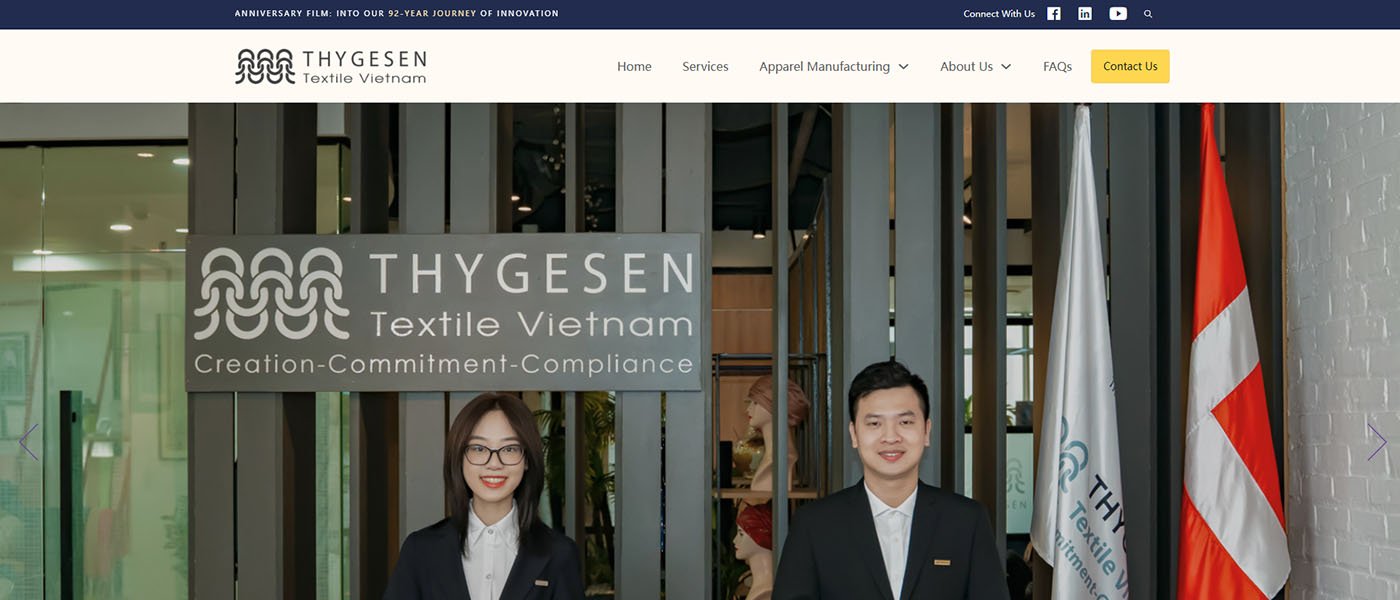
With over 90 years of textile heritage and two vertically integrated factories producing 800,000 pieces per month, Thygesen Textile Vietnam represents the gold standard for mid-to-large scale golf shirt manufacturing[3]. Their vertical control—from fabric knitting through garment finishing—ensures consistency critical for multi-season golf shirt programs. Serving brands like Calvin Klein, DKNY, and Fjällräven, they bring established-brand discipline to golf shirt production while maintaining flexibility for custom development[3]. Their expertise in moisture-wicking, UV protection, and quick-dry fabrics positions them as a premium partner for brands requiring 3,000-20,000 units per style with documented quality systems[3].
Key Products:
- Performance golf polos (pique, micro-pique, jersey, interlock knits)
- Moisture-wicking and UV-protective golf shirts (UPF 50+)
- Custom rayon and lyocell resort-style golf polos[3]
- Women's golf shirts with tailored fits
- Technical base layers and mock necks
Pros:
- Massive vertical capacity: 800,000 pcs/month with full control from yarn to finished garment[3]
- Heritage quality systems: 90+ years of pattern-making and fit expertise[3]
- Advanced fabric development: In-house experts for custom knit structures and performance finishes[3]
- Proven track record: Serving major global brands with consistent quality[3]
- Full OEM/ODM support: Design mockups within 24 hours, free samples for bulk orders[3]
- Comprehensive certifications: ISO 9001, OEKO-TEX, likely BSCI (needs verification)[3]
- Streamlined lead times: 60-75 days with efficient production planning[3]
Cons:
- Higher MOQ for custom development: Typically 3,000+ units per style for full customization
- Vietnam shipping: 25-35 days to US/EU (longer than China coastal ports)
- Communication through merchandising team: Less direct access to production floor than smaller factories
- Not ideal for ultra-low volume testing: Best suited for established seasonal programs
Website: https://thygesenapparel.com/
8. Alanic Global – Large-Scale Private Label Golf Catalog
Introduction:
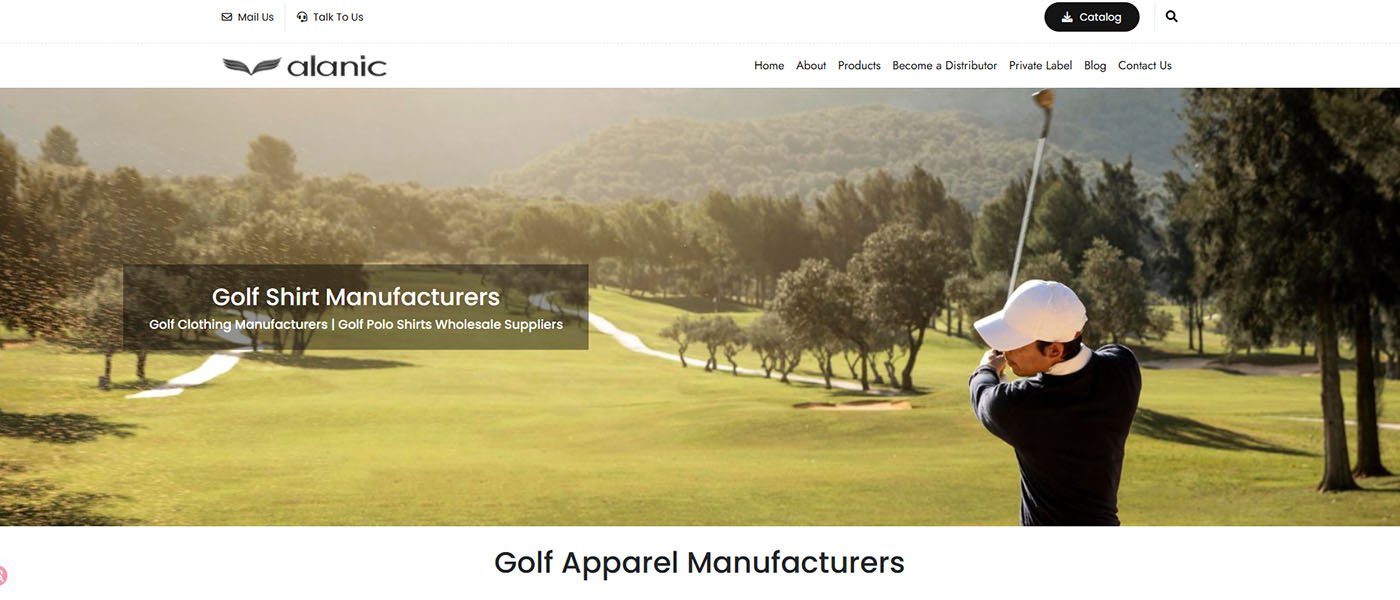
Alanic Global operates as a massive private label wholesaler with hundreds of pre-designed golf apparel SKUs. This is a "speed-to-market" solution: brands select from Alanic's existing catalog, add logos, and go to market in weeks rather than months. The trade-off is brand differentiation—your golf polo may be sold by another brand with a different logo. Alanic works for brands testing market demand before committing to custom development, or for those requiring broad assortments quickly without deep OEM investment[2].
Key Products:
- Hundreds of stock golf polo designs (pique, jersey, performance blends)
- Golf shorts, skorts, and pants
- Full sublimation printing capabilities
- Compression tops and athletic fits
- Vests and outerwear
Pros:
- Speed: launch full collection in 2-4 weeks by selecting from stock catalog
- Low design burden: no tech packs or pattern development required
- Proven products designed for mass-market appeal
- Flexibility to test multiple styles with minimal commitment
- Scalable production through established factory network
- Basic customization (colors, logos, trims) available
Cons:
- Not unique: "custom" products may be sold by competitors with different branding
- Limited true customization without moving to much higher MOQ brackets
- Transactional relationship (less collaborative than dedicated OEM partnership)
- Quality designed for mass market, not premium positioning
- Difficult to build distinctive brand identity on stock catalog items
Website: https://www.alanicglobal.com/manufacturers/sports-team-wear/golf/
9. Lefty Production Co. – US Premium Production House
Introduction:
Lefty Production Co. is a Los Angeles-based development house and factory specializing in "Made in USA" premium golf apparel. They are not a mass-production manufacturer but a strategic partner for brands prioritizing IP protection, high-touch service, and ultra-low-volume production (50-150 units per style). Their pattern-making, grading, and sample development expertise guides brands from sketch to final production. Ideal for well-funded startups or luxury golf brands where quality control proximity and domestic production are paramount[2].
Key Products:
- High-end golf polos with premium construction
- Luxury golf trousers and technical shorts
- Custom pattern development and grading
- Sample development and fit refinement
- Sourcing of premium materials
Pros:
- Extremely low MOQ: 50-150 units per style (perfect for testing premium market)
- IP protection under US law (critical for innovative designs)
- No time zone or language barriers for US-based brands
- High-quality execution suitable for luxury positioning
- Full-service development from concept to production
- Fast sampling and iteration (proximity advantage)
Cons:
- Extremely high cost: 5-10x higher per-unit costs than Asian OEM (only viable for premium pricing)
- Limited scalability beyond 500-1,000 units per style
- Fabric sourcing is separate service (unlike vertically integrated mills)
- Not suitable for brands competing on price or requiring large volumes
Website: https://www.leftyproductionco.com/
10. Tack Apparel – USA-Based Custom Golf Factory
Introduction:
Tack Apparel serves small-to-medium US golf brands requiring fast turnarounds on polos, bottoms, and custom branding. Their domestic location enables 30-40 day production cycles and simplified logistics for brands prioritizing "Made in USA" positioning. While not competing on price with Asian manufacturers, Tack offers speed and flexibility for brands serving the US market with frequent reorders and seasonal collections[2].
Key Products:
- Golf polos (pique, performance knits)
- Golf pants and shorts
- Custom branding and logo applications
- Team and event apparel
- Quick-turn seasonal collections
Pros:
- Fast turnaround: 30-40 days production for domestic orders
- Simplified logistics and communication for US brands
- Flexible with design changes and rapid reorders
- No international shipping complexities or tariffs
- MOQ moderate for domestic manufacturer (300-500 units/style typical)
- Good for testing seasonal styles before scaling
Cons:
- Higher unit costs than international options (25-40% premium)
- Limited technical fabric expertise compared to specialized Asian mills
- Capacity constraints for large orders (max ~2,000 units/style efficiently)
- Fabric sourcing primarily domestic (narrower performance fabric options)
- Not suitable for brands needing lowest cost of goods
Website: [Needs verification - often operates through B2B referrals and industry connections]
How We Selected These Manufacturers
Our selection process prioritized manufacturers with verifiable golf apparel capabilities across different brand scales, manufacturing models, and geographic locations:
Selection Criteria:
- Verified Golf Apparel Production: Current production of golf polos, pants, shorts, or performance golf apparel—not generic sportswear repositioned as golf
- MOQ Range Diversity: Options from 50 units (startups) to 10,000+ units (established brands)
- Technical Golf Expertise: Demonstrated capability in collar construction, placket stability, swing ease, moisture-wicking, UV protection
- Quality Systems: ISO 9001 minimum; preference for BSCI, WRAP, OEKO-TEX, or GRS certifications
- Business Model Transparency: Clear understanding of whether entity is factory, production house, or private label wholesaler
- Geographic Representation: Coverage of major manufacturing hubs (China, Pakistan, USA) with different cost/capability profiles
- Communication Infrastructure: English-speaking merchandisers or direct production access for international brands
What We Excluded:
- Trading companies posing as manufacturers without factory ownership
- Brands confused with manufacturers (e.g., Nike Golf, Greyson Clothiers are brands, not factories available for private label)
- Facilities without documented quality management systems
- Entities with unverifiable claims or contradictory information across sources
How to Choose the Right Golf Apparel Manufacturer
For Startup/Pre-Launch Brands (Annual Revenue <$500K):
Priority Checklist:
- [ ] MOQ below 300 units per style (allows testing 3-4 styles with $15-25K)
- [ ] Sampling under 10 days (critical for iteration before launch)
- [ ] Golf-specific pattern expertise (collar construction, placket, swing ease)
- [ ] Flexibility with tech pack refinement (you're still learning construction)
- [ ] Transparent pricing with itemized quotes (understand cost drivers)
- [ ] Willingness to work with your fabric samples if you've sourced specialty materials
- [ ] Payment terms: Expect 30-50% deposit, balance before shipping
Critical Questions to Ask:
- How many golf polos did you produce last year? (Verify golf-specific experience)
- Can I see production photos of collar construction and placket attachment?
- What is your sampling process and cost? (Should be $50-150 per sample)
- How do you handle collar curling prevention? (Tests their technical knowledge)
- What fabric performance testing can you provide? (Moisture management, UV protection)
Red Flags:
- Factory pushes you to MOQs 2-3x their stated minimums
- Sampling takes 20+ days (sign of deprioritized small clients)
- Vague responses about collar construction or fabric sourcing
- Requires full payment upfront (accept only for very small test orders <$5,000)
- No photos of actual golf apparel production
Recommended from This List: FUWAY (#1), Qiandao Apparel (#2), JOYORD (#3), Lefty Production Co. (#9) for premium US market
For Growth-Stage Brands ($500K-$5M Revenue):
Priority Checklist:
- [ ] MOQ 1,000-3,000 units per style (balance cost efficiency with inventory risk)
- [ ] BSCI or WRAP certification (opens specialty retail partnerships)
- [ ] Proven golf apparel portfolio (request references from similar-sized brands)
- [ ] Established fabric mill relationships (reduces lead time, improves shade consistency)
- [ ] Formal quality control: AQL sampling, inline inspection, pre-production approval process
- [ ] 60-75 day lead times with clear production schedules and milestone tracking
- [ ] Capacity for growth (can they handle 5,000 units next year? 10,000 in two years?)
- [ ] Extended size grading capability (S-XXL minimum, ideally S-3XL)
Strategic Considerations:
- This is the stage to invest in factory visits (1-2 shortlisted manufacturers annually)
- Develop quality approval sequence: Lab dip → Strike-off → Fit sample → Pre-production → Production → Pre-shipment inspection
- Negotiate payment terms to 30% deposit, 70% against copy of Bill of Lading
- Lock in fabric shade standards and create master reference samples
- Implement fabric performance testing protocols (especially for moisture-wicking and UV claims)
Advanced Validation:
- Request fabric lab test reports: colorfastness (AATCC 61), moisture management (AATCC 195), pilling resistance (ASTM D3512)
- Verify grading consistency: Request size set for 5 sizes to check sleeve length, chest, shoulder proportion
- Test washing durability: Request pre-production sample for 20 wash cycles to check collar stability
- Check decoration durability: If using embroidery or heat transfer, test wash performance
Recommended from This List: Qiandao Apparel (#2), JOYORD (#3), Callaway Apparel (#4), Sansan Sports (#6), Jiangsu Lianfa (#7)
For Established Brands ($5M+ Revenue):
Priority Checklist:
- [ ] Capacity for 5,000-10,000+ units per style with documented production planning systems
- [ ] Vertical integration or direct mill partnerships (fabric consistency critical at scale)
- [ ] Multiple certifications: ISO 9001, BSCI/WRAP, OEKO-TEX Standard 100 minimum
- [ ] Sustainability capabilities if brand-relevant: GRS for recycled content, GOTS for organic, bluesign for chemistry
- [ ] Quality systems aligned with your standards: inline inspection, final random inspection (AQL 2.5 or better), measurement tolerances
- [ ] Proven track record with comparable brands (request 3-5 references)
- [ ] Financial stability verification (years in business, company background, facility ownership)
- [ ] Multi-seasonal delivery capability with staggered production schedules
Advanced Requirements:
- Fabric development capability: Can they develop exclusive moisture-wicking constructions or custom textures?
- Color approval system: Lab dip, strike-off, bulk production with documented shade tolerances
- Fit standards: Comprehensive measurement spec sheets, tolerance levels, grading documentation
- Testing infrastructure: In-house or contracted testing for AATCC standards, wash durability, fabric performance claims
- Supply chain visibility: Can they document fabric origin, dye chemistry, finishing processes for sustainability reporting?
Strategic Considerations:
- Negotiate annual contracts with volume commitments for pricing stability (typically 15-25% better pricing)
- Implement comprehensive QA protocols: Color approval → Fit sample approval → Salesman sample → Pre-production sample → Inline QC → Final random inspection
- Develop fabric shade card library with master reference samples for all core colors
- Consider dual-sourcing strategy: 70% primary manufacturer, 30% secondary for risk mitigation
- Establish dedicated account manager relationship with quarterly production planning reviews
Recommended from This List: Callaway Apparel (#4), Ningbo Shenzhou Knitting (#5), Jiangsu Lianfa (#7)
Universal Due Diligence Steps (All Brand Stages):
-
Request Production-Ready Samples: Not fabric swatches—finished golf polos from recent production runs, ideally with same collar/placket construction you need
-
Verify Certifications: Request certificate numbers and verify with issuing bodies (especially BSCI/WRAP). Check expiration dates and scope.
-
Check References: Speak with 2-3 current clients about:
- Quality consistency between first and repeat orders
- Communication responsiveness (email reply time, problem resolution)
- Lead time reliability (on-time delivery percentage)
- How they handle defects or quality issues
-
Understand Fabric Sourcing Model:
- Do they source fabric mill-direct or through traders?
- Can they provide fabric specifications and performance test reports?
- How do they ensure shade consistency across production runs?
- What is their fabric approval and strike-off process?
-
Clarify All Costs in Writing:
- Unit price by quantity breaks (300, 500, 1,000, 3,000, 5,000 units)
- Sampling costs and how many rounds included
- Mold/trim charges for buttons, zippers, hangtags
- Embroidery or decoration setup fees
- Shipping options (FOB, CIF, DDP) with transit time estimates
- Payment terms and deposit requirements
-
Test With Controlled Small Order:
- Even if standard MOQ is 1,000, negotiate a 300-500 unit test at slightly higher per-unit cost
- This verifies quality, communication, and timeline before scaling
- Budget 20-30% premium for test order pricing
-
Visit if Possible:
- For annual orders exceeding $75,000, factor in 1-2 factory visits
- Schedule during production of your line to see actual processes
- Inspect collar/placket sewing stations, fabric receiving QC, final inspection area
- Meet production manager, QC manager, and merchandiser who will handle your account
Golf Apparel Specification Considerations
Golf apparel has unique technical requirements that generic sportswear manufacturers often miss:
Polo-Specific Requirements:
Collar Construction:
- Fused vs. sewn collar (sewn collars last longer but cost more)
- Collar stand height (typically 1.5-2 inches for golf)
- Interlining weight and stability (prevents curling after washing)
- Collar tip stitching to prevent edge rolling
Placket Details:
- Reinforcement stitching at placket bottom (high-stress area)
- Button quality and attachment method (cross-stitch vs. shank)
- Placket interlining to prevent puckering
- Button spacing (typically 3.5-4 inches for golf polos)
Swing Ease Features:
- Slightly longer back hem (prevents untucking during swing)
- Underarm gussets for rotation freedom
- Raglan or set-in sleeve choice based on fit preference
- Side vents for comfort and mobility
Pants/Shorts-Specific Requirements:
Waistband Construction:
- Internal gripper tape to prevent shirttail pullout
- Comfort stretch waistband options
- Belt loop placement and reinforcement
- Hook and bar closure durability
Pocket Engineering:
- Depth sufficient for golf tees and ball markers (6-7 inches minimum)
- Reinforced pocket openings (high-wear area)
- Back pocket placement that doesn't interfere with sitting
- Potential for hidden scorecard pocket
Performance Details:
- 4-way stretch fabric for squat comfort during putt reading
- Water-repellent finish for dew resistance (DWR treatment)
- UV protection (UPF 30+ rated fabrics)
- Inseam gusset for extended mobility
Fabric Performance Standards to Request:
Moisture Management (AATCC 195):
- Wetting time: <5 seconds (top surface)
- Absorption rate: >40% (faster = better)
- One-way transport: >200% (moisture moves away from skin)
- Spreading speed: >3 (faster drying)
Colorfastness Testing:
- Wash colorfastness (AATCC 61): Grade 4 minimum
- Perspiration colorfastness (AATCC 15): Grade 4 minimum
- Light colorfastness (AATCC 16): Grade 4 minimum for outdoor wear
Physical Durability:
- Pilling resistance (ASTM D3512): Grade 3.5+ after 2,000 cycles
- Stretch and recovery (ASTM D2594): ≥20% stretch, ≥90% recovery
- Dimensional stability (AATCC 135): ≤3% shrinkage after 3 washes
UV Protection:
- UPF rating (AATCC 183): Minimum UPF 30 for "UV Protection" claims, UPF 50+ for "Excellent Protection"
Most manufacturers can coordinate these tests through SGS, Intertek, or Bureau Veritas for $200-500 per fabric type.
Conclusion: Building Your Golf Apparel Manufacturing Partnership
The global golf apparel market offers manufacturing solutions for every brand stage—from 50-unit prototype runs to 50,000-unit seasonal programs. Success lies in matching factory capabilities to your current needs while planning for 18-24 month growth trajectory.
Immediate Next Steps:
-
Define Your Sourcing Requirements:
- Target MOQ based on realistic sales projections and working capital
- Specific styles needed (polos, pants, outerwear) with technical requirements
- Fabric preferences (pique vs. jersey, synthetic vs. natural, sustainability requirements)
- Certifications required for your distribution channels (BSCI for specialty retail, OEKO-TEX for eco-positioning)
- Budget per unit based on your retail pricing strategy
-
Shortlist 2-3 Manufacturers:
- Use the brand stage framework above to identify appropriate scale
- Request production photos of actual golf apparel (focus on collar/placket construction)
- Verify business model: Are they factory, production house, or private label wholesaler?
-
Request Detailed Quotations:
- Provide tech packs or detailed reference samples for accurate pricing
- Request pricing at multiple quantity breaks (your target MOQ, 2x MOQ, 5x MOQ)
- Ask for itemized costing: fabric, trims, labor, overhead, decoration, sampling
-
Evaluate Through Sampling:
- Order 2-3 samples per style from shortlisted manufacturers
- Evaluate collar stability, fabric handfeel, construction quality, fit accuracy
- Wash samples 10-20 times to test durability
- Compare against competitive products at your target price point
-
Conduct Due Diligence:
- Verify certifications with issuing bodies
- Check 2-3 client references
- Clarify payment terms, shipping responsibilities, defect handling procedures
- Review their quality control process documentation
-
Start Small and Scale:
- Place initial order at or near factory minimum to test partnership
- Document everything: approved samples, measurement specs, fabric shade standards
- Establish quality approval checkpoints before scaling to larger volumes
- Build relationship and trust before committing to annual contracts
Final Strategic Recommendation:
Don't rush the manufacturer selection process. A 3-6 month evaluation period—including sampling, test production, and quality verification—saves far more time and capital than it costs. The right manufacturing partnership becomes a competitive advantage: enabling faster product development, consistent quality execution, and cost efficiency that funds sustainable growth.
The manufacturers in this guide represent verified options across the spectrum of brand needs. Your task is to honestly assess your brand stage, understand your true requirements, and select the partner aligned with where you are and where you plan to be in 24 months.
Recommended Next Step:
Before you begin manufacturer outreach or sampling, ensure your product strategy, fit, budget, and launch sequence are clearly defined. See our field-tested step-by-step guide to starting a golf apparel line—including tips on product focus, fabrics, MOQ math, pricing, and fit—to maximize your odds of success and choose the right factory for your needs.