.png)

Your women's golf polo sample looked perfect, but the bulk order arrived with inconsistent fits and cheap-feeling fabric. Now you're facing angry customer feedback and costly returns.
To properly assess quality, you need a systematic checklist covering fit, performance fabric, and construction details. This process starts before sampling and continues through bulk production, ensuring consistency and reducing returns.

I've seen so many brands stumble here. They approve a beautiful sample, only to find the bulk order is a completely different product. This is especially true for women's apparel, where fit is everything. The difference between a best-seller and a clearance item often comes down to small details in the chest, waist, and armholes. A subjective "this feels good" on a sample isn't enough. You need objective criteria to hold your manufacturer accountable and build a product line that customers love and re-buy.
What Are the Realities of Purchasing Women's Golf Polo Shirts?
You think a great design is all it takes. But the gap between your design, the sample, and the bulk production reality can sink your brand before it even starts.
Women's golf polos require a deeper focus on fit, shaping, and fabric drape than men's. The approved sample must be treated as a technical blueprint, not just a design concept, to avoid inconsistencies in the final bulk order.

I've seen so many brands stumble here. They approve a beautiful sample, only to find the bulk order is a completely different product. This is where the reality of manufacturing hits hard, and where many new brand owners learn tough lessons about production.
Why Quality Assessment Is Different for Women’s Golf Polos
For men's polos, the fit is often a simple, straight box. For women, it's a game of curves. The chest, waist, and hip ratios are everything. A small error in these areas can make the shirt look unflattering and feel uncomfortable, leading to immediate customer rejection. The fabric's drape and how it contours the body are also much more critical.
The Gap Between Design, Sample, and Bulk Reality
The biggest mistake I see is falling in love with a single "hero" sample. Any factory can make one perfect sample. The real test is making 500 perfect units. Without strict controls and a detailed tech pack, small variations creep in during bulk production, creating a product that's disappointingly different from the one you approved.
What Is the Essential Quality Assessment Checklist for Women's Polos?
You need to evaluate polos, but "good quality" is too vague. This leads to inconsistent products and disputes with your supplier because you have no objective standards.
Use a 9-factor checklist to evaluate fit, fabric performance, and construction. This checklist turns subjective opinions into measurable data, ensuring every polo from sample to bulk production meets your brand's standards.
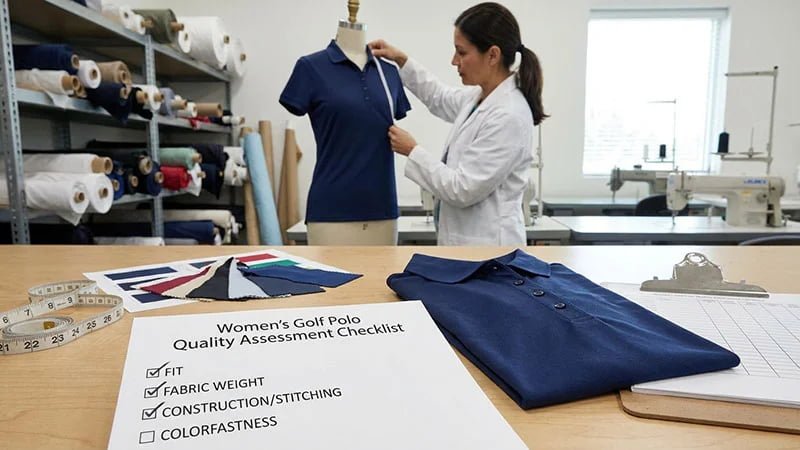
Before you even request a sample, you should have a clear idea of your standards. This checklist is perfect for systematically reviewing your samples and production units. It creates a shared language between you and your manufacturer.
Fast Evaluation Sheet Before Sampling
Create a simple scorecard for your ideal polo. Rate importance (1-5) for factors like wicking speed, stretch, and fit style (e.g., fitted, relaxed). This gives your supplier a clear target before they even start.
The 9 Core Quality Factors to Review
This table is your go-to reference. Use it for every sample and bulk inspection.
| Category | Factor | What to Check |
|---|---|---|
| Fit | 1. Shoulder & Chest Fit | No pulling across the chest; shoulder seam sits correctly on the body. |
| 2. Waist Shaping & Length | Contours naturally without being tight; appropriate length for tucking. | |
| 3. Armhole & Sleeve | No gaping or tightness; allows for a full range of motion. | |
| Fabric | 4. Moisture Wicking | Absorbs and spreads moisture quickly; feels dry to the touch. |
| 5. Stretch & Recovery | Stretches easily and snaps back to shape without sagging over time. | |
| 6. Handfeel & Drape | Feels good against the skin; hangs well on the body without clinging. | |
| Construction | 7. Seam & Stitching Quality | Flat, even stitches with no puckering or loose threads. |
| 8. Collar & Placket Stability | Sits flat and doesn't curl at the edges; placket is straight. | |
| 9. Color & Finish Consistency | Uniform color and fabric finish; no defects or blemishes. |
How to Use the Checklist During Procurement
Use the checklist to evaluate the initial sample, the pre-production sample, and a random selection from the bulk order. This consistency ensures nothing slips through the cracks and holds your supplier accountable at every stage.
Why Are Women's Golf Polos So Strategic for Your Brand?
You see them as just another product. But failing to meet core quality expectations on women's polos can lead to high return rates and damage your brand's reputation.
Women's polos are a strategic product because they build loyalty when done right. Success rests on four pillars: comfort, a clear fit spec, consistent quality, and a flattering design. Nailing these reduces returns and creates repeat customers.
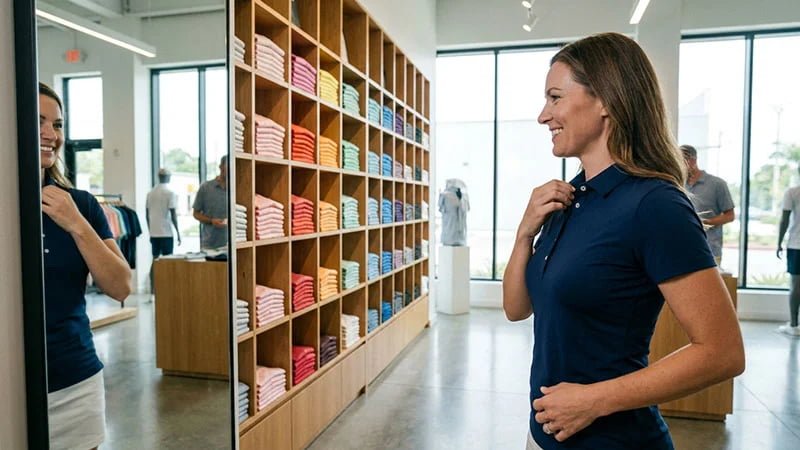
A female golfer who finds a polo that fits her perfectly is incredibly loyal. She'll often buy it in multiple colors, making the women's polo a cornerstone product. But the stakes are high if you get it wrong.
Comfort, Fit, Spec Clarity, and Consistency: The Four Pillars
These are the foundation. Comfort comes from the right fabric. A great fit comes from a well-developed pattern. Spec clarity comes from a detailed tech pack. Consistency comes from a disciplined manufacturing partner. You need all four.
Common Consequences When Criteria Are Missing
I’ve seen brands fail by neglecting these pillars. They get a sample with a "good fit" but never create a clear technical spec. The bulk order comes in with inconsistent sizing. The result? A flood of returns, negative online reviews, and a warehouse full of dead stock. This isn't just a lost sale; it's a loss of trust.
How Do Different Polo Styles Change Your Evaluation Criteria?
You have one quality checklist for all polos. But a sleeveless polo has different risks than a long-sleeve or plus-size version, leading to overlooked flaws.
You must adapt your quality criteria for each style. Sleeveless polos need extra focus on armhole shape. Long-sleeve polos require checks on sleeve length. Plus-size polos need careful attention to grading and mobility.
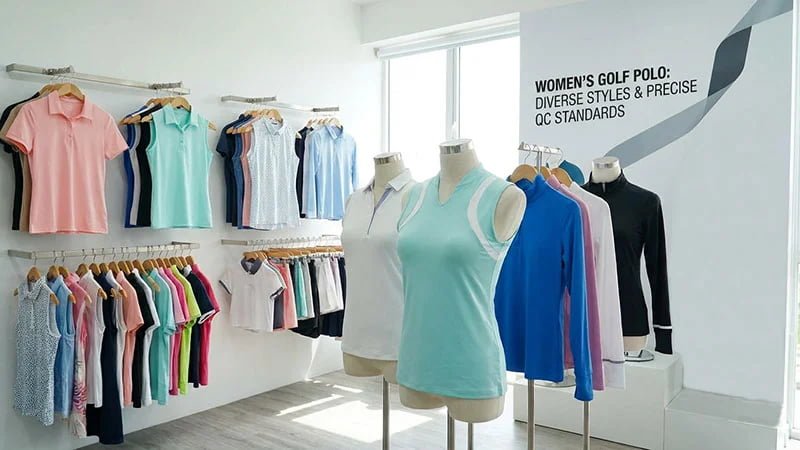
One size does not fit all, and one checklist doesn't either. Every style variation introduces new potential points of failure that you must anticipate. This table highlights the key differences.
| Polo Style | Key Evaluation Criteria / Extra Risks |
|---|---|
| Standard Short-Sleeve | This is your baseline. Focus on bust fit (no pulling), waist shaping, and sleeve opening (not too tight). |
| Sleeveless | The armhole is the #1 risk. It must be shaped perfectly to prevent gaping during a swing. |
| Long Sleeve | Check sleeve length and circumference for restriction. Ensure the cuff is functional and not too tight. |
| Plus Size | Must use a dedicated plus-size fit model and pattern. Linear grading will fail; focus on mobility. |
How Can You Define Fit Criteria to Actually Reduce Returns?
Your customers complain about "bad fit," but this feedback is too vague to fix. Without clear, measurable standards, you can't solve the root problem.
Translate subjective feedback like "good fit" into objective Points of Measure (POMs). Define specific measurements for the chest, armhole, and body length in your tech pack. This gives your manufacturer concrete targets to hit.
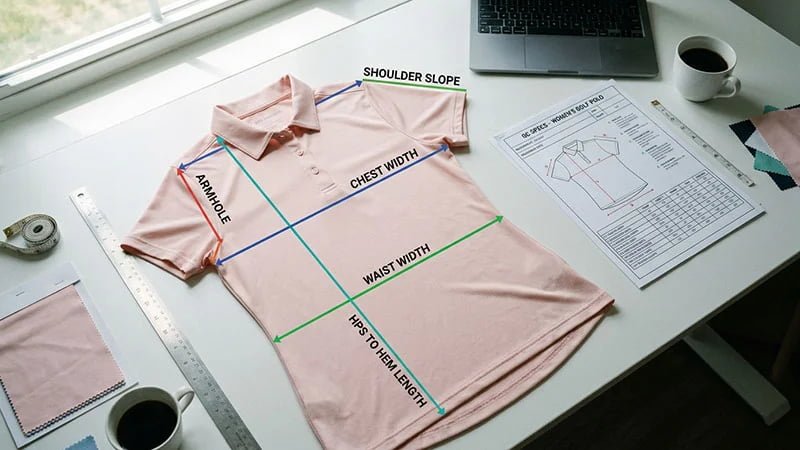
"Comfortable" is not a measurement. To reduce returns, you have to get specific. This turns a subjective opinion into a pass/fail test you can use with your supplier.
Defining Comfortable Shoulder, Chest, and Armhole
Specify the cross-chest width, the shoulder slope, and the armhole circumference. This ensures the polo allows for a full golf swing without pulling or restriction.
Evaluating Body Length, Waist Shaping, and Hem Behavior
Specify the high-point-shoulder (HPS) to hem length. Define the waist measurement and its position relative to the HPS to create consistent shaping. Check that the hem doesn't ride up.
Translating “Good Fit” Into Measurable POMs and Feedback
When a customer says the armhole is too tight, you can check the production garment against your spec sheet. If the measurement is outside your allowed tolerance, you have a data-driven reason to address it with your supplier.
What Are the Essential Performance Factors for Women's Golf Polos?
You chose a "performance fabric," but it feels stuffy and loses its shape. Not all performance fabrics are created equal, and choosing the wrong one ruins the garment.
Focus on four key performance metrics: moisture management, breathability, stretch with good recovery, and premium features like UV protection. Each must be tested and specified to ensure true on-course performance.
The term "performance" is overused. True performance is a combination of factors that keep a golfer comfortable. You must define these performance targets for your manufacturer.
Moisture Management: Wicking and Dry-Time
The fabric must pull sweat away from the skin (wicking) and dry quickly. You can request lab tests to measure a fabric's wicking rate and dry time to get objective data.
Breathability: Fiber, Knit, and Construction
Air needs to pass through the fabric. This is determined by the fiber (polyester), the knit structure (mesh is more breathable than a heavy piqué), and any ventilation features like mesh panels.
Stretch and Recovery: Maintaining Shape and Look
Most golf polos use spandex for stretch. The key is specifying the percentage of stretch and ensuring the fabric snaps back to its original shape. Poor recovery leads to a saggy, misshapen garment.
Premium Features: UV, Odor, and Ventilation Requirements
For a higher price point, consider adding features like a UPF 50+ rating for sun protection or an anti-odor finish. These must be specified and verified by the supplier.
What Must Be in Your Tech Pack for Quality Control?
Your polos are inconsistent, and your supplier says they "followed the design." Without a detailed tech pack, your instructions are just suggestions, not requirements.
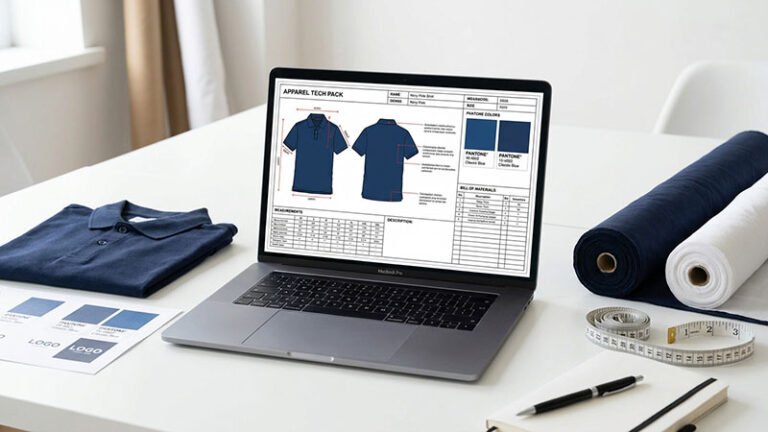
A strong tech pack is your contract with the factory. It must include graded Points of Measure (POMs) for all sizes, detailed construction notes, material specs, and clear quality tolerances to prevent disputes.
A weak tech pack is the number one cause of production errors. A complete tech pack is the single most important document you will create. It removes ambiguity and serves as the ultimate source of truth.
| Tech Pack Component | Why It's Critical |
|---|---|
| 1. POMs and Grading Rules | Provides exact measurements for all sizes, eliminating guesswork. |
| 2. Style & Construction Annotation | Shows how to build the garment (e.g., stitch types, collar construction). |
| 3. Material Spec | Defines the exact fabric composition, weight, and performance targets. |
| 4. Tolerances & Visual Standards | Sets acceptable measurement variations (e.g., +/- 0.5 inches) to avoid disputes. |
What Supplier Evaluation Criteria Should You Use for Women's Golf Polos?
You're looking for a manufacturer, but you don't know what to ask. Choosing the wrong partner can lead to poor quality, missed deadlines, and endless frustration.
Evaluate suppliers on three main areas: their proven capability with performance fit garments, their quality assurance systems from sampling to bulk, and their business structure (MOQ, lead time, and pricing).

Finding the right supplier is like hiring a key employee. A cheap price from a factory that has never made women's performance wear is not a good deal; it's a huge risk. Ask potential partners these questions.
Fit and Performance Garment Capability
Ask to see examples of similar women's performance polos they have made. Do they have fit specialists who understand female athletic apparel?
Sampling, QA, and Bulk Consistency
What is their quality assurance process? Do they create a pre-production sample for approval? How do they ensure bulk orders match the sample? Ask about their inline inspection process.
MOQ, Lead-Time, and Pricing Structure
Are their Minimum Order Quantities (MOQs) a good fit for your brand? What are their standard lead times? Is their pricing transparent, with all costs explained upfront?
What Common Sourcing Pitfalls Should You Avoid?
You're making classic sourcing mistakes without even realizing it. These errors, driven by vague specs and a focus on cost, lead to low-quality products and lost profits.
Avoid choosing a supplier on price alone, using subjective terms like "flattering" in your specs, ignoring style-specific risks, and failing to incorporate customer feedback into your next production run.
I see new brands make the same mistakes over and over. They are so focused on getting the lowest possible price that they ignore the hidden risks. A cheap polo that doesn't fit will cost you far more in returns.
| Pitfall | How to Avoid It |
|---|---|
| Choosing by Price Alone | Balance price with supplier capability, quality systems, and communication. |
| Using Subjective Specs | Translate words like "comfortable" into measurable POMs and material specs in your tech pack. |
| Ignoring Style-Specific Risks | Create a unique pattern and risk assessment for each style (sleeveless, plus size, etc.). |
| Not Incorporating Returns Feedback | Treat customer returns as valuable data to improve the fit and quality of your next order. |
What Are Buyers' Most Common Questions About Women's Polo Quality?
You have questions, but you're not sure where to start. Getting clear, expert answers to the most common questions can help you make smarter purchasing decisions.
Buyers often ask about key evaluation criteria, specific risks for different styles (sleeveless, plus-size), and whether a fitted or relaxed silhouette is better. Understanding these fundamentals is key to building a successful product line.
Over the years, I've answered thousands of questions from brand owners. The same concerns come up again and again because they are fundamental to creating a great product.
Key Criteria for Women’s Golf Polo Shirt Evaluation
The top three are: 1) Fit and mobility through the shoulders and torso, 2) Fabric performance, specifically moisture-wicking and stretch/recovery, and 3) Construction quality of the collar, placket, and seams.
Product Assessment for Sleeveless and Long Sleeve Styles
For sleeveless, the armhole shape is critical to prevent gaping. For long sleeve, you must check the sleeve length and circumference to ensure it's not restrictive and that the cuff is functional.
Evaluating Plus Size Polo Shirts
Do not use a linearly graded pattern. Ensure your supplier uses a dedicated plus-size fit model and pattern that adds appropriate room in the bust and hips while maintaining a flattering shape.
Fitted vs. Relaxed: What’s Best for Golf
This depends on your target customer. However, the most successful women's golf polos are typically "semi-fitted" or "athletic fit." They follow the shape of the body without being tight or restrictive, offering a balance of performance and style.
Common Testing and Wash Care Considerations
Specify wash tests to check for shrinkage and colorfastness. Ensure the care label instructions are correct for the fabric to prevent customer issues.
How Can You Build a Repeatable & Predictable Women's Golf Polo Program?
You got one good production run. But how do you ensure the next one is just as good? This is how you scale a brand from a single product to a full collection.
Turn a "nice sample" into a consistent bulk product by integrating a disciplined system. Combine detailed specs for fit, performance, and grading with a reliable, expert supplier. This is the formula for a predictable program.
Building a successful brand isn't about one home run product. It's about a system that produces quality consistently. The goal is to make quality predictable, not accidental. This happens when you stop thinking about just the "design" and start thinking about the entire production system.
Turning “Nice Sample” Into Bulk Consistency
The approved pre-production sample is your "gold standard." Your manufacturing partner must have systems in place—like inline QC and final inspections—to ensure every piece in the bulk order matches it within the agreed-upon tolerances.
Integrating Fit, Performance, Grading, and Supplier Discipline
This is the final step. Your detailed tech pack (fit, performance, grading) and your supplier's manufacturing discipline must work together. When these two parts are strong, you create a program that is repeatable, predictable, and profitable.
Conclusion
Build your women's golf polo program on a foundation of clear criteria. By integrating precise fit, performance, and supplier discipline, you can ensure consistency and build a brand customers trust.