
Piles of old golf shirts cluttering your closet? Tossing them feels wasteful. Pros have smart systems for their old gear that you can copy to make a real difference.
Most old pro golf shirts are donated to charity, given to team members and caddies, kept as memorabilia, or reclaimed through brand take-back programs. They are rarely just thrown away, as their lifecycle is often managed by sponsorship contracts and brand policies.
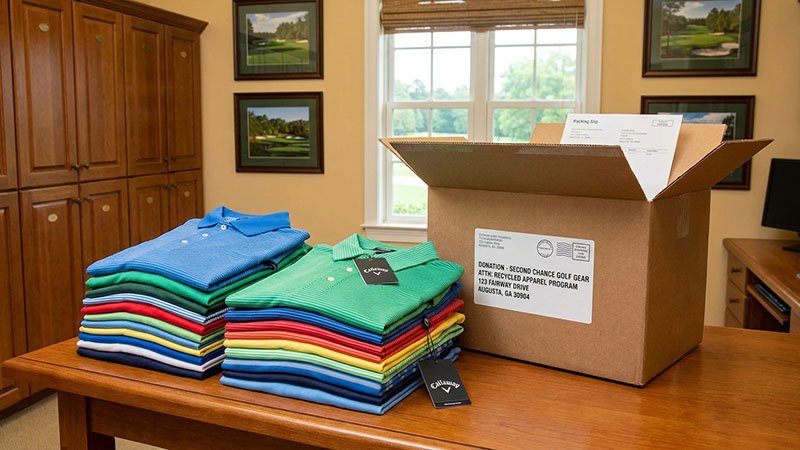
You might think players simply discard them after a tournament, but that’s far from the truth. As someone who manufactures apparel for golf brands, I see the real system behind the scenes. The journey of a pro’s shirt is controlled by contracts and brand inventory strategies long before it even reaches a player. It’s a managed process, not a casual toss into a hotel bin. This organized approach holds valuable lessons for all of us.
Why Do Pros Cycle Through So Many Golf Shirts?
Ever watch a tournament and see a player in a new, crisp shirt every single day? It’s easy to think it's just for fashion, but the reality is much more business-focused.
Pros need a constant supply of new shirts due to strict sponsorship contracts, demanding tournament schedules across different climates, and the need for perfect on-camera branding. It's a professional necessity.
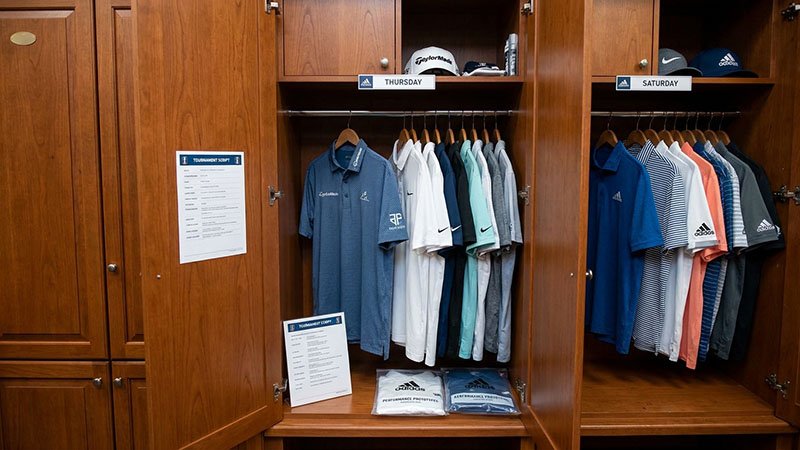
From my experience working with brands, the number of shirts a player receives is staggering, but it's not about waste; it's about meeting professional demands. A player isn't just an athlete; they are a walking billboard. Their apparel is a critical part of a multi-million-dollar marketing engine, and it has to perform flawlessly both on the course and on camera.
Sponsorship cycles and logo policies
This is the biggest driver. I work with brands, and their sponsorship contracts are incredibly specific. They require players to wear the latest season's gear with perfectly placed logos. A faded, worn, or incorrectly branded shirt is a breach of contract. A fresh shirt is required for every round to ensure the sponsor's brand looks pristine.
Tournament schedules, climates, and dress codes
A player might compete in hot and humid Florida one week and then fly to cool, windy Scotland the next. They need specific apparel—lightweight and vented for heat, or heavier and long-sleeved for cold. With a multi-day tournament, plus pro-ams and practice rounds, a player needs at least 5-7 different shirts ready for just one event.
TV visibility, colorways, and branding needs
Brands provide players with specific "scripts" or color stories for each tournament day. This is planned for maximum TV visibility. A sharp, bright, and clean shirt simply looks better on an HD broadcast. Fuzz, pilling, or a dull color will be noticed, and that reflects poorly on the brand.
Samples, prototypes, and limited drops
Before a new collection launches to the public, tour players are the ultimate product testers. We send them prototypes and pre-production samples to get feedback on fit, fabric performance, and durability. These early versions are quickly replaced once the final product is ready.
Locker room logistics and inventory turnover
Players live out of a suitcase. They don't have time to do laundry. A tour van or brand representative will often supply them with a full week's worth of apparel at the start of a tournament, and sometimes collect the used items at the end. It's a practical system built for constant travel and high performance.
Where Does Old Pro Golf Apparel Actually Go?
So if they're not just throwing them out, what happens to all these slightly used shirts? They don't vanish. There's an established, though often informal, system for where this gear ends up.
Most used pro shirts are channeled into productive second lives. They are frequently donated to charities for auction, given to caddies and team members, or passed along to family and friends.
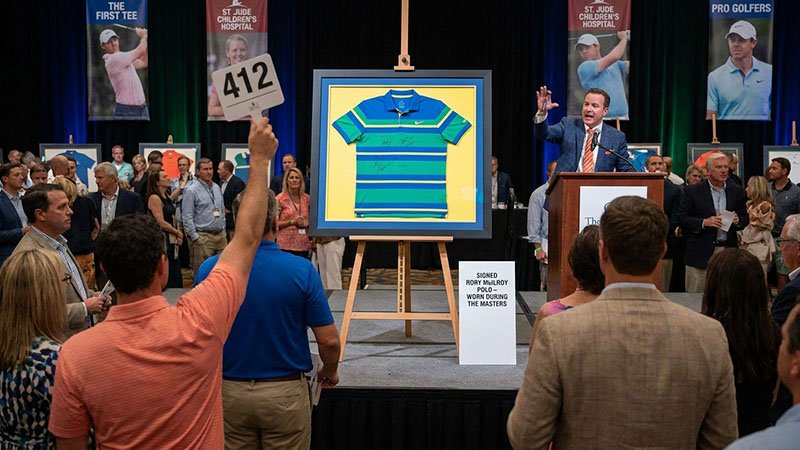
Brands and players are very aware of the value—both monetary and sentimental—tied to these shirts. From my perspective in the supply chain, a player's used shirt is a brand asset. Its journey is often guided by PR and brand management goals long after it leaves the player's back. The goal is to ensure the shirt's next life continues to reflect positively on the brand and the player.
Charitable donations and auctions
This is the most common and public-facing path. Signed shirts from big-name players can raise thousands of dollars for foundations and charities. This is a huge win-win: a charity gets funding, a fan gets a piece of history, and the player and brand get positive exposure.
Team, caddie, and staff reuse
A golfer's success depends on their team: the caddie, coach, physio, and agent. It’s very common for players to pass along their apparel to their inner circle. That's why you often see caddies wearing the same branded gear as their player.
Family, friends, and fan giveaways
The simplest path is often the most personal. Players will give shirts to loved ones or toss a signed polo to a fan in the crowd after a round. It’s a small gesture that builds a powerful connection and creates a fan for life.
Personal archives and memorabilia storage
Some shirts are too important to give away. The polo worn to win a Major, a Ryder Cup, or a first PGA Tour event is destined for a frame on the wall. These become cherished pieces of personal history.
Resale via memorabilia marketplaces
For very high-profile players, some game-worn apparel makes its way to certified memorabilia marketplaces. This is a controlled process, often managed by the player's agent and the brand, to ensure authenticity and protect the brand's image.
What Eco-Friendly Pathways Are Used by Players and Brands?
The golf industry is waking up to its environmental responsibilities. Beyond simple donations, brands and manufacturers are creating more sophisticated, circular systems to handle apparel at the end of its life.
Leading brands are now creating take-back programs to collect old apparel and partner with textile recyclers to turn it into new fiber. Another key strategy is upcycling deadstock fabric into new, limited-edition products.
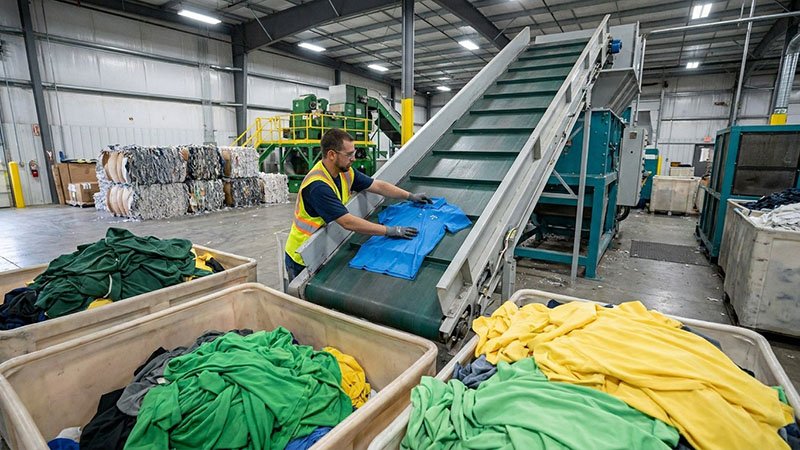
This is an area where I see the most innovation. The conversation has shifted. It's no longer just about what to do with a used shirt; it's about how we, as manufacturers, can design a shirt that is meant to be recycled from day one. This is the core of a truly sustainable model.
Brand take-back and circular programs
A few major apparel brands are piloting programs where customers can return old clothing. These items are then sorted for resale, donation, or recycling. While not widespread in golf yet, it's the direction the industry is headed.
Textile recycling partners and fiber-to-fiber options
This is the holy grail. We are now manufacturing performance fabrics with mono-materials (like 100% polyester) that are easier to recycle. We work with recycling partners who can break down these old garments and spin the material into new yarn. This "fiber-to-fiber" process creates a truly circular loop.
Upcycling into gear: towels, headcovers, quilts
For shirts that can't be recycled back into fiber, upcycling is a creative solution. The fabric can be cut and sewn into new items like equipment headcovers, practice pouch bags, or even unique patchwork quilts for charity auctions.
Deadstock redesigns and limited capsule releases
The biggest waste problem in apparel isn't the one shirt a player wears—it's the thousands of yards of unsold fabric, or "deadstock," left at the factory. We work with smart brands to use this deadstock to create new, limited-edition capsule collections. It's a creative and highly sustainable solution.
Tracking impact: take-back data and traceability
To prove these programs work, brands are starting to track the data. They measure how many items are returned and how much material is successfully recycled or upcycled. Traceability technologies, like QR codes, can help show the consumer the journey their returned garment took.
What Are Some Real-World Snapshots of These Programs in Action?
These environmentally friendly practices aren't just theories; they are happening right now on tours and in partnerships across the golf world. These examples show how the industry is taking concrete steps.
Tours and brands are actively collaborating on sustainability. This includes hosting on-site donation drives at tournaments, using signed apparel for foundation fundraisers, and forming partnerships to reduce the sport's environmental footprint.
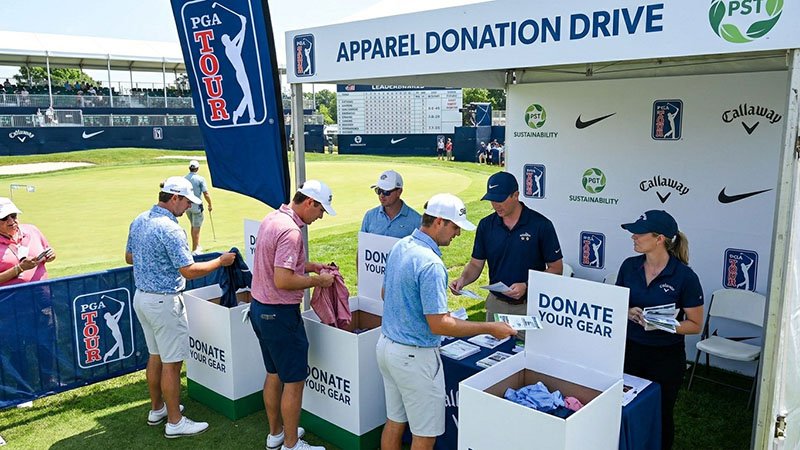
Seeing these initiatives firsthand is inspiring. It shows a collective shift in mindset. When a major tour, a global brand, and the players all align on a sustainability goal, it creates a powerful ripple effect that reaches millions of fans. These actions normalize the idea that our gear can and should have a positive impact beyond the 18th hole.
On-site donation drives at tournaments
Some tournaments now feature collection bins where players, caddies, and even fans can donate used golf apparel and equipment. These items are then distributed to local youth golf programs or charities.
Athlete foundation fundraisers and signed polos
Nearly every top professional golfer has a foundation. Signed, game-worn polos are a staple of their fundraising auctions and raffles, converting a simple shirt into vital funding for community causes.
Brand–tour sustainability collaborations
We're seeing major tours like the DP World Tour partner with apparel brands to promote sustainability. This can involve anything from using recycled materials in official tournament merchandise to committing to carbon-neutral operations.
Club, college, and junior program pipelines
A massive amount of "old" pro gear, including overstock from brands, is channeled to support the next generation of golfers. College teams, junior golf academies like The First Tee, and local clubs often receive bulk donations of apparel.
Media spotlights that amplify good practices
When a major golf publication or broadcast highlights a player's or brand's sustainability efforts, it has a huge impact. It raises awareness and encourages more people and companies to adopt similar practices. This positive reinforcement is key to driving industry-wide change.
What Can You Do with Your Old Golf Shirts?
Inspired by the pros? You can adopt the same smart strategies for your own golf wardrobe. Your old shirts have plenty of life left in them long after you've upgraded.
You can donate your shirts to local youth golf programs, resell them on online marketplaces, or get creative with DIY upcycling projects. The key is to assess the condition and choose the right path.
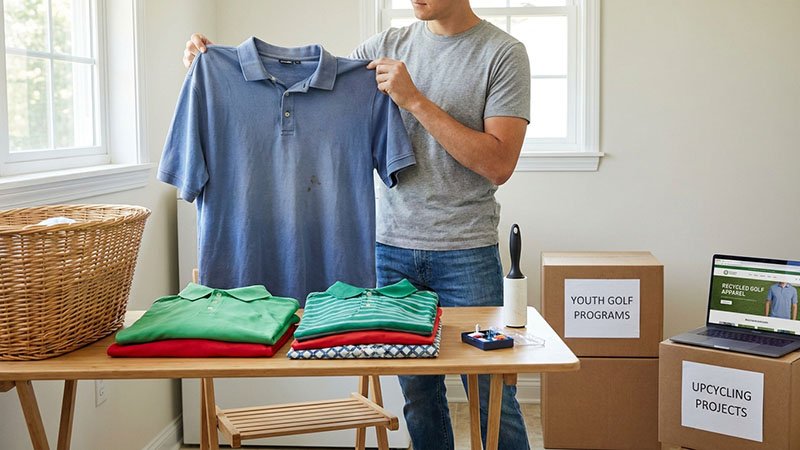
As an apparel maker, I can tell you that a well-made golf shirt is incredibly durable. The technical polyester fabrics we use are built to last. Throwing them away should be the absolute last resort. With a little effort, you can ensure your old gear finds a new home where it will be appreciated and used.
Donate smartly: condition checks and where to give
Before donating, make sure the shirt is clean and in good condition—no major stains, tears, or broken zippers. Local youth golf organizations like The First Tee are a perfect destination, as are high school golf teams and thrift stores.
Resell or swap: pricing and authenticity tips
If you have a shirt from a premium brand or a limited edition, consider reselling it on platforms like Poshmark, eBay, or dedicated golf forums. Be honest about the condition and take clear photos. For swaps, connect with other golfers in online communities.
DIY upcycling ideas for golfers
Get creative! You can turn an old polo into:
- A cover for your alignment sticks.
- A small valuables pouch for your golf bag.
- Cleaning rags for your clubs.
- Patches for a golf-themed quilt or decorative pillow.
Recycle right: blends, logos, and contamination
Textile recycling is still tricky for consumers. Most municipal programs don't accept clothing. Look for specific brand take-back programs or designated textile recycling bins in your area. Note that heavy embroidery or vinyl logos may need to be cut out before recycling.
Prep checklist: wash, repair, pack, label
No matter which path you choose, prepare the shirt properly. Wash it first. Make small repairs if you can, like sewing on a loose button. If donating or selling, fold it neatly. If recycling, check the specific requirements of the program.
How Can You Buy Better and Make Your Shirts Last Longer?
The most sustainable action you can take is to reduce consumption. This means buying high-quality, durable shirts and taking proper care of them so they last for many seasons.
Invest in shirts made from durable, certified materials. Extend their life by washing them in cold water and air-drying. Learning simple repairs can also keep a favorite shirt in play for years.
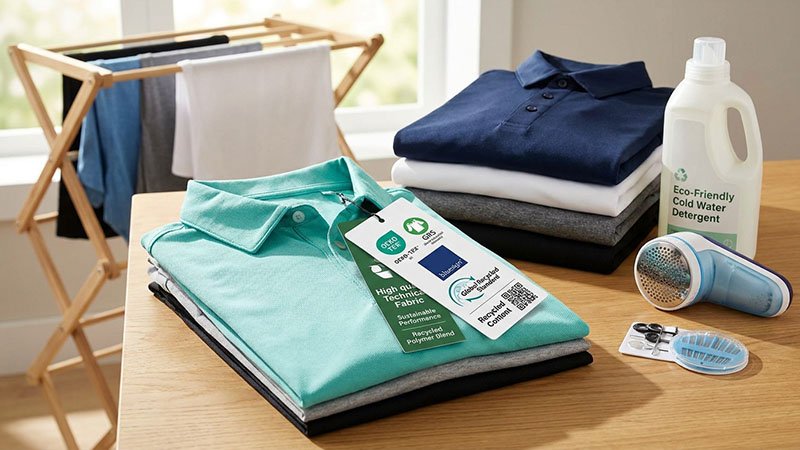
This is a principle I've built my business on. A shirt that falls apart after five washes is the definition of waste. When you choose a well-constructed garment, you aren't just buying better performance; you are making a more responsible environmental choice. It's about shifting from a disposable mindset to one of investment and care.
Preferred materials and certifications to look for
Look for high-quality polyester or nylon blends. Certifications like bluesign® or OEKO-TEX® ensure the fabric was produced with less environmental impact and is free from harmful chemicals. GRS (Global Recycled Standard) certification guarantees the recycled content.
Care habits: cold wash, air-dry, microfibre filters
Hot water and high-heat dryers degrade technical fabrics and spandex. Wash your golf shirts in cold water and hang them to air-dry. They will dry quickly, and this will preserve the fabric's integrity. To combat microfiber pollution, consider using a Guppyfriend washing bag or installing a filter on your washing machine.
Repair, tailor, re-dye, and de-pill
Don't discard a shirt because of a small flaw. Learn to sew on a button or fix a small seam. A handheld fabric shaver can easily remove pilling and make a shirt look new again. If a shirt is stained or faded, you can even try re-dyeing it a darker color.
Build a versatile, minimal golf wardrobe
Instead of buying dozens of trendy shirts, build a core wardrobe of 5-7 high-quality, versatile polos in classic colors like navy, white, black, and grey. You can easily mix and match them, and they will never go out of style.
Quick FAQ on Old Golf Shirts
Can embroidered or sponsor-logo shirts be recycled?
This is a tricky one. In most textile recycling systems, embroidery thread and plastic-based logos (like silicone or heat transfers) are considered contaminants. The process works best with pure materials, like 100% polyester. While some advanced facilities can remove these, many cannot. My advice? For donation or upcycling, logos are perfectly fine. If your goal is recycling, a plain shirt is always a better candidate. If in doubt, your best bet is to find a creative upcycling project for it instead of tossing it in a recycling bin where it might be rejected.
What should I do with a signed polo before donating or selling it?
A signature adds significant value, so handle it carefully. If you're planning to sell it, getting it authenticated by a professional service will maximize its value. For donations, don't just drop it in a generic bin. Contact a charity that runs memorabilia auctions, like The First Tee or a specific player's foundation. This ensures the shirt's full value goes toward a good cause. As for care, try to avoid washing it to preserve the ink. If you absolutely must, wash it by hand very gently in cold water and let it air dry.
Are tax deductions possible for apparel donations?
Yes, often they are, but you have to be careful. I'm an apparel expert, not a tax advisor, so you must check your local rules and consult a tax professional. Generally, in places like the U.S., you can claim a deduction for items donated to a qualified charity. You'll need a receipt, and the deduction is based on the item's "fair market value" at the time of donation. For a standard used polo, this might be a few dollars. For a valuable signed shirt, you may need a formal appraisal to justify its value.
How can I reduce microfiber shedding when washing my golf shirts?
This is a great question because performance fabrics are made from synthetic fibers. Here are a few simple things you can do:
- Wash Less: Air dry your shirt after a round. If it’s not visibly dirty, you can wear it again before washing.
- Use Cold Water: Wash on a short, cold cycle. Less friction and heat means fewer fibers break off.
- Use a Filter Bag: A specialized laundry bag like a Guppyfriend traps a large portion of the microfibers before they go down the drain. You can also install a filter on your washing machine's outlet hose.
- Wash Full Loads: A fuller load reduces the amount of friction on each individual garment.
Conclusion
Don't just discard old shirts. Treat them like pros do: donate, reuse, or upcycle. Buying durable, quality apparel from the start is the most sustainable choice of all.