
Choosing the right custom golf shirt can feel overwhelming. A wrong choice leads to uncomfortable teams, unhappy customers, and a brand image that doesn’t connect. Let me help you avoid that.
The best way to choose a custom golf shirt is to start with its end use. Define if it's for active play or casual wear, the climate it will be worn in, and your brand's style. This clarity will guide every decision, from fabric and fit to your final supplier.
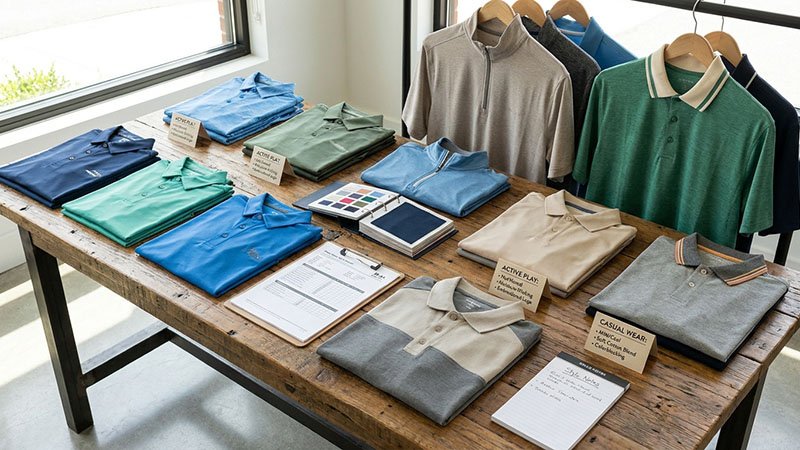
It seems like a lot to think about, I know. When I first started in a small textile factory, I saw brands make costly mistakes by focusing on the wrong things. They'd pick a fancy fabric that wasn't right for the situation. But don't worry. I've broken this down into a clear, step-by-step process. Let's start with the most important part: defining what you truly need.
How Do You Define Your Needs and Brand Positioning?
Are you feeling unsure where to even begin? A vague plan creates a generic shirt that excites no one. Let’s build a strong foundation for your design first.
Start by detailing the shirt's purpose (tournament vs. corporate), climate, and brand style. Then, create a priority matrix for cost, performance, and comfort. This roadmap ensures every choice reflects your brand's unique goals and audience, preventing costly mistakes later on.
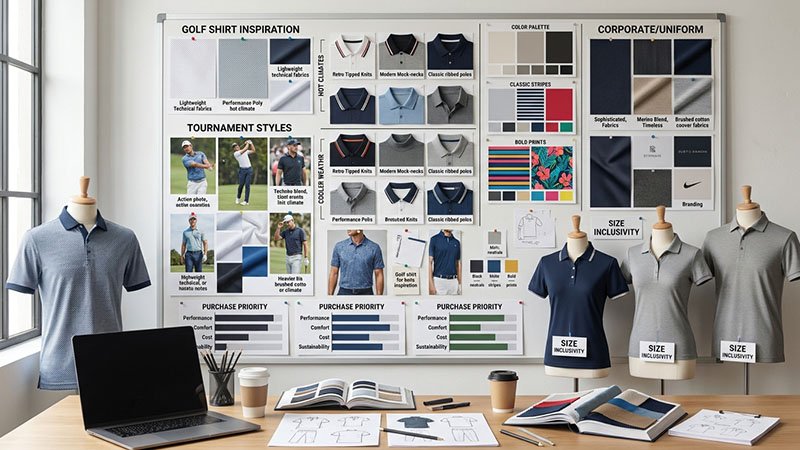
Getting this first step right is everything. I’ve seen clients pick a high-performance fabric for a corporate giveaway, only to find the athletic look felt wrong for their accountants. The key is to match the shirt to the real-world situation. Let's break down how to do that.
Use cases & climate
First, think about who will wear the shirt and where. A shirt for a competitive golf tournament needs maximum breathability and stretch. A shirt for a corporate team or a retail line might prioritize a classic look and feel. Then consider the climate. A hot, humid Florida course demands a lightweight, moisture-wicking fabric. A cooler, windy day in Scotland might call for something a bit heavier.
Brand style & palette
Next, define your brand’s personality. Are you minimalist and modern? Classic and retro? Or bold with vibrant prints? Your brand's style will guide your color palette, collar type, and overall design. Nail this down early, so your shirt communicates your brand identity at a glance.
Purchasing priority matrix
You can't have everything, so you must prioritize. A priority matrix helps you make smart trade-offs between comfort, performance, cost, and sustainability. For a high-end tournament polo, performance and comfort are king. For a large promotional order, cost might be the biggest factor.
| Feature | Tournament Polo | Corporate Uniform |
|---|---|---|
| Performance | High Priority | Low Priority |
| Comfort | High Priority | Medium Priority |
| Cost | Medium Priority | High Priority |
| Sustainability | Medium Priority | Medium Priority |
Audience & size range
Finally, who is your audience? Are you designing for men, women, or creating a unisex fit? Your choice affects the cut and sizing. Offering an inclusive size range, including tall or petite options if needed, shows you understand and value all your potential customers.
How Do You Match Fabric and Performance?
The fabric you choose can make or break your custom golf shirt. Feeling lost in technical terms like GSM, UPF, and wicking rates? Let's decode the language of textiles.
Analyze your defined needs, then find fabrics with matching technical specs. For active golf, look for high benchmarks like UPF 50+ and fast wicking. For casual or corporate use, focus more on a comfortable hand-feel, durability, and easy care instructions.
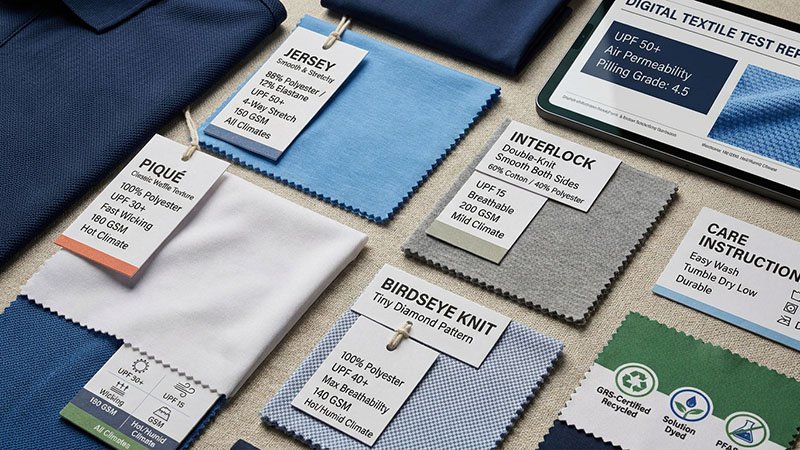
I often tell new brands that expensive does not always mean suitable. A premium, ultra-wicking athletic fabric might feel "too sporty" or clingy for a business-casual setting. Conversely, a standard cotton-blend polo fabric will leave a golfer feeling hot and restricted during a swing. The secret is finding the right match for your intended use case.
Knit structures & fibers
The fabric's structure affects its feel, drape, and performance. Common options include:
- Jersey: Soft, lightweight, and stretchy, like a t-shirt.
- Piqué: Has a textured, waffle-like appearance. This is the classic polo shirt fabric.
- Interlock: A double-knit fabric that is smooth on both sides, stable, and drapes well.
- Birdseye: A knit with a small, diamond-shaped pattern that creates tiny pockets for breathability.
Performance benchmarks
Look for specific test results to guarantee performance. Key benchmarks include:
- Sun Protection: UPF 50+ is the gold standard (tested via AATCC 183).
- Moisture Wicking: Look for a vertical wicking rate of ≥3.5 (AATCC 195).
- Breathability: Measured by air permeability (ASTM D737).
Weight & comfort
The fabric's weight, measured in Grams per Square Meter (GSM), should match the climate.
- Hot climates: 140–170 GSM
- Temperate climates: 160–190 GSM
- Cool climates: 180–220 GSM
A good golf polo should also have 8-15% elastane (spandex) for comfortable stretch.
Durability & care
A great shirt needs to last. Check for a pilling resistance of grade 3.5 or higher and a snag resistance of grade 4 or higher. The fabric should also have minimal shrinkage (≤5%) and be easy to care for, so it looks great after many washes.
Chemistry & sustainability
For brands focused on sustainability, look for GRS-certified recycled materials, solution-dyed core colors that save water, and PFAS-free water-repellent finishes. Non-biocidal odor control is also a great feature for performance wear.
How Do You Dial in the Fit, Construction, and Comfort?
A great fabric in a poorly fitting shirt is still a bad shirt. An incorrect fit can restrict a player's swing or just look sloppy in a business meeting. Let's build a shirt that feels as good as it performs.
Choose between an athletic fit (trimmer, higher stretch) and a classic fit (more relaxed). The real difference is in the construction. Details like raglan sleeves, gussets, and flatlock seams directly impact mobility and comfort, so match them to the shirt’s intended purpose.
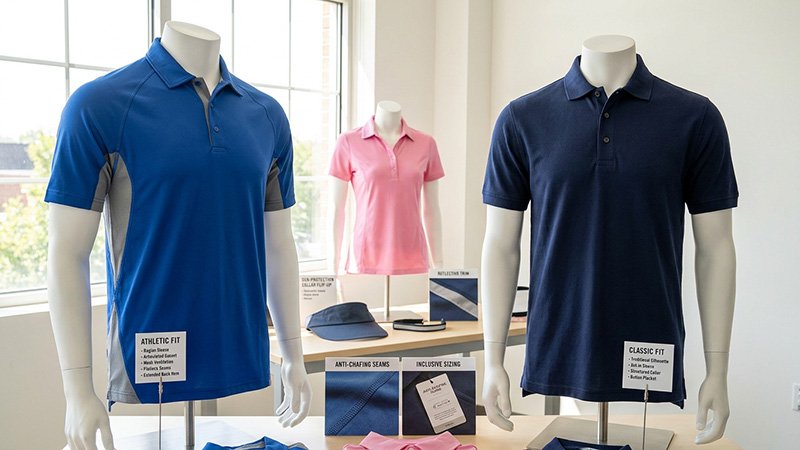
Many people think the difference between an athletic and a business-casual polo is just style. This is a common mistake. The difference is structural. An athletic polo is engineered for movement, with special seam placements and panels. A business polo is cut for a clean drape when standing or sitting. Mixing them up leads to polos that ride up during a swing or look unkempt in a meeting.
Fit selection & grading
Will your shirt have an athletic fit, which is more tapered to the body, or a classic fit with a straighter, more relaxed cut? Also, remember that women's blocks are shaped differently from men's, with darts or seams to accommodate curves. Offering inclusive sizing and consistent grading between sizes is crucial.
Collars & plackets
The collar is a key visual element. A ribbed knit collar is traditional. A self-fabric collar offers a cleaner, more modern look. A blade collar provides a very athletic, minimalist style. Make sure collars have proper interfacing to prevent curling after washing. The placket can have two, three, or four buttons, or even a short zipper for a technical look.
Mobility & venting details
For true performance, construction is everything. Raglan sleeves or forward-shifted shoulder seams provide a greater range of motion for a golf swing. Underarm gussets prevent the shirt from lifting. Strategically placed mesh panels or laser-cut perforations add ventilation where it’s needed most. A slightly longer back hem keeps the shirt tucked in.
Touch & anti-chafing seams
Comfort is in the details you can't always see. Flatlock or coverstitch seams lie flat against the skin to prevent chafing during a long round. If you are adding embroidery, always request a soft backing (or "fusible interlining") on the inside so it doesn't irritate the skin.
Sun protection & visibility
Besides UPF fabric, a well-designed collar that can be flipped up provides extra sun protection for the neck. For players who are out in the early morning or evening, adding small reflective details can be a great functional and safety feature.
What Are the Best Decoration and Branding Choices?
Your logo represents your brand, but the wrong application method can crack, peel, fade, or even damage the fabric. Let’s make sure your branding looks professional and holds up over time.
Match your decoration method to your fabric and design complexity. Embroidery is a durable classic, while silicone printing offers a modern, flexible alternative. Always perform wash and stretch tests to ensure your branding endures without fading, cracking, or peeling.
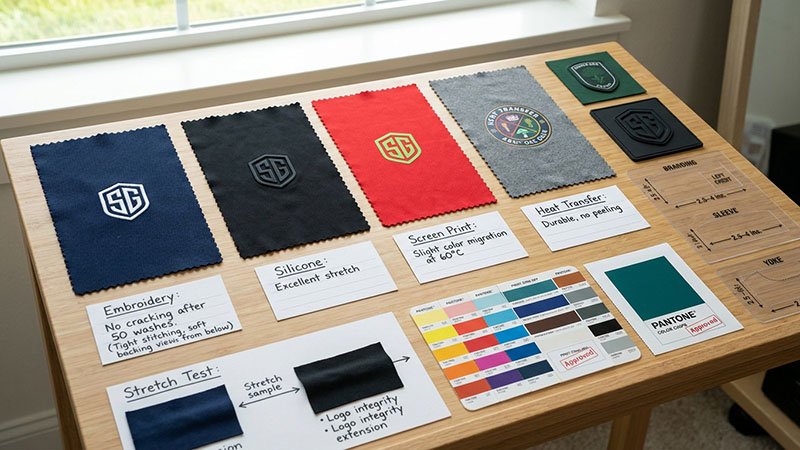
The biggest mistake I see is when a brand puts a thick, non-breathable logo right in a high-sweat area. Or they use a high-temperature heat transfer that damages the delicate performance fabric underneath. The goal is to make the branding a seamless part of the shirt, not a stiff afterthought. Let's look at the options.
Decoration methods compared
Each branding method has its pros and cons.
- Embroidery: Timeless, durable, and has a high-perceived value. Best for simple logos.
- Screen/Silicone Print: Great for larger designs and very durable. Silicone offers a premium, 3D effect.
- Heat Transfer/DTF: Excellent for complex, multi-color logos. It’s critical to use low-temperature films on polyester to prevent dye migration.
- Sublimation: Perfect for all-over prints on 100% polyester, as the ink becomes part of the fabric.
- Badges: Woven or 3D rubber badges offer a premium, textured look.
Parameters & testing
Don't skip testing. For any decoration on polyester, you must ask for an anti-dye-migration test, which ensures the fabric color doesn't bleed into your logo. A simple wash test (5-10 cycles) will quickly reveal if a logo will crack or peel. Your supplier should be able to provide these test results.
Placement & sizing guidelines
Standard branding placements are the left chest, sleeve, and below the collar on the back (the "yoke"). Typical chest logos are 2.5 to 4 inches wide. It's best to avoid placing large, non-breathable decorations on high-sweat zones like the center back or underarms. Always provide your manufacturer with clear vector art files (.AI, .EPS) for the best results.
Color management
To ensure your brand colors are accurate, always provide Pantone (PMS) color codes. Before production, you should request lab dips (small swatches of custom-dyed fabric) and print strike-offs (print samples on your actual fabric) for approval. For sublimation on colored fabrics, a bleed-blocking base layer might be needed to keep colors true.
How Do You Manage Suppliers, Costing, and Ordering?
Finding a reliable manufacturing partner can feel like a huge risk. A low price can hide problems with quality, communication, or on-time delivery. Let me give you my personal checklist for vetting partners.
Vet potential suppliers by checking their industry experience, sample quality, and third-party compliance reports. Provide a detailed RFQ with a tech pack to get accurate quotes. Understand that MOQs and lead times will vary based on your fabric and design choices.
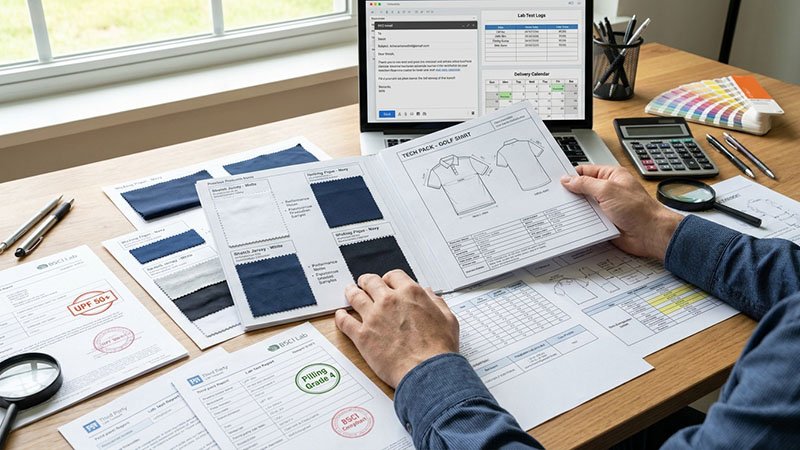
When I was starting FUWAY, I learned that a good partner is worth more than a cheap invoice. A good factory asks smart questions and helps you avoid problems you didn't even know you had. The goal is to find a partner, not just a vendor. Here’s what to look for and how to structure your communication.
Vendor vetting checklist
When you talk to a potential supplier, ask them about:
- Industry Experience: How long have they been making golf apparel specifically?
- Sample Quality: Request samples of their previous work to inspect the stitching, fabric, and finishing.
- Third-Party Tests: Can they provide recent lab test reports for things like UPF or pilling?
- Compliance: Do they have certifications for social accountability (like BSCI) or chemical safety?
MOQs & lead times
Minimum Order Quantities (MOQs) depend on the manufacturing process. Piece-dyeing solid colors usually has lower MOQs. Custom yarn-dyed stripes or jacquards will have higher MOQs. A typical sample (SMS) takes 2-3 weeks. Bulk production for knit garments usually takes 30-45 days after all approvals.
Cost breakdown
To understand your costs, ask for a breakdown. The price is based on the Bill of Materials (BOM) and the Cut-Make (CM) labor cost. Fabric utilization is a big factor—more complex designs with more panels result in more wasted fabric and higher cost. Decoration, special trims, and shipping are usually priced separately. Lock in your pricing to avoid surprises from currency fluctuations.
RFQ essentials
To get a fast and accurate quote, your Request for Quote (RFQ) must be professional. Include these key items:
- A complete Tech Pack with all design details.
- Your desired size breakdown (sizing curve).
- Your target FOB price.
- A matrix of required lab tests.
- Your ideal delivery schedule.
Terms & after-sales
Before placing an order, clarify the commercial terms. Agree on an AQL standard for inspections and your right to a Pre-Shipment Inspection (PSI). Discuss the policy for any defects—will they be reworked, or will you receive a discount? A good partner will also offer a warranty period for their products.
How Do You Ensure Quality, Compliance, and Final Acceptance?
The shipment of 500 shirts has just arrived. Are you sure each one is perfect? Don't wait until the boxes are open to discover a problem. Here's how professionals guarantee quality.
Use an AQL inspection plan to check for defects at key production stages. Before mass production, validate all fabric performance claims with lab tests and conduct fit tests with a full-size set. This proactive approach prevents large-scale failures and protects your brand's reputation.
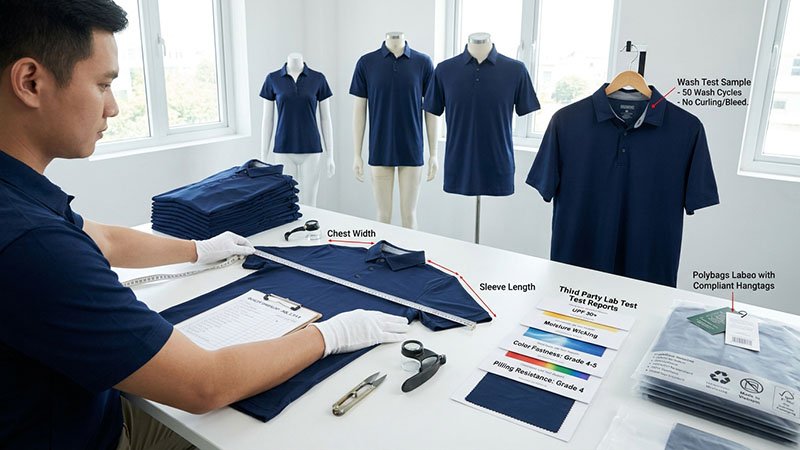
I’ll never forget a new brand owner who skipped these steps to save a little money. He received 1,000 polos where the navy blue dye bled into the white embroidery after the first wash. A simple QC check would have caught this. The cost of fixing that problem was ten times what he "saved" by cutting corners. Don't let that be you.
AQL and process control
AQL stands for Acceptance Quality Limit. It’s a statistical method used for inspections. A common plan is AQL 2.5/4.0, which means you will accept a batch if it has no more than 2.5% major defects and 4.0% minor defects. Inspections should happen at multiple stages: when raw materials arrive (IQC), during production (DUPRO), and before shipping (FQC/PSI).
Lab test matrix
Create a simple checklist of all the performance claims you're making and ensure your supplier provides third-party lab reports to back them up. This includes:
- UPF rating
- Wicking and drying speed
- Color fastness (to wash, sweat, and light)
- Pilling and snag resistance
- Dimensional stability (shrinkage)
Sizing & fit verification
Before you approve bulk production, you must get a size set—one sample in each size you plan to order. Try these on fit models or people with different body types to ensure your grading is correct. Key measurements (Points of Measure or POMs) should have a tolerance of no more than ±1 cm. Also, perform a 5-wash test on the collar to check for curling.
Packaging & labeling compliance
Your labels and packaging must comply with the laws in your country of sale. This includes fiber content (per 16 CFR 303 in the US), care instructions (ISO 3758), and country of origin. If you promise sustainability, using FSC-certified paper and recycled polybags strengthens your brand story.
Go-live & review
The final step is approving the Top of Production (TOP) sample, which represents the first units off the line. Once you approve the TOP sample and the final inspection report, your goods can ship. After your product launches, gather customer feedback. This is valuable information that will help you make your next product even better.
Frequently Asked Questions
1. How much does a custom golf shirt actually cost?
There is no single answer, as the cost depends entirely on your choices. The final price is influenced by fabric quality, order quantity (more shirts usually mean a lower price per shirt), the complexity of your logo decoration, and construction details like custom collars or zippers. I always tell new brands to budget for quality first; a cheap shirt that falls apart reflects poorly on your brand and ends up costing you more in the long run.
2. What is a typical MOQ, and can I order a very small quantity?
MOQ, or Minimum Order Quantity, is one of the biggest challenges for new brands. For a fully custom shirt with custom-dyed fabric, MOQs typically start around 300-500 pieces per color. This is because fabric mills have minimums for dying. My tip for new brands: start by choosing from your manufacturer's in-stock fabric colors. This can often lower the MOQ to as little as 100 pieces, allowing you to get your brand off the ground without a huge initial investment.
3. What’s the single best all-around fabric for a golf shirt?
If I had to choose just one, it would be a polyester/spandex blend jersey or piqué knit. This combination gives you the best of all worlds. The polyester provides excellent durability, color fastness, and moisture-wicking properties to keep you dry. The small percentage of spandex (usually 8-12%) gives you that critical four-way stretch for an unrestricted swing. It's a proven workhorse for both performance and comfort.
4. I have an idea but not a professional design. Do I need to hire a designer to create a tech pack?
While a professional tech pack is the gold standard, it's not always necessary to start. A good manufacturing partner should be able to help you. At FUWAY, we often work with brand owners who come to us with a simple sketch, a collection of inspiration photos, and a clear idea of their needs. From there, our team can help build the official tech pack for you. The most important thing is that you have a clear vision for the final product.
5. How can I guarantee the logo won't peel off or the shirt won't shrink?
This is a great question and it comes down to two things: choosing the right methods and testing. First, make sure your manufacturer uses a decoration method compatible with your fabric (for example, a low-temperature heat transfer for performance polyester to prevent damage). Second, insist on seeing test results. Before bulk production, a good supplier should perform wash tests to check for logo peeling, cracking, and fabric shrinkage. Don't be afraid to ask for this—it's your best insurance for a quality product.
Conclusion
Choosing the right golf shirt isn't about price. It's about matching every detail—fabric, fit, and finish—to its specific purpose. Get this right, and your brand will succeed.