Confused about what pants are okay for the golf course? The wrong choice can make you feel uncomfortable, restrict your swing, or even leave you underdressed for certain clubs.
For golf, the best option is performance golf pants or chinos made from stretch, breathable, moisture-wicking fabric. Most courses do not allow denim, cargo pants, or sweatpants. A clean fit, belt loops, and golf-appropriate fabric are the safest choice.
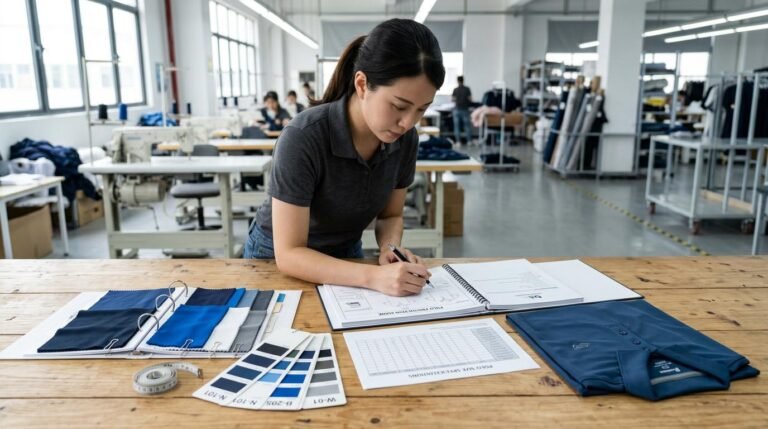
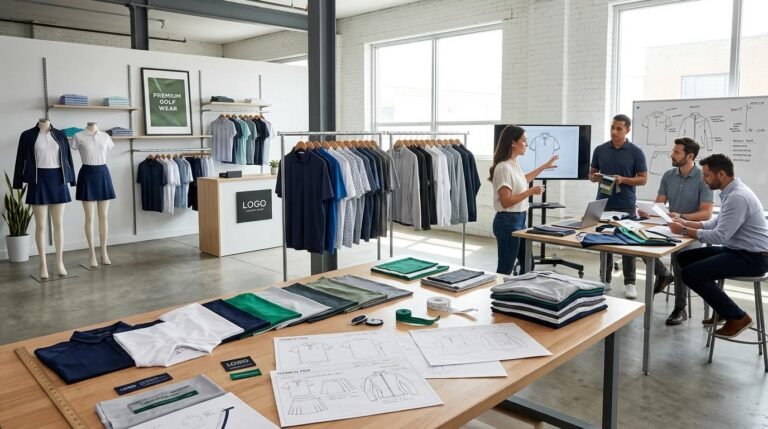
As a golf apparel manufacturer, we work with golf brands, clubs, resorts, and buyers to develop golf pants, polos, skorts, and teamwear that combine dress code compliance, on-course comfort, and modern athletic styling. In this guide, we explain what pants to wear golfing, what fabric and fit matter most, and what brands or clubs should consider when sourcing golf pants for their collections.
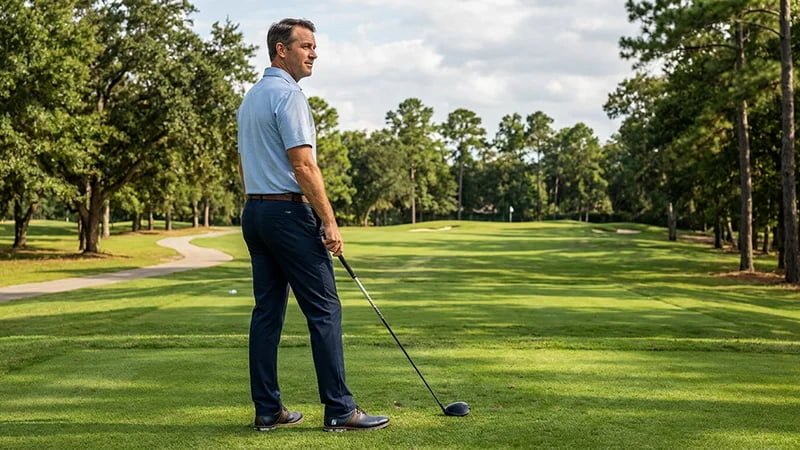
Choosing the right pants for golf is about more than just rules. It is about respecting the game’s traditions while using modern fabric technology to improve comfort and mobility. A good pair of golf pants should look polished, feel lightweight, and allow unrestricted movement throughout the round.
What Pants Do Most Courses Accept?
Worried about showing up in the wrong pants? It is a common concern, especially when visiting a new course or private club.
Most golf courses accept classic golf trousers or performance chinos. Tailored 5-pocket pants are often acceptable, but denim, cargo pants, and sweatpants are almost always prohibited. When in doubt, check the course dress code online first.
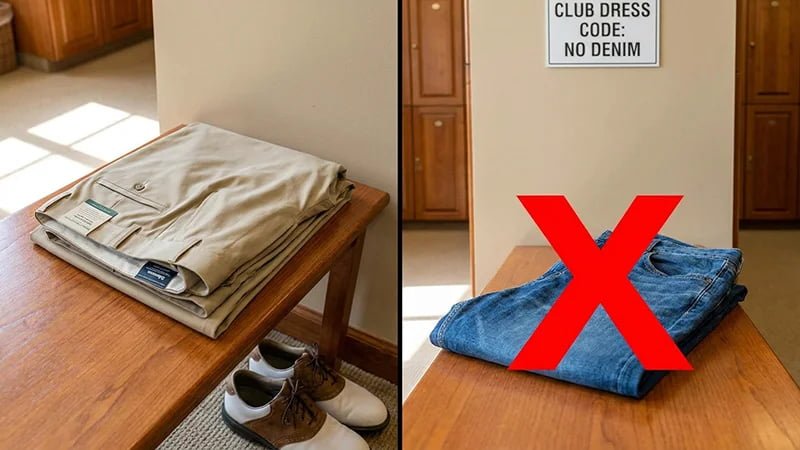
For most players, the safest choice is a dedicated pair of golf trousers. They are designed to meet course dress expectations while offering the stretch, breathability, and moisture control needed for play.
Safe choices: performance chinos and classic golf trousers
These are the most widely accepted options. They are specifically designed for golf and usually include stretch fabric, lightweight construction, and moisture-wicking performance. They also come in versatile colors that work across public, resort, and private club settings.
Often acceptable: tailored 5-pocket pants and subtle joggers
A technical 5-pocket pant can be a modern alternative to classic golf trousers if the fit is clean and the fabric is not denim. Golf joggers are becoming more common as well, but some traditional clubs may still restrict them. Always check the club’s policy before wearing joggers.
Common no-go options: denim, cargo pants, sweatpants, and loud prints
Jeans are too heavy and restrictive for golf. Cargo pants look too casual and utilitarian. Sweatpants are not appropriate for course dress codes. Novelty prints and aggressive camouflage patterns can also look out of place unless it is a themed event.
Fit basics: tapered leg, belt loops, and clean lines
Whatever style you choose, the fit should look neat and intentional. Golf pants should not be overly baggy, sagging, or sloppy. Belt loops are still expected at many courses, especially private clubs.
Always check the course dress code
This is still the most important rule. Dress codes can vary by club, region, and level of formality. Before heading out, take a quick look at the course website or call the pro shop.
Why Modern Golf Pants Are Different from Regular Casual Pants
At first glance, golf pants may look similar to casual chinos, but the construction is often quite different.
Modern golf pants are typically developed with performance fabrics, added stretch, moisture management, and movement-focused pattern cutting. From a manufacturing perspective, details such as waistband structure, gusset design, fabric weight, pocket placement, and recovery all affect how the pants perform on the course.
That is why many golf brands, clubs, and event buyers prefer purpose-built golf trousers over standard casual pants. For coordinated collections, many buyers also want the bottoms to match the look and performance level of their polos and outerwear. If you are developing a golfwear program, it helps to work with an experienced golf apparel manufacturer that understands both dress code expectations and product functionality.
What Fabric Features Matter Most in Golf Pants?
Not all golf pants perform the same. The wrong fabric can feel hot, stiff, noisy, or uncomfortable over 18 holes.
The most important golf pant fabric features are stretch, breathability, moisture-wicking, and shape retention. Details like a gripper waistband, wrinkle resistance, and water-repellent finishes can also improve the on-course experience.
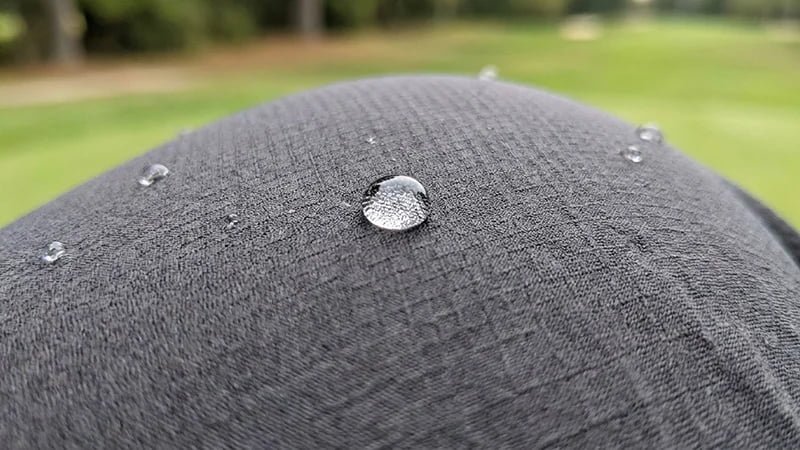
In product development, fabric is usually the first key decision because it defines comfort, movement, and overall appearance.
Stretch blends for mobility
Golf swings require a wide range of movement, especially through the hips and legs. Polyester-spandex and nylon-spandex blends are common because they provide flexibility without losing shape. Four-way stretch fabrics are especially effective for mobility.
Breathability and moisture-wicking performance
Lightweight synthetic fabrics help pull moisture away from the body and dry quickly. This keeps players more comfortable in warm weather, on long walking rounds, or during tournament play.
UPF protection for sunny conditions
Many golf pants are made with fabrics that offer built-in UPF protection, which can be useful for players spending several hours outdoors.
Water-repellent finishes for changing weather
For dewy mornings or light rain, a durable water-repellent finish can help keep the fabric drier for longer. This is a useful feature in many golf bottoms designed for all-weather use.
Smart construction details
Small details matter. A silicone gripper waistband helps keep shirts tucked in. Quiet fabric reduces swishing noise while walking. Secure pockets make it easier to carry tees, markers, scorecards, or small personal items.
For brands building a complete golf line, fabric consistency across custom golf pants, polos, and outerwear is also important for product positioning and merchandising.
How Should Golf Pants Fit? Rise, Taper, and Hem Explained
Even high-quality golf pants can look wrong if the fit is poor.
Golf pants should usually have a mid-rise waist and a tapered or athletic fit that allows movement without looking baggy. The hem should lightly touch the shoe, creating a slight break without bunching around the ankle.
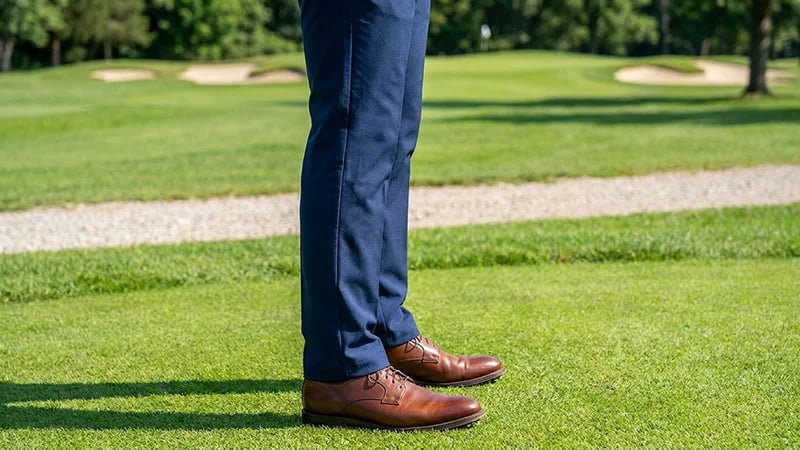
Fit affects both appearance and performance. A good golf pant silhouette should look sharp while allowing the player to move comfortably.
Slim, athletic, and classic fits
Slim fit golf pants create a modern look with a narrower leg. Athletic fit styles offer more room in the seat and thighs while still tapering below the knee. Classic fits provide the most room and can work well for players who prefer a traditional look.
Mid-rise waist for comfort and shirt retention
Mid-rise construction is usually the safest option because it sits comfortably and helps keep the polo tucked in throughout the round.
Hem length should be clean and controlled
Golf pants should not puddle over the shoes. The ideal hem creates a slight break at the front and falls neatly at the back.
Joggers need tailored execution
If wearing joggers, choose a version made from technical fabric with a clean, tailored shape rather than a casual fleece silhouette.
Tailoring can improve the final result
Even quality golf pants may need light hemming or tapering to look their best. A simple tailoring adjustment can significantly improve the appearance.
What Brands, Golf Clubs, and Tournament Buyers Should Look for in Golf Pants
For individual golfers, comfort and dress code are the top priorities. For brands, clubs, resorts, and tournament organizers, golf pants also need to meet product development, branding, and production requirements.
Fabric performance and consistency
Golf pants should provide stretch, breathability, moisture management, and reliable shape retention across repeated wear and washing.
Fit development and size range
A good golf pant program should consider men’s and women’s fits, commercial sizing strategy, and the preferences of the target market.
Branding and customization options
Buyers often need embroidery, heat transfer logos, woven labels, hangtags, or private label packaging. Some projects also require color-matched trims or coordinated capsules across tops and bottoms.
Multi-use applications
Golf pants may be developed for resort retail, pro shops, club uniforms, tournament apparel, teamwear, or a private label golf collection.
Production planning and quality control
MOQ, sample development, lead time, and quality consistency should all be reviewed before bulk production. These factors matter as much as appearance when sourcing golf apparel at scale.
If you are developing bottoms for a golf brand, club, or event program, it is often more efficient to source through a specialist [private label golf apparel supplier] or [OEM golf apparel manufacturer] with experience in golfwear construction.
Need Custom Golf Pants or Golf Apparel for Your Brand?
Fuway Golf works with golf brands, clubs, resorts, and buyers to develop custom golf pants, polos, skorts, and teamwear with OEM/ODM and private label support.
- Performance stretch fabrics
- Men’s and women’s golfwear
- Custom logo application
- Private label packaging
- Bulk production support
Explore our related services:
- [Custom Golf Pants]
- [Custom Golf Polo Shirts]
- [Private Label Golf Apparel]
- [Golf Apparel Manufacturer]
Does Your Style Need to Change Depending on the Golf Course?
Yes. Different golf environments often call for different levels of formality.
Private clubs generally expect a more conservative look, while public and resort courses may allow slightly more relaxed styling.
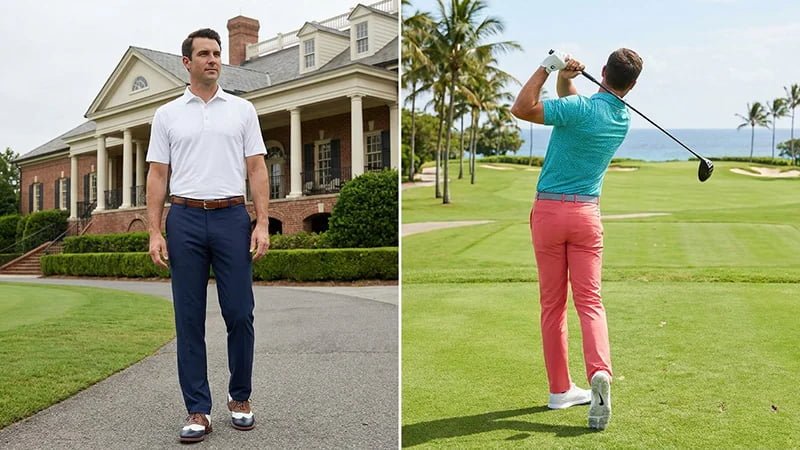
Private clubs
Stick to classic colors such as navy, grey, khaki, or white. Choose clean, tailored trousers and avoid experimental styles unless the club clearly allows them.
Public and municipal courses
These courses are often more relaxed, but jeans, cargo pants, and sweatpants are still usually unacceptable. Clean technical pants or chinos remain the best option.
Resort courses
Lightweight fabrics and lighter colors often work well in resort settings, especially in warm climates. This is also where golfers may have a bit more flexibility in styling.
Charity tournaments and corporate events
For group events, players often dress one step sharper. Coordinated apparel can create a more polished appearance, which is why many organizers order golf club uniforms or matching branded apparel for the event.
International and regional differences
Dress expectations can vary by country, club culture, and age demographic. When in doubt, choose the more polished option.
What Are the Best Options for Women’s Golf Pants?
Women’s golf pants should balance comfort, movement, function, and a polished on-course look.
Popular options include tailored trousers, ankle-length golf pants, modern skorts, and in some cases refined jogger silhouettes. Functional pockets, stretch waist comfort, and lightweight technical fabric are key features.
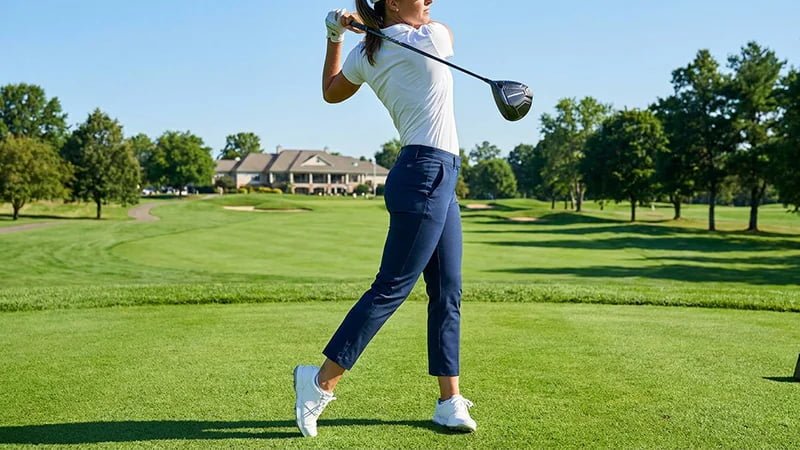
Tailored trousers and ankle-length styles
These are versatile, modern, and widely accepted on the course. Technical fabrics help maintain comfort and shape.
Skorts for mobility and styling flexibility
Skorts remain one of the most popular women’s golfwear options because they combine coverage, movement, and a sport-specific look.
Joggers and cropped styles
Some clubs allow these styles, especially if the garment is tailored and made from performance fabric. Traditional clubs may still prefer a more classic trouser silhouette.
Functional details matter
Women’s golf pants should include real pockets, good stretch recovery, and a waistband that feels secure without discomfort.
For coordinated collections, many buyers source women’s and men’s styles together through the same golf clothing manufacturer to maintain fabric consistency, branding, and fit strategy.
Golf Shorts, Rain Pants, and Other Alternatives to Standard Golf Trousers
Long pants are not always the only option. Weather, course type, and regional norms can affect what works best.
Tailored golf shorts are the most common warm-weather alternative. In wet conditions, waterproof rain pants worn over standard golf trousers are often the best choice. In cold conditions, thermal base layers can improve comfort without changing the outer look.
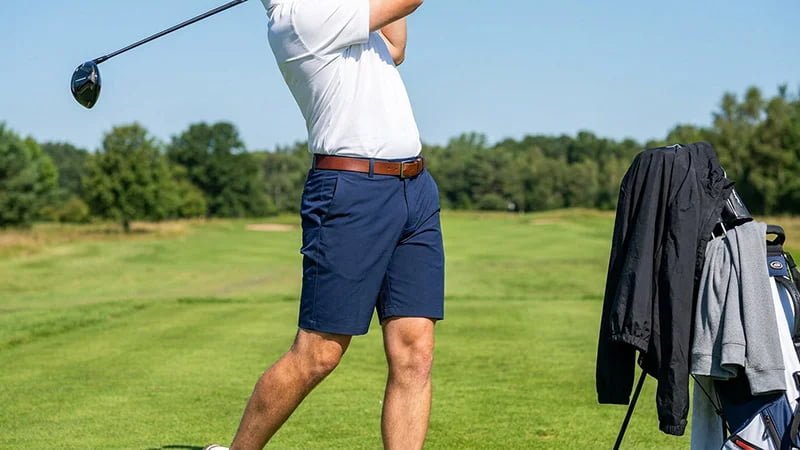
Tailored golf shorts
Golf shorts should fit cleanly, end around the knee area, and include belt loops. They should look more like tailored chinos than casual cargo shorts.
Rain pants
For bad weather, lightweight waterproof over-pants are useful because they can be layered on quickly without replacing the main outfit.
Thermal base layers
When temperatures drop, a base layer under standard golf pants can provide warmth without excessive bulk.
Adaptive and pull-on styles
For some players, pull-on designs offer a practical alternative while still maintaining a neat, golf-appropriate appearance.
What Pants Should You Absolutely Avoid on the Golf Course?
Knowing what not to wear is just as important as knowing what works.
Avoid denim jeans, cargo pants, sweatpants, yoga pants worn as outerwear, overly baggy cuts, and distracting novelty prints. These styles are typically either too casual, too restrictive, or inconsistent with golf dress expectations.
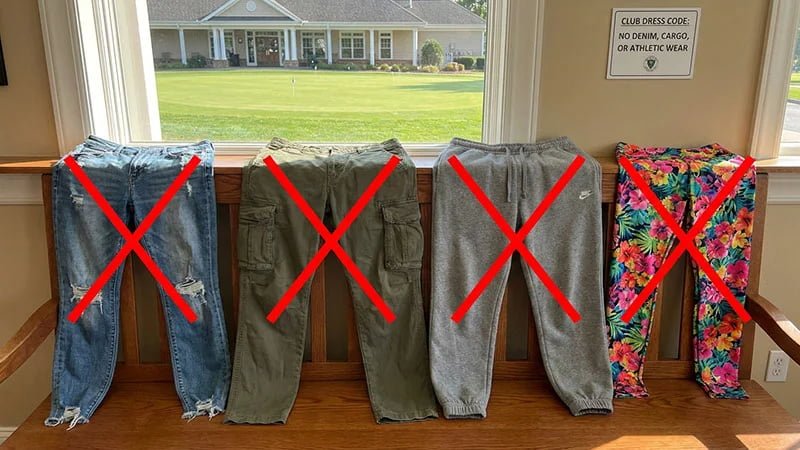
Denim
Too heavy, too casual, and poor for mobility.
Cargo pants
Bulky pockets and a workwear look make them a poor match for golf dress standards.
Sweatpants and yoga pants as outerwear
These styles belong more to gym or lounge settings than the golf course.
Distracting prints
Novelty graphics and loud camouflage are rarely the right choice unless approved for a special event.
Overly baggy fits
Excess fabric does not look polished and may interfere with movement.
How Do You Pair Golf Pants with the Rest of Your Outfit?
A strong golf outfit depends on balance and coordination.
Pair your golf pants with a clean polo, a matching or complementary belt, appropriate golf shoes, and layering pieces that fit the same overall level of formality.
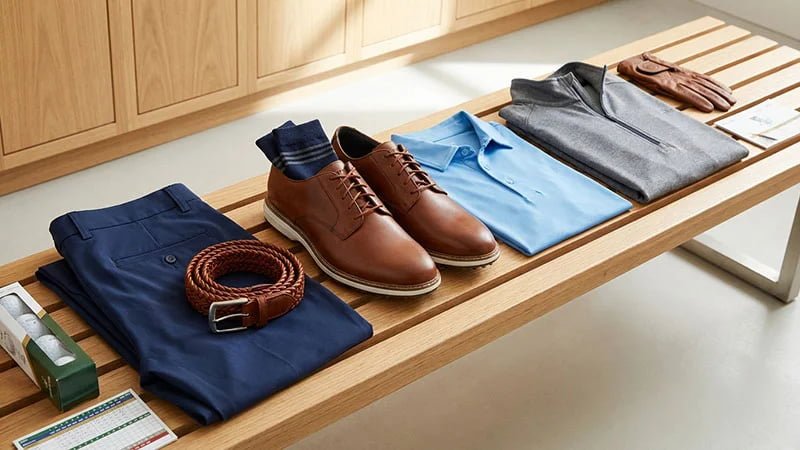
Match belt and shoe tone
This creates a cleaner, more intentional overall appearance.
Choose polos that balance the pants
Neutral pants work with most polo colors. Brighter bottoms should be balanced with a more controlled top.
Consider outerwear coordination
Quarter-zips, vests, and jackets should match the styling level of the pants. Technical golf pants pair best with purpose-built golf outerwear.
Keep logos controlled
Subtle branding usually looks cleaner and more versatile than oversized logos.
If you are merchandising a collection, matching bottoms with [custom golf polo shirts][Internal Link] and light outerwear can create a stronger product story across your golf apparel line.
How Should You Care for Golf Pants?
Performance golf pants last longer when they are washed and stored properly.
Wash golf pants in cold water on a gentle cycle and avoid high-heat drying. This helps preserve stretch, shape, color, and any water-repellent finish.
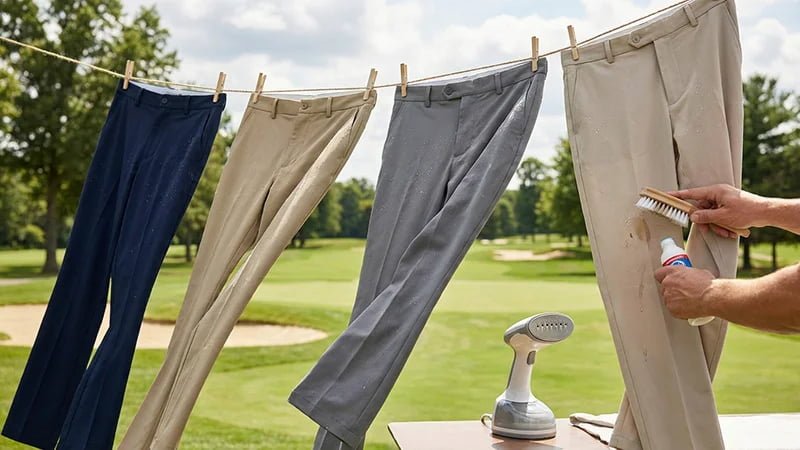
Wash cold to protect stretch and finishes
High heat can damage elastane and reduce the effectiveness of technical coatings.
Air dry when possible
Hanging golf pants to dry is one of the best ways to protect fabric performance.
Treat stains quickly
Mud, grass, and sunscreen marks are easier to remove when treated early.
Use light steaming for wrinkles
A garment steamer is usually better than aggressive ironing for technical golfwear.
Repair and tailor when needed
Simple hemming or repair work can extend the usable life of a quality pair of golf pants.
Quick FAQ on Golf Pants
Are joggers allowed at golf courses?
Sometimes. Tailored joggers made from technical fabric may be accepted at modern or resort-style courses, but many private clubs still prefer traditional golf trousers.
Can I wear jeans to golf at a public course?
Usually no. Even relaxed public courses generally consider denim inappropriate for golf.
What colors are most versatile for golf pants?
Navy, grey, khaki, and black are the most versatile choices because they pair easily with polos and layers.
What fabric is best for golf pants?
Polyester-spandex and nylon-spandex blends are commonly used because they provide stretch, breathability, moisture-wicking performance, and easy care.
How should golf pants break over the shoe?
They should have a slight break, meaning the hem lightly touches the top of the shoe without bunching excessively.
What should I wear in rain or cold weather?
In wet weather, wear waterproof rain pants over your golf trousers. In cold weather, add a thermal base layer underneath.
Can golf pants be customized with a club or brand logo?
Yes. Many golf pants can be customized with embroidery, heat transfer logos, woven labels, or private label packaging depending on the project.
What should buyers consider when sourcing golf pants for a brand or club?
Buyers should review fabric performance, fit development, size range, logo application, MOQ, sample process, production lead time, and quality consistency.
Do manufacturers offer matching golf apparel collections?
Yes. Many suppliers can develop coordinated collections including golf pants, polos, skorts, jackets, and teamwear for brands, clubs, and tournament programs.
Looking for a Golf Apparel Manufacturer?
Fuway Golf supports custom golf apparel development for brands, golf clubs, resorts, distributors, and tournament buyers. We manufacture custom golf pants, golf polo shirts, skorts, jackets, and coordinated teamwear with OEM/ODM and private label support.
You may also be interested in:
Conclusion
Choosing the right pants for golf means balancing dress code, comfort, mobility, and style. For most golfers, performance golf trousers or chinos are the safest and most versatile option. Focus on stretch fabric, a clean fit, and course-appropriate styling, and you will rarely go wrong.
For brands, clubs, and event buyers, golf pants are also a key product category that must combine technical fabric, modern fit, and reliable production quality. Working with an experienced golf apparel manufacturer can make it easier to develop golf bottoms and matching apparel that perform well both on the course and in the market.