
The golf apparel market looks crowded and impossible to enter. You have a passion for the sport, but every idea seems taken, leaving you unsure where to invest.
Focus on underserved niches like women's performance wear, true Big & Tall fits, certified UPF 50+ sun protection, and vibrant tropical collections. These segments have loyal customers who are willing to pay a premium for products that truly meet their needs.

Over my years in apparel manufacturing, I've seen countless brands try to compete with the giants by making a slightly different version of the same blue polo shirt. They almost always fail. The real opportunity isn't in competing head-on; it's in finding a group of golfers the big brands have overlooked or underserved. These niches aren't just about adding a new size or a fancy label. They require technical expertise in fit, fabric, and function. But if you get it right, you build a loyal customer base that the big brands can only dream of.
What Are the Quick Answers for Targeting These Profitable Niches?
| Question | Quick Answer |
|---|---|
| Fastest niche to monetize? | Women’s performance capsules (sizes XS–2XL). Start with 2–3 hero polos and matching skorts. The demand is high and the competition on true fit is low. |
| What margin to target? | 60–70% for Direct-to-Consumer (DTC). Tropical prints and limited editions can often command a 10–15% higher price. |
| Must-have tests for humid lines? | Wicking (AATCC 197), air permeability (ASTM D737), snag resistance (D3939), pilling (D4970), and lab-verified UPF 50+ (AS/NZS 4399). |
| UPF labeling basics? | You must have a lab report verifying UPF 50+. Use the correct legal language on your labels per standards like AS/NZS 4399 and avoid making unproven medical claims. |
| Big & Tall size curve? | Offer core sizes L–5XL plus tall sizes (LT–3XT). Grade the chest by 2 inches per size, the bicep by 0.5–0.75 inches, and add a longer back hem. |
| Hot-humid fabric spec? | 150–170 gsm polyester/elastane micro-mesh or piqué. It must be a high-wicking, quick-dry, anti-snag knit. An anti-odor finish is a valuable add-on. |
| Women’s fit watch-outs? | Focus on bust and hip ease, armhole shape for swing mobility, and skort rise/inseam length to ensure modesty and comfort. |
| Tropical print risks? | Dye migration and crocking (color rubbing off). You must require your supplier to test for colorfastness to washing, sweat, and light. |
| Typical MOQs/lead times? | 300–800 pieces per color for custom OEM. For resort capsules, you might get 150–300 pieces using a supplier's existing styles (ODM). Bulk production is 45-75 days. |
| Best sales channels? | Start with DTC and then target resort pro-shops, women’s golf leagues, and specialty sun-safe retailers. Seeding product with teaching pros is a great way to build credibility. |
Why Do These Specific Niches Actually Win?
You see the opportunity, but you need to convince yourself—and potential investors—that these niches have real, sustainable demand. Why are they more profitable than just making another mainstream polo?
These niches win because they solve a real problem for an overlooked customer. This creates intense loyalty, higher pricing power, and lower return rates. You're not just selling a shirt; you're selling a solution: a fit that finally works or protection you can trust.
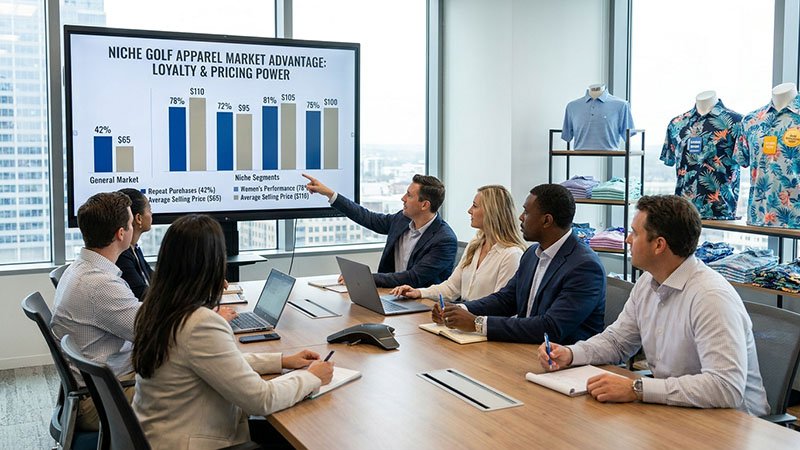
The beauty of a niche strategy is that you stop competing on price and start competing on value. When a Big & Tall golfer finds a shirt that fits him perfectly, he doesn't just buy one—he buys three and tells his friends. That's a level of loyalty the big brands struggle to achieve.
Women’s performance gap
For too long, women's golf apparel was an afterthought—just smaller, pink versions of men's shirts. The result is a massive gap in the market for products that offer a true performance fit, address modesty concerns on the course, and deliver modern, stylish designs.
Big & Tall loyalty
This is one of the most loyal customer segments in all of apparel. When they find a brand that gets the fit right, they stick with it. The key is "true fits." Just making a shirt wider isn't enough. The pattern needs to be re-engineered. Get it right, and you'll see high repeat purchases and very low return rates.
Sun protection as a mission
As awareness of skin cancer grows, UPF 50+ is shifting from a nice-to-have feature to a non-negotiable requirement, especially in sun-intense markets like Florida, Arizona, and Australia. A brand built around the mission of sun safety can build incredible trust. I get so many questions from buyers asking "Do you have the test certificates?". They've been burned by fake claims and need proof.
Tropical/resort capsules
These vibrant, printed collections have a unique economic advantage. They are less tied to traditional fashion seasons and are often purchased as "souvenirs" or vacation wear, which gives them higher pricing power. A limited-edition tropical print can feel like a collectible.
Price ladders and bundling
These niches allow you to create smart pricing strategies. You can bundle a women's polo and skort as a set. For Big & Tall, you can offer 2-packs. For UPF lines, you can add on sun sleeves. These tactics increase your Average Order Value (AOV) and overall profitability.
What Does a Winning Women's Performance Line Really Look Like?
You want to serve the women's market, but you know that "shrink it and pink it" is a losing strategy. What are the specific product and design details you must get right?
Success in women's golf apparel hinges on perfecting the fit block. This means engineering patterns for bust and hip curves, providing swing mobility in the armholes, and creating skorts with proper coverage and functional pockets.
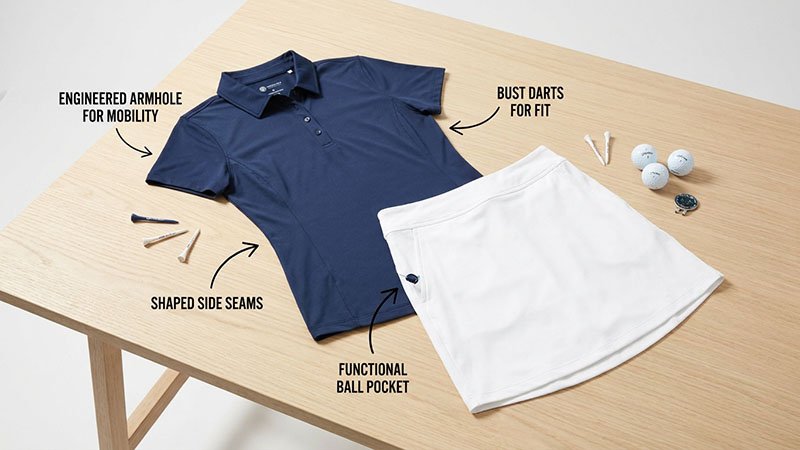
From my experience, this is the niche with the most immediate potential. The demand is there, but the supply of truly thoughtful, performance-oriented products is surprisingly low. When a brand comes to me to develop a women's line, I tell them we have to obsess over the pattern. A women's performance fit is not about adjusting a men's size; it requires a dedicated pattern maker who understands how to build for a woman's body in motion.
Fit blocks and grading
The foundation is the pattern, or "fit block." It must be designed with bust darts or shaped side seams to prevent pulling across the chest. The grading rules (how you scale from a Small to an XL) must account for how women's bodies change across sizes, particularly in the bust-to-waist-to-hip ratio.
Skorts and bottoms
A great golf skort is a technical garment. The inner short must stay in place without riding up. The rise and inseam length must provide full coverage and modesty, even when crouching to read a putt. And don't forget functional, discreet pockets for a ball and a marker.
Fabrics
The fabric needs to be a lightweight (150-170 gsm) performance knit, like a micro-mesh or piqué. It must have tested UPF 50+, excellent wicking, and be resistant to snagging from jewelry or bags. An anti-odor finish is a huge value-add for this customer.
Dress code compliance
Work with your designer to ensure all styles meet common club dress codes. This means paying attention to collar heights, placket designs, and the length of tops and skorts.
Assortment cadence
You don't need a huge collection. Launch with a focused capsule: two or three "hero" polo styles in a few great colors, one or two well-fitting skorts that coordinate, and perhaps one essential layering piece like a lightweight quarter-zip.
How Do You Engineer a Big & Tall Line for Comfort and Loyalty?
You see the opportunity in the Big & Tall market, but you're worried about the complexity and cost. How do you create a product that delivers a truly superior fit without breaking the bank?
A true Big & Tall fit isn't just about adding width. It requires a completely re-engineered pattern with adjusted shoulder slopes, deeper armholes, and specific grading rules for the chest, waist, and biceps to ensure comfort and mobility.

The reason Big & Tall is often expensive for a new brand isn't because of the extra fabric; it's because most factories don't have existing, properly graded patterns for these sizes. They have to draft them from scratch, which is a skilled, time-consuming process. But this is also your opportunity. By investing in a superior pattern, you create a product that smaller brands can't easily copy.
Size curves
A good Big & Tall range includes both "Big" sizes (L–5XL) and "Tall" sizes (LT–3XT). The difference is in the length. A "Tall" size adds length to the body and sleeves without adding extra width.
Pattern tweaks
A skilled pattern maker will do more than just make things bigger. They will adjust the shoulder slope to be less steep, create a deeper armhole to prevent pulling, and add more width through the sleeve and bicep for a non-restrictive fit.
Hem and length
All Big & Tall polos should feature a drop-tail hem (longer in the back) for better coverage. The overall length must be generous enough to stay tucked in during a full swing. Side vents are also critical to allow the shirt to drape cleanly over the hips.
Breathability at scale
A larger body has a larger surface area, which means breathability and moisture management are even more critical for comfort. Specify fabrics with high air permeability and proven wicking performance.
Returns prevention
The best way to ensure a good fit and prevent returns is to conduct wearer trials. Get golfers who actually wear XL+ sizes to test your samples and give you direct feedback before you go into production. This small investment can save you thousands in returned inventory.
What Are the Technical Details for a UPF 50+ & Tropical Line?
You want to build a brand around sun protection and bold tropical prints. What are the specific fabric tests and production risks you need to manage to deliver a high-quality product?
For this niche, you must have lab-verified UPF 50+ certification. For tropical prints, the biggest risks are color migration and fading. You need to demand specific colorfastness tests from your supplier to ensure the vibrant prints stay that way.
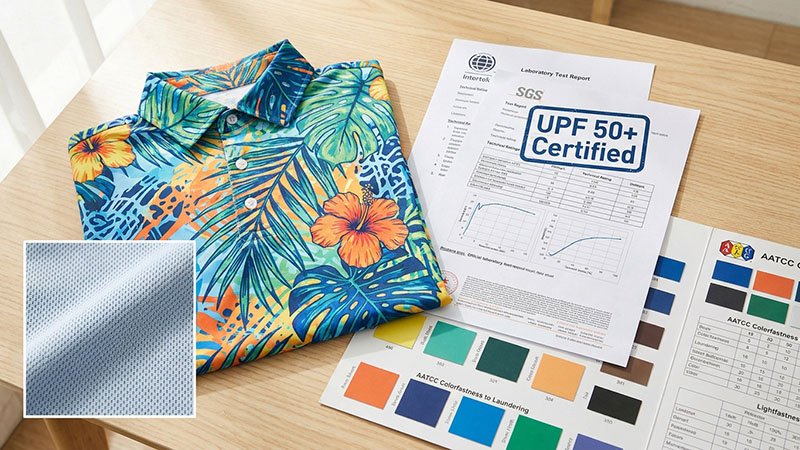
This niche is all about trust and visual appeal. The trust comes from proving your UPF claims with a certificate. The appeal comes from vibrant, unique prints. My job as a manufacturer is to make sure that print looks as good after 20 washes as it did on day one. This requires tight control over the fabric, the dyes, and the printing process.
Fabric choices
The best fabrics for hot and humid climates are 150-180 gsm polyester/elastane blends in a knit structure like piqué, micro-mesh, or a subtle jacquard. These structures help lift the fabric off the skin, promoting airflow.
Sun protection
You must get a lab test report that verifies a UPF 50+ rating according to a recognized standard like AS/NZS 4399. Darker colors generally offer better UV protection than lighter colors in the same fabric. Your on-product label language must be legally compliant and avoid making medical claims.
Hot-humid must-haves
Beyond UPF, the fabric must be tested for quick-dry performance, snag resistance (a rating of 3-4 or higher on the ASTM D3939 test is good), pilling resistance, and preferably have an anti-odor finish.
Colorfastness and migration
For bold prints, this is critical. Your tech pack must specify tests for colorfastness to light (AATCC 16), washing (AATCC 61), and crocking/rubbing (AATCC 8). If you are printing on a white base fabric, it must be a sublimation-resistant variety to prevent the dyes from "bleeding" into the white areas over time.
Care guides for customer comfort
Educate your customers on how to care for their garments to extend life and reduce energy use. Recommend a cold wash (30°C) and line drying. This is better for the environment and for preserving the fabric's performance features.
How Do You Merchandise and Tell a Story for Each Niche?
You've created a great niche product. How do you present it online and in-store to communicate its unique value and persuade the right customer to buy?
Your merchandising must visually solve the customer's problem. For women, show coordinated outfits. For Big & Tall, use models of that size. For UPF, display the certification icon prominently. For tropicals, create a story around a destination or limited drop.
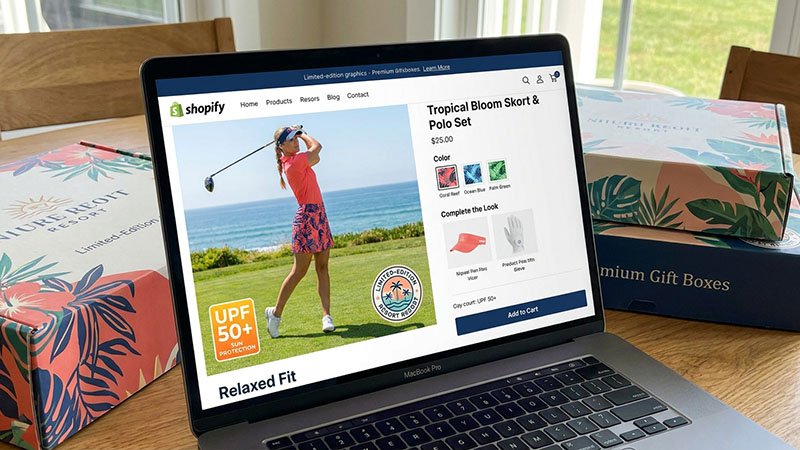
How you present your product is just as important as the product itself. Your website's product page, your social media content, and your in-store displays should all work together to tell a story that resonates with your specific niche customer. It's about showing them you understand their unique needs.
Women’s line
Merchandise tops and skorts together as coordinated sets. Use photography that shows the garments in action during a golf swing. In your product descriptions, call out specific fit and modesty features that solve common problems.
Big & Tall line
This is crucial: use models who actually wear Big & Tall sizes. Showing your XL-3XL product on a size Medium model is a quick way to lose trust. Create a clear size guide with detailed measurements and add a "fit badge" (e.g., "Relaxed Fit") to your product pages.
UPF line
Make the UPF 50+ rating a hero feature. Display the certification icon prominently. You can even add educational content to your site, like a map of UV index levels or tips for sun-safe golfing, to build authority and trust.
Tropical line
Frame these as limited-edition "drops" to create urgency. If you have a partnership with a specific resort, co-brand the collection. Consider premium, gift-worthy packaging that enhances the "souvenir" feel.
Bundling and AOV
Actively prompt customers to bundle. On your product page, use an app to suggest "Complete the Look" with a matching skort or a "Frequently Bought Together" bundle with a 2-pack of polos or add-on sun sleeves. This is one of the easiest ways to increase your average order value.
What Are the Sourcing and Quality Realities for These Niches?
You're ready to contact a factory. What are the specific MOQs, lead times, and quality control processes you need to plan for when sourcing for these technical niches?
Plan for MOQs of 300-800 pieces per color for fully custom (OEM) development. A faster route is using a factory's existing styles (ODM). Regardless of the model, you must own quality control by providing a detailed test matrix and implementing multi-stage inspections.
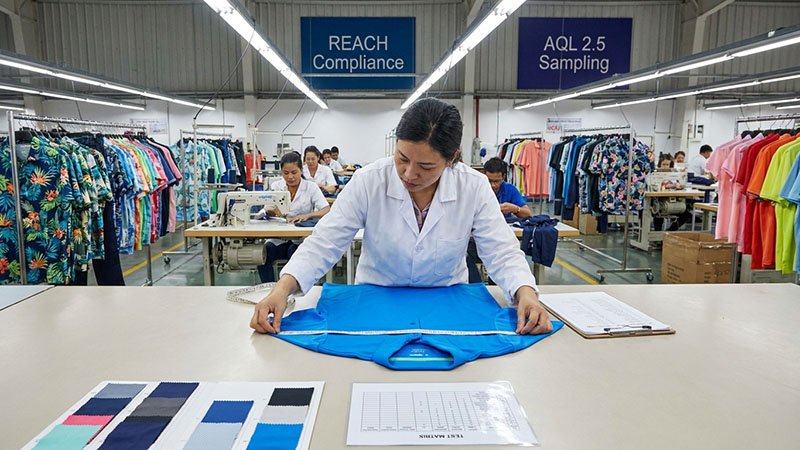
Sourcing for a technical niche is different from buying blank t-shirts. You need a partner with proven expertise. When vetting a factory, ask to see examples of similar products they've made. This isn't the time to go with the absolute cheapest option; it's the time to find the most capable and reliable partner.
Supplier models
For speed, especially for a resort capsule, using an ODM/private label model can get you to market faster. For a niche like women's or Big & Tall where the custom fit is your entire brand, you must invest in an OEM process to develop your own proprietary patterns.
Typical MOQs
A factory's standard MOQ of 300-800 pieces per color is driven by the minimums required by the fabric mills. For printed tropicals, you may find lower MOQs (150-300 pieces) if the factory uses digital sublimation printing, which has lower setup costs than screen printing.
Lead times
A safe estimate for custom development is 4-8 weeks for sampling and 45-75 days for bulk production, plus shipping time. Always add a few weeks of buffer, especially if you are launching for a peak season.
Test matrix
Your tech pack must include a mandatory test matrix. This is your list of non-negotiable performance standards. It should include tests for wicking, air permeability, snag resistance, pilling, UPF, and shrinkage. Don't rely on the factory's claims; demand the reports.
AQL and inspections
You must inspect what you expect. Implement a formal QC process with approvals at the Pre-Production Sample (PPS) stage, an inline inspection during production, and a Final Random Inspection (FRI) before shipment. For a premium product, use an AQL of 2.5/4.0.
Compliance
Ensure your supplier can meet the chemical compliance standards for your target markets, such as REACH in the EU or Prop 65 in California. All UPF claims must follow the legal guidelines of the region where you are selling.
Conclusion
Profitable niches are found by solving real problems for overlooked golfers. Success requires deep product expertise in fit and function, a focus on quality, and a strong partnership with a capable manufacturer.