You've designed the perfect golf polo, but every factory is quoting a minimum order quantity (MOQ) of 1,000 pieces per color. You're feeling stuck, unable to afford the inventory to launch your brand or test new styles.
You can successfully negotiate a lower MOQ by understanding the factory's costs and offering strategic compromises. The key is to use stock fabrics, standardize your trims, simplify your design, and present yourself as a flexible, long-term partner, not just a one-time buyer.
For years, I've watched passionate brand founders get stopped in their tracks by MOQs. They see it as a rigid wall. But I see it as the starting point of a conversation. The truth is, small orders aren't impossible; they are a negotiation. It's not just about asking for a lower number; it's about understanding why the number exists and helping the factory find a way to make it work. Let's break down how you can do just that.
Why Do Factories Have MOQs in the First Place?
You feel like factories are just being difficult, but the MOQ isn't an arbitrary number. It's rooted in the real costs of the entire supply chain.
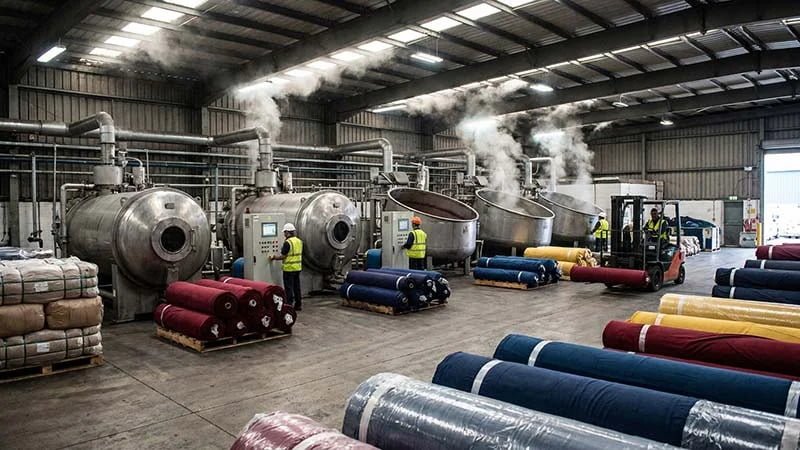
The main driver of MOQs is the fabric mill, not the garment factory. Dyeing fabric is an industrial process with high minimums, and those costs cascade down to your final product.
I've learned that if you understand your factory's costs, you can help them solve their problems, and in turn, solve your own. The MOQ isn't personal; it's just business math.
Fabric Minimums Are the Main Culprit
This is the number one reason. To start a dye bath for a standard polyester knit fabric, a mill needs 400-800 yards of a single color. If you want a special finish like brushing, a PFC-free DWR water repellent, or an antimicrobial treatment, that minimum can jump to 800-1,200 yards. The factory can't just order 50 yards for your small run; they are bound by their supplier's industrial-scale rules.
Trims and Logos Have Their Own MOQs
It's not just the fabric. Every single component has a minimum quantity attached to it. This is where many new brands get tripped up. Let's break down the minimums for common components:
| Component | Typical MOQ | Why It Matters for Small Orders |
|---|---|---|
| Custom Dyed Zippers | 500–1,000 meters | Forces you to buy enough zippers for thousands of garments. |
| Custom Molded Pullers | 3,000–5,000 pieces | A high one-time cost for the mold plus a large minimum order. |
| Heat Transfer/Silicone Logos | 300–1,000 sheets/designs | Lower than others, but still a hurdle for very small runs. |
| Dyed Ribbed Collars/Cuffs | 300–500 meters | Another dyeing process with its own minimum yardage requirement. |
Factory Production Costs
Even before a single stitch is sewn, the factory incurs significant fixed costs. Creating the digital pattern, setting up the automated cutting machine, preparing the specific sewing line for your style, and initial quality control steps can easily cost $300-$800 per style. If you spread that over 1,000 units, it's a small part of the price. If you spread it over 200 units, the cost per garment skyrockets.
Which Factories Are More Willing to Accept Small Orders?
You've been emailing factories and getting rejected. Are you talking to the right people?
Factories in China and Indonesia are generally more flexible with smaller orders than those in Vietnam or Bangladesh. Look for partners who offer a "stock fabric program" as this is the single most effective way to lower the MOQ barrier.
Not all factories are built the same. Some are designed for massive volume for big-box retailers, while others have built their business on flexibility and serving emerging brands. You need to find the second type.
Geographic and Business Model Differences
Factories in China and Indonesia have a mature and highly flexible supply chain, often with smaller, specialized workshops that cater to faster turnaround times and smaller e-commerce orders. In contrast, factories in Vietnam and Bangladesh are masters of large-scale, cost-effective production. They are less likely to break up their highly efficient production lines for a 300-piece order unless you're a major brand.
The Power of "Stock Fabric" Programs
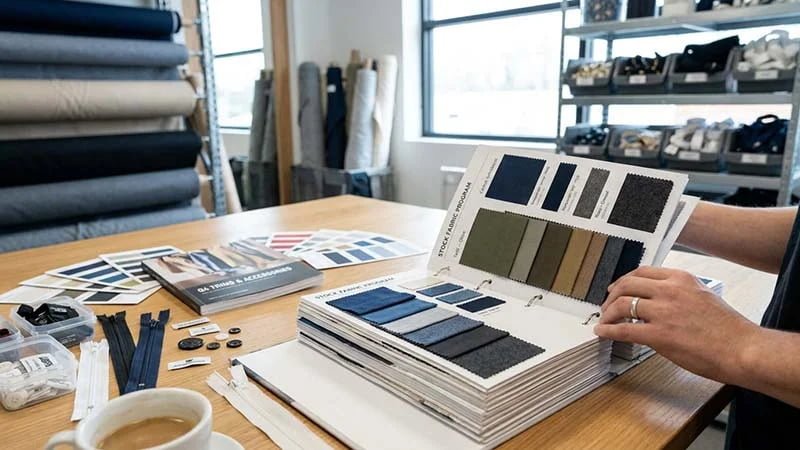
This is your green light. Look for factories or trading companies that explicitly offer a "stock fabric program." This means they have already pre-purchased large quantities of popular, high-quality fabrics in standard colors. Because the fabric MOQ is already met, they can offer you a much smaller quantity, sometimes as low as 100-200 pieces per color.
Suppliers with Stock Trims Are Key
The most effective way to lower the barrier is to partner with a factory or materials supplier who keeps stock of standard colors and common trims. This means they have black, white, and navy zippers, basic logo applications, and standard threads ready to go, eliminating the minimums associated with custom orders.
What Are the Levers You Can Pull to Lower Your MOQ?
You know you need to be flexible, but what specific compromises will make the biggest difference?
The most powerful levers are choosing stock fabrics, standardizing your trims, and simplifying your design. Each compromise you offer reduces the factory's risk and cost, making them more likely to accept your order.
This is a negotiation. You need to be prepared to give something to get something. Here are the most valuable things you can offer.
Choose Stock Fabrics & Colors
Instead of demanding a specific Pantone that requires a new dye lot, ask for the factory's stock color card and choose from their available options. A powerful strategy is to use the same fabric across multiple styles. For example, if you order a polo and a quarter-zip in the same 190gsm black fabric, your total yardage might be enough to meet the dyeing minimum.
Standardize Your Trims and Logos
Custom everything is expensive and requires high minimums. Instead:
- Use stock colors for zippers (black, white, navy are always available).
- Choose from the factory's existing catalog of zipper pullers.
- Opt for a heat transfer logo, which has a much lower MOQ than complex embroidery or custom silicone patches.
- Use generic size labels and care labels, not ones with seasonal or collection-specific dates.
Simplify Your Design and Construction
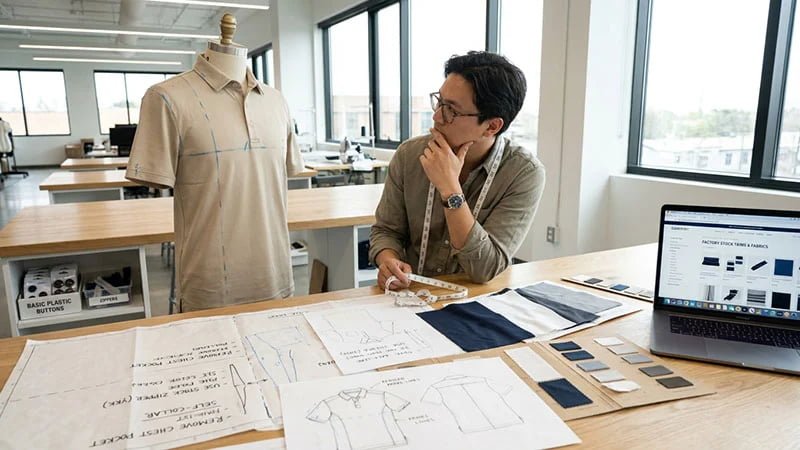
Fewer components mean lower MOQs and lower costs. Instead of a custom-dyed rib collar, use a self-fabric collar made from the main body material. Reduce the number of color-blocked panels, which require more cutting and sewing operations. Eliminate or simplify pockets and reduce the number of logo placements.
Bundle Your Orders and Be Flexible with Scheduling
Instead of placing a single small order, propose a "blanket PO" for a larger quantity (e.g., 1,000 pieces), but arrange to have it produced and delivered in 2-3 smaller batches. You can also combine fabric orders for two seasons. For example, if you plan to use navy in both your Spring and Fall collections, dye the full fabric amount at once.
Make Operational Concessions
Show the factory you're easy to work with. Agree to a +/- 5-10% quantity variance, which gives them flexibility to manage fabric usage and defects. Offer a flexible production window and be open to taking your order during the factory's off-season (e.g., March-April, after the Chinese New Year rush), when they are more eager for work.
Make Cash Flow Concessions
Money talks. Offering to pre-pay for the fabric and trims removes the factory's financial risk and shows you're a serious partner. Offering a higher deposit percentage (e.g., 50% instead of 30%) or offering to pay for the setup fees as a separate line item also builds goodwill and makes your small order much more attractive.
How Do You Actually Start the Negotiation?
You're ready to make compromises, but how do you phrase it in an email without sounding desperate or inexperienced?
Be direct, professional, and lead with your concessions. Show the factory immediately that you understand their business and are prepared to work with them to find a solution.
Here’s how I would approach it. Don't just ask "what is your MOQ?" Frame your request in a way that shows you've done your homework.
Give Your Core Needs and Concessions Upfront
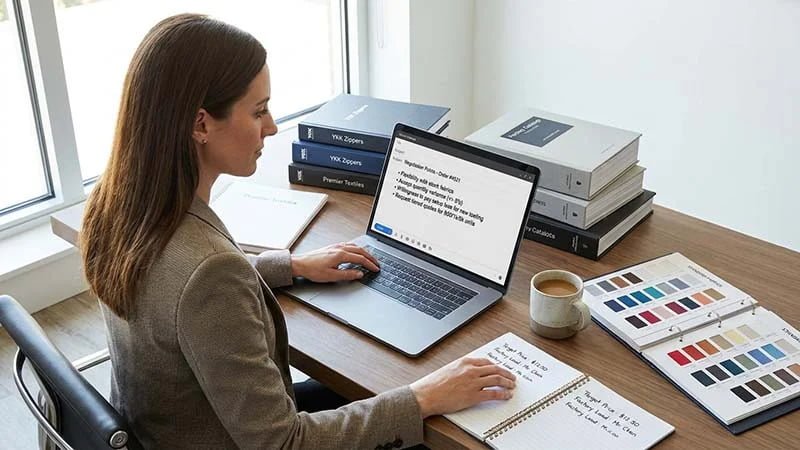
Lead with a clear, concise summary of what you want and what you're willing to give. For example: "We are looking to produce 600 units of a men's polo. We are flexible and can use your 190gsm stock fabric in black and navy, with standard black trims and a simple heat transfer logo. We can accept a +/-8% quantity variance."
Ask for Tiered Quotes Based on Different Components
Ask the factory to present you with options. This shows you're open to solutions. "Could you please tell me the individual MOQs for the fabric, logo, and zipper? Please provide two options: Plan A using all stock materials for the lowest MOQ, and Plan B using our custom color so we can see the difference in MOQ and price."
Proactively Offer Concessions
Show you're thinking like a partner. "We understand there are setup fees for small runs. We would be open to paying a one-time setup fee separately if you could then offer us a per-unit price based on a 1,000-piece order." Or, "If we remove the ribbed collar and use a self-fabric collar, how much can the MOQ be reduced?"
Lock In Your Quality and Delivery Terms
Once you agree on quantity and price, immediately lock in the non-negotiables. Clearly define the AQL (Acceptable Quality Limit) standard, the requirement for an approved Pre-Production Sample (PPS), and the confirmation standards for all trims and colors. This ensures your "small order" isn't treated like a "low-quality order."
How to Calculate the Real Cost Impact
Understanding the numbers will make you a much better negotiator. Let's look at how these concessions translate into real dollars.
By separating out fixed costs like setup fees or paying a small premium, you can often unlock a much lower MOQ without destroying your margins. It's about cost transparency.
Let's do some simple math.
- Setup Fee Example: A factory has a $600 setup fee per style. For a 300-piece order, that's a $2 premium baked into each garment's price. If you offer to pay the $600 separately, you can then negotiate the unit price as if it were a larger order, which might save you more than $2 per piece.
- Fabric Example: Your polo needs 0.85 yards of fabric. A 600-yard dye minimum means you need to order ~700 polos. But if you order 350 polos and 350 quarter-zips that use the exact same fabric, you've just hit the minimum for both styles.
- Trim Example: Choosing a stock black zipper instead of a custom-dyed one can save you $0.20-$0.35 per garment on a small order because you're avoiding the surcharge for a small dye lot.
Real-World Case Studies from My Experience
Theory is great, but let's look at how this works in practice. Here are a few real examples of how I've helped brands like yours navigate MOQs.
| Case Study | The Challenge | The Solution | The Result |
|---|---|---|---|
| 1. The 420-Piece Polo Order | 2 custom colors, but the mill's dye MOQ was 600 yards per color. | The brand agreed to use the factory's stock 190gsm fabric in black and navy and use a standard heat transfer logo. | We achieved an MOQ of 210 pieces per color. The FOB price was $4.95, only a 9% premium over the bulk price of $4.55. |
| 2. The 300-Piece Quarter-Zip | Needed a specific brushed fabric (800-yard MOQ) and a custom zipper. | We found another brand using the same fabric and "piggybacked" the order. They switched to a stock black zipper and paid a $450 setup fee separately. | They got their 300 pieces at an FOB of $11.50 (vs. a bulk price of $10.40) and a 6-week delivery. |
| 3. The 900-Piece Combined Order | A startup wanted 450 polos and 450 quarter-zips but worried about two separate MOQs. | We designed both garments to use the exact same 200gsm fabric in the same three colors and standardized the logo application. | We placed one large fabric order, meeting the mill's MOQ easily. They paid no small-order premium. |
| 4. Embroidery vs. Heat Transfer | A brand insisted on a complex embroidered logo for a 250-piece order. | The factory quoted a $0.40 surcharge per piece. I showed them that a high-quality silicone heat transfer would only have a $0.12 surcharge and would look more modern. | They switched to the heat transfer, saved money, and cut a week off their production time. |
Effective vs. Ineffective Negotiation Tactics
To put it simply, here’s what works and what will get your email deleted.
| ✅ Effective Tactics (What Works) | ❌ Ineffective Tactics (What Doesn't Work) |
|---|---|
| Ask for the factory's stock fabric list upfront. | Demand a custom fabric, trims, and logos all at once on a small order. |
| Propose combining styles or placing a blanket PO for staggered delivery. | Insist on a rigid, short delivery date with zero quantity tolerance. |
| Offer to pay setup fees separately or pre-pay for materials. | Constantly change your mind about colors after lab dips are made. |
| Start with a simplified design (fewer colors/logos) for your first run. | Ignore the factory's advice on how to reduce cost/MOQ. |
A Look at Regional Flexibility for Small Orders
Where you produce matters. Different regions have different appetites for small orders. I've summarized my experience below.
| Region | Small Order Appetite | Key Characteristics |
|---|---|---|
| China | High | Most flexible. Huge ecosystem of suppliers and factories specializing in quick-turnaround orders. Massive inventory of stock materials available. |
| Vietnam | Medium | Primarily focused on large volume. May accept smaller runs if you use fabric from their existing large programs or are willing to accept a much longer delivery time. |
| Bangladesh / Cambodia | Low | Geared for massive orders for major retailers. Very difficult for direct small orders. Best accessed through a trading company that can bundle orders. |
| Mexico / Portugal / Turkey | High (for a price) | Higher FOB prices, but very willing to produce small "capsule" collections of 100-300 pieces for brands needing speed-to-market. |
Key Points for Your Small Order Negotiation Email
Here is a template you can adapt for your first email. The key is to be clear, concise, and show you are prepared to be a good partner.
"Hello,
We are looking to place an order for [Style Name, e.g., Men's Performance Polo].
Fabric: We are looking for [Fabric Spec, e.g., ~190gsm polyester/spandex jersey with wicking]. We are flexible and can use your stock/running fabrics. We can accept standard colors like black, navy, and white.
Quantity: Our target is [Total Quantity] units, split across [Number] colors.
Details:
- Logo: [Logo Method, e.g., 1-color heat transfer on chest].
- Trims: We can use standard black/white accessories.
Concessions: We can accept a +/- 8% quantity variance, are open to split shipments, can pre-pay for materials, and can discuss paying for setup fees separately. Our target FOB is in the $X - $X range.
Please let us know your lowest possible MOQ based on this, along with a cost estimate, lead time, and your QC process.
Thank you,"
Risks and Red Flags to Watch For
Not every factory that says "yes" to a small order is a good partner. Here’s a quick guide to telling the difference.
| 🚩 Red Flags (Warning Signs) | ✅ Green Flags (Good Signs) |
|---|---|
| Vaguely agrees to "any quantity" without explaining how. | Immediately sends you their stock fabric list and trim options. |
| Has no clear sampling process (wants to go straight to bulk). | Provides a clear, multi-option quote showing cost/MOQ trade-offs. |
| Quote is unclear and later increases with "hidden" fees. | Has a defined sampling process (Fit, PPS) and can explain their AQL standard. |
| Communication is poor and responses are slow. | Responds to questions professionally and transparently. |
FAQ: Your Top MOQ Questions Answered
1. What is a "reasonable" surcharge for a small order?
A premium of 8-15% over the bulk price is very common for a small order that requires some accommodation. If you are using all stock materials and the factory is just fitting you in, it might be lower. If you need a custom dye lot, it could be higher.
2. Can I trust the quality of a small order?
This is a valid concern. The key is to lock in the quality standards in writing. Insist on an approved Pre-Production Sample (PPS) that must be matched, and agree on an AQL (Acceptable Quality Limit) standard for the final inspection. A good factory will apply the same quality process to all orders.
3. What if I absolutely NEED a custom Pantone color for my brand?
If a custom color is non-negotiable, you have two main options: 1) Be prepared to meet the fabric mill's full MOQ, even if it means ordering more inventory than you planned. 2) Be prepared to pay a significant surcharge (sometimes 50-100% on the fabric cost) for the mill to run a small "lab lot."
4. Is a trading company better than a factory for small orders?
Sometimes, yes. A good trading company has relationships with multiple factories and can place your order where it fits best. They are also skilled at combining orders from different clients to meet MOQs. The trade-off is slightly less direct control and a small markup on the price.
5. What's the best way to find factories that are open to small orders?
Look for factories that explicitly advertise "stock programs" or "flexible MOQ." Platforms like Alibaba often have filters for this. Attending smaller, regional sourcing fairs can also connect you with factories that are more focused on smaller, independent brands rather than giant retailers.
Conclusion
Negotiating a small order isn't about fighting for the lowest price. It's about building a partnership, demonstrating flexibility, and finding a win-win solution that allows your brand to grow.