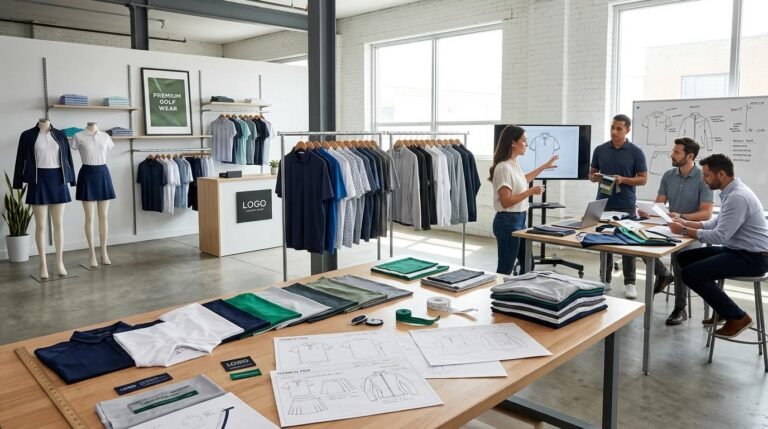
Want to launch your golf apparel line, but the process feels slow and complex? Delays mean missing market trends, which can stop a new startup brand in its tracks.
To launch a golf apparel collection quickly, you need a streamlined manufacturing plan. Start with a detailed design tech pack, choose a manufacturer that has performance fabrics in stock, approve your samples decisively, and maintain clear, constant communication throughout the entire process.

That might sound simple on paper, but I’ve learned from years of experience that every step has details that can either speed you up or slow you down dramatically. Helping brands like yours turn a vision into a real product is what I do every day. Let's break down the key areas where you can save the most time. Getting these right will help you launch your collection much faster than you thought possible.
What's the Fastest Way to Finalize Your Designs for Production?
Unclear designs cause endless back-and-forth with your manufacturer. This confusion wastes weeks, leading to wrong samples, frustration, and costly mistakes that delay your launch.
Create a complete "tech pack" for every design. This technical document must include detailed sketches, precise measurements, fabric types, color codes, and construction details like stitching. A great tech pack removes all guesswork for the manufacturer.
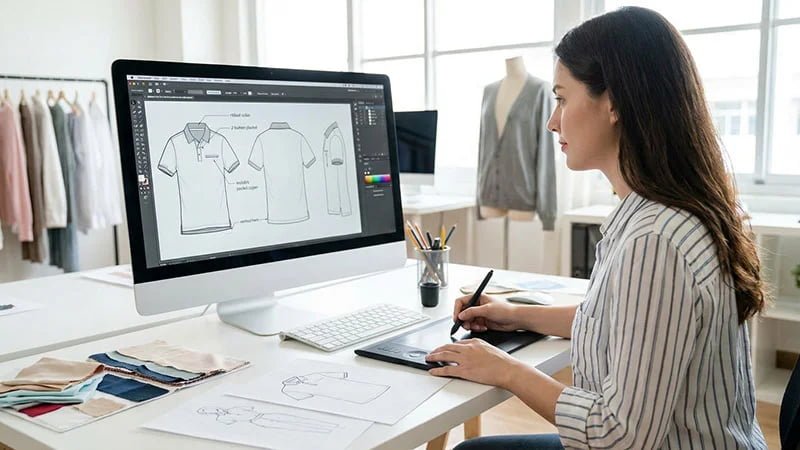
In my workshop, I tell every new partner that a tech pack is the single most important document for speed and accuracy. It’s not just a sketch; it’s a complete instruction manual for my production team. The more detail you provide me upfront, the fewer questions we will have later. This directly translates to a faster sampling and production timeline. I’ve seen brands get delayed by a month just because of a missing measurement or an unclear instruction about a zipper. To avoid this, your tech pack must be perfect.
Key Parts of a Speed-Focused Tech Pack
- Technical Drawings: These are simple, flat drawings of your garment from the front, back, and side. They must show every seam, stitch line, pocket, and button. Don't worry about artistic flair; clarity is the goal.
- Graded Measurement Chart: This is a table that lists all the key measurements for every size you want to produce. Don't just provide measurements for a size Medium; include them for S, L, XL, and so on.
- Bill of Materials (BOM): This is a list of every single material needed. It includes the main fabric, any lining fabrics, thread colors, zippers, buttons, and brand labels.
Think of the tech pack as your insurance policy. It protects your vision and is the fastest way to get an accurate sample made right the first time.
How Can Fabric and Trim Selection Speed Up Your Timeline?
Sourcing unique, custom fabrics can take months. For a startup brand, waiting for materials means you could miss an entire selling season and lose your initial momentum.
Work with a manufacturer who offers a library of in-stock performance fabrics. This simple choice eliminates long sourcing delays. For trims like zippers and buttons, using their standard, readily available options is much faster than ordering custom ones.
When I first started Wearzio, I saw how fabric sourcing could become a huge bottleneck. If you want a specific fabric that is custom-milled or custom-dyed, it can easily add 30 to 60 days to your schedule before my team can even start sewing. As a new brand, you don’t have that kind of time to waste. That's why I made sure my factory invested in building a large collection of high-quality fabrics that are perfect for golf apparel and ready to go.
Fast Fabric Options for Golf Apparel
- Polyester/Spandex Blends: These are the workhorses of golf polos and trousers. They offer the four-way stretch, moisture-wicking properties, and durability players expect. We keep these in classic golf colors like white, navy, black, and beige.
- Lightweight Performance Wovens: These are perfect for golf shorts, skirts, and lightweight jackets. Many of our in-stock options already have a DWR (Durable Water Repellent) finish.
- Soft Jersey Knits: These are great for comfortable base layers or lightweight practice tops.
By choosing from a manufacturer's in-stock fabric library, you can cut weeks off your timeline. You skip the entire sourcing and shipping delay and can move directly into the sampling stage. It is the biggest time-saver in the entire pre-production process.
Why is Streamlining the Sampling Process Crucial for a Quick Launch?
Getting your samples made can turn into an endless loop of revisions. Every time you request a change, it adds weeks of production and shipping time, pushing your launch date back.
You can minimize sample revisions by giving your manufacturer extremely clear and consolidated feedback. Use photos, videos, and specific notes to explain any changes. Approve the pre-production sample decisively once it meets your core requirements.
The goal of sampling is to confirm that your tech pack is correct and that the factory fully understands your vision. It is not the time to introduce new design ideas. I always advise my partners to be firm and decisive during this stage. A slow sampling process is a clear sign of a delayed launch. A fast, efficient sampling process gets you to bulk production quickly. The difference comes down to how you communicate feedback.
Here’s a clear comparison to show what I mean:
| Slow Sampling Process (Adds 6-10 weeks) | Fast Sampling Process (Adds 2-4 weeks) |
|---|---|
| Vague feedback like "make the fit better." | Specific feedback like "reduce the chest by 2cm." |
| Sending feedback in several different emails. | Sending one consolidated email with all notes. |
| Asking for new design features on a sample. | Focusing only on fixing fit and construction issues. |
| Needing 3-5 rounds of samples to get it right. | Approving the design after 1-2 sample rounds. |
When you receive your first sample, put it on a fit model. Take pictures and even a short video. Mark any areas that need changes directly on the garment with pins or tape. Then, put all of your notes and pictures into a single document or email. A good manufacturing partner can take that precise feedback and create a perfect final sample, getting your approval to start bulk production right away.
Conclusion
A fast launch requires a clear, focused plan. Prioritize detailed tech packs, make smart fabric choices from in-stock options, and manage the sampling process efficiently.