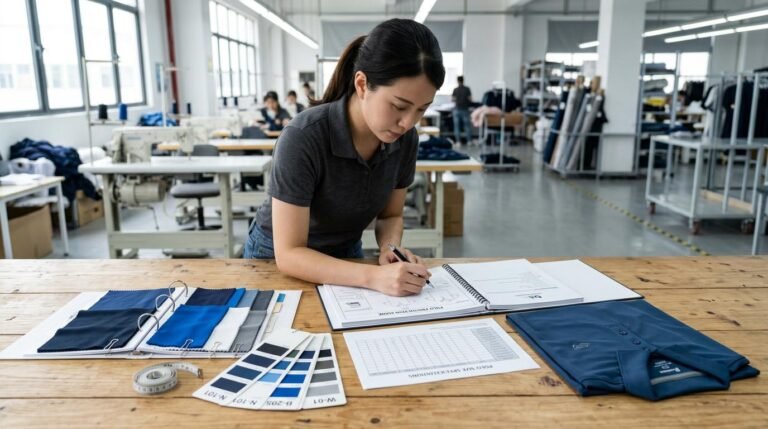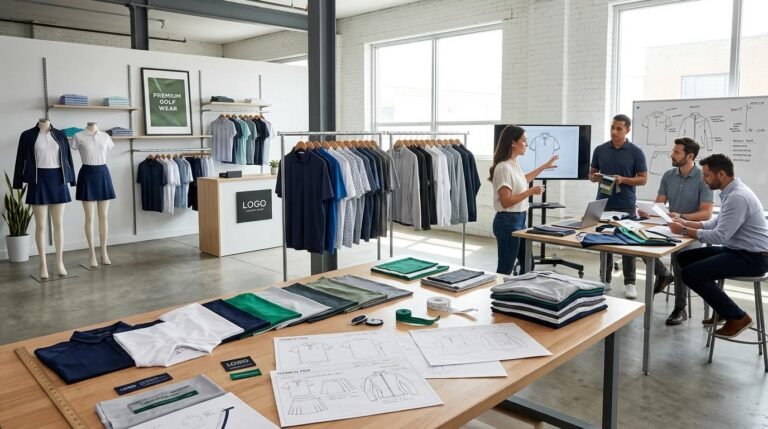
Choosing the right logo method for custom golf polos affects more than appearance. It impacts durability, brand perception, production cost, fabric performance, and customer satisfaction. A logo that looks sharp in a sample can fail quickly if the decoration method does not match the garment fabric or use case.
For most premium and corporate golf polos, embroidery is the better choice for durability and brand presentation. Heat transfer is often better for complex artwork, lightweight performance fabrics, personalization, and lower-volume orders. The best option depends on your logo design, polo fabric, budget, and order quantity.
If you are sourcing from an experienced golf apparel manufacturer or comparing options for custom golf shirts, understanding decoration methods early can help avoid costly production mistakes.
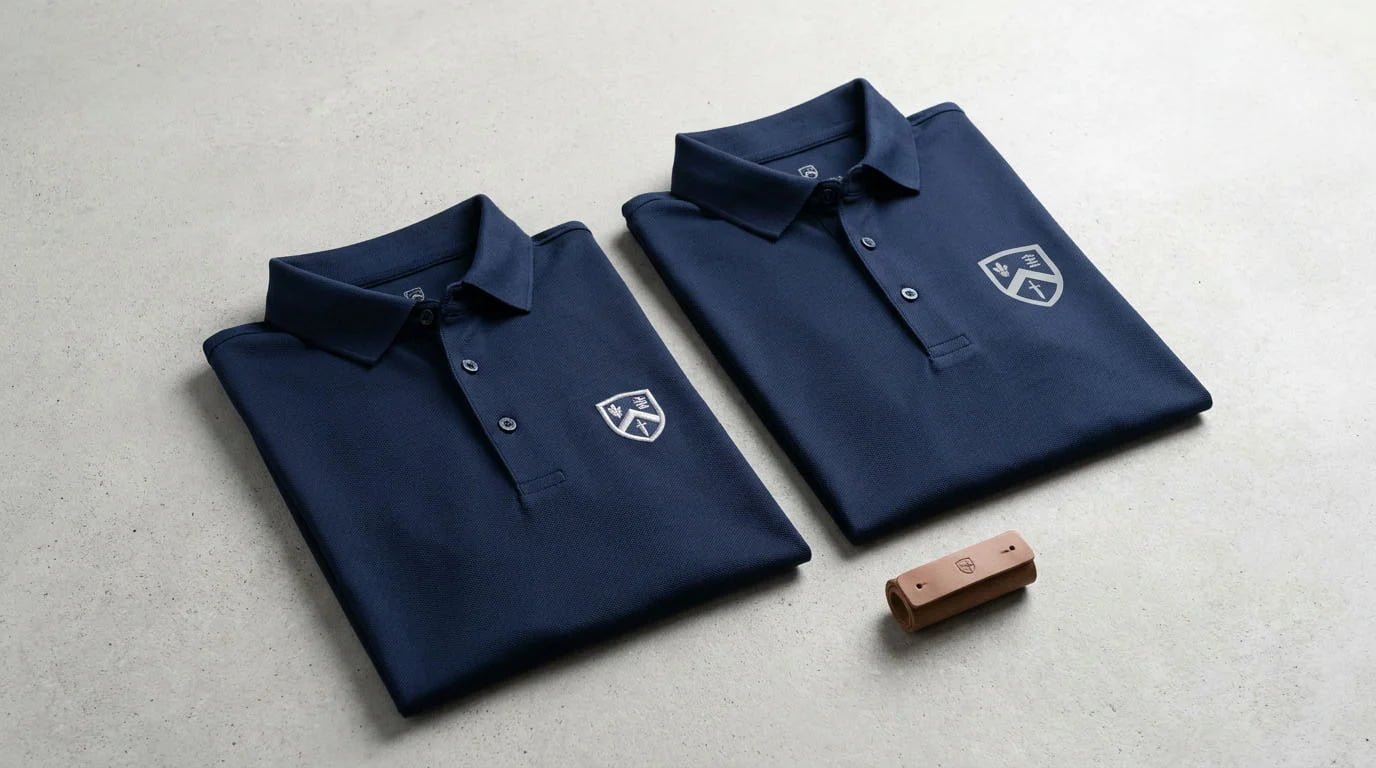
If you are comparing embroidered golf polos, heat transfer logo polos, or planning custom logo golf shirts for a brand, event, team, or corporate program, this guide explains how to choose the right method with fewer mistakes.
Quick Answer: Embroidery or Heat Transfer for Golf Polos?
Embroidery is usually best for premium branding, corporate golf polos, and logos that need a classic, durable look. Heat transfer is usually best for detailed artwork, names and numbers, smaller runs, and performance fabrics that need lightweight decoration.
For brands developing custom golf polo shirts, the best choice often depends on whether the project is aimed at retail, uniforms, tournaments, or private label golf apparel.
In General:
-
Choose embroidery if you want:
- a premium look
- strong long-term durability
- classic corporate or retail branding
- logos with simple shapes and limited colors
-
Choose heat transfer if you want:
- fine detail
- gradients or multicolor graphics
- player names or event personalization
- lightweight decoration on technical golf polos
- flexibility for smaller orders
Fast Decision Guide
| If You Need... | Better Option |
|---|---|
| Premium corporate appearance | Embroidery |
| Fine detail or gradient artwork | Heat Transfer |
| Long-term classic durability | Embroidery |
| Lightweight decoration on performance fabric | Heat Transfer |
| Names, numbers, or variable personalization | Heat Transfer |
| Traditional left chest brand logo | Embroidery |
| Lower setup complexity for short runs | Heat Transfer |
Why Logo Method Matters for Custom Golf Polos
A golf polo is not the same as a basic promotional T-shirt. Golf shirts often use performance fabrics, stretch construction, moisture management finishes, and more structured fits. The wrong logo method can reduce comfort, distort the fabric, or shorten the usable life of the garment.
The best logo method for a golf polo should match the fabric, fit, decoration size, and end use. What works well on a heavy cotton polo may not work well on a lightweight polyester performance shirt.
If your project includes special yarns, performance blends, or custom material development, fabric selection should be considered together with decoration planning. This is especially important when working with a supplier that also supports fabric sourcing for golf apparel.
Logo method affects:
- brand image — premium vs promotional appearance
- comfort — especially on lightweight or stretch golf polos
- durability — resistance to wash wear, stretching, and friction
- cost — setup charges, per-piece pricing, and scale efficiency
- fabric performance — breathability, drape, moisture-wicking behavior
- placement flexibility — chest, sleeve, back yoke, collar, or hem branding
For golf brands, tournament organizers, and corporate apparel buyers, this decision should be made before bulk production, not after final approval of a generic mockup.
What Is Embroidery on a Golf Polo?
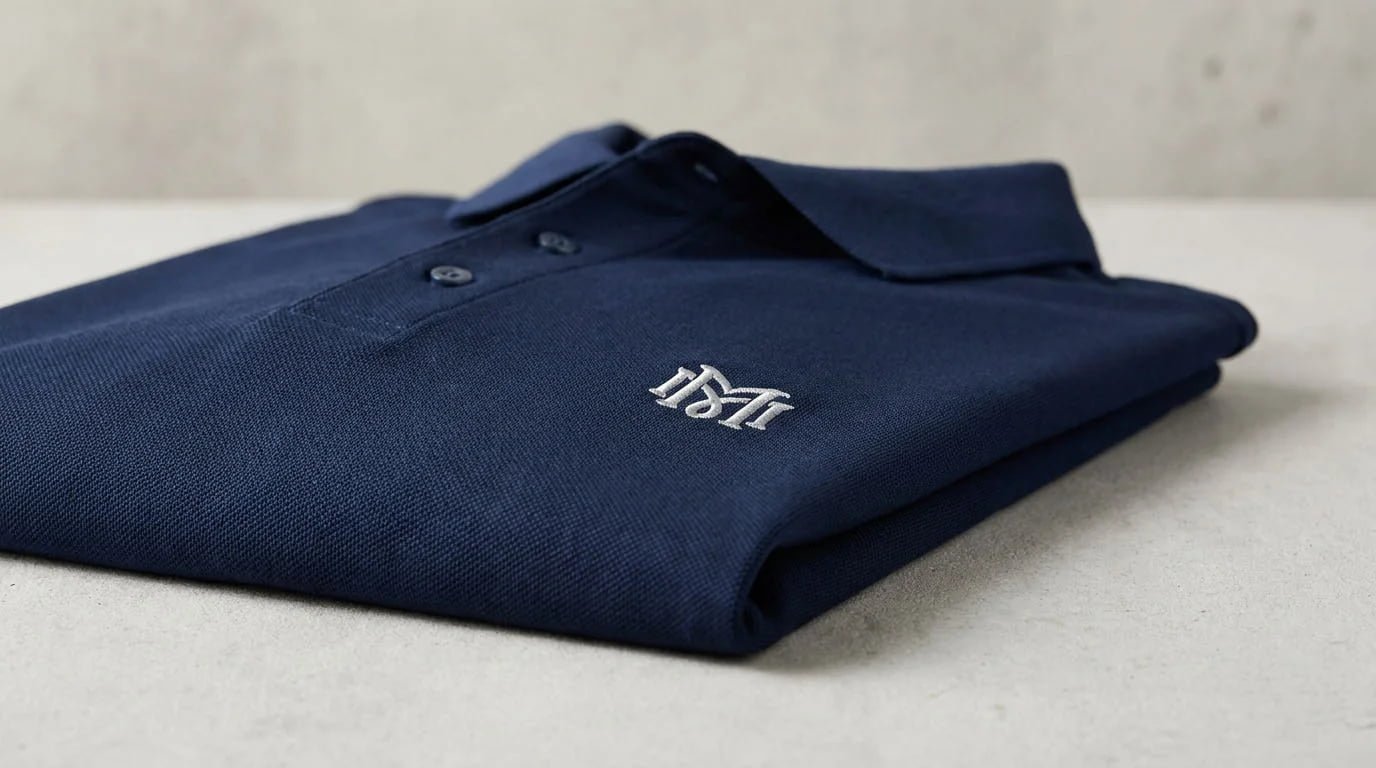
Embroidery is a decoration method that stitches the logo directly into the polo fabric using thread. It creates a textured and raised appearance that is widely associated with professional, retail, and corporate apparel.
Embroidery is one of the most common logo methods for custom golf polos because it looks premium and performs well on standard chest branding.
If you want to review this method in more detail, you can also check our golf polo embroidery service.
Advantages of Embroidery
- premium appearance
- strong brand perception
- suitable for left chest logos
- good durability in repeated wear and washing
- ideal for corporate uniforms and golf events
- works well on pique polos and mid-weight fabrics
Limitations of Embroidery
- not ideal for photographic artwork
- not suitable for gradients
- very small text can become unclear
- may add weight or stiffness to lightweight performance fabric
- can increase cost for highly detailed logos with many stitch counts
Best Use Cases for Embroidery
Embroidery is often best for:
- company logos
- golf club logos
- resort polos
- retail brand chest logos
- classic team apparel
- premium tournament merchandise
What Is Heat Transfer on a Golf Polo?
Heat transfer applies a logo to the garment surface using heat and pressure. The artwork is first printed or cut onto transfer material, then bonded to the polo fabric under controlled temperature and pressure.
Heat transfer is often the better option for complex graphics, lightweight technical polos, and personalized logos such as names, numbers, or event details.
Depending on the artwork and project requirements, some buyers also compare heat transfer with screen printing or sublimation printing when developing performance golf apparel.
Advantages of Heat Transfer
- excellent detail reproduction
- suitable for gradients and multicolor artwork
- can handle fine lines and small lettering better than embroidery
- lightweight feel compared to heavy stitching
- good for names, numbers, and custom variable data
- practical for short runs and event orders
Limitations of Heat Transfer
- may show wear earlier than embroidery depending on material and wash care
- standard transfers are not suitable for every performance fabric
- some finishes can feel less premium on luxury polos
- incorrect application can lead to peeling, lifting, or surface cracking
Best Use Cases for Heat Transfer
Heat transfer is often best for:
- player names
- sponsor logos
- tournament event details
- multicolor graphic logos
- sleeve branding
- lightweight golf polos
- promotional apparel with variable artwork
Embroidery vs Heat Transfer: Key Differences
Both methods can work well on golf polos, but they perform differently in appearance, detail, weight, and long-term use.
Embroidery is usually stronger for premium presentation and classic logo durability, while heat transfer is usually stronger for graphic detail, personalization, and lightweight technical applications.
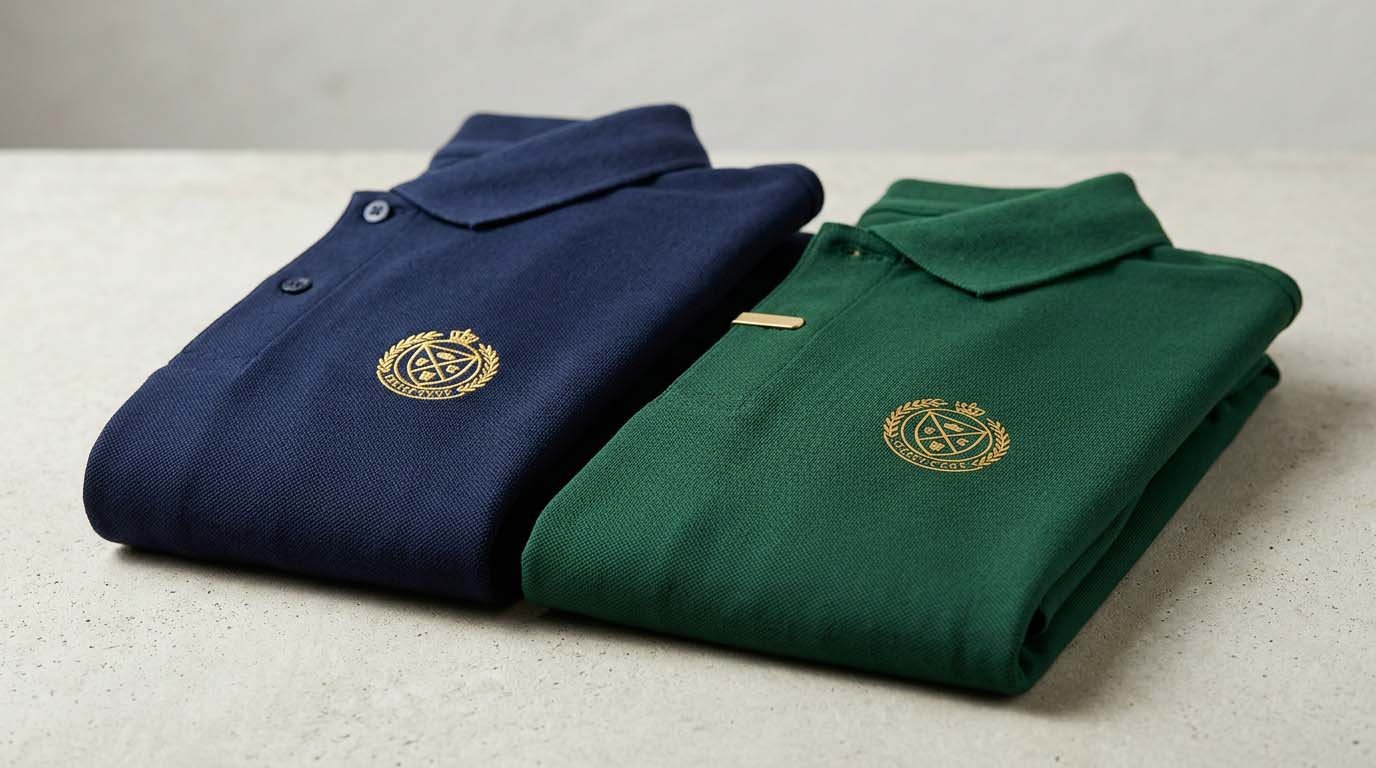
Comparison Table
| Factor | Embroidery | Heat Transfer |
|---|---|---|
| Look and feel | Raised, textured, premium | Smooth, flat, graphic |
| Best for | Corporate logos, premium branding | Detailed artwork, names, small runs |
| Design detail | Moderate | High |
| Gradients | Not suitable | Suitable |
| Fine text | Limited by stitch size | Better for small text |
| Durability | Usually excellent | Good, but depends more on transfer quality and care |
| Fabric impact | Can add weight or stiffness | Usually lighter on fabric |
| Personalization | Less efficient for variable names | Very efficient |
| Small order flexibility | Moderate | Strong |
| Premium perception | Strong | Depends on artwork and execution |
Which One Lasts Longer?
In many cases, embroidery offers longer-lasting visual durability, especially for standard chest logos on stable polo fabrics. Heat transfer can also perform well when the right transfer type is used and applied correctly, but it is typically more sensitive to:
- wash temperature
- dryer heat
- fabric stretch
- application quality
- transfer material selection
That is why heat transfer should never be chosen based on artwork alone. It also has to match the polo fabric. If product consistency is important, it is also worth asking whether your supplier can provide garment performance validation or a test report.
Which Logo Method Is Best by Fabric Type?
Fabric choice is one of the most important factors when selecting a logo method for custom golf polos.
The best decoration method depends on whether your polo is cotton, poly-cotton, pique, lightweight polyester, or stretch performance fabric.
For brands building a long-term collection or private label golf line, fabric and decoration should be developed together rather than separately.
1. Cotton Golf Polos
Cotton polos typically work well with both methods.
- Embroidery gives a traditional premium finish
- Heat transfer works for complex logos or event graphics
Best choice:
Embroidery for classic brand logos; heat transfer for detailed prints
2. Cotton-Poly Blend Polos
Blended polos are generally flexible and can support both methods well.
Best choice:
Either method, depending on logo complexity and price target
3. Pique Golf Polos
Pique fabric is one of the most common materials for classic golf polos. Its texture pairs naturally with embroidery.
Best choice:
Embroidery, especially for left chest branding
4. Lightweight Polyester Performance Polos
These polos often require more caution. Heavy embroidery may affect drape and comfort if the logo is too dense. Standard heat transfer may also fail if the transfer type is not suitable for the fabric.
Best choice:
Lightweight embroidery for simple logos, or performance-grade low-temperature heat transfer for detailed logos
5. Stretch Performance Golf Polos
Stretch fabrics move more during wear, which means decoration method and placement need careful testing.
Best choice:
Specialized heat transfer or low-density embroidery, tested before bulk production
Fabric-Based Decision Table
| Fabric Type | Embroidery | Heat Transfer | Recommended Choice |
|---|---|---|---|
| Cotton polo | Excellent | Good | Embroidery for premium branding |
| Cotton-poly blend | Excellent | Good | Depends on design |
| Pique polo | Excellent | Good | Embroidery |
| Lightweight polyester | Good with care | Good with proper transfer type | Depends on logo detail |
| Stretch performance polo | Moderate | Good with correct application | Often heat transfer for detail |
Which Logo Method Is Best by Design Type?
Your logo artwork may decide the answer faster than price does.
Simple brand logos usually work better with embroidery. Complex, multicolor, or photographic graphics usually work better with heat transfer.
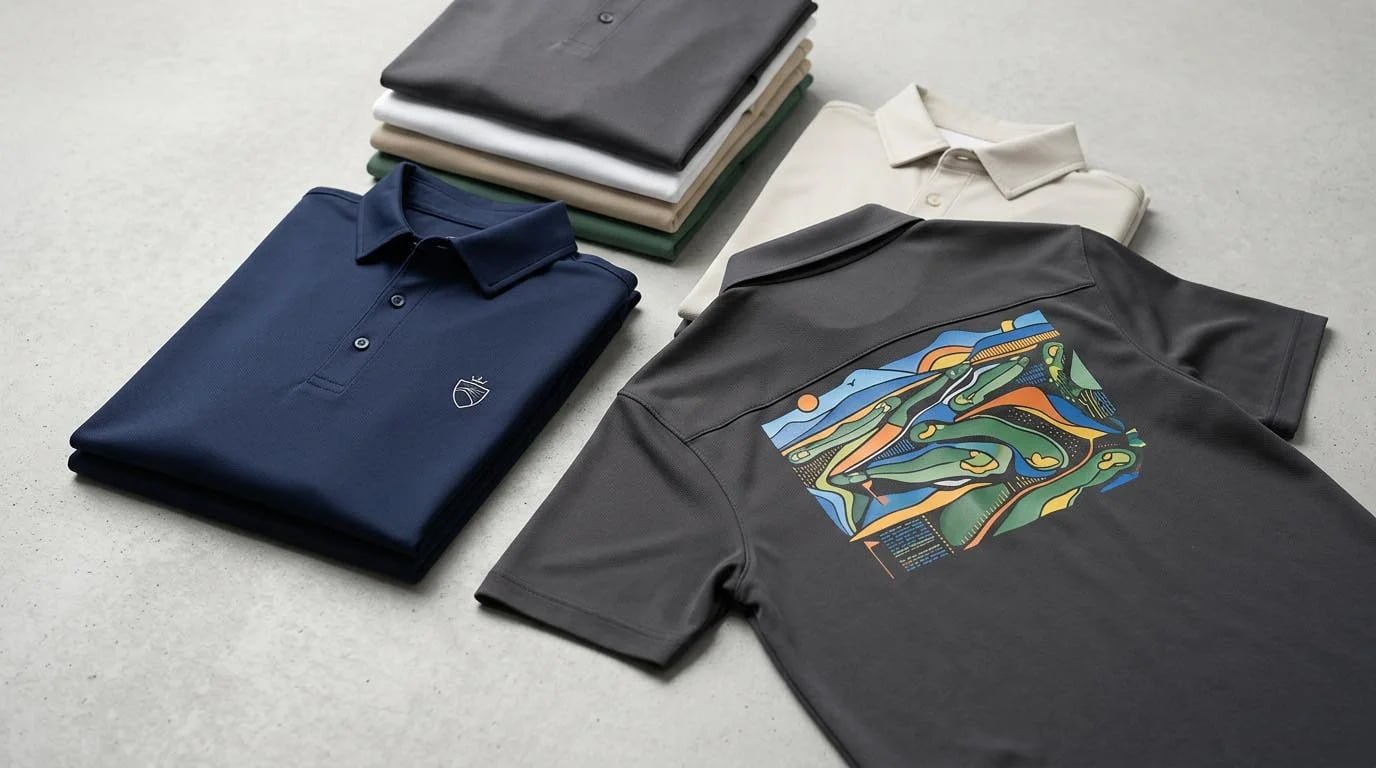
Choose Embroidery If Your Logo Has:
- simple shapes
- solid color areas
- limited color count
- bold text
- classic crest or badge style
Choose Heat Transfer If Your Logo Has:
- gradients
- photographic effects
- fine lines
- small text
- multiple colors
- sponsor-heavy layouts
- event-specific artwork
Design Rule of Thumb
If your logo is meant to look premium, classic, and structured, embroidery is often the better fit.
If your logo is meant to look graphic, technical, colorful, or highly detailed, heat transfer is often the better fit. In some all-over or highly colorful sportswear projects, buyers may also consider sublimation printing instead of standard logo decoration.
Which Logo Method Is Better by Order Quantity and Budget?
Budget matters, but it should be evaluated together with setup cost, order volume, and the final market position of your golf polos.
Heat transfer is often more flexible for short runs and personalization. Embroidery becomes more attractive when you want premium branding and better consistency across larger standard-logo orders.
In General
Heat Transfer is Often Better For:
- short runs
- names and numbers
- event polos
- multiple unique artworks in one order
- lower setup complexity
Embroidery is Often Better For:
- repeat corporate orders
- standard chest logos
- premium presentation
- long-term uniform programs
- brand collections with stable logo use
Budget Considerations
Pricing varies by:
- logo size
- stitch count
- transfer type
- fabric difficulty
- placement count
- order quantity
- packaging requirements
Instead of asking only for “price per logo,” ask your manufacturer for:
- setup fee
- per-piece logo price
- sample fee
- revision fee if any
- pricing by quantity tier
- pricing for multiple placements
This gives you a more realistic comparison.
Best Logo Placement for Custom Golf Polos
Logo method and logo placement should be planned together. Some placements naturally work better with one method than the other.
The most common golf polo logo placement is the left chest, but sleeves, right chest, back yoke, collar, and lower hem can also work depending on the branding goal.
If you are planning a fully customized program, it helps to review placement options together with your custom golf shirt manufacturer.
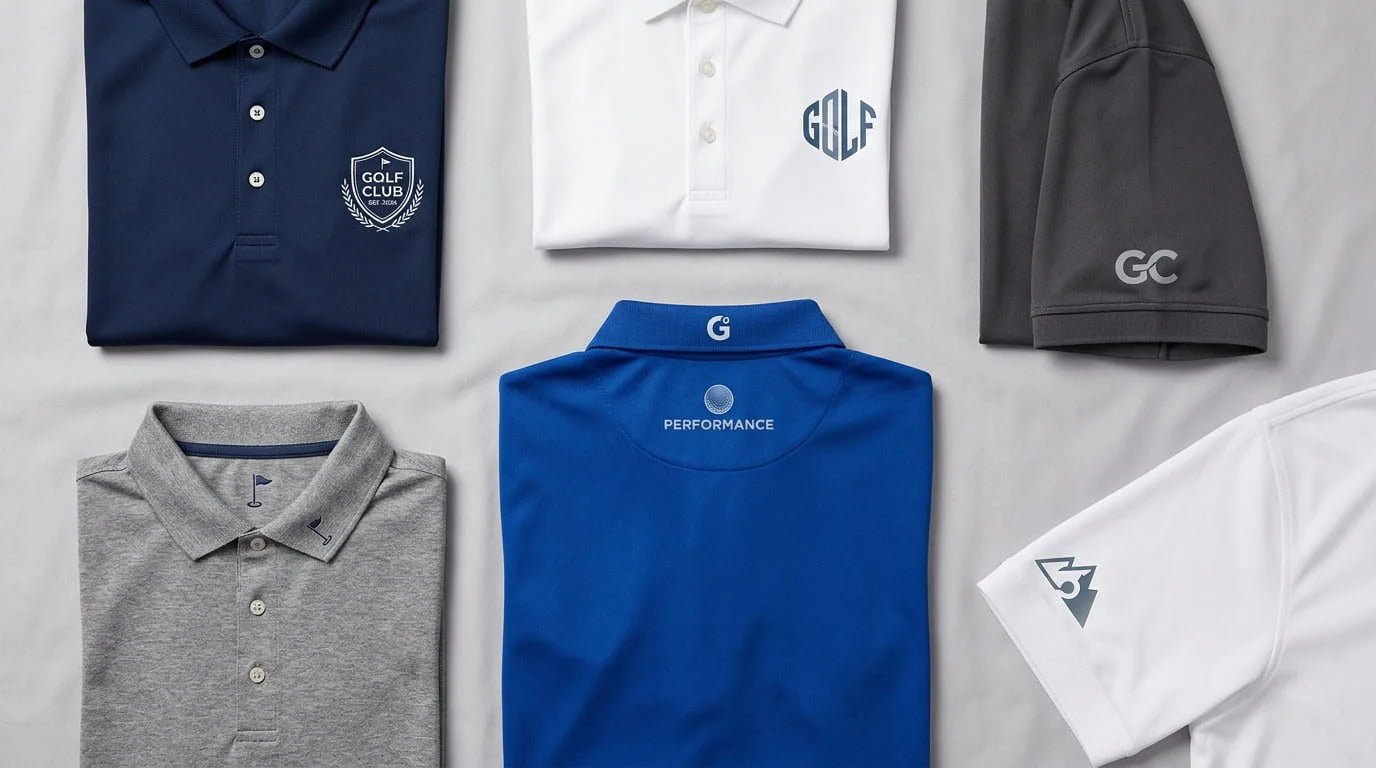
1. Left Chest
This is the standard placement for:
- company logos
- retail brand logos
- golf club branding
- sponsor identity
Best methods:
- Embroidery for premium branding
- Heat transfer for complex or very detailed logos
2. Right Chest
Useful for:
- secondary sponsor logos
- personalized names
- event branding
Best methods:
- embroidery for simple logos
- heat transfer for names or variable data
3. Sleeve
Sleeves work well for:
- modern brand styling
- sponsor logos
- tournament branding
Best methods:
- heat transfer for light feel and detail
- embroidery for small, simple logos
4. Back Yoke
Best for:
- team names
- event marks
- larger supporting graphics
Best methods:
- heat transfer for readability and flexibility
- embroidery only for small, simple marks
5. Collar or Back Hem
Best for subtle branding.
Best methods:
- heat transfer for low-profile marks
- embroidery only if the fabric and construction can support it cleanly
Placement Guide Table
| Placement | Best Use | Recommended Method |
|---|---|---|
| Left chest | Main brand logo | Embroidery or heat transfer |
| Right chest | Secondary logo or name | Embroidery or heat transfer |
| Sleeve | Sponsor or fashion branding | Heat transfer often preferred |
| Back yoke | Team or event identity | Heat transfer |
| Collar | Small modern logo | Heat transfer |
| Back hem | Subtle branding | Heat transfer |
Best Branding Strategies for Corporate Golf Shirts and Team Orders
Corporate buyers and team organizers often need more than one logo method. The smartest decoration plan is often a combination approach.
For many corporate golf shirts, the best strategy is embroidery for the main chest logo and heat transfer for personalization or secondary graphics.
Recommended Strategy for Corporate Golf Polos
Use:
- left chest embroidery for the main company logo
- right chest heat transfer for names or titles if needed
- sleeve heat transfer for sponsor or campaign graphics
This approach gives you:
- premium appearance
- stable main branding
- flexible personalization
- better control of decoration cost
Recommended Strategy for Golf Teams
Use:
- embroidered team crest or club logo on the chest
- heat transfer names on chest or back yoke
- heat transfer numbers or tournament marks if required
Recommended Strategy for Event and Tournament Polos
Use:
- embroidery if the event logo is simple and premium positioning matters
- heat transfer if you need:
- sponsor-heavy layouts
- multiple placements
- short lead times
- personalized player or guest names
For larger branded programs, this mixed approach is especially useful in private label and custom uniform development.
Common Mistakes to Avoid When Decorating Golf Polos
Many logo problems happen not because embroidery or heat transfer is “bad,” but because the method was selected without enough testing.
The most common mistakes include choosing based on cost alone, ignoring fabric behavior, approving oversized logos, and skipping pre-production wash testing.
Mistake 1: Choosing Only by Price
A cheaper logo method can lead to:
- weaker appearance
- lower durability
- more customer complaints
- lower brand value perception
Mistake 2: Using Standard Heat Transfer on Technical Performance Fabric
Not all transfer materials are suitable for moisture-wicking golf polos. Performance fabrics often require specialized transfer solutions.
Mistake 3: Putting Heavy Embroidery on Lightweight Stretch Polos
Dense logos can distort the fabric, reduce drape, and make the polo feel uncomfortable in wear.
Mistake 4: Ignoring Logo Placement Balance
A logo may look fine in artwork but awkward on the body when worn. Placement should be checked on a real garment sample.
Mistake 5: Skipping Wash and Wear Testing
Before approving bulk production, test:
- wash performance
- heat sensitivity
- stretch behavior
- edge lifting
- color retention
- comfort against skin
If possible, ask the supplier whether they can provide a test report or similar quality verification.
Mistake 6: Sending the Wrong Artwork Format
For best production results, manufacturers usually need:
- vector files such as AI, EPS, or PDF
- clean logo layers
- defined colors
- size and placement instructions
FAQ: Embroidery vs Heat Transfer for Golf Polos
Here are the questions buyers most often ask when choosing a logo method for custom golf shirts.
Is embroidery or heat transfer better for polo shirts?
It depends on the logo, fabric, and final use. Embroidery is usually better for premium and classic branding. Heat transfer is usually better for detailed graphics, names, and lightweight performance polos.
What is the best logo method for custom golf polos?
For many standard brand and corporate applications, embroidery is the best choice. For technical polos, event personalization, or highly detailed logos, heat transfer may be the better option.
Does heat transfer work on polyester golf shirts?
Yes, but the transfer type must match the fabric. Performance polyester often needs a specialized low-temperature transfer to avoid damage or poor adhesion.
Is embroidery good for moisture-wicking golf polos?
It can be, especially for simple chest logos, but the stitch density and backing should be controlled carefully. On very light performance polos, heavy embroidery may affect comfort and drape.
Which logo method lasts longer on golf polos?
In many cases, embroidery offers better long-term durability. Heat transfer can also perform well, but its lifespan depends more heavily on transfer quality, application method, fabric compatibility, and wash care.
What is the best logo placement on a golf polo?
The left chest is the most common and versatile placement. Sleeves, right chest, and back yoke also work well depending on the branding goal.
Can I use both embroidery and heat transfer on one golf polo?
Yes. Many brands combine embroidery for the main logo with heat transfer for names, event details, or secondary placements.
What file format should I send for polo logo production?
Vector artwork such as AI, EPS, or PDF is usually preferred. For heat transfer, high-resolution files may also work depending on the supplier and printing method.
Conclusion
There is no single best logo method for every custom golf polo. The right choice depends on your fabric, artwork, logo placement, budget, and the purpose of the garment.
Choose embroidery when you want a premium, classic, and durable brand presentation. Choose heat transfer when you need graphic detail, lightweight decoration, personalization, or flexibility for smaller runs.
For many successful projects, the best solution is not embroidery only or heat transfer only. It is a combination strategy based on placement and use case.
If you are developing custom golf polos, corporate golf shirts with logo, or private label golf apparel, always test the logo method on your exact fabric before bulk production.
Need Help Choosing the Best Logo Method for Your Custom Golf Polos?
Before requesting a quote, prepare these details:
- logo artwork
- preferred logo placement
- fabric type
- estimated quantity
- number of personalized names if any
- target price range
- intended use such as retail, corporate, team, or event
This helps your manufacturer recommend the right decoration method and avoid unnecessary sampling delays.
If you want professional support for custom golf shirts, embroidery, fabric development, or bulk production, feel free to contact us.