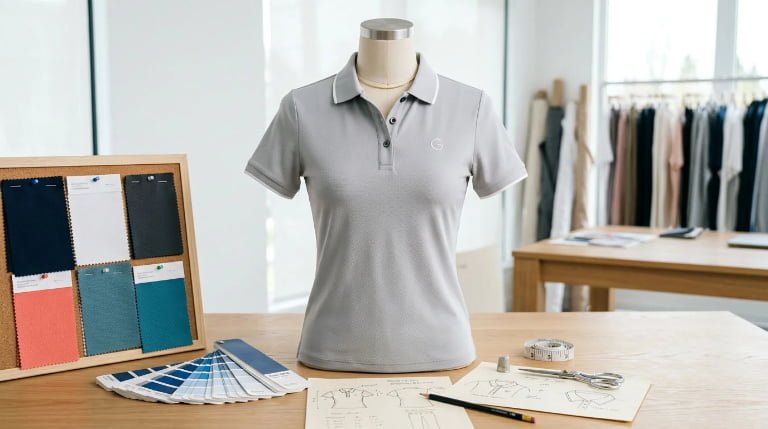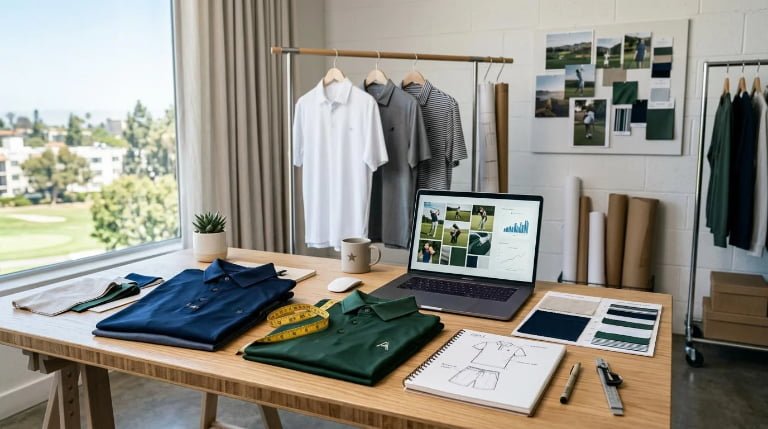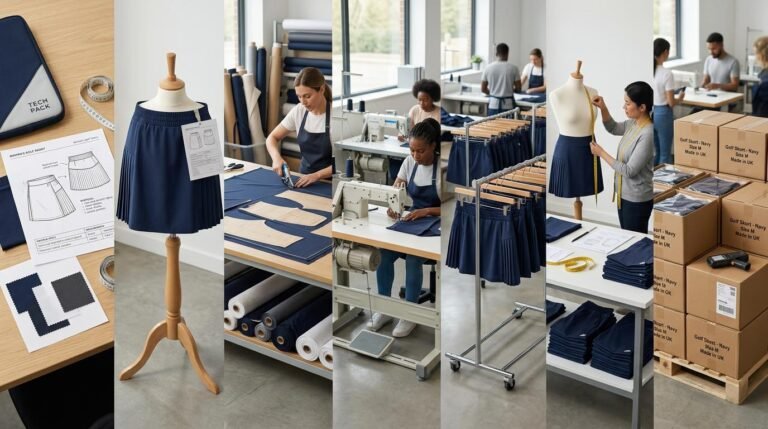
The golf polo shirt OEM process usually includes product planning, tech pack development, fabric sourcing, sample making, fit approval, pre-production confirmation, bulk manufacturing, quality control, packaging, and shipment coordination. For most first-time projects, the full process takes around 60 to 90 days, depending on fabric availability, trim complexity, order quantity, and customization requirements.
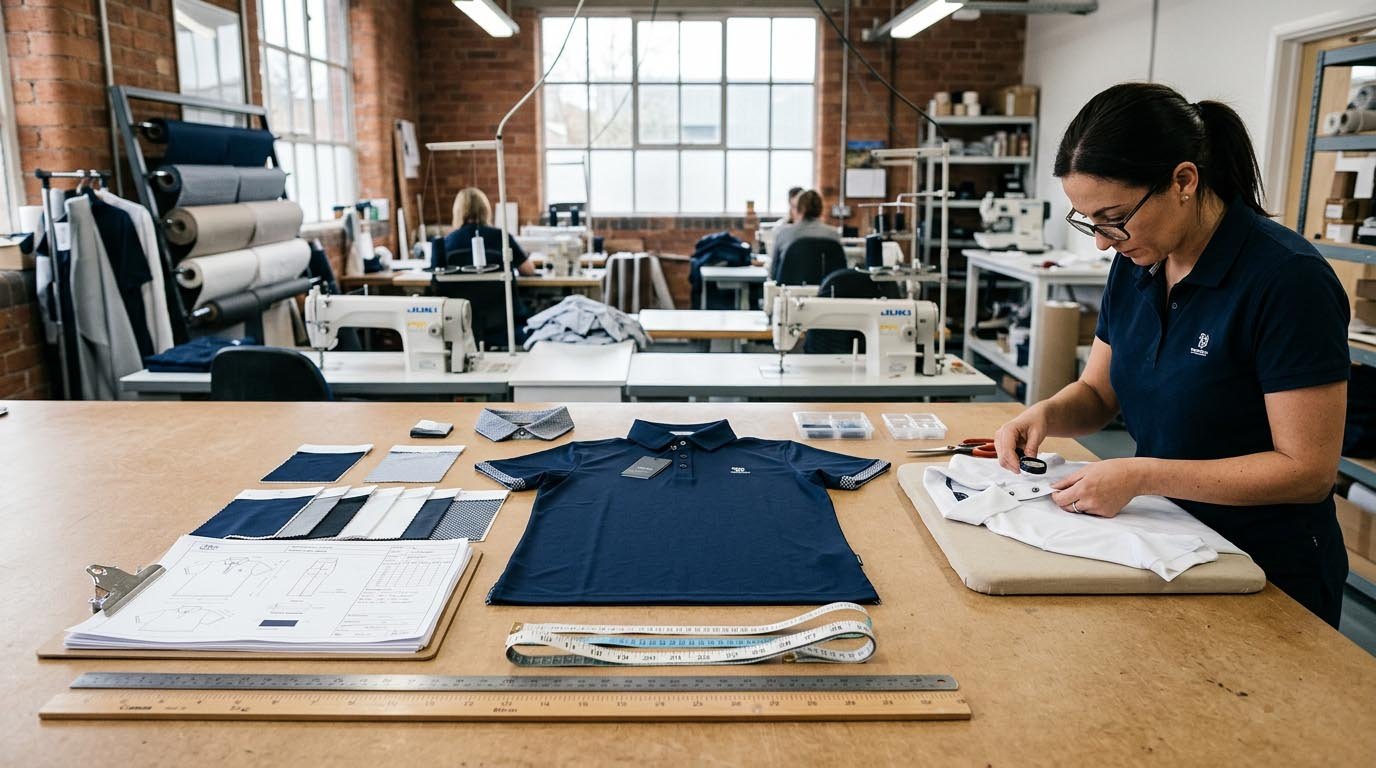
Compared with basic casual polos, custom golf polo shirts require more control over fit, performance fabric, moisture management, collar structure, logo application, color consistency, and size grading. This is why understanding the OEM workflow helps brands reduce mistakes, control timelines, and improve product quality before mass production begins.
This guide explains how golf polo shirts are made, what buyers need to prepare, how sampling and fit approval work, and what affects lead time, cost, and production consistency.
Quick Answers: Golf Polo Shirt OEM Process
What are the main stages in the golf polo shirt OEM process?
Most projects include design planning, tech pack confirmation, fabric and trim sourcing, sample development, size and fit review, pre-production approval, mass production, quality inspection, and shipment preparation.
How long does a custom golf polo shirt OEM project take?
A first custom order usually takes 60 to 90 days. Repeat orders with approved materials and patterns are often faster.
What is the MOQ for custom golf polo shirts?
MOQ varies by supplier, fabric source, and customization level. Many OEM projects start from a few hundred pieces per style or color.
What should buyers prepare before contacting a manufacturer?
The most useful starting materials are a tech pack, logo files, size chart, product references, fabric direction, and packaging requirements.
Can buyers customize fabric, collar, buttons, labels, and logos?
Yes. Most golf polo shirt manufacturers can support customization of fabric composition, collar construction, placket details, buttons, embroidery or print logos, neck labels, hang tags, and packaging, depending on project scope.
Golf Polo Shirt OEM Process at a Glance
The table below shows the typical workflow for a custom golf polo shirt manufacturing project.
| Stage | Main Tasks | Typical Time | Main Risks |
|---|---|---|---|
| Product Planning | Confirm target customer, fit, performance needs, pricing level | 5-7 days | Unclear product direction |
| Tech Pack Development | Finalize measurements, construction, trims, branding | 5-10 days | Missing technical information |
| Fabric and Trim Sourcing | Source fabric, collar material, buttons, labels, color references | 7-15 days | Material mismatch or sourcing delays |
| Sample Development | Make proto and fit samples | 10-20 days | Fit problems, collar or fabric issues |
| Pre-Production Approval | Confirm size set, trims, workmanship, golden sample | 7-10 days | Late revisions before bulk |
| Mass Production | Cutting, sewing, finishing, packing | 20-35 days | Inconsistent quality or delays |
| Quality Inspection | Inline and final inspection | Ongoing | Defects not caught early |
| Delivery Coordination | Carton marking, export documents, shipping booking | 5-10 days | Packing or shipment errors |
What Does the Golf Polo Shirt OEM Process Include from Design to Delivery?
The golf polo shirt OEM process covers more than production sewing. It starts with design planning and continues through sample development, fit approval, pre-production review, manufacturing, quality inspection, and logistics.
A typical project includes:
- product concept confirmation
- tech pack creation
- fabric and trim selection
- sample making
- fit and size review
- pre-production approval
- bulk production
- quality control
- packaging and shipment
For custom golf polos, the factory must balance both style and performance. Buyers usually pay attention to:
- comfortable fit for movement
- breathable and moisture-managing fabric
- stable collar shape
- placket and button appearance
- clean logo execution
- color consistency across bulk fabric
- accurate sizing from small to plus sizes if required
These details influence whether the final polo feels like a premium golf product or just a basic casual shirt.
Step 1: Product Planning and Tech Pack Development
A successful OEM project begins with a clear product brief.
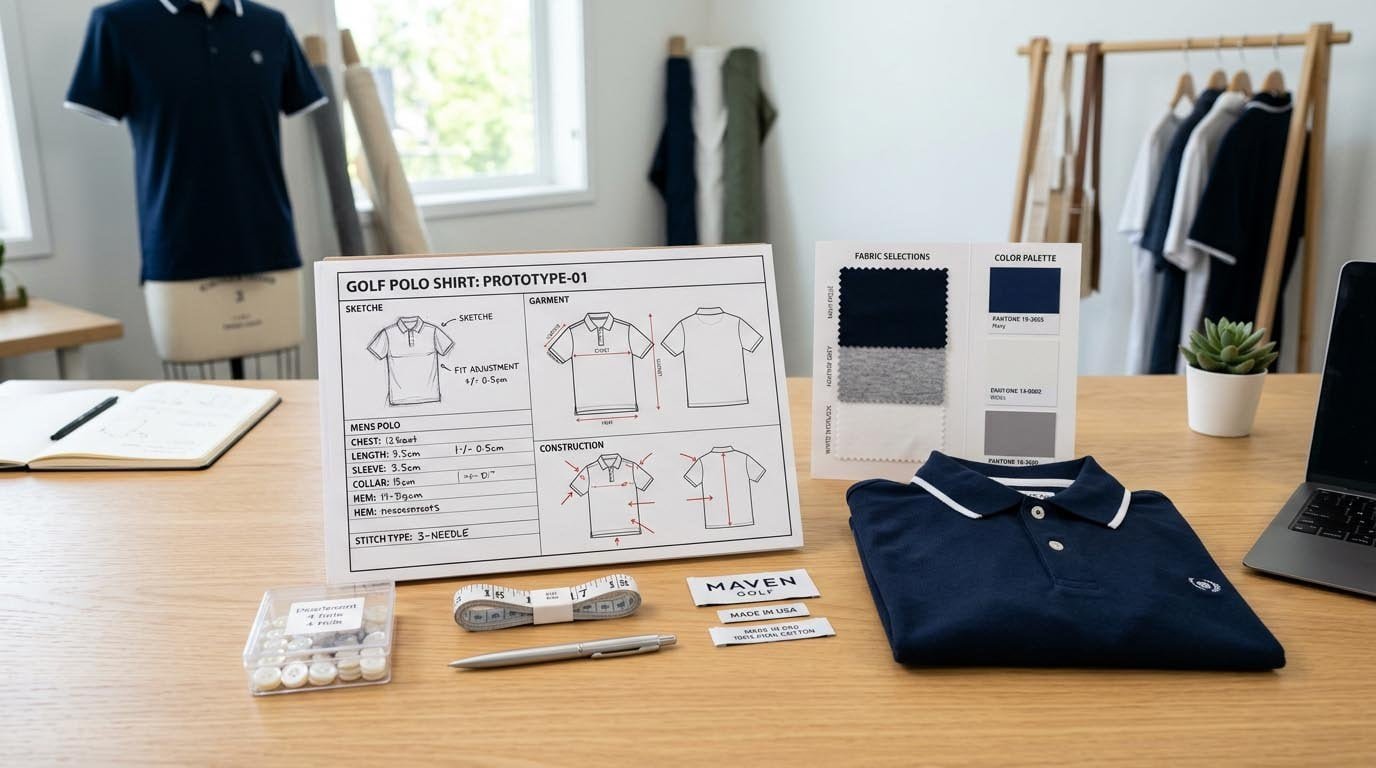
Before development starts, buyers should define:
- target market
- fit direction
- price target
- seasonal use
- fabric expectations
- logo method
- size range
- packaging requirements
- expected order quantity
What should be included in a golf polo shirt tech pack?
A proper tech pack for golf polos usually includes:
- front and back flat sketches
- detail views of collar, placket, sleeve opening, hem, and side slit
- measurement chart by size
- bill of materials
- fabric composition and weight direction
- color references
- branding placement
- embroidery, print, or badge instructions
- trim details such as buttons and labels
- packaging notes
Why the tech pack matters
A detailed tech pack helps reduce errors in:
- sample interpretation
- pattern making
- collar construction
- trim matching
- logo placement
- bulk consistency
If the technical file is incomplete, the manufacturer may make assumptions during sampling. That usually results in more revisions and slower development.
Step 2: Fabric, Collar, and Trim Sourcing
After the design direction is confirmed, the next stage is material selection.
For custom golf polo shirts, material selection usually focuses on:
- breathability
- moisture management
- stretch and recovery
- softness
- shape retention
- colorfastness
- suitability for embroidery or printing
Common fabric options for golf polos
Many golf polo manufacturers work with the following fabric types:
| Material Type | Common Use | Key Features |
|---|---|---|
| Polyester Performance Knit | Main body fabric | Moisture management, quick drying, easy care |
| Polyester-Spandex Blend | Stretch golf polos | Better flexibility and recovery |
| Cotton-Poly Blend | Lifestyle golf polos | Balanced comfort and durability |
| Recycled Performance Polyester | Sustainable collections | Lightweight and eco-focused positioning |
| Jacquard or Textured Knit | Premium styles | More visual depth and brand differentiation |
Important trim components
Golf polo trim selection may include:
- flat knit or self-fabric collar
- placket construction
- buttons
- neck tape
- woven brand label or heat transfer label
- care label
- hang tag
- retail packaging or standard polybag
Why collar development matters
In golf polo shirt manufacturing, collar quality strongly affects perceived value. A poor collar can create issues such as:
- curling after washing
- uneven shape
- weak structure
- mismatch with body fabric
Because of this, collar material and construction should be reviewed carefully during development.
Step 3: Sample Development and Fit Approval
Sample development turns the design into a physical garment.
Most projects include one or more of the following stages:
- proto sample
- fit sample
- revised fit sample
- pre-production sample
What should buyers check in a golf polo sample?
Fit and movement
The polo should allow natural movement through the shoulders, chest, and sleeve opening.
Collar shape
The collar should sit cleanly and maintain structure.
Placket construction
The placket should lie flat and align properly.
Fabric behavior
The selected fabric should match the intended hand feel, stretch, and performance level.
Logo execution
Embroidery, print, or badge placement should be clean and consistent.
Length balance
Body length and sleeve length should match the intended fit profile.
Why fit approval is critical
Golf apparel must perform during movement, not just look good on a hanger. During fit review, buyers should evaluate:
- arm movement
- torso rotation
- comfort across the chest
- hem coverage during activity
- layering potential in different climates
Even if the first sample looks acceptable visually, it may still need changes after wear testing.
Step 4: Pre-Production Planning, Trim Approval, and Size Set Review
Once samples are approved, the order moves into pre-production planning.
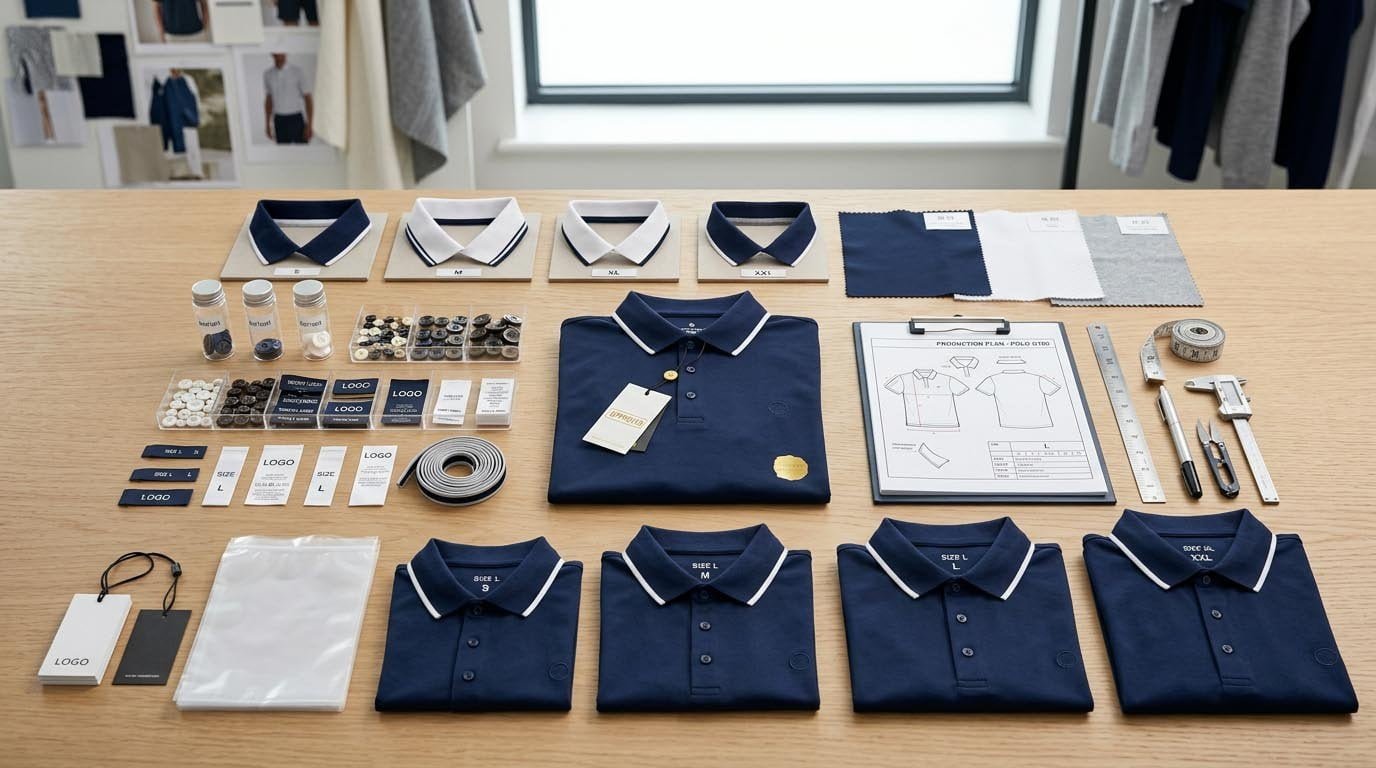
This stage confirms that the factory is ready to produce the style consistently at scale.
What usually happens during pre-production?
Material confirmation
Fabric, collar, buttons, labels, and packaging materials are finalized.
Production scheduling
The factory plans cutting, sewing, finishing, and packing based on material arrival and available line capacity.
Size set review
One piece in each size may be reviewed to confirm grading accuracy and proportional balance.
Golden sample approval
The approved reference sample becomes the benchmark for bulk production.
Why pre-production approval matters
Many bulk problems happen because production starts before all details are fully aligned. This stage helps reduce risk from:
- size inconsistency
- trim errors
- color mismatches
- workmanship variation
- packaging mistakes
For custom golf polo shirts, a careful pre-production review is essential.
Step 5: Mass Production of Custom Golf Polo Shirts
After pre-production approval, the order moves into bulk manufacturing.
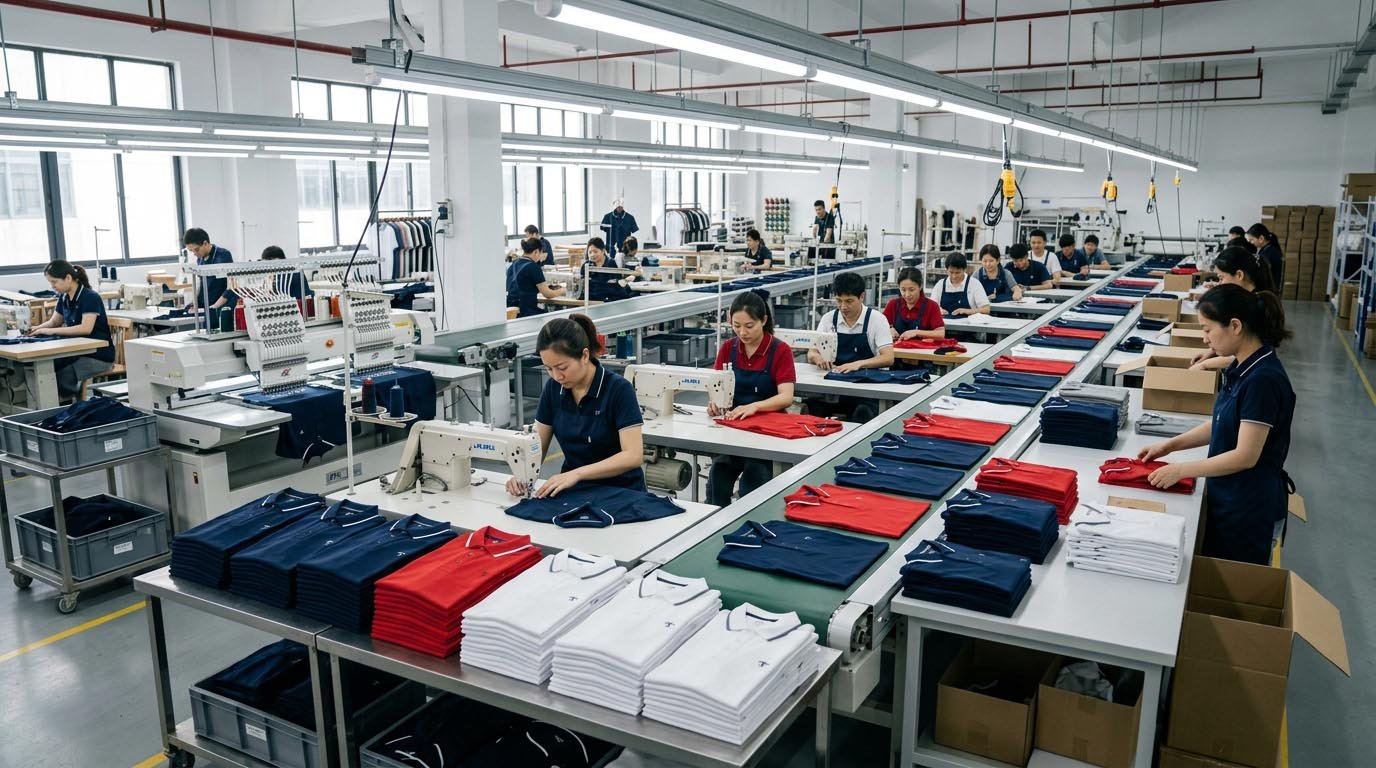
What happens during production?
Bulk production usually includes:
- incoming fabric inspection
- marker making
- cutting
- logo embroidery or printing
- collar and placket assembly
- sewing
- pressing and finishing
- folding and packing
What affects production lead time?
Production time may vary based on:
- order quantity
- number of colors
- fabric lead time
- trim complexity
- logo process
- production season
- factory workload
A repeat order with existing patterns and approved materials is usually faster than a completely new development order.
Step 6: Quality Control in Golf Polo Shirt Manufacturing
Quality control is one of the most important parts of the golf apparel OEM process.
Common quality checkpoints
Incoming material inspection
The factory checks fabric shade, hand feel, visible defects, and trim accuracy before production starts.
Inline inspection
During sewing, quality teams monitor:
- measurement consistency
- collar construction
- placket alignment
- button attachment
- logo placement
- stitching quality
- thread cleanliness
Final inspection
Before packing or shipment, finished garments are checked for:
- appearance
- measurement tolerance
- stains or damage
- labeling accuracy
- packaging accuracy
Common quality issues in golf polo production
Buyers should watch for:
- collar curling
- placket distortion
- uneven sleeve opening
- skewed embroidery
- shade variation
- loose threads
- poor pressing finish
Why quality control matters
If quality issues are found after delivery, they can lead to:
- returns
- retailer complaints
- delayed launch
- extra replacement cost
- damage to brand reputation
This is why inspection standards should be agreed on before bulk production starts.
Step 7: Packaging, Shipment Coordination, and Delivery
After final inspection, the order moves into packing and export preparation.
Shipment coordination usually includes:
- folding method confirmation
- individual polybag or retail packaging
- carton quantity setup
- carton marking
- barcode verification if needed
- shipping document preparation
- freight booking
Common shipping options
| Shipping Method | Best For | Transit Time | Cost Level |
|---|---|---|---|
| Sea Freight | Larger orders | Longer | Lower |
| Air Freight | Faster replenishment | Shorter | Higher |
| Express Courier | Samples or urgent small shipments | Fastest | Highest |
Common causes of shipment delay
- unfinished packaging approval
- failed final inspection
- missing export documents
- payment delay
- freight congestion
- late booking during peak season
To avoid delays, packaging and shipping requirements should be confirmed early.
Golf Polo Shirt OEM vs ODM vs Private Label
Many buyers compare OEM, ODM, and private label golf apparel before starting a project.
| Type | Meaning | Best For | Development Time | Customization Level |
|---|---|---|---|---|
| OEM | Product made to buyer specification | Brands wanting more control and differentiation | Longer | Higher |
| ODM | Existing factory style modified for buyer | Faster launch with moderate customization | Medium | Medium |
| Private Label | Existing style with logo and packaging changes | Quick market testing | Fastest | Lower |
Choose OEM if:
- the brand wants a custom fit or custom fabric
- product differentiation matters
- long-term brand building is the goal
Choose ODM if:
- faster launch is more important
- the budget is more limited
- the brand accepts adapting an existing style
Choose private label if:
- the goal is to test demand quickly
- customization needs are simple
- the brand wants to reduce development complexity
What Affects the Cost of Custom Golf Polo Shirts?
The cost of a custom golf polo shirt depends on multiple factors, including:
- fabric type
- fabric weight and finish
- collar construction
- number of colors
- logo method
- trim selection
- packaging complexity
- order quantity
- quality standard
Typical cost categories include:
- sample development cost
- fabric and trim cost
- cut-and-sew labor
- branding cost
- packaging cost
- inspection cost if required
- freight cost
When comparing suppliers, buyers should look at the full project cost, not only the base unit price.
Common Delays in the Golf Polo Shirt OEM Process
Even well-planned projects can be delayed. Common reasons include:
1. Incomplete tech pack
Missing measurements or construction notes often slow down sampling and costing.
2. Slow fabric or trim approval
Late decisions on collar, buttons, labels, or packaging can affect the production schedule.
3. Repeated sample revisions
If sample comments are not consolidated, development can stretch much longer than planned.
4. Peak season production pressure
Factories may have limited line availability during busy periods.
5. Packaging decisions made too late
Retail packing, barcode labels, and shipping marks often get confirmed later than ideal.
6. Material supply changes
If the selected fabric is not available, replacement materials may need re-approval.
How Buyers Can Make the OEM Process More Efficient
To make the project smoother, buyers should prepare:
- reference photos or sample garments
- clear size chart
- logo files
- fabric expectations
- collar direction
- packaging brief
- target quantity
- target delivery date
- one contact person for approvals
Fast and organized feedback usually shortens the sampling and approval cycle.
FAQ: Golf Polo Shirt OEM Process
How long does the golf polo shirt OEM process take?
A first custom project usually takes 60 to 90 days, depending on sample revisions, material lead time, and order complexity.
What is the MOQ for custom golf polo shirts?
MOQ depends on the factory and customization level. Many projects start from a few hundred pieces per style or color.
What should be included in a golf polo shirt tech pack?
A tech pack usually includes flat sketches, measurements, fabric details, bill of materials, logo placement, trims, and packaging notes.
What fabrics are commonly used in golf polo shirts?
Most golf polos use performance polyester knits, polyester-spandex blends, cotton-poly blends, or textured performance fabrics, depending on the target price and function.
What is the difference between OEM and private label golf polos?
OEM is based on the buyer's own product specifications, while private label usually uses an existing factory style with logo and packaging changes.
Can smaller brands start with lower order quantities?
Yes. Many smaller brands start with ODM or private label programs before moving into full OEM development.
Final Thoughts
The golf polo shirt OEM process connects product concept, technical development, fabric sourcing, sample making, pre-production approval, bulk manufacturing, quality control, and delivery coordination.
The best OEM projects usually succeed because buyers do three things well:
- define product requirements clearly
- review samples carefully
- confirm all bulk details before production starts
A structured OEM process helps brands reduce errors, improve product consistency, and build a stronger foundation for future repeat orders.
Supplier Checklist Before Starting a Golf Polo OEM Project
Before choosing a golf polo shirt manufacturer, ask these questions:
- Do you offer OEM, ODM, or private label services?
- What is the MOQ for new styles and repeat orders?
- Can you support custom fabrics or only stock materials?
- How many sample rounds are usually required?
- What logo methods do you support?
- How do you manage size set and pre-production approval?
- What quality control checkpoints are used?
- What packaging options are available?
- What is the realistic lead time from development to shipment?
- How are repeat orders handled after the first run?
Clear answers to these questions make it easier to choose the right custom golf apparel manufacturer and manage the project with fewer surprises.