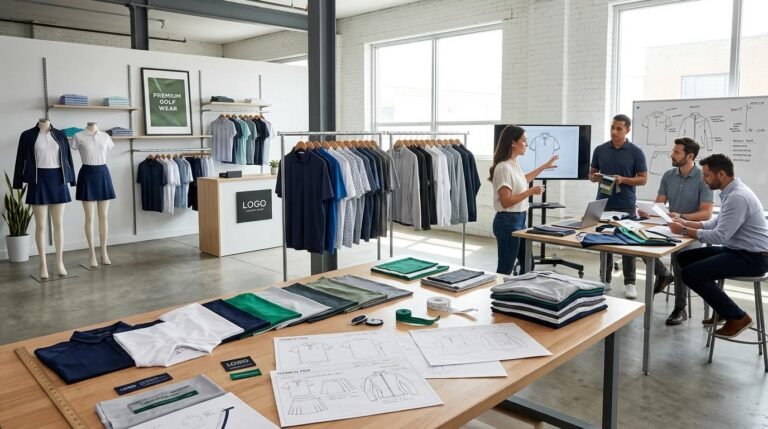
A brand founder called me last month, frustrated. His first order of quarter-zip polos had just arrived, and half his retail partners refused to stock them. They said zippers looked "too athletic" for their country club customers. He thought he was following trends, but he had ignored his brand positioning.
Collar and placket selection is not about which style is "better" or more premium—it is a matching decision between your brand positioning, target venue rules, and fabric structural capabilities. The right choice depends on who wears your polos, where they wear them, and what fabrics you are using.
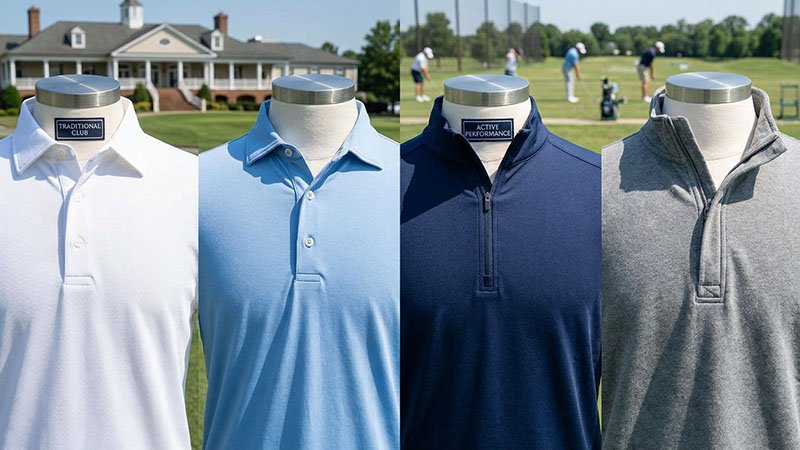
I have been helping golf apparel brands choose collar and placket styles for six years. The conversation almost always starts the same way: "What is trending?" or "Which looks more expensive?" Those are the wrong questions. The right question is: "What matches my brand identity and performs reliably with my chosen fabrics?" A three-button placket on a premium piqué fabric signals traditional quality. The same design on a lightweight stretch knit might look cheap. A quarter-zip in performance fabric positions you as activewear. That same zip on a heavy cotton blend might confuse customers about what you are selling.
Quick Answers: Plackets, Collars & Golf Polo Etiquette
What is the difference between a placket and a collar?
The placket is the opening at the front of the polo, usually with buttons or a zipper. The collar is the folded fabric around the neck. Both affect dress code compliance, but venues judge collars more strictly—most require a collar of some kind, while placket style varies more by club culture.
Are quarter-zip polos acceptable at private golf clubs?
It depends on the club. Traditional private clubs often restrict zippers to outerwear only, treating zip polos like athletic training gear. Modern clubs and public courses are more flexible. I tell brands: if you are targeting country club retailers, ask them specifically before designing a zip-heavy line.
Is a three-button placket more formal than a two-button?
Not inherently. Button count affects styling and neck opening, not formality. Three buttons let you adjust ventilation and create a more tailored look when fully buttoned. Two buttons give a cleaner, simpler appearance. Both are equally acceptable at most courses—it is about your brand aesthetic, not etiquette hierarchy.
Can you use any fabric with any placket style?
No. Lightweight stretch knits (under 140 GSM) often cannot support traditional button plackets without puckering or distorting after washing. Heavy piqué fabrics (200+ GSM) can make zippers look bulky and awkward. Collarless designs need enough fabric structure to hold their shape, or they look sloppy. Fabric choice constrains placket options more than most brands expect.
Do collarless golf shirts violate dress codes?
At most traditional courses, yes. The standard rule is "collared shirt required." Collarless crew necks and henleys (shirts with a partial button placket but no collar) are growing more acceptable at modern clubs and public courses, but you risk limiting your market if your line relies heavily on collarless styles. Check target venue policies before committing.
What collar height is standard for golf polos?
Most traditional polos use a 2.5 to 3-inch collar height (measured from the neckline to the collar tip when folded). Performance polos sometimes use shorter blade collars (2 inches) or taller mock necks (3.5 to 4 inches). Taller collars provide more sun protection but can feel restrictive. Test collar height with your target customers before finalizing production.
How do you prevent collar curl and placket puckering?
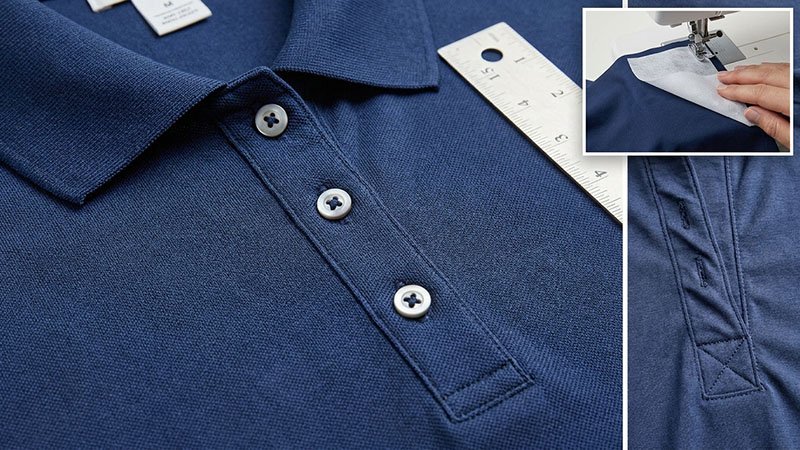
Collar curl happens when the fabric lacks structure or the interfacing (stiffening material inside the collar) is too light. Use a heavier interfacing or a double-layer collar construction. Placket puckering happens when the fabric stretches but the placket facing does not—you need to match the stretch properties or use a stabilizing tape along the placket edge. I see this problem most often when brands pair high-stretch fabrics with standard placket construction.
What Dress Codes Actually Count as a Collar (and Where)?
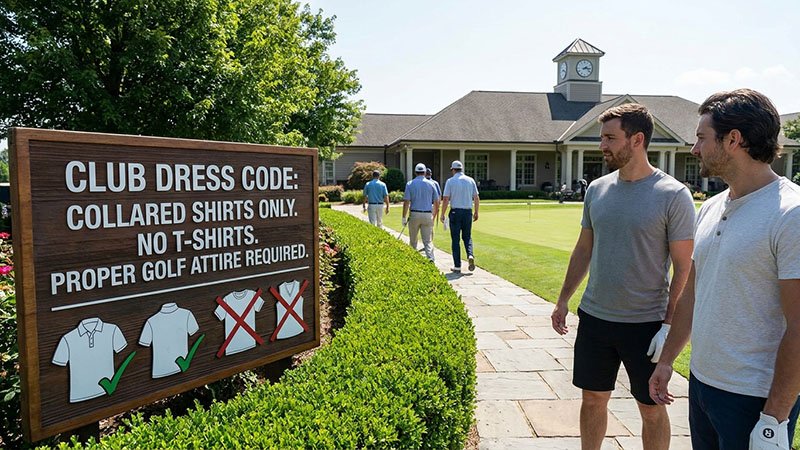
Most traditional golf courses define "collared shirt" as a garment with a folded or standing collar that encircles the neck. Placket buttons alone do not count. Venue rules vary, but private clubs and tournament settings are strictest, while public courses and casual clubs allow more flexibility.
How Venues Define Collars
I ask brands to think about where their customers actually play. Private country clubs usually enforce a strict "collared shirt" rule. That means a traditional polo collar, either a fold-over style (the most common type, where the collar stands up and folds down) or a stand collar (a short collar that stands up but does not fold). Mock necks with a partial zip sometimes qualify if the stand is tall enough, but some clubs still reject them. Collarless styles—crew necks, henleys, sleeveless shirts—are almost always prohibited.
Public courses are more relaxed. I have seen courses accept collarless henleys, especially if they are marketed as "golf-specific" and look polished. Muni courses (municipal, public golf facilities) often allow any athletic shirt as long as it is not a T-shirt. Resort courses fall somewhere in the middle—they want a "put-together" look, which usually means a collar, but they are less strict about style.
Tournament play has its own rules. Professional tours and amateur championships require traditional collared shirts, period. If your brand targets competitive golfers, you cannot rely on collarless or non-traditional collar styles. Recreational tournaments are more flexible, but you should not assume.
Here is how I map venue types to collar expectations:
| Venue Type | Collar Required? | Acceptable Collar Styles | Placket Flexibility | Collarless Risk |
|---|---|---|---|---|
| Private country club | Yes, strictly enforced | Fold-over polo, stand collar | Buttons preferred, zippers sometimes restricted | High—will be rejected |
| Semi-private club | Yes, usually enforced | Fold-over polo, mock neck, stand collar | Buttons and zippers usually accepted | Medium—check individual club rules |
| Public course (upscale) | Yes, generally enforced | Fold-over polo, mock neck, blade collar | All placket styles accepted | Medium—some courses allow henleys |
| Public course (casual) | Often required, loosely enforced | Any collar style, sometimes henleys | All placket styles accepted | Low—collarless may be acceptable |
| Resort course | Yes, usually enforced | Fold-over polo, mock neck | All placket styles accepted | Medium—depends on resort positioning |
| Muni/budget course | Sometimes | Any collar style, athletic shirts often OK | No restrictions | Low—most accept collarless athletic wear |
One thing I emphasize: even if a course allows collarless shirts, that does not mean customers will buy them for golf. Many golfers associate collared polos with the game's identity. A collarless shirt might be legal, but it does not "feel" like golf apparel to traditional players. Your brand positioning determines whether you can sell outside those expectations.
What Are the Benefits and Pitfalls of 3-Button Placket Polos?
Three-button plackets offer styling versatility and adjustable ventilation but require fabric weight above 150 GSM and stabilized placket construction to prevent puckering and button strain. They work best for traditional or premium-positioned brands using structured fabrics.
When Three-Button Plackets Work
Three-button plackets give you options. You can button all three for a formal, tailored look. You can leave the top button open for a relaxed vibe. You can leave two buttons open for maximum ventilation on hot days. This flexibility appeals to golfers who play in different settings—they can adjust the same shirt for a member-guest tournament or a casual Saturday round.
The third button also affects the visual line of the shirt. A three-button placket usually extends 7 to 9 inches down from the collar, creating a longer vertical element. This can make the torso look longer and leaner, which some customers prefer. Two-button plackets typically extend 5 to 6 inches, creating a simpler, more casual appearance.
But three-button plackets add construction complexity. You need a longer placket facing (the strip of fabric underneath the placket that reinforces it). If your fabric is lightweight or high-stretch, the placket can ripple or twist. I see this most often with performance knits—brands love the feel and breathability, but the fabric does not have enough body to support a three-button design. You need at least 150 GSM fabric weight, and ideally 160-180 GSM, for a stable placket.
Button spacing also matters. If buttons are too close together (less than 2 inches apart), the placket looks busy and can pull when the wearer bends or twists. If they are too far apart (more than 3 inches), gaps appear between buttons and the shirt opens awkwardly. I recommend 2.5 to 2.75 inches between buttons for most applications.
Here is how fabric type affects three-button placket success:
| Fabric Type | Weight (GSM) | Placket Stability | Best Button Configuration | Common Issue | Solution |
|---|---|---|---|---|---|
| Lightweight performance knit | 120-140 | Poor—fabric stretches, placket distorts | Not recommended | Puckering, button pull | Use two-button or zip placket instead |
| Standard polo knit | 150-170 | Good—fabric holds shape | 3-button works well | Minor wrinkling after washing | Add fusible interfacing to placket |
| Heavy piqué | 180-220 | Excellent—fabric structure prevents distortion | 3-button is ideal | None, if constructed properly | Standard construction sufficient |
| Stretch blend (15-25% stretch) | 160-180 | Fair—needs reinforcement | 3-button possible with stabilization | Placket ripples when stretched | Use stay tape along placket edge |
I also tell brands to think about their customer. Three-button plackets read as traditional and slightly more formal. If you are positioning as modern performance golf or targeting younger, trend-focused players, a three-button design might feel old-fashioned to your audience. If you are selling to country club golfers or older demographics, three buttons signal quality and attention to detail.
One more thing: three-button plackets increase production time and cost. More buttons mean more button holes, more stitching, and more quality control checks. Expect to add $0.30 to $0.50 per unit in labor cost compared to a two-button design. Your MOQ might also increase slightly because cutting and sewing three-button plackets generates more setup time.
How Do Quarter-Zip and Zip Plackets Perform in Golf Settings?
Quarter-zip and zip plackets provide superior ventilation and a modern aesthetic but face restrictions at traditional venues and require fabric weight above 160 GSM to prevent zipper rippling. They work best for performance-focused brands targeting public courses, resort play, or younger demographics.
The Performance Case for Zippers
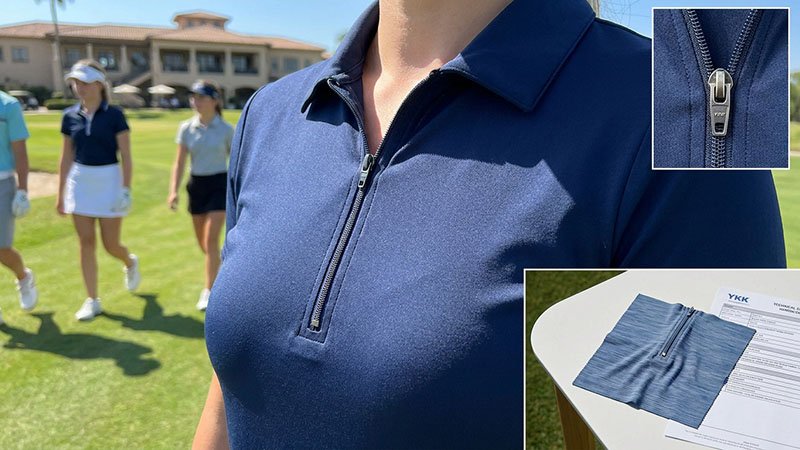
Zippers let you control airflow more precisely than buttons. A quarter-zip (usually 6 to 8 inches long) opens wide enough to cool your neck and upper chest without exposing too much skin. You can zip up quickly if the temperature drops or you move into shade. Golfers who walk 18 holes in variable conditions appreciate this flexibility.
Zippers also eliminate button-related fit problems. Buttons can gap, pull, or pop open if the shirt is too tight across the chest. Zippers lie flat and do not create those stress points. For women's polos, this is especially valuable—a zip placket avoids the bust-fit challenges that plague button designs.
But zippers carry etiquette baggage. Many traditional golfers associate zippers with gym clothes, layering pieces, or cold-weather gear—not standalone polos for warm-weather play. Private clubs often have written or unwritten rules against zip plackets. I worked with a brand that made beautiful quarter-zip polos in a premium merino blend. The product was technically excellent, but they struggled to get traction at upscale pro shops because the zipper positioned them as "athletic" rather than "golf."
Zipper construction also imposes fabric requirements. The zipper tape (the fabric strip the zipper teeth attach to) is relatively stiff. If your base fabric is too lightweight or stretchy, the zipper will create ripples or waves along the placket. The fabric needs enough structure to anchor the zipper without distorting. I recommend minimum 160 GSM fabric weight, and preferably 170-180 GSM, for zip plackets. Stretch fabrics can work, but you need to use a stabilizing underlayer along the placket to prevent the fabric from pulling away from the zipper.
Zipper quality matters more than most brands expect. Cheap zippers snag, separate, or fail after a few washes. I have seen brands save $0.30 per unit by using low-grade zippers, then lose far more in returns and warranty claims. Use YKK or equivalent quality zippers—they cost more upfront but dramatically reduce failure rates.
Here is how zipper choice affects positioning and performance:
| Zipper Type | Length | Cost vs. Buttons | Best For | Venue Acceptance | Performance Benefit |
|---|---|---|---|---|---|
| [Quarter-zip | 6-8 inches | +$1.50-$2.00 per unit](https://www.rushordertees.com/sweatshirts/quarter-zip-up/?srsltid=AfmBOoqgcKXW1JrluOlsKUNSQDnZsMzdpIq_yFO2x74Y-QEUTSRxrxoh) | Active/performance brands, layering | Restricted at traditional clubs, OK at public courses | Excellent ventilation control |
| Half-zip | 10-12 inches | +$2.00-$2.50 per unit | Cold-weather layers, athletic brands | Rarely accepted as standalone polo | Maximum ventilation, easy on/off |
| Full-zip | Entire front | +$3.00-$4.00 per unit | Jackets, vests—not typically used for polos | Not applicable | Not relevant for polo design |
I advise brands to be clear about positioning before choosing zippers. If you are building a performance-first brand targeting public courses, younger players, and resort golf, zippers make sense. They signal modernity and function-over-tradition. If you are selling to country club pro shops or older golfers who value traditional aesthetics, zippers will work against you. You can offer both button and zip styles in your line, but understand that they appeal to different customer segments and retail channels.
What Do Different Collar Types Signal About Your Brand?
Collar type—knit rib, self-fabric, mock/blade, or stand—determines how the collar holds shape, rolls, and withstands washing. Choice should match fabric weight, target price point, and brand positioning. Each type performs differently and signals different quality levels to customers.
Decoding Collar Construction
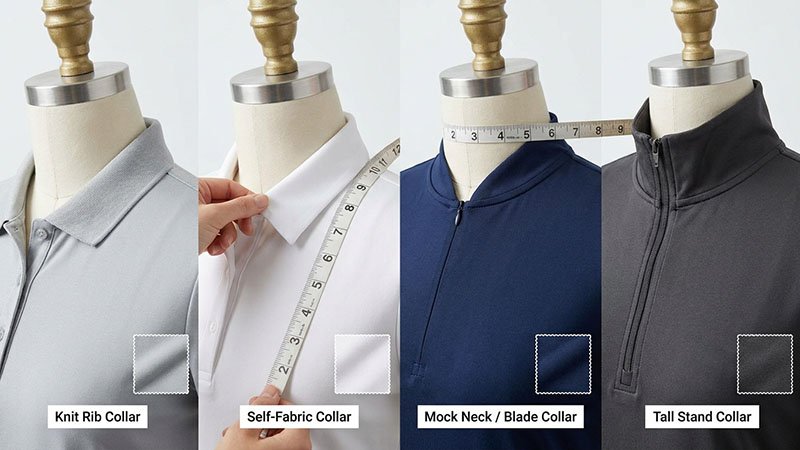
A knit rib collar is made from a stretchy ribbed fabric, usually 1x1 or 2x2 rib (the numbers refer to the knit pattern—alternating columns of raised and recessed stitches). Rib collars are the most common type on affordable and mid-range polos. They stretch easily, return to shape after washing, and work with almost any base fabric. But they can lose elasticity over time, especially if you use low-quality yarns. I have seen cheap rib collars go limp after ten washes, making the polo look worn out even if the body fabric is still fine.
A self-fabric collar uses the same fabric as the polo body, folded and sewn to create the collar. This creates a unified look—no contrast between collar and body. Self-fabric collars work best with structured fabrics like piqué or heavier knits (180+ GSM). They give a premium, cohesive appearance. But they require more fabric and more complex construction, which raises cost by $0.40 to $0.80 per unit. Self-fabric collars also lack the natural "spring" of rib knits, so they can go flat or lose their fold line over time if the fabric does not have enough body.
A mock neck or blade collar is a shorter, stand-up collar without a fold. It extends 1.5 to 2.5 inches above the neckline and usually includes a short zip placket. Mock necks are popular in performance golf because they provide sun protection without the bulk of a traditional collar. They look modern and athletic. But they are controversial at traditional clubs—some consider them acceptable collars, others do not. I always tell brands: if you use mock necks, make sure your target venues will accept them.
A stand collar is similar to a mock neck but taller (3 to 4 inches) and usually includes a full-length zip. Stand collars are rare on warm-weather polos—they are more common on layering pieces and cold-weather gear. They provide maximum neck coverage and wind protection. For brands targeting northern markets or year-round golf, stand collars can be a differentiator. But they are too warm for summer play in most regions.
Here is how collar type affects construction and positioning:
| Collar Type | Fabric Compatibility | Construction Complexity | Cost vs. Standard | Positioning Signal | Durability |
|---|---|---|---|---|---|
| Knit rib (1x1 or 2x2) | Works with any base fabric | Low—standard process | Baseline | Casual to mid-range | Good if quality yarn used |
| Self-fabric | Requires structured fabric (180+ GSM) | Medium—more fabric and steps | +$0.40-$0.80 | Premium, cohesive design | Excellent with proper fabric |
| Mock/blade collar | Works with performance knits | Medium—needs careful shaping | +$0.50-$1.00 | Modern, athletic | Good, but can flatten if fabric too soft |
| Stand collar (tall) | Best with mid-weight fabrics (160-180 GSM) | Medium—longer seam, interfacing | +$0.60-$1.20 | Performance, layering | Excellent, but can curl at top edge |
Collar height matters too. Traditional polo collars are 2.5 to 3 inches tall when standing, which folds to about 1.5 to 2 inches when worn. Shorter collars (under 2 inches) look more casual and modern but provide less sun protection. Taller collars (over 3 inches) protect the neck better but can feel restrictive, especially for golfers with thick necks or short torsos.
I also tell brands to test collar roll—how the collar folds and lays against the neck and shoulders. A good collar should roll smoothly without buckling or standing up stiffly. This depends on fabric stiffness, interfacing weight, and collar pattern geometry. Lightweight fabrics need heavier interfacing to achieve a clean roll. Heavy fabrics need lighter interfacing or the collar becomes too stiff.
One more detail: collar tipping (the contrasting stripe often seen on the underside of polo collars) is a styling choice that also affects perception. Solid collars look clean and modern. Tipped collars (with one or two stripes) signal traditional, preppy style. Some brands use collar tipping to add a subtle brand signature—a specific stripe pattern that becomes recognizable. This works well for heritage brands but can look dated if not executed carefully.
What Are the Upside and Risks of Collarless Golf Shirts?
A startup brand contacted me with designs for a collarless golf shirt line—crew necks and henleys in performance fabrics. The founder said he was tired of traditional polos and wanted to offer something different. I asked him how he planned to handle course dress codes. He said most courses were relaxing their rules. I warned him that "most" was not "all," and limiting his market might kill his brand before it launched.
Collarless golf shirts—crew necks and henleys—offer styling differentiation and comfort advantages but face widespread dress code restrictions that limit retail opportunities and target market size. They work best as secondary styles for brands with established collared lines, not as primary offerings for new brands.
When Collarless Makes Sense
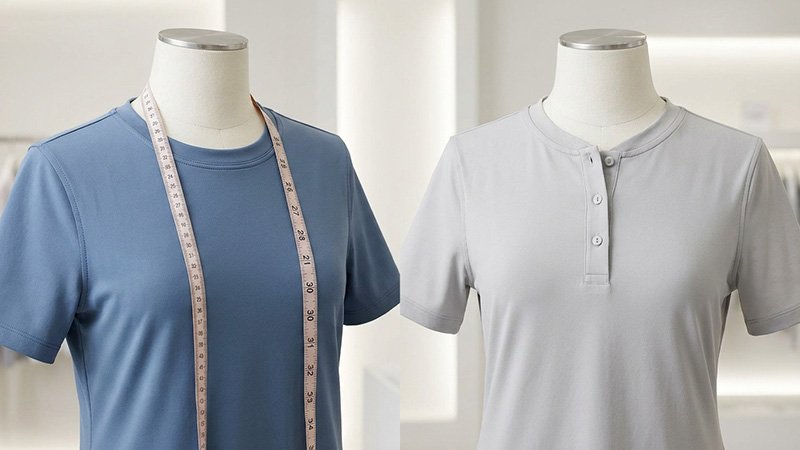
Collarless shirts eliminate the most common polo fit complaint: collar discomfort. Some golfers find traditional collars restrictive, especially in heat or during intense play. Removing the collar creates a cleaner neckline and reduces fabric bulk. For brands targeting a modern, minimalist aesthetic, collarless shirts can differentiate you from traditional polo-heavy competitors.
Henleys (collarless shirts with a partial button placket) offer a middle ground. They have the casual comfort of a crew neck but the adjustability and visual interest of a placket. Some golfers feel henleys look more "golf-appropriate" than plain crew necks, even though neither has a collar. This is subjective, but perception matters when you are trying to sell to pro shops or golfers who care about tradition.
Collarless designs also simplify construction. You eliminate collar cutting, sewing, and interfacing—this saves $0.50 to $1.00 per unit in labor and materials. For budget-conscious brands, that cost saving is attractive. But the savings only matter if you can actually sell the shirts.
Here is the problem: collarless shirts severely limit your market. Most private clubs prohibit them outright. Many semi-private and upscale public courses do too. Even casual courses that technically allow collarless shirts still have customers who associate collars with golf. I have talked to pro shop buyers who said they would not stock collarless golf shirts because their members "expect a collar." This is not always about rules—it is about customer expectations and brand identity for the course itself.
If you position collarless shirts as athleisure that works for golf, you expand your market beyond courses. Customers might buy them for the driving range, gym, or casual wear, with golf as a secondary use case. This works if you have strong direct-to-consumer channels and are not relying on pro shop distribution. But it is a different business model than traditional golf apparel.
Here is how collarless risk varies by brand strategy:
| Brand Stage | Distribution Model | Collarless Risk Level | Recommendation |
|---|---|---|---|
| Startup, no established line | Pro shop focused | High—will struggle to get retail placement | Avoid collarless as primary offering |
| Established brand, adding styles | Pro shop + DTC | Medium—can offer as alternative for existing customers | Add 1-2 collarless SKUs to test demand |
| Performance/athleisure brand | DTC focused, limited pro shop | Low—audience expects crossover styles | Collarless can be core offering if positioned clearly |
| Premium/traditional brand | Pro shop + private club | Very high—conflicts with brand identity | Avoid collarless entirely |
Fabric choice matters even more for collarless designs. Without a collar to provide structure, the entire garment relies on the base fabric to hold shape. Lightweight or overly stretchy fabrics make collarless shirts look sloppy—they sag at the neckline and lose form after a few hours of wear. I recommend minimum 160 GSM fabric weight for collarless golf shirts, and preferably 170-180 GSM. The fabric should have good recovery (ability to return to original shape after stretching) or the neckline will stretch out permanently.
One more consideration: collarless shirts shift sizing challenges to the neck opening. Collars adjust somewhat to different neck sizes and shapes—if the collar is slightly too large, it just sits a bit looser. Collarless crew necks do not have that flexibility. If the neck opening is too tight, it is unwearable. If it is too loose, it looks sloppy and slides off the shoulder. You need to test neck opening across your size range carefully, and you might need different neck diameters for different sizes, not just scaled proportionally.
How Do You Nail Fit with Placket Length, Collar Roll, Tucking and Layering?
Proper fit for golf polos requires testing placket length against chest depth, collar roll against neck shape and posture, hem length against tucked and untucked wear, and total garment length against layering needs. These details determine whether your polo looks polished through 18 holes or falls apart after nine.
Getting the Details Right
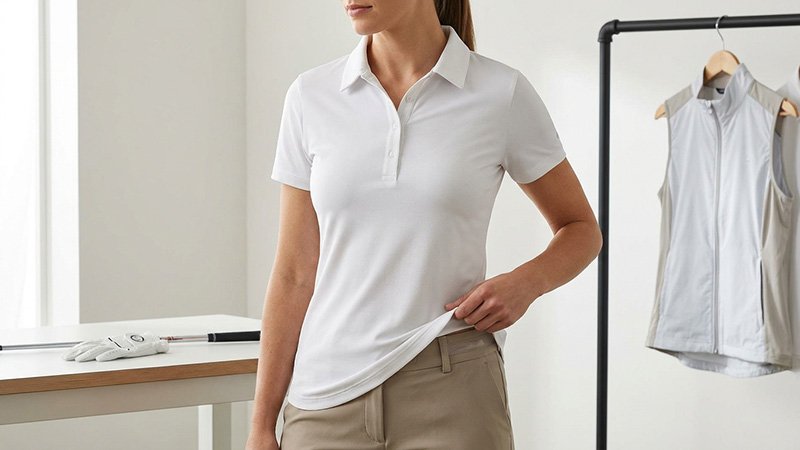
Placket length affects both function and appearance. A placket that is too short (under 5 inches on a two-button design) does not open far enough to put the shirt on comfortably. Golfers with larger heads or necks struggle to get the shirt over their head. A placket that is too long (over 10 inches on a three-button design) can gap and flap during the swing, especially if the fabric is lightweight. I recommend 5 to 6 inches for two-button plackets, 7 to 9 inches for three-button, and 6 to 8 inches for quarter-zips.
Placket positioning also matters. The placket should sit flat against the chest when the buttons are closed. If it pulls open or creates a V-gap, the shirt is either too tight or the placket is constructed wrong. This happens most often when brands use lightweight fabrics without stabilizing the placket with interfacing or tape. The fabric stretches, but the placket does not, creating tension.
Collar roll determines how polished the polo looks. A collar should fold smoothly and lie flat against the shoulders and back of the neck. If the collar stands up stiffly or collapses flat, the construction is wrong. Stiff collars usually mean too much or too heavy interfacing. Collapsed collars mean the fabric or interfacing is too light. I test collar roll by putting the polo on a dress form and checking from the side and back. The collar should have a gentle, consistent curve, not a sharp crease or flat line.
Collar roll also interacts with posture. Golfers with forward head posture (head tilted forward, common in people who sit at desks all day) put different stress on the collar than golfers with upright posture. The collar can ride up in back or pull down in front. This is hard to fix with standard sizing, but you can adjust collar stand height (the vertical portion of the collar before it folds over) to compensate. A slightly shorter stand works better for forward head posture.
Hem length and tucking are the most overlooked fit details. Traditional golf etiquette calls for tucked shirts at many courses, but younger players and casual courses embrace untucked wear. Your polo needs to work both ways, or you need separate designs for each use case. A tucked polo should be long enough to stay in the pants during the swing—I recommend 28 to 30 inches from back collar to hem for men's medium, 25 to 27 inches for women's medium. Shorter than that, and the shirt pulls out constantly. Longer, and it bunches uncomfortably.
An untucked polo should end at the top of the back pocket or just below the belt line—about 26 to 28 inches for men's medium. Longer looks sloppy, shorter looks like the shirt is too small. The side and front hem should be slightly shorter than the back to create a flattering curved hem that does not cling to the hips or ride up in front.
Here is how I guide hem length decisions:
| Intended Wear | Back Hem Length (Men's M) | Front Hem Length (Men's M) | Side Hem Length (Men's M) | Works For |
|---|---|---|---|---|
| Tucked only | 28-30 inches | 27-29 inches | 27-29 inches | Traditional courses, formal events |
| Untucked only | 26-28 inches | 25-27 inches | 25.5-27.5 inches | Casual courses, younger demographics |
| Dual-purpose (tuck or untuck) | 27-29 inches | 26-28 inches | 26.5-28.5 inches | Most versatile option, fits most needs |
Layering adds another dimension. If golfers will wear your polo under a vest or jacket, you need to consider how the collar, placket, and hem interact with the outer layer. A collar with too much structure can bunch under a jacket collar. A placket that is too bulky adds visible bulk under a vest. A hem that is too long creates extra fabric that bunches at the waist. For layering-focused styles, I recommend flatter collars, slim plackets (buttons over zippers for less bulk), and slightly shorter hem lengths.
One final detail: tuck tabs. Some higher-end golf polos have grip strips or silicone printing on the inside of the hem to help the shirt stay tucked. This adds $0.15 to $0.30 per unit but dramatically reduces ride-up for golfers who tuck their shirts. It is a small touch that elevates perceived quality and function. I recommend it for premium brands targeting traditional courses.
Conclusion
Choosing the right collar and placket is not about copying trends or ranking styles by prestige. Match your design to your brand positioning, target venues, and fabric capabilities. Test fit details under real play conditions before committing to production, and you will avoid the expensive mistakes I see every month.