
You have a strong brand identity but worry it won't translate to actual apparel. A premium design in a mockup can easily look cheap or fail during a real golf swing.
To create apparel that wins, you must integrate your brand's aesthetics with performance engineering from the very first sketch. This means choosing fabrics, seams, and logo applications that look good not just standing still, but also through a full 18 holes of play.

I recently had a client, a passionate founder just like Bobby, come to me with a folder full of stunning AI-generated visuals for his new brand. The designs were incredible, with beautiful color gradients and intricate details. The problem was, they were impossible to create on the high-performance knit fabrics that golfers demand. Gradients distort when the fabric stretches, and fine details get lost in sublimation printing. The design looked premium in the mockup, but it would have failed completely on the course. This is the gap I help brands cross every day. Designing great golf apparel isn't about making a pretty picture; it's about engineering aesthetics that can play to win.
What Are the Quick Answers for Designing Aesthetics That Perform?
| Question | Quick Answer |
|---|---|
| How many brand colors on-course? | Stick to 1–2 core colors plus 1 accent color per season. Always keep your pants and shorts in versatile neutral colors like navy, khaki, or black. |
| Best collar for structure? | A self-fabric knit rib collar or a modern spacer knit collar holds its shape best. Bonded mock necks look sharp but check that they are permitted by club dress codes. |
| Best logo method? | Silicone heat-transfer offers crisp edges and lightweight stretch, perfect for performance fabrics. Use fine micro-embroidery for heavier, heritage-style pieces like a vest. |
| Broadcast-legible logo size? | For visibility on camera or from a distance, aim for a chest logo height of 35–45 mm and a hat logo height of 40–55 mm. |
| Club-friendly print scale? | Stick to micro-prints where the individual design elements are only 2–4 mm. Avoid large slogans or graphics to ensure your apparel is welcome at all clubs. |
| Can you wear dark colors in heat? | Yes, if the garment is engineered for it. Use fabrics with cool-touch yarns, add mesh vents for airflow, and pair a darker top with lighter-colored bottoms to manage heat load. |
| Best seam map for a golf swing? | Use a forward-shoulder seam, shaped side panels, and a back yoke. This moves the seams away from key motion zones and flatters the body. |
| How do I claim UPF protection? | You can only make a UPF claim if you have a valid, third-party lab report (like from an AATCC 183 test). Never use unproven medical or therapeutic language. |
| Dress-code safe shorts length? | For men, a 7–9 inch inseam is the modern standard. For women's skorts, a 15–17 inch outseam (total length from waistband to hem) is typical and widely accepted. |
| How to create a signature brand cue? | Pick one unique, subtle detail and repeat it across your entire collection. It could be a contrast-color bar tack on the back yoke, a colored top button, or a specific stitch pattern. |
How Do You Turn Your Brand Identity into a Wearable Design System?
Your brand has a logo and colors, but how do you apply them to clothing in a way that feels intentional and premium, not just slapped on?
You need a design system. This means creating rules for how your core colors, fonts, and brand motifs are used on everything from hangtags to the actual garments. It’s about creating a cohesive visual language that customers can recognize instantly.
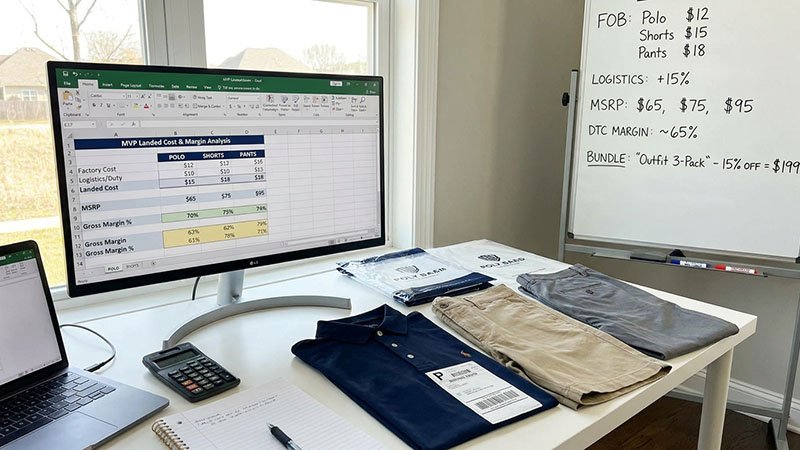
A strong brand isn't just a logo; it's a system of repeating elements that work together. When I work with a new brand, we don't just talk about one polo shirt. We build a design system that will guide the look of the entire collection for seasons to come. This ensures consistency and makes every piece feel like it belongs to the same family.
Palette and hierarchy
Define your color system clearly. You should have:
- Core Colors: 1-2 colors that are always present (e.g., a specific navy blue).
- Neutral Colors: Black, white, grey, and khaki for your bottoms and basics.
- Accent Colors: 1-2 seasonal brights for a pop of interest.
Create rules about how these are combined. For example, "Bottoms are always Neutral; Polos can be Core or Accent."
Typography to trims
Your brand's font is more than just for your website. It can be translated into physical trims. The style of your font can inform the design of your woven labels, be etched onto your buttons, or even be woven into a jacquard tape on the inside of the collar.
Motif library
Develop a library of subtle graphic elements that are unique to your brand. This could be a modern take on a classic argyle, a micro-print based on a golf course topography map, or a simple icon of a tee or a green. Using these consistently is more sophisticated than just using your logo everywhere.
Signature cues
This is your brand's secret handshake. It’s a small detail that you repeat on every single garment. It could be a contrast-colored stitch on the back yoke, a small notch cut into the sleeve hem, or a branded bar tack on the placket. When customers see this detail, they know it's your brand.
Tiering the line
Apply your design system across different product tiers.
- Core/Evergreen: Your essential pieces, always in stock in your Core and Neutral colors.
- Hero/Seasonal: Your most exciting seasonal pieces, featuring your Accent colors and prints.
- Collaborations: Special limited-edition pieces where you might bend the rules slightly.
What Makes an Aesthetic Actually Work for the Golf Swing?
A shirt can look great on a mannequin, but how do you design it so it looks just as good—and feels even better—during a powerful golf swing?
Great on-course aesthetics are achieved through seam engineering. By strategically placing seams and gussets, you can create a garment that moves with the body, prevents chafing, and flatters the golfer's physique without restricting their motion.
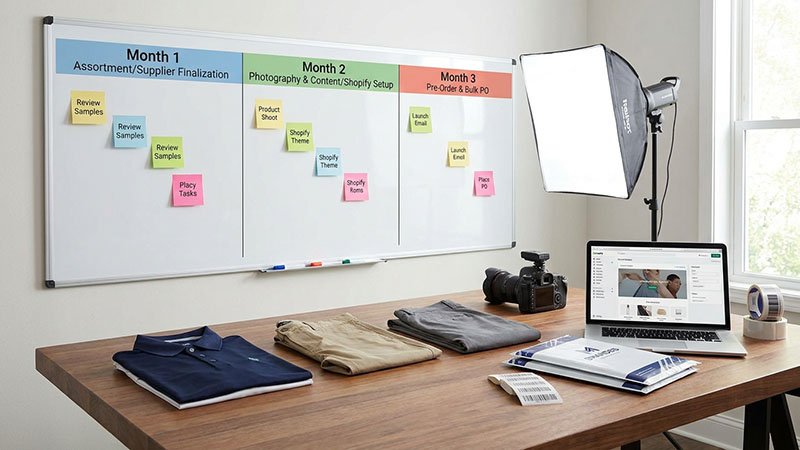
This is where the gap between a fashion designer and a performance apparel expert becomes crystal clear. A garment that looks good standing still can pull, bunch, and chafe during athletic movement. The aesthetics must be built around the motion of the golf swing.
Motion lines
We design with "motion lines." A forward shoulder seam moves the seam off the top of the shoulder, reducing friction from a carry bag. A raglan sleeve offers more mobility than a traditional set-in sleeve. For maximum performance, a small gusset panel under the arm allows for unrestricted movement during the backswing and follow-through.
Flattery + function
Smart seam placement can also create a more flattering silhouette. A shaped back yoke can make the shoulders appear broader. Curved side seams can create the illusion of a more athletic, tapered waist without the garment actually being tight or clingy.
Anti-chafe construction
Comfort is paramount. We use cover-stitch or bonded hems that are completely flat and won't rub against the skin. We also ensure that any taped seams are placed away from "hotspots" like the underarm or the side of the neck.
Pattern matching
This is a small detail that signals high quality. On any garment with stripes or a repeating print, we make sure the pattern aligns perfectly across the front placket and at the side seams. It's more difficult and requires more fabric, but it's a hallmark of premium construction.
Inclusive fits
Aesthetic design must also account for different body types. For a women's line, this means building in the right amount of ease through the bust and hips. For a Big & Tall line, it means properly grading the armhole depth and bicep width to ensure a comfortable, non-restrictive fit.
How Does Fabric Choice Impact the Final Look and Feel?
You know performance fabric is important, but how do the specific details—like sheen, weight, and color—affect the aesthetic quality and on-course comfort of your apparel?
The fabric is your canvas. Its sheen, hand-feel, and colorfastness define the premium look of your brand, while its technical properties like knit structure and yarn type directly control heat management and UPF protection. A cheap, shiny fabric can ruin a great design.
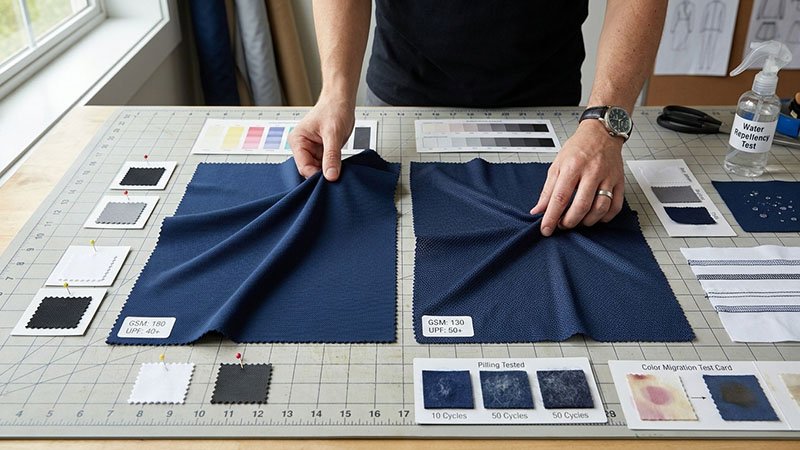
When I receive a design from a client, the first thing we discuss is fabric. The same design will look completely different on a matte-finish piqué versus a semi-sheen jersey. The fabric choice dictates not only the aesthetic but also what is possible from a performance standpoint.
Matte vs semi-sheen
A matte or low-sheen fabric generally looks more premium and sophisticated. Many cheap performance fabrics have a high, plastic-like glare that instantly signals low quality. A subtle semi-sheen can provide an athletic pop, but it must be chosen carefully.
Performance base
For your core line, you need reliable base fabrics. For polos, a 150–180 gsm piqué or micro-mesh is a great starting point. For bottoms, a durable 180–220 gsm stretch twill provides the structure and performance you need.
Cooling and UPF
Aesthetics and comfort are linked. To create a garment that looks and feels cool, we use special yarns with a "cool-touch" feel. We also use more open knit structures or map mesh vents in high-heat zones. UPF protection comes from the tightness of the weave and special UV-blocking properties in the yarn, which must be lab-verified.
Colorfastness and migration
There is nothing worse than a vibrant design that fades after a few washes. We demand fabrics that pass colorfastness tests for washing, sweat, and UV light (AATCC 16/61/8). For printed designs, we use special anti-migration inks to ensure the colors stay crisp and don't bleed into each other.
Surface durability
A golf shirt needs to look good on the 18th hole, not just the 1st. We specify fabrics that are tested for snag resistance (ASTM D3939) and pilling (ASTM D4970). For bottoms, a PFAS-free DWR water-repellent finish, verified with a spray test (AATCC 22), adds a functional benefit that customers appreciate.
Where and How Should You Place Logos and Graphics?
You want your brand to be seen, but you don't want your apparel to look like a cluttered billboard. What are the rules for effective, tasteful logo and graphic placement?
Create a clear placement map for your logos. Use the standard left chest and sleeve locations, but choose your application method carefully. A silicone heat-transfer is best for most performance polos, while micro-embroidery works for classic pieces. Always prioritize subtlety over size.
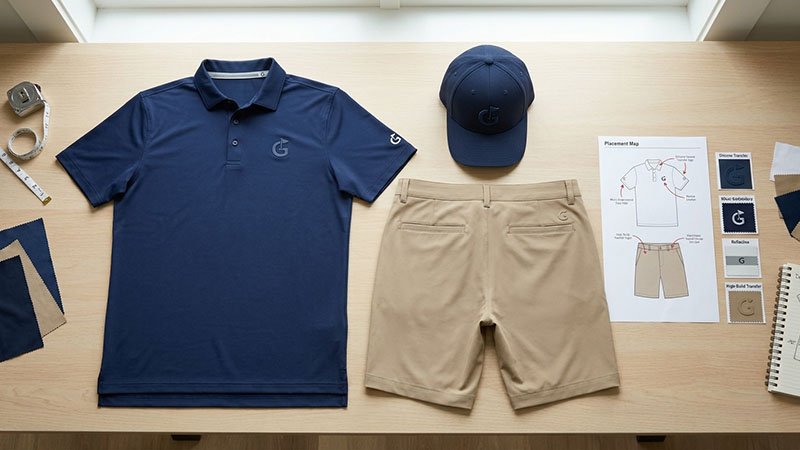
Logo application is a perfect example of aesthetics and performance being intertwined. A thick, heavy embroidered logo on a lightweight performance polo will pucker and feel stiff. The application method must match the fabric and the intended use of the garment.
Placement map
Establish a consistent placement map for all your products. The standard, tour-proven locations are:
- Primary: Left chest (for your main logo).
- Secondary: Left sleeve or back of the neck, below the collar.
- Headwear: Front and center.
- Bottoms: A very small, subtle logo above one of the back pockets.
Method matrix
Different methods have different pros and cons.
- Silicone Heat-Transfer: Stretchy, lightweight, sharp edges. The best choice for modern performance wear.
- High-Build Transfer: Creates a thicker, 3D effect. Good for a bold, modern look.
- Embroidery: Classic and durable, but can be heavy. Best for hats, outerwear, or heritage-style cotton polos.
- Reflective Transfer: Good for a technical look and for visibility in low light.
Broadcast and retail legibility
If you plan to sponsor players, your logo needs to be legible on camera. This means not just making it the right size, but also ensuring there is enough color contrast against the fabric and enough "clear space" around the logo.
Sponsor coexistence
For sponsored players, you need a grid system that dictates where other sponsor logos can be placed. This prevents a cluttered, unprofessional look and ensures your brand's logo maintains the priority position.
Graphic restraint
As a general rule for golf apparel, less is more. Most private clubs have rules against large logos or slogans. A tasteful, all-over micro-print is always a safer and more sophisticated choice than a loud graphic.
How Do You Ensure Your Designs Are Legal on the Course?
You've designed a beautiful collection, but what if a customer gets turned away at a private club because your apparel doesn't meet the dress code?
You must design with club dress codes in mind. This means paying strict attention to collar requirements, the length of your shorts and skorts, and the type of graphics you use. What is acceptable at a casual resort course might not be at a traditional private club.
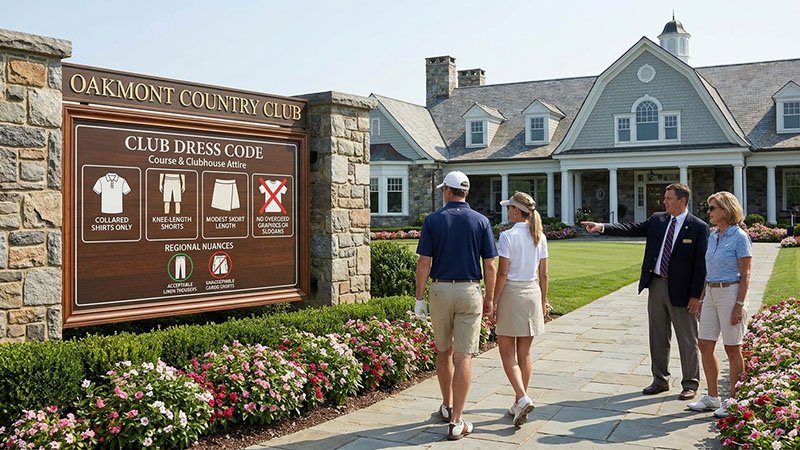
This is a crucial part of designing for the golf market. Your product has to be able to be worn everywhere your customer plays. Ignoring dress codes is a rookie mistake that can damage your brand's reputation. I always advise my clients to design for the strictest club's rules; that way, their apparel is safe everywhere.
Club rules
The three most common dress code rules are:
- Collars: Most clubs require all shirts to have a collar. While a classic fold-over collar is always safe, many modern mock necks are now accepted, but it's a risk. T-shirts are almost universally banned.
- Lengths: Clubs have specific rules for the length of shorts and skorts. Men's shorts must typically be knee-length (a 7-9 inch inseam is safe). Women's skorts or shorts must be of a "modest" length.
- Graphics: Loud, oversized graphics or slogans are often prohibited. This is why subtle micro-prints are the preferred method for adding patterns to golf apparel.
Regional nuances
Dress codes can vary by region. A relaxed, tropical-print shirt might be perfectly acceptable at a resort course in Florida or Hawaii, but it might be frowned upon at a traditional private club in the Northeast. Know your target customer and where they play.
Product claims
Your on-course legality also extends to your marketing claims. Be honest and accurate. If you claim UPF 50+, have the report. If you claim moisture-wicking, have the test data. Avoid making any medical or therapeutic claims, like saying a shirt "prevents skin cancer." This is illegal and will destroy your credibility.
Labels and care
Proper labeling is a legal requirement. Every garment must list the fiber content, country of origin, and have clear care instructions. It's also good practice to recommend a care routine (like washing in cold water and hanging to dry) that will preserve the performance finishes of the garment.
How Do You Use Your Aesthetics to Tell a Story and Drive Sales?
Your beautifully designed products are ready. How do you present them to customers in a way that communicates their quality and makes people want to buy them?
You need to build a content system that tells a story. Use photography that shows your apparel in both a clubhouse setting (style) and during a golf swing (performance). Use your hangtags and product descriptions to explain the "why" behind your design choices.
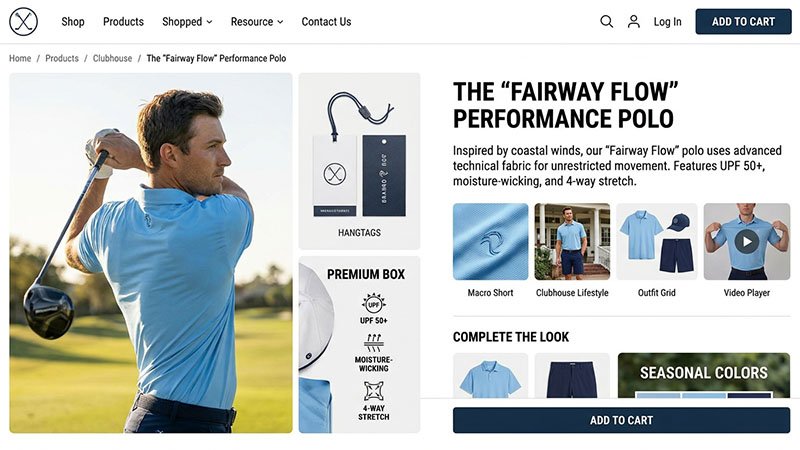
The final step is to translate all your hard work on design and performance into a compelling story for your customer. The aesthetics of your brand don't stop at the product; they extend to your photography, your website, and even your packaging.
Color stories and outfitting
When you merchandise your products online, don't just show a single polo. Show it as part of a complete outfit. Create "color stories" for each season that show how your core, neutral, and accent colors work together. Use bundling features to encourage customers to buy the full look.
Content system
Your content needs to show both beauty and function.
- On-Course Shoots: Photos and videos of golfers actually playing in your apparel, showing how the garments move and perform.
- Clubhouse Shoots: More styled, lifestyle shots that show how your apparel can be worn off the course.
- Motion Shots: Use slow-motion video to highlight the stretch in the fabric and the non-restrictive fit during a swing.
Ambassador kits
For any players or pros you sponsor, create a formal lookbook and set of rules for how your apparel should be worn and how your logos should be displayed. This ensures your brand is always presented professionally.
Seasonal cadence
Use your design system to create a predictable launch rhythm. Your core, evergreen products should always be available. Then, create excitement by launching limited-edition prints or seasonal colors as "drops." This creates a sense of scarcity without creating chaos in your supply chain.
Packaging and POS
Your hangtags are a valuable piece of marketing real estate. Use them to call out key features, like "UPF 50+ Protection" or "4-Way Stretch." Continue your signature brand cues onto your packaging to create a cohesive and premium unboxing experience.
Conclusion
Great golf apparel design is where your brand's story meets on-course reality. It's an engineered system of aesthetics that looks amazing, feels incredible, and performs flawlessly through every swing.