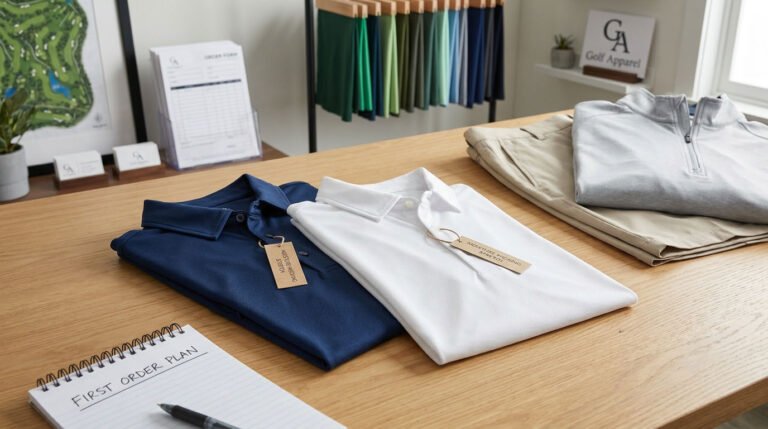
Is a polo shirt just a polo shirt? You see them everywhere, but the difference between a $15 shirt and a $150 one feels mysterious, making it hard to choose quality.
At its core, a polo shirt is defined by its knit fabric (like piqué or jersey), a soft collar, and a placket with two or three buttons. Its unique construction balances the formality of a dress shirt with the comfort of a t-shirt, making it incredibly versatile.
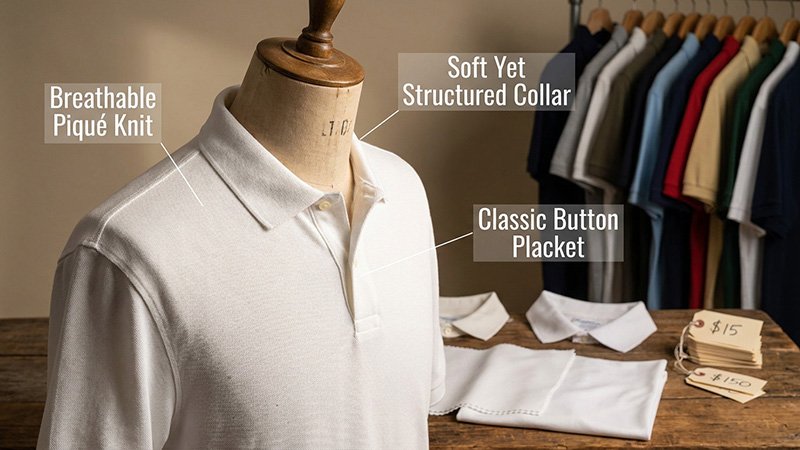
The polo shirt is one of the most successful garments ever designed. It's a true uniform, worn for work, sport, and leisure across the globe. But to me, as someone who has built these shirts from the yarn up for over 15 years, its simplicity is deceptive. Many buyers think a polo is a standard product, but every single feature—from the weave of the fabric to the stiffness of the collar—is a variable. These aren't just aesthetic choices; they are production variables that determine quality, cost, and who your brand speaks to. Let's decode this icon.
How Did a Sports Top Become a Fashion Staple?
The polo shirt's history feels scattered. You've probably heard it connected to polo, tennis, and golf. This can make it difficult to understand its real design DNA.
The modern polo shirt was born on the tennis court. In the 1920s, player René Lacoste redesigned the restrictive tennis uniform into a breathable, short-sleeved piqué cotton shirt. Its comfort and sharp look were quickly adopted, becoming a global fashion staple.
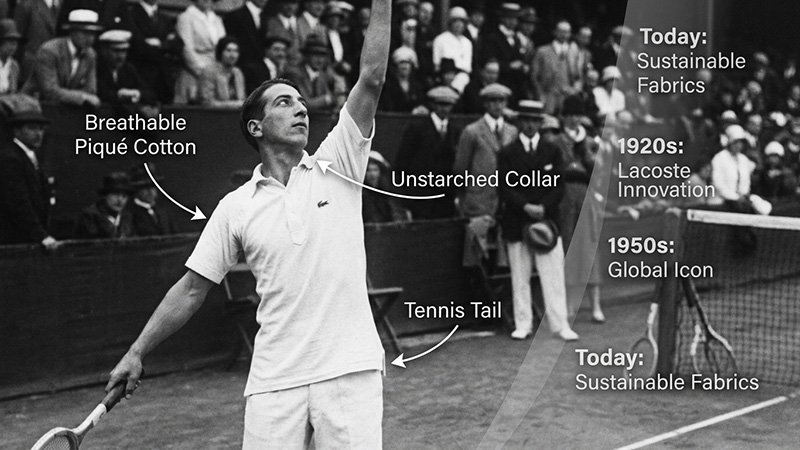
When I hear new brand owners talking about the polo's history, I try to frame it as a series of design problems that were solved. Each step wasn't about fashion; it was about function. Understanding this history is like having a framework to evaluate what makes a good polo today.
Polo players, button-down collars, and the name “polo”
The story starts in the 19th century with polo players in India. They wore long-sleeved cotton shirts, but their collars would flap in the wind. To solve this, they added buttons to fasten the collar points to the shirt. This innovation, the "button-down collar," was later seen by John E. Brooks (of Brooks Brothers) and became a dress shirt staple. The sport gave the shirt its name, but not its modern form.
René Lacoste’s tennis shirt revolution in the 1920s
The real breakthrough came from tennis. Players wore long-sleeved, starched dress shirts and flannel trousers—hot and restrictive. Tennis champion René Lacoste designed a better solution: a short-sleeved shirt made from a breathable piqué cotton knit. It had a soft, unstarched collar you could flip up to protect your neck from the sun and a slightly longer back hem (a "tennis tail") to keep it tucked in. This was the true birth of the modern polo shirt.
Ivy/Prep, sportswear boom, and global adoption
After Lacoste commercialized his design, it was adopted by other athletes and then the public. In the mid-20th century, it became a core part of the American "Ivy League" or "Prep" style. Its association with aspirational sports like tennis and golf, combined with its comfort, made it a symbol of casual elegance.
Golf, tennis, rugby: how each shaped today’s polo
Each sport added its own touch. Tennis gave us the piqué fabric and tennis tail. Golf popularized the polo and helped drive the move toward modern performance fabrics. The rugby shirt, a heavier-duty cousin of the polo, influenced styles with sturdier collars and rubber buttons.
Timeline: key milestones and fabric innovations
The evolution is really a story of fabric and function. What started as cotton has become a high-tech apparel category.
| Era | Key Milestone | Impact on Design |
|---|---|---|
| Late 1800s | Polo players button down their collars | Gives the shirt its name and a functional collar |
| 1926 | René Lacoste creates the piqué tennis shirt | Introduces breathable fabric, short sleeves |
| 1950s-60s | Rise of Ivy League style in the USA | Cements the polo as a smart-casual staple |
| 1972 | Ralph Lauren launches his Polo line | Brands the polo as an aspirational lifestyle item |
| 1990s-2000s | Golf brands introduce performance polyesters | Shift towards moisture-wicking and stretch fabrics |
| 2010s+ | Sustainable and luxury fibers (recycled, merino) | Focus on eco-consciousness and premium handfeel |
What are the Key Parts that Define a Quality Polo?
You’re looking at two polos that seem identical, but one costs five times more. It's frustrating. The secret is in the construction details that are often overlooked.
A quality polo is defined by more than just a collar and placket. Look for a well-constructed collar that doesn't curl, a clean placket, refined fabric like piqué or jersey, and strong stitching, especially at the side vents.
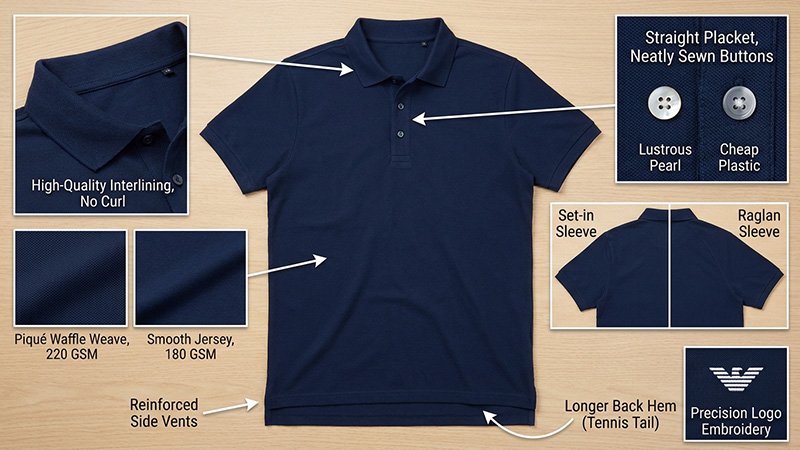
This is where my manufacturing background is most useful. When a brand client asks me, "How do I know if a factory can deliver quality?" I tell them to look at the anatomy. These details tell you about the factory's equipment, expertise, and attention to detail.
Piqué vs jersey: knit structures and GSM ranges
These are the two most common knit types. Piqué has a textured, waffle-like weave that is breathable and durable. It’s the classic choice. Jersey is the same flat, smooth knit used for t-shirts, offering a softer feel and more drape. In the factory, we measure fabric weight in GSM (grams per square meter). A lightweight summer polo might be 160-180 GSM, while a premium, year-round polo is often 200-240 GSM.
Collars and plackets: knit collar, Johnny collar, zips
The collar is the soul of the shirt. A cheap, flimsy collar that curls after one wash is a dead giveaway of poor quality. A good polo has a collar made from the same fabric or a sturdy flat-knit rib, often with interlining to give it structure. The placket (the opening with buttons) should be clean and straight. Modern variations include the buttonless Johnny collar or a zip placket for a sporty look.
Sleeves and cuffs: rib trims, set-in vs raglan
Most polo sleeves end with a ribbed cuff for a snug fit on the bicep. The armhole construction matters too. A set-in sleeve is the standard t-shirt style. A raglan sleeve, with a diagonal seam from the collar to the underarm, offers more room for movement and a sportier look.
Hems and vents: side splits, tennis tail, straight hem
Look at the bottom of the shirt. Side splits or vents allow for better movement and help the shirt sit cleanly over your hips. The classic tennis tail, with a longer back hem, is designed to stay tucked in. A straight hem is more casual and intended to be worn untucked. Quality polos often have these vents reinforced with a small piece of fabric or bar-tack stitching.
Buttons, stitching, and construction quality cues
The details tell the story. Are the buttons cheap plastic or substantial mother-of-pearl? Is the stitching dense and even? Look at the back of the logo embroidery—is it clean or messy? These small things separate a true premium garment from a fast-fashion imitation.
What Fabrics and Finishes Create Comfort and Performance?
The shirt feels great in the store, but after a few hours on a warm day, you're hot and sticky. The fabric choice and finish are what determine the real-world performance.
The best fabric depends on the intended use. Mercerized cotton offers a luxe sheen for smart-casual wear, while performance polyesters provide stretch and moisture-wicking for sports. Merino wool is a great all-rounder for travel and varying temperatures.
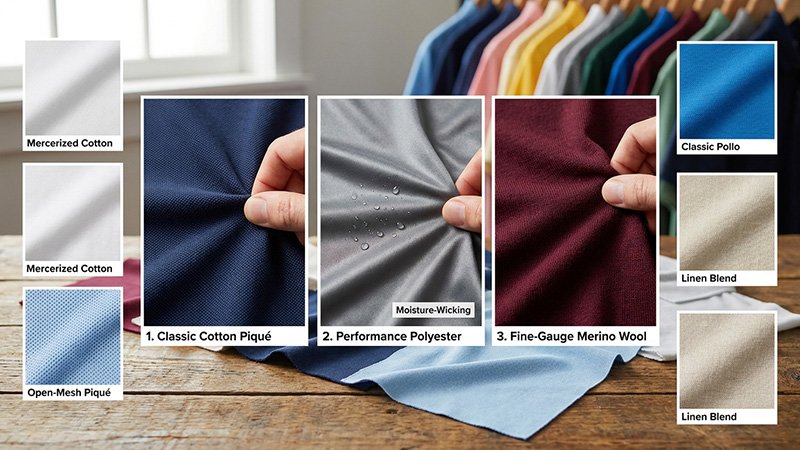
From a production standpoint, fabric selection is a balancing act between handfeel, performance, and cost. There is no single "best" fabric; there is only the best fabric for the job. Understanding this helps you choose a polo that actually meets your needs.
Classics: cotton piqué, combed, and mercerized cotton
Traditional cotton piqué is the original and still a great choice. Higher-quality versions use combed cotton, where shorter fibers are removed to create a smoother, stronger yarn. Mercerized cotton is a finishing process that adds strength, a silk-like luster, and improved color depth. It gives the polo a dressier, more luxurious look.
Warm-weather: linen blends, open-mesh piqué
For extreme heat, 100% cotton can feel heavy. Linen-cotton blends offer the breathability of linen with less wrinkling. We also produce polos with open-mesh piqué, which has a more porous structure to maximize airflow.
Cool-weather: merino, long-staple jersey, knit polos
A long-sleeve polo in fine-gauge merino wool is an amazing layering piece. It's naturally temperature-regulating, moisture-wicking, and odor-resistant. Heavier long-staple jersey provides a soft, substantial feel that is perfect for cooler days. A fully knit polo, made like a sweater, is a sophisticated, dressy alternative.
Performance: recycled poly, stretch, wicking, UPF, anti-odor
This is the standard for modern golf shirts. These are typically polyester fabrics blended with elastane for stretch. Key finishes we apply include moisture-wicking treatments, UPF for sun protection, and anti-odor technologies that inhibit bacterial growth. Using recycled polyester is also becoming a standard for brands focused on sustainability.
Handfeel and drape: how fabric affects silhouette
A stiff, heavy cotton piqué creates a structured, boxy silhouette. A soft jersey or a merino blend will have more drape, meaning it hangs and flows more fluidly over the body. The drape can be more forgiving and often feels more luxurious. This is a critical factor in how the polo will look and feel when worn.
How Can You Wear a Polo Shirt Today?
You want to wear your favorite polo, but you're worried about looking dated or like you just stepped off the golf course. How do you style it for modern, everyday life?
Style your polo based on the occasion. For a casual look, pair it untucked with jeans and sneakers. For smart-casual, tuck it into chinos with loafers. For business-casual, wear it under a blazer with tailored trousers.

The polo is a true chameleon, but its success depends entirely on the pieces you pair it with. The biggest mistake is not thinking about the context. A few simple styling rules can elevate it from a simple shirt to a sophisticated outfit anchor.
Casual: denim or shorts, clean sneakers, untucked or French tuck
This is the polo in its natural habitat. Wear it untucked with clean (not beat-up) sneakers and either dark denim or well-fitting shorts. For a slightly more put-together feel, try a "French tuck"—just tucking in the very front of the hem.
Smart-casual: chinos, unstructured blazer, loafers
This is how you make a polo look effortlessly cool. Tuck a solid-colored, high-quality polo into a pair of chinos. Add a leather belt and loafers. To complete the look, throw on an unstructured blazer. The key is a clean fit and quality materials.
Business-casual: tailored trousers, belt, dress sneakers/derbies
Yes, a polo can work in many modern offices. Choose a subtle, solid-colored polo made from a luxe fabric like mercerized cotton or merino. Tuck it into tailored trousers and wear a proper leather belt. Finish with clean leather dress sneakers or classic derby shoes.
Women’s looks: skorts, wide-legs, midi skirts, delicate jewelry
For women, the polo can be incredibly chic. Try a sleeveless polo tucked into a pleated midi skirt or high-waisted wide-leg trousers. It also looks great paired with a tailored skort. Add delicate jewelry to keep the look polished and feminine rather than overly sporty.
Logos, patterns, and color: subtlety vs statement
For maximum versatility, a solid-colored polo with a small, discreet logo is best. Patterns like subtle stripes or heathered textures are also great. Loud patterns or oversized logos make the shirt a "statement piece," which makes it much less versatile and can look dated.
Tuck rules and collar care to avoid “gym” vibes
To avoid looking like you're heading to the gym, tuck in your shirt when wearing it with trousers or chinos. The second rule is collar care. An ironed, crisp collar instantly signals intention and style. A curled, sloppy collar just looks lazy.
What is the Best Fit for a Polo Shirt?
You tried on a polo in your usual size, but the sleeves are baggy and the body is like a tent. Getting the fit right is the most important step to looking good in a polo.
A well-fitting polo should have shoulder seams that sit on your shoulder bone. The sleeves should be snug on your bicep, and the torso should skim your body without being tight. The hem should end around your mid-zipper.
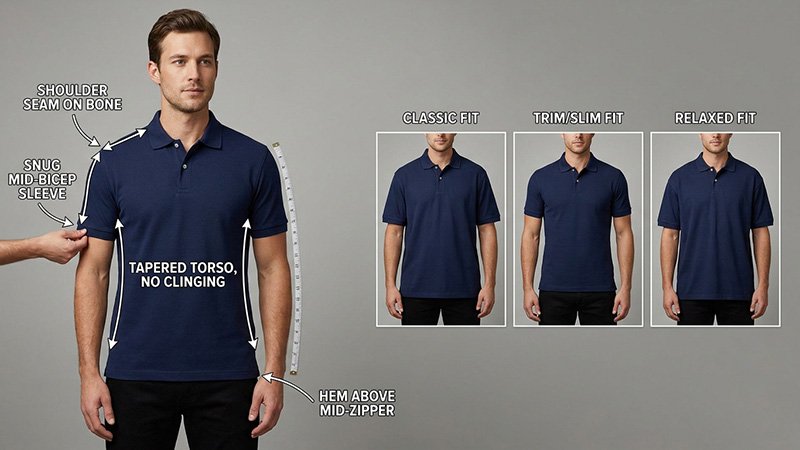
As a manufacturer, we spend a huge amount of time perfecting fit. A "medium" can mean very different things between brands. Understanding the key fit points empowers you to find the right silhouette for your body type, regardless of what the size tag says.
Shoulders, sleeve length, torso taper, and hem length
These are the four key areas.
- Shoulders: The seam should end right where your shoulder starts to curve down your arm.
- Sleeves: The cuff should hit around your mid-bicep and be snug, but not constricting.
- Torso: It should follow the lines of your body with a gentle taper, not billow out like a sail.
- Hem Length: For untucked wear, it should hit around the middle of your pants zipper. Any longer, and it will look sloppy.
Classic vs trim vs relaxed: choosing your silhouette
- Classic Fit: Offers the most room in the chest and body. Good for larger body types or for a traditional look.
- Trim/Slim Fit: Tapered through the body and sleeves for a modern, sharp silhouette. Best for athletic and slender builds.
- Relaxed Fit: A more recent trend, with a looser cut and sometimes a dropped shoulder, offering a more fashion-forward, casual vibe.
Shrinkage and stretch: pre-wash and try-on tips
Cotton will always shrink a bit, usually more in length than in width. High-quality polos are often pre-shrunk ("sanforized"), but you should still expect a small amount of shrinkage. If a shirt is borderline too short when you try it on, it will be too short after you wash it. Performance polyesters with stretch will keep their shape much better.
Neckline and collar height for different builds
The collar should sit comfortably around your neck without a large gap. For men with thicker necks, a polo with a slightly more generous cut in the collar will be more comfortable. When buttoned, you should be able to fit two fingers comfortably between your neck and the collar.
Brand sizing quirks and regional differences
Be aware that an American "large" is often bigger than a European or Japanese "large." Brands also have their own fit philosophies. One brand's "slim fit" might be another's "classic." When trying a new brand, always check their size chart and read customer reviews about the fit.
How Do You Care for Polos to Keep Them Looking Sharp?
You bought a great polo, but after a few washes, the color is faded and the collar is curled. Proper care is essential to protecting your investment and keeping your shirt looking new.
Wash polos in cold water, turn them inside out, and air-dry them flat or on a hanger. Avoid high-heat dryers, which can shrink cotton, damage performance fabrics, and cause collar curling. Iron the collar on low heat when needed.
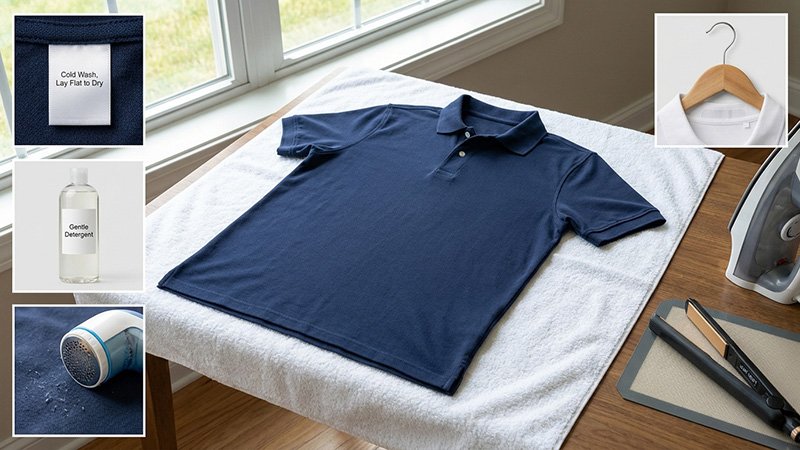
The care label isn't just a suggestion; it's a technical instruction sheet based on the fabric and finishes. As manufacturers, we test these fabrics extensively. Following the care instructions is the best way to ensure the longevity of the garment.
Wash cool, air-dry flat; avoid over-drying and shine
High heat is the enemy. Wash with like colors in cold water to prevent fading and shrinking. The intense heat of a dryer breaks down elastane (stretch) fibers and can cause the surface of polyester fabrics to get a permanent, cheap-looking shine. Air drying is always best.
De-pill, de-wrinkle, and collar curl fixes (no heavy starch)
Pilling (little balls of fiber) can happen on any knit fabric. A simple fabric shaver can remove them easily. To fix a curled collar, use a hair straightener on low heat or a standard iron. Avoid heavy starch, which can be too harsh for modern fabrics.
Storage: fold vs hang; collar supports and travel folders
For short-term storage, folding is fine. For long-term, hanging on a quality hanger is better to prevent creases and protect the collar's shape. You can buy small "collar stays" or supports to help them keep their form. When traveling, use a garment folder to keep your polos crisp.
Simple repairs: buttons, loose threads, vent reinforcement
Don't discard a shirt over a minor issue. Learning to sew on a button is a valuable life skill. Snip any loose threads with scissors—don't pull them. If a side vent starts to tear, a tailor can add a small bar-tack stitch to reinforce it for just a few dollars.
Stain playbook: sweat, sunscreen, grass, and wine
Act fast. For sweat stains, a pre-soak in vinegar or OxiClean can help. Sunscreen stains often require a specific degreasing stain remover. For grass, dab with rubbing alcohol before washing. For wine, blot immediately and treat with a salt paste or club soda.
How Do You Judge Value and Spot Future Trends?
Is a more expensive polo always better? In a market flooded with options, it's hard to know if you're paying for real quality or just a brand name.
True value comes from quality construction, durable fabric, and a great fit—not the price tag. Judge a polo by its cost-per-wear. Look for signs of quality like dense stitching and good materials, and be aware of sustainable trends like recycled fibers.
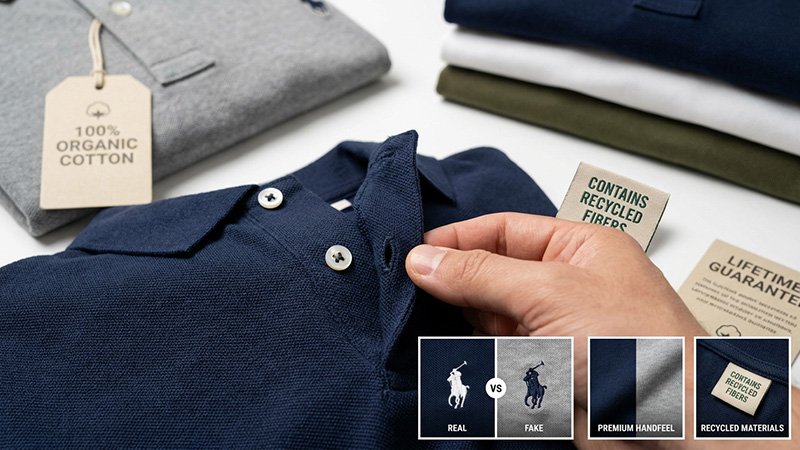
This is the ultimate question for a brand owner like you. Your customer is asking, "Is this worth it?" The answer lies in the tangible details. It's my job as a manufacturer to build those details into the garment.
Quality cues vs price tags: stitches, fabric, fit, warranties
A high price can be for marketing, but it can also signal quality. Look for tangible evidence: dense stitches-per-inch, clean embroidery, substantial buttons, and fabric that feels good. A brand that offers a warranty or stands behind its product is also a good sign.
Cost-per-wear and when to save or splurge
Think about value in terms of "cost-per-wear." A $20 polo that you wear three times before it looks bad costs you nearly $7 per wear. A $100 polo that you wear 50 times costs you $2 per wear. Splurge on versatile, classic colors you'll wear often. Save on trendy patterns or colors you might only wear for one season.
Spot fakes: labels, logo embroidery, fabric handfeel
Counterfeits often cut corners in ways a manufacturer can spot immediately. Look at the logo—is the embroidery clean and dense, or is it sparse with loose threads? Check the care label—is it printed poorly with typos? Does the fabric feel cheap, thin, or plasticky compared to an authentic one?
Sustainability: certified cotton, recycled fibers, circular services
The future of apparel is sustainable. As a consumer and brand owner, look for materials like organic or BCI cotton and recycled polyester/nylon. Some forward-thinking brands are also exploring circular services like take-back and repair programs, which is a huge indicator of a commitment to quality.
What’s next: PFAS-free finishes, 3D knit collars, on-demand
From my side of the industry, big changes are coming. We are moving toward PFAS-free water-repellent finishes to be more environmentally friendly. 3D knitting technology will allow us to create collars and even entire shirts with zero waste. And on-demand manufacturing will allow brands to produce exactly what they need, reducing overstock and waste.
Quick FAQ on Polo Shirts
Is a polo the same as a tennis shirt or golf shirt?
Essentially, yes. The modern polo shirt originated as a "tennis shirt." Today, brands use "golf shirt" or "polo shirt" interchangeably, though "golf shirt" often implies it's made from a modern performance fabric with features like moisture-wicking and UV protection.
Should I tuck a polo for business-casual?
Yes. For any professional or smart-casual setting, tucking in your polo shirt with a belt creates a much cleaner, more polished, and appropriate look. Leave it untucked only for truly casual occasions with shorts or jeans.
Which fabric is best for hot, humid weather?
For hot and humid conditions, a lightweight performance polyester with moisture-wicking properties is the most effective. If you prefer natural fibers, look for a linen-cotton blend or an open-weave piqué cotton.
How do I stop the collar from curling?
Wash in cold water and air-dry the shirt flat or on a hanger, shaping the collar with your hands while it's damp. Avoid high-heat dryers. If it still curls, press it with an iron or hair straightener on a low heat setting.
Are polos appropriate for semi-formal events?
No. A polo shirt is a casual garment. Semi-formal events require a much higher level of dress, such as a suit and tie or at least a dress shirt and blazer. Wearing a polo to a semi-formal event would be considered underdressed.
Conclusion
The polo shirt is more than just a simple top; it's a piece of design history. Understanding its components, from fabric to fit, empowers you to choose or create a shirt that performs perfectly.