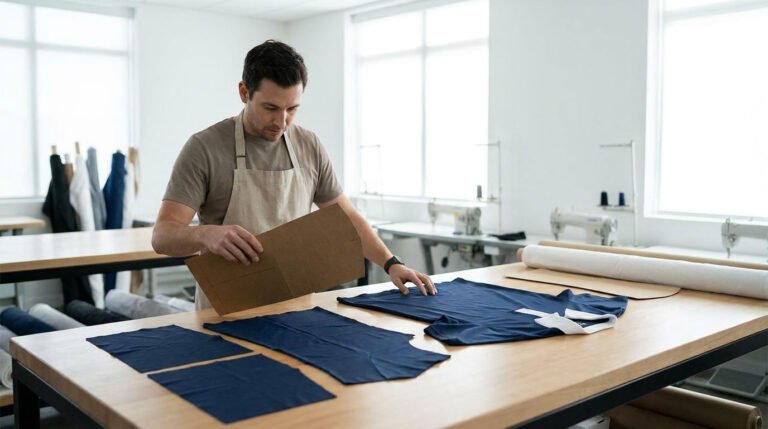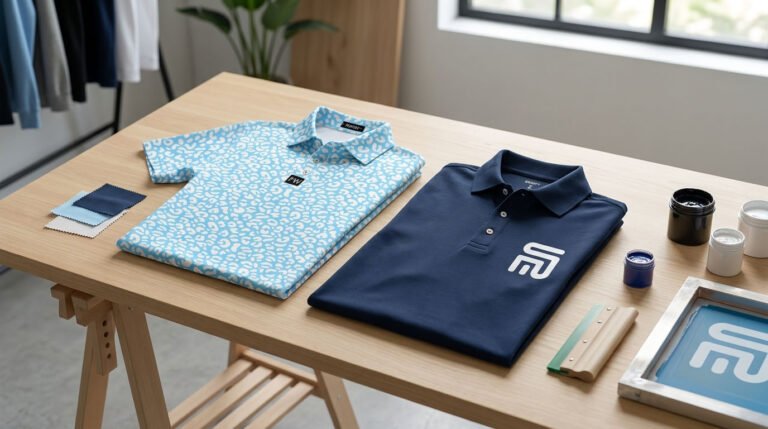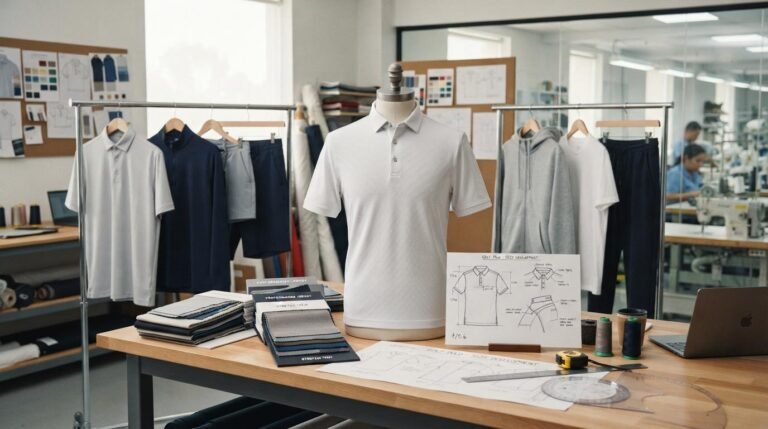
Choosing a reliable golf apparel manufacturer is about more than finding competitive prices. Your supplier must understand product development, performance fabrics, golf-specific fit, and how to maintain quality from approved samples to bulk production.
FUWAY is a China-based golf apparel manufacturer providing OEM, ODM, and private label services for startup brands, established golf labels, and wholesalers. We support custom product development, fabric sourcing, sampling, branding, and bulk manufacturing.
But is FUWAY the right supplier for your business?
This review examines our manufacturing capabilities, commercial terms, quality-control approach, and limitations. More importantly, it explains what evidence buyers should request before committing to production.
Transparency Note: This article is published by the FUWAY team. It is a company self-assessment, not an independent third-party review or customer endorsement. Manufacturing claims should be evaluated against current documentation, relevant samples, and agreed project specifications.
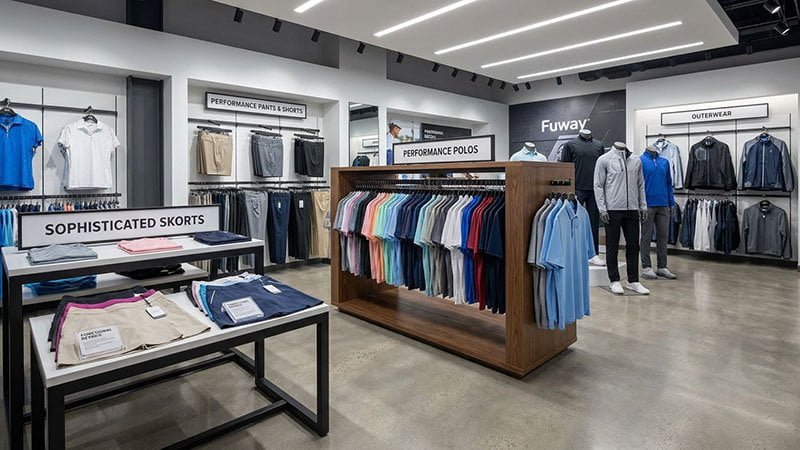
Quick Answer: Is FUWAY a Reliable Golf Apparel Manufacturer?
FUWAY may be a suitable manufacturing partner for brands that need customized golf clothing, flexible starting quantities, and technical support throughout product development.
Our strengths lie in golf-focused garment development, customization options, and managing production against approved specifications.
However, supplier reliability should be assessed through product samples, manufacturing evidence, quality records, and documented commercial agreements—not promotional claims alone.
FUWAY Manufacturing Profile
| Category | FUWAY Information |
|---|---|
| Company | FUWAY Golf Apparel Manufacturing |
| Manufacturing Base | Guangzhou, China |
| Business Model | OEM, ODM, Private Label |
| Core Products | Golf polos, shorts, pants, skorts, quarter-zips, hoodies, and outerwear |
| Customization | Fabrics, patterns, sizing, logos, labels, colors, packaging |
| Typical MOQ | Approximately 100 pieces per style |
| Sampling | Approximately 7–10 working days |
| Bulk Production | Approximately 3–4 weeks for suitable standard projects after approval and material readiness |
| Target Customers | Startups, growing golf brands, wholesalers, and distributors |
| Quality Approach | Material checks, production inspection, final garment verification |
These are general planning figures, not guaranteed terms for every project. Custom fabrics, complex construction, order quantities, and material availability can affect feasibility, MOQ, and lead time.
Key 1: What Golf Apparel Manufacturing Capabilities Does FUWAY Offer?
FUWAY supports the development and production of golf-specific clothing rather than focusing solely on generic promotional apparel.
Our product range covers performance polos, golf bottoms, women's skorts, and layering garments.

Core Products and Technical Focus
| Product Category | Manufacturing Focus |
|---|---|
| Golf Polo Shirts | Collar structure, placket alignment, fabric recovery, fit |
| Golf Shorts | Waistband comfort, stretch, pocket construction |
| Golf Pants | Pattern balance, movement, measurement consistency |
| Golf Skorts | Built-in liner fit, fabric opacity, waistband stability |
| Quarter-Zips | Zipper alignment, fabric hand feel, layering comfort |
| Golf Jackets & Vests | Mobility, suitable outer fabrics, functional trims |
Golf apparel requires a balance between performance and appearance.
For example, a polo should allow shoulder rotation without excessive pulling while maintaining its intended collar and placket shape.
Similarly, a golf skort needs sufficient coverage and comfortable liner construction during walking, bending, and swinging.
How Can Buyers Verify These Capabilities?
Product catalogs demonstrate the range a supplier offers, but not necessarily the quality of every manufacturing process.
Before selecting FUWAY, buyers should consider requesting:
- Physical samples of similar product categories
- Actual garment construction photographs
- Measurement specifications and grading references
- Examples of relevant fabric choices
- Details of which production processes are handled at each facility
For a more detailed overview of golf polo options, visit our Custom Golf Shirts page.
Buyer takeaway: Evaluate the products and processes relevant to your collection, not simply the number of garment styles a manufacturer advertises.
Key 2: How Does FUWAY Support OEM, ODM, and Private Label Brands?
FUWAY offers different levels of customization depending on a brand's development experience and product requirements.
The right manufacturing model affects cost, development time, and control over the finished garment.
OEM vs. ODM vs. Private Label
| Model | Brand Responsibilities | FUWAY Support | Suitable For |
|---|---|---|---|
| OEM | Provide designs and technical requirements | Sampling, sourcing coordination, manufacturing | Established product concepts |
| ODM | Provide market positioning and product goals | Fabric selection, design refinement, development | Brands needing technical support |
| Private Label | Define branding and customization needs | Product customization, labels, logos, packaging | Brands building branded collections |
These models are not mutually exclusive. A private label collection can involve custom patterns, while an OEM project may still require manufacturing recommendations.
How Does FUWAY Translate Brand Requirements Into Products?
We begin by understanding several commercial and technical priorities:
- Target customer and market
- Desired garment fit and appearance
- Intended climate and performance
- Fabric expectations
- Branding and packaging requirements
- Estimated order quantity and budget
These decisions affect materials and construction.
A premium warm-weather golf polo, for example, may need breathable fabric, comfortable stretch, and a stable collar. A tournament uniform may place greater emphasis on repeatable colors, logo placement, and size consistency.
Brands should confirm that these requirements are translated into a specification that can be sampled and approved.
For available customization options, see our Private Label Golf Apparel service.
Key 3: How Does FUWAY Approach Fabric Selection and Technical Development?
Fabric selection is one of the most important decisions in golf apparel manufacturing.
A material can feel excellent in a showroom yet perform poorly after repeated washing or during a full golf swing.
FUWAY considers material composition, construction, finishing, and intended use when reviewing fabric choices.

What Should Buyers Evaluate?
| Requirement | Technical Consideration | Practical Verification |
|---|---|---|
| Moisture Management | Fabric structure and finishing | Relevant performance test |
| Stretch & Recovery | Fiber blend and construction | Stretch and recovery evaluation |
| Wash Stability | Fabric processing and construction | Dimensional-change test |
| Color Durability | Dyeing and finishing | Appropriate colorfastness results |
| Collar Stability | Fabric and reinforcement | Approved sample and wash review |
| UV Protection | Material and construction | Applicable UPF test report |
For example, two polyester-spandex fabrics with similar compositions may feel and perform differently because of their knit structure and finishing.
An Illustrative Development Example
Consider a golf brand planning a lightweight polo for hot and humid conditions.
The initial fabric may look attractive but feel too heavy during use.
A suitable development review would compare alternative knits, evaluate stretch and moisture-management requirements, and confirm that the selected fabric works with the desired collar and logo application.
The team would then review a physical sample before approving bulk specifications.
This is a manufacturing example, not a claim about a completed FUWAY customer project.
The important point is that technical decisions should be documented and approved rather than based on verbal descriptions alone.
Brands can explore our Fabric Sourcing capabilities for further information.
Key 4: What Evidence Can Buyers Use to Verify FUWAY?
This is one of the most important questions in any manufacturer review.
Factory photographs, certifications, and marketing statements may provide useful context, but they should not be treated as interchangeable forms of evidence.
Buyers should distinguish between public company information, project-specific documentation, and independently verified findings.
FUWAY Manufacturing Verification Matrix
| Area to Verify | Public Information or Initial Reference | Additional Evidence Buyers Should Request |
|---|---|---|
| Company Identity | FUWAY website and contact information | Relevant business registration and contracting entity details |
| Manufacturing Location | Guangzhou manufacturing base | Current walkthrough or arranged visit to the production location |
| Product Capabilities | Public product pages and images | Comparable physical samples and construction details |
| Material Performance | Published test report categories | Full relevant reports and matching material identification |
| Factory Quality Controls | Published QC descriptions | Appropriate recent inspection records |
| Certifications | Any certifications claimed by the supplier | Certificate number, holder, scope, issuing body, validity |
| Production Capacity | Supplier's stated capabilities | Order-specific capacity and production schedule |
| Repeat-Order Control | Supplier process description | Approved specifications, material references, change records |
This matrix identifies what should be checked. It does not mean every listed document has already been independently authenticated.
What Does FUWAY Publish About Testing?
FUWAY maintains a Golf Shirts Test Reports page showing report categories that include colorfastness, fabric stretch and recovery, pilling, air permeability, and chemical-related tests.
This provides buyers with a useful starting point for reviewing the types of testing represented on the website.
However, before relying on a particular report, check:
- The laboratory and report number
- Test date and applicable method
- Sample description and material identification
- Actual results and acceptance criteria
- Whether the report applies to the proposed garment, fabric, or production batch
A report for one fabric does not automatically prove compliance for every fabric or finished product.
Likewise, an ISO 9001 management-system certificate is different from an OEKO-TEX product certification or a REACH-related test result.
Can Buyers Arrange a Factory Audit?
Buyers can discuss production-site visits, video walkthroughs, and third-party inspections with FUWAY.
The proposed access, location, timing, confidentiality conditions, and inspection scope should be agreed before placing an order.
For a detailed buyer-side audit process, read our Guide to Verifying a Golf Apparel Factory in China Before Paying a Deposit.
Buyer takeaway: Request evidence that matches your specific manufacturing risks. Avoid relying on certificates or factory photographs without checking their relevance and authenticity.
Key 5: How Does FUWAY Control Sample-to-Bulk Quality?
A successful sample does not guarantee that every finished garment will meet the approved requirements.
Sample-to-bulk consistency depends on specifications, material approvals, production monitoring, and final inspection.
FUWAY's manufacturing approach includes checks at different stages rather than relying solely on completed garments.

Main Quality-Control Checkpoints
| Production Stage | What Should Be Controlled | Relevant Evidence |
|---|---|---|
| Pre-Production | Fit, measurements, materials, construction | Approved sample and tech pack |
| Incoming Materials | Fabric appearance, color, trims | Receiving and inspection records |
| In-Line Production | Stitching, assembly, branding | In-process inspection findings |
| Final Inspection | Measurements, workmanship, labeling | Final inspection results |
| Pre-Shipment | Agreed batch acceptance requirements | Buyer or third-party inspection report |
The inspection plan should be agreed for each project.
AQL-based final inspection may be suitable for evaluating finished lots, while individual product features may require separate checks.
The applicable inspection level, defect limits, sampling arrangement, and measurement tolerances should be defined before production.
What Should Be Locked Before Bulk Production?
The approved production reference should include:
- Final garment specifications and measurements
- Fabric composition, weight, and approved color references
- Construction details and critical quality points
- Logo artwork, placement, and application method
- Labels, trims, and packaging instructions
- Agreed testing and inspection requirements
For example, if a golf polo's collar structure changes after sample approval, the revised construction should be reviewed before production proceeds.
How Should Repeat Orders Be Managed?
Repeatability requires more than using the same product name.
Retaining approved patterns, material specifications, measurements, color references, and branding instructions helps establish a consistent production target.
If a material becomes unavailable, a substitute should be reviewed and approved rather than assumed identical.
Our Golf Apparel Quality Control Guide explains the broader inspection methods, including AQL and defect classification.
Key 6: What Are FUWAY's MOQ, Lead Times, and Commercial Terms?
Commercial terms matter because even a technically capable manufacturer may not be suitable for a particular launch schedule or order quantity.
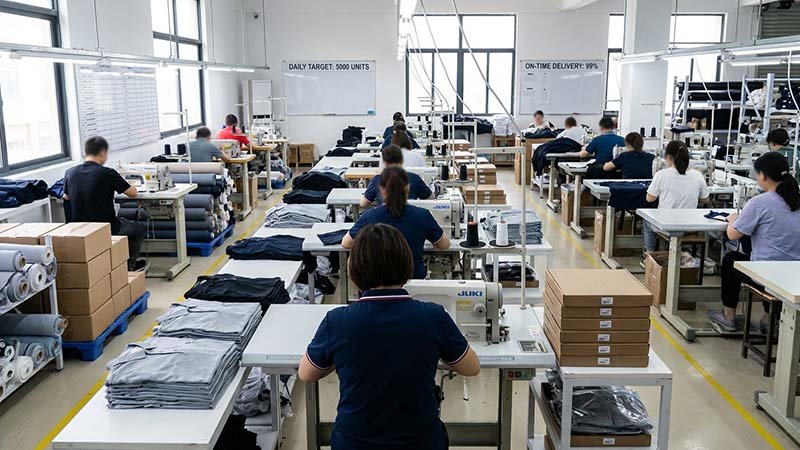
FUWAY supports suitable custom orders starting at approximately 100 pieces per style.
This can make small initial collections possible, although minimums depend on fabric and customization requirements.
Typical Manufacturing Arrangements
| Item | Typical Planning Basis |
|---|---|
| MOQ | Approximately 100 pcs per style |
| Sampling | Approximately 7–10 working days |
| Bulk Production | Approximately 3–4 weeks for suitable standard orders |
| Fabric | Stock options or project-specific sourcing |
| Branding | Embroidery, printing, labels, packaging |
| Reorders | Based on approved specifications and current material availability |
These estimates should not replace a project-specific quotation or production schedule.
Custom dyeing, specialized fabric development, complex garments, and additional sample revisions may require more time or higher quantities.
What Should Buyers Confirm in Writing?
Before paying a deposit, confirm:
| Commercial Item | Buyer Question |
|---|---|
| MOQ | Does the minimum apply per style, color, or configuration? |
| Unit Price | What exactly is included? |
| Sampling | Are sample fees and revisions charged separately? |
| Materials | Are custom fabrics or trims subject to additional minimums? |
| Testing | Which tests are required, and who pays? |
| Lead Time | What starts the production clock? |
| Quality Acceptance | What happens if the goods fail inspection? |
| Shipping | Which Incoterm and delivery responsibilities apply? |
| Payment | What are the agreed payment stages? |

Why Is the Lowest Unit Price Not Always the Best Choice?
A lower initial quotation may become less attractive when development changes, rejected garments, testing, logistics, or delayed deliveries are considered.
However, a higher quotation does not automatically mean better quality.
Buyers should compare suppliers against the same specifications and review the complete cost and risk of fulfilling the order.
For FUWAY, the practical objective is to align product requirements, achievable manufacturing terms, and the brand's commercial expectations before production starts.
Key 7: Which Brands Are Best Suited to FUWAY?
FUWAY works with businesses that need customized golf clothing rather than only ready-to-ship stock apparel.
Startup Golf Apparel Brands
Startups may benefit from suitable entry quantities, support with fabric and product decisions, and a structured sample approval process.
A focused first collection can reduce complexity compared with launching many styles and custom materials simultaneously.
Growing and Established Brands
Growing brands often prioritize repeat-order consistency, custom fits, coordinated product collections, and dependable communication.
Clear material references, specifications, and approval records become increasingly important as order volumes grow.
Wholesalers and Distributors
Wholesalers may require coordinated size assortments, repeatable branding, defined packaging specifications, and clear replenishment planning.
These requirements should be established before the first production order.
When Might FUWAY Not Be the Right Fit?
No supplier is suitable for every project.
| Buyer Requirement | Potential Limitation |
|---|---|
| Only a few ready-made pieces | A stock wholesaler may be more practical |
| Immediate shipment of new custom designs | Sampling and production require preparation |
| Fully custom fabric at very low volume | Mill minimums can limit feasibility |
| Highly specialized garment processes | Technical capabilities must be confirmed |
| Unusual certification or testing requirements | Relevant evidence must be reviewed before commitment |
| Guaranteed identical materials indefinitely | Future fabric availability cannot be assumed |
FUWAY should evaluate project feasibility before confirming the production method, quantity, cost, or timeline.
Being transparent about limitations helps brands make more informed sourcing decisions.
Key 8: How Should Buyers Evaluate Their First Project With FUWAY?
A first order is an opportunity to assess the complete manufacturing relationship.
The evaluation should cover communication, sample quality, documentation, production consistency, and delivery—not just whether the initial garment looks attractive.
First-Order Buyer Checklist
| Evaluation Area | What to Confirm |
|---|---|
| Requirements | Does the team understand the product and target market? |
| Development | Are technical recommendations relevant and documented? |
| Sampling | Does the sample meet the approved specifications? |
| Materials | Are the fabric and trims suitable and approved? |
| Production | Are material changes and delays communicated? |
| QC | Are the agreed inspection activities documented? |
| Commercial Terms | Do charges match the written quotation? |
| Delivery | Are quantities, labels, packaging, and shipment documents correct? |
A Practical First-Order Approval Process
Step 1: Review the quotation. Confirm materials, quantities, prices, sampling costs, testing, payment, and shipping responsibilities.
Step 2: Approve the sample. Check fit, construction, fabric, measurements, and branding against the agreed requirements.
Step 3: Confirm bulk specifications. Finalize the approved sample, technical documents, materials, and inspection criteria.
Step 4: Review production evidence. Agree on relevant updates, inspection checkpoints, and procedures for handling deviations.
Step 5: Complete pre-shipment verification. Review final inspection, packing quantities, labeling, and shipment documents before releasing goods under the agreed terms.

What Should You Send FUWAY for an Initial Evaluation?
To discuss a project efficiently, provide the following where available:
- Product category and design references
- Technical pack or sample photographs
- Desired fabric, fit, and branding
- Estimated quantity per style and color
- Target market and launch date
- Special testing or compliance requirements
If your project is still at the concept stage, you can explain your intended customer, product positioning, and design goals.
The FUWAY team can then review the requirements and discuss possible development options.
Frequently Asked Questions About FUWAY
Is This an Independent Review of FUWAY?
No. This article is an internal review published by FUWAY.
It describes the company's manufacturing services and explains how buyers can evaluate relevant claims.
Independent audits, current product testing, and third-party inspections may provide additional verification when required.
Is FUWAY a Manufacturer or a Trading Company?
FUWAY presents itself as a golf apparel manufacturer providing OEM, ODM, and private label services.
Buyers who need to confirm the manufacturing structure should request relevant business documentation, identify the actual production location, and clarify which processes are performed by the manufacturing team or external partners.
What Is FUWAY's Minimum Order Quantity?
FUWAY generally supports suitable custom projects starting at approximately 100 pieces per style.
The actual MOQ depends on fabric availability, colors, trims, and customization.
How Long Does FUWAY Take to Produce Custom Golf Apparel?
Typical sampling takes approximately 7–10 working days, while suitable standard bulk production may take around 3–4 weeks after the required approvals and material readiness.
Complex projects or additional revisions can extend the schedule.
Can Buyers Request Product Testing and Quality Records?
Buyers can review the testing information published by FUWAY and discuss whether additional project-specific reports or inspection records are needed.
Any document used to support a claim should be checked for validity, scope, and relevance to the product being purchased.
Can FUWAY Work With a Brand's Existing Designs or Nominated Fabric Supplier?
FUWAY can evaluate projects based on existing tech packs, reference samples, and design requirements.
A buyer-nominated fabric supplier may also be considered, subject to material suitability, responsibilities, order minimums, and lead times.
Conclusion: Is FUWAY the Right Golf Apparel Manufacturing Partner?
FUWAY offers OEM, ODM, and private label manufacturing for brands developing custom golf polos, shorts, pants, skorts, and performance layers.
Our manufacturing services include product development, fabric sourcing, sampling, customization, and production coordination.
However, choosing FUWAY should not depend solely on factory marketing, low MOQ claims, or a single successful sample.
The strongest foundation for a long-term manufacturing relationship is clear product specifications, verifiable evidence, approved samples, transparent terms, and consistent communication.
FUWAY may be a suitable partner for startups building their first custom collection or established brands looking to develop and repeat their golf apparel products.
The next step is to evaluate the requirements of your specific project.
Contact FUWAY to share your designs, estimated quantities, material requirements, and launch plans. Our team can review the project and discuss suitable manufacturing options.