A golf polo can look excellent in a design mockup and still fail during product development.
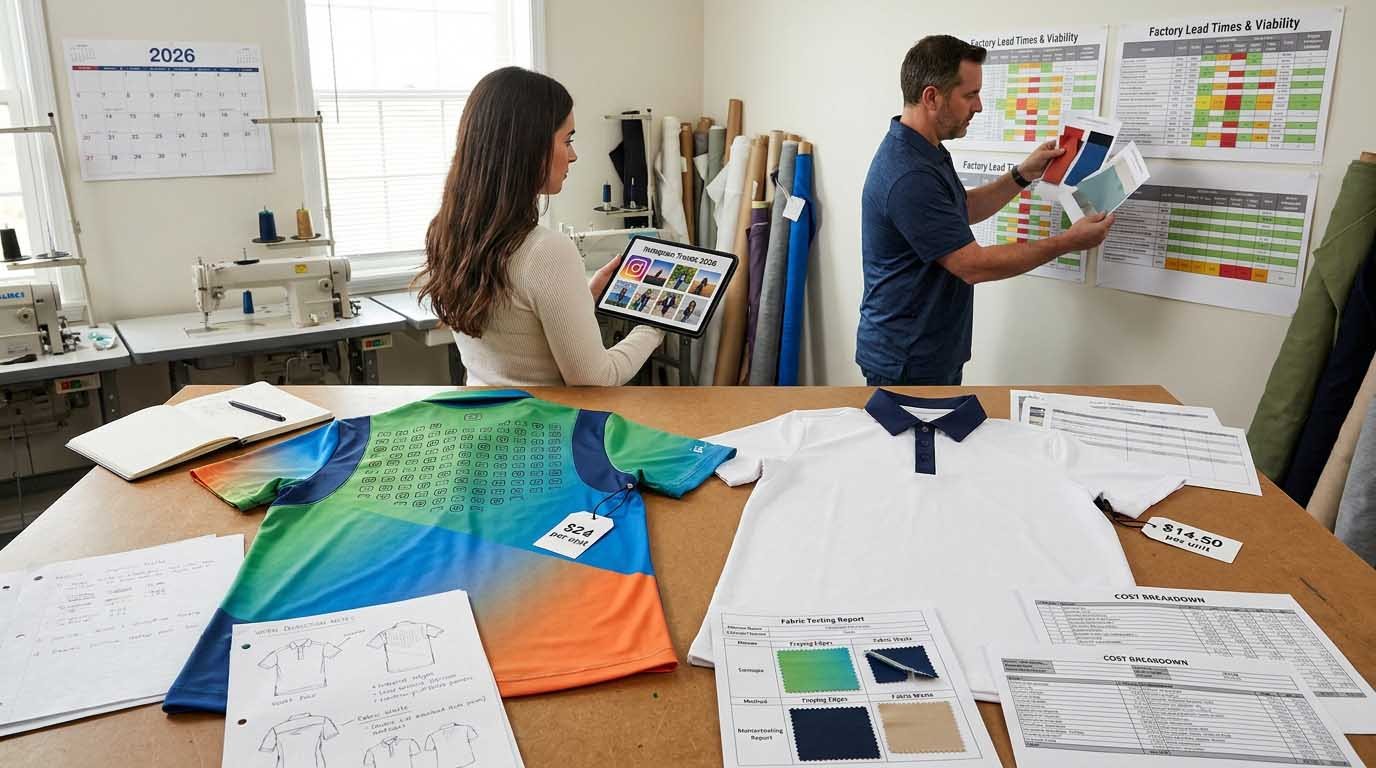
We have seen brands bring references featuring laser-cut ventilation, gradient graphics, asymmetric paneling, unusual collars, and multiple performance technologies in a single polo. Some concepts survive sampling. Others become too expensive, difficult to repeat, or inconsistent after fit and wash testing.
That leads to an important principle:
A useful golf polo trend must work in both design and production.
For golf apparel brands, the question is therefore not only:
What is trending?
It is also:
Can this trend be manufactured consistently, at the right cost, and at the required quality?
At FUWAY, we develop custom golf apparel for brands, retailers, distributors, and private-label programs. Across sampling and production projects, we regularly see the difference between trends that look interesting online and trends that work commercially.
This guide focuses on the areas that matter most:
- performance fabrics;
- fit and silhouette;
- collar and trim styling;
- colors and patterns;
- lifestyle crossover;
- and production viability.
2026–2027 Golf Polo Trends at a Glance
As golf brands move from late-2026 development into 2027 collections, the strongest direction is not simply "more design."
Instead, golf polos are becoming more refined through:
- softer performance fabrics;
- subtle surface texture;
- controlled athletic fits;
- lifestyle versatility;
- muted seasonal colors;
- cleaner branding;
- and restrained premium details.
The strongest trends can be summarized like this:
| Golf Polo Trend | Direction | Production Risk | Best Use |
|---|---|---|---|
| Soft-touch performance fabrics | Strong | Low–Medium | Core and premium polos |
| 4-way stretch | Established | Low | Performance collections |
| Tonal jacquard / subtle texture | Growing | Medium | Premium and lifestyle golf |
| Muted natural colors | Strong | Low | Broad commercial collections |
| Refined color blocking | Growing | Medium | Modern / younger golf brands |
| Engineered ventilation | Growing | Medium | Warm-weather performance |
| Course-to-lifestyle styling | Strong | Low | Modern golf collections |
| Heritage collar details | Stable / Growing | Low | Classic and premium ranges |
| Extreme slim fits | Selective | High | Narrow customer segments |
| Complex laser-cut features | Experimental | High | Limited premium capsules |
The key takeaway is:
The most commercially useful golf polo trends are becoming more sophisticated, not necessarily more complicated.
What Is Driving Modern Golf Polo Design?
Golf polo design is changing because the product now has to work across more situations.
Golf Is Becoming More Lifestyle-Oriented
Many golfers no longer want a polo that looks useful only on the course.
Modern golf apparel increasingly needs to work for:
- golf;
- travel;
- casual work;
- club environments;
- restaurants;
- and everyday leisure.
This favors cleaner designs with:
- subtle branding;
- softer fabrics;
- versatile colors;
- refined texture;
- and less aggressive technical styling.
For brands, this means performance is still essential, but it often needs to look more understated.
Performance Is Becoming a Baseline Requirement
Moisture management is no longer enough to make a golf polo feel premium.
Buyers increasingly evaluate the complete fabric experience:
- hand feel;
- stretch;
- recovery;
- breathability;
- drying performance;
- UV protection;
- odor-control options;
- and surface texture.
A modern performance polo therefore needs to balance function with comfort and appearance.
For deeper fabric development, brands can review FUWAY's Fabric Sourcing capabilities.
Sustainability Claims Require Better Documentation
Sustainability is also influencing material selection.
However, generic descriptions such as:
eco-friendly fabric
or
sustainable polyester
are less useful when they cannot be supported.
More defensible options include:
- certified recycled polyester;
- traceable material content;
- recognized chemical-safety standards;
- documented fabric composition;
- reduced-plastic packaging.
For buyers, the important distinction is between:
a marketing claim
and
a claim that can be verified.
Which Golf Polo Fabric Trends Matter Most?
This article is not intended to replace a complete golf polo fabric guide.
Instead, the important question here is:
Which fabric directions are influencing current golf polo design?
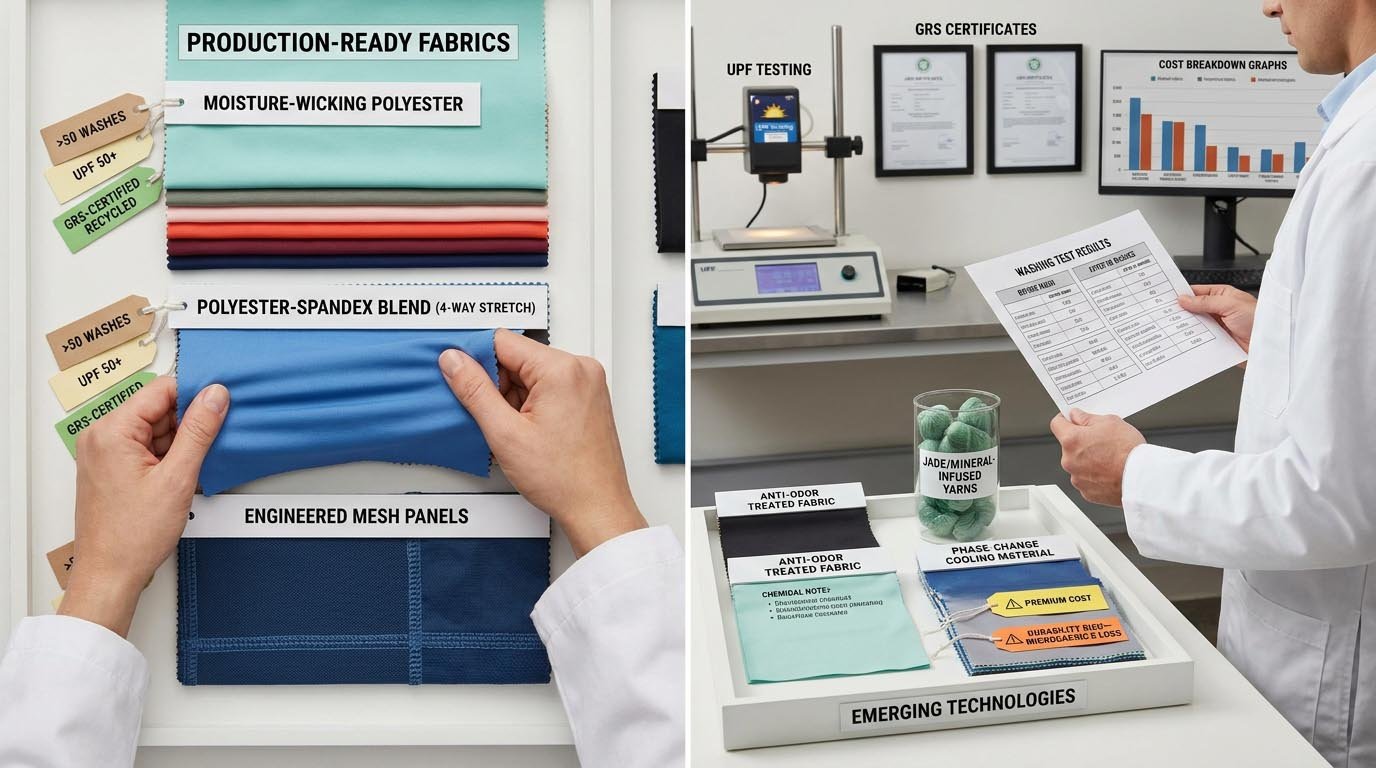
Soft-Touch Performance Fabrics
One of the strongest directions is performance fabric that feels less synthetic.
Traditional technical polyester can sometimes feel too slick or athletic.
Modern golf brands increasingly want:
performance with a softer, more lifestyle-oriented hand feel.
This can be achieved through:
- finer yarns;
- softer finishing;
- polyester-spandex blends;
- engineered knit structures;
- microfiber constructions.
Production viability: High
The main challenge is keeping the approved hand feel consistent from sample fabric to bulk fabric.
Brands should approve the actual:
- fabric weight;
- stretch;
- recovery;
- surface feel;
- and finish
rather than relying only on fiber composition.
Stretch and Breathability
Stretch remains highly relevant because golf requires rotational movement.
Polyester-spandex fabrics can provide:
- swing mobility;
- better recovery;
- closer modern fits;
- improved comfort.
Breathability is also increasingly supported through:
- lighter knit structures;
- engineered mesh;
- ventilated panels;
- strategic perforation.
Production viability: High to Medium
Simple stretch fabrics are well established.
More complicated ventilation becomes riskier when a polo combines several fabrics, narrow inserts, or complex panels.
Tonal Texture and Jacquard
Tonal texture is one of the most commercially interesting directions.
Instead of relying on bold graphics, the fabric itself creates visual depth through:
- jacquard;
- dobby;
- micro-pattern structures;
- tonal stripes;
- engineered knit texture.
This works particularly well for premium golf because it provides differentiation without making the polo difficult to wear.
Production viability: Medium–High
The main considerations are usually:
- fabric MOQ;
- development lead time;
- pattern scale;
- repeat consistency;
- shade matching.
For brands wanting a premium look without a large print, tonal texture is often a strong option.
Verified Performance Features
Features such as:
- UPF protection;
- anti-odor treatments;
- cooling finishes;
- recycled content
can support product positioning.
However, they should not be selected purely because they sound technical.
Brands should ask:
Does the feature provide a meaningful customer benefit?
and:
Can the claim be tested or documented?
FUWAY buyers can review our Test Reports resources when performance verification is required.
What Fit and Silhouette Trends Are Emerging?
Golf fit is not moving in only one direction.
Two different trends are developing at the same time.
Clean Athletic Fit
Performance-oriented polos continue to favor cleaner, shaped silhouettes.
Typical characteristics include:
- moderate body shaping;
- controlled sleeve width;
- comfortable armholes;
- enough shoulder and back room for rotation.
The goal is not extreme slimness.
It is:
a tailored appearance without restricting the golf swing.
Production viability: High
Fit should always be evaluated during movement, not only on a static mannequin.
Relaxed Lifestyle Fit
Lifestyle-oriented golf brands are also experimenting with slightly more relaxed proportions.
These may include:
- wider bodies;
- softer shoulder lines;
- shorter untucked styling;
- less formal silhouettes.
This direction works particularly well for brands crossing between:
golf + streetwear + casual lifestyle.
Production viability: High
The main requirement is making sure a fashion-led silhouette still works during real golf movement.
Mobility-Focused Construction
Raglan sleeves, underarm gussets, and strategic stretch zones can improve movement while adding visual differentiation.
These details are most relevant to:
- athletic golf;
- younger customers;
- warm-weather collections;
- golf-athleisure crossover.
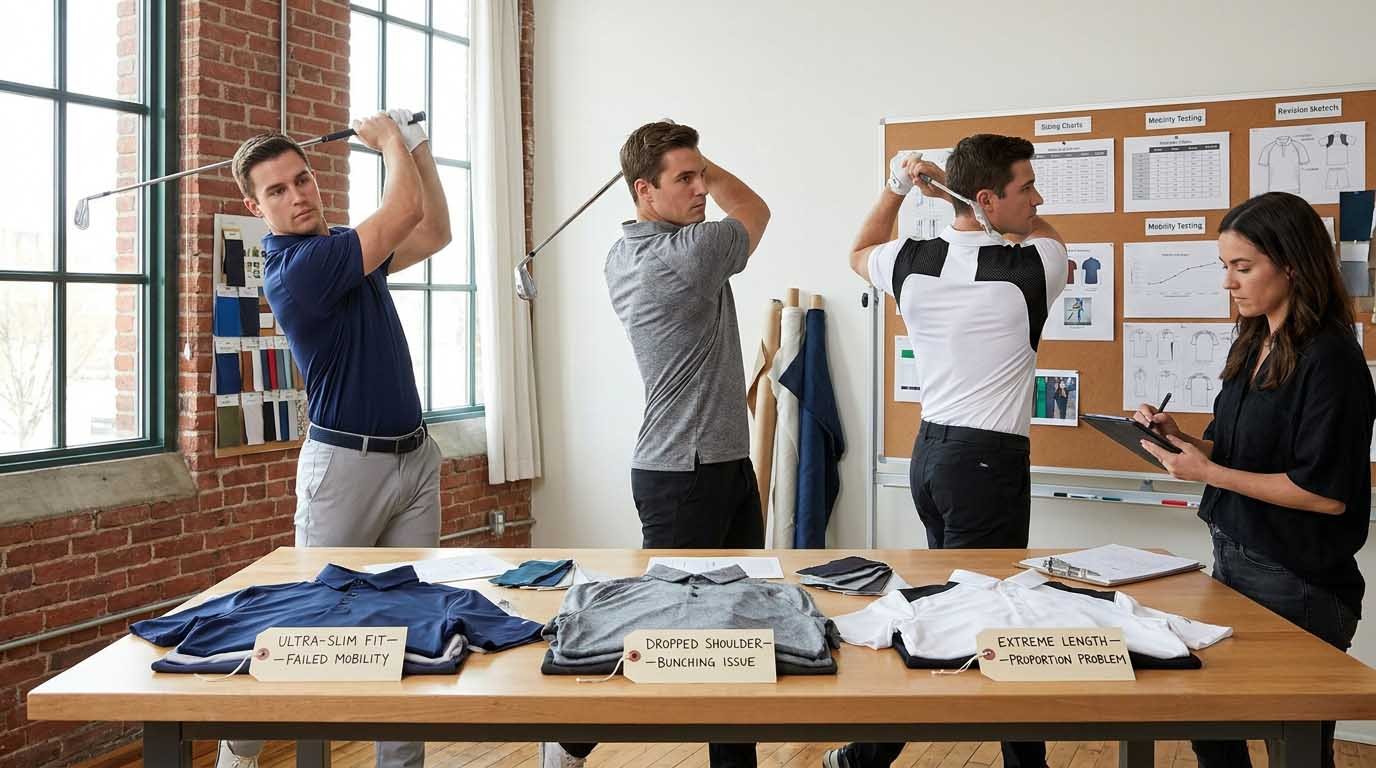
For deeper technical construction information, this topic should remain separate from the Trend Guide and be covered in dedicated golf polo construction content.
Which Collar and Trim Trends Are Commercially Useful?
Collars remain one of the easiest ways to differentiate a golf polo without redesigning the entire garment.
The strongest current direction is usually:
subtle differentiation rather than excessive construction.
Heritage Rib Details
Rib-knit collars and cuffs continue to work well with:
- heritage styling;
- muted colors;
- contrast tipping;
- vintage-inspired branding.
Production viability: High
The main production consideration is controlling shrinkage between the rib trim and body fabric.
Tonal and Textured Collars
A collar can use:
- self-fabric texture;
- tonal jacquard;
- subtle dobby structure;
- coordinated knit effects.
This creates a cleaner premium look than strong contrast detailing.
Production viability: High
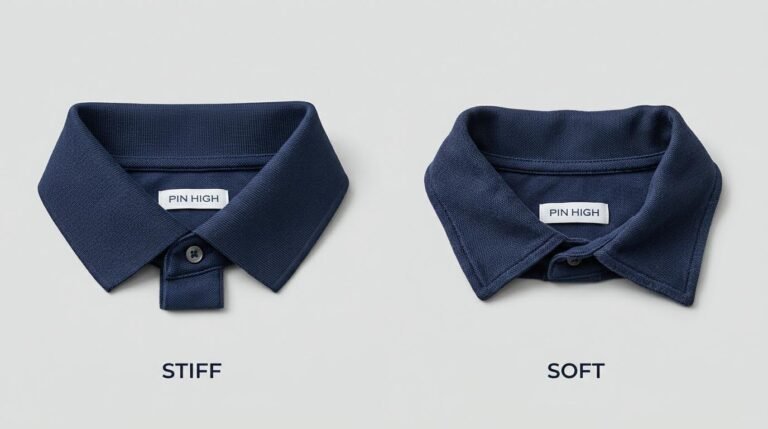
The collar still needs enough stability to maintain shape after washing.
Restrained Contrast Details
Contrast remains commercially useful when applied selectively.
Examples include:
- collar tipping;
- cuff tipping;
- inner placket contrast;
- tonal color blocking;
- premium buttons.
These details can add identity without dramatically increasing production complexity.
| Collar / Trim Detail | Trend Direction | Production Risk |
|---|---|---|
| Rib collar | Stable / Growing | Low |
| Tonal texture | Growing | Low–Medium |
| Contrast tipping | Stable | Low |
| Premium buttons | Stable | Low |
| Multi-layer structured collar | Selective | High |
| Complex concealed placket | Selective | Medium–High |
For custom branding, buyers can also compare FUWAY's Embroidery and other decoration options.
Which Color Trends Are Most Commercially Relevant?
Color can change the entire impression of a golf collection without changing garment construction.
That makes it one of the safest areas for trend adoption.
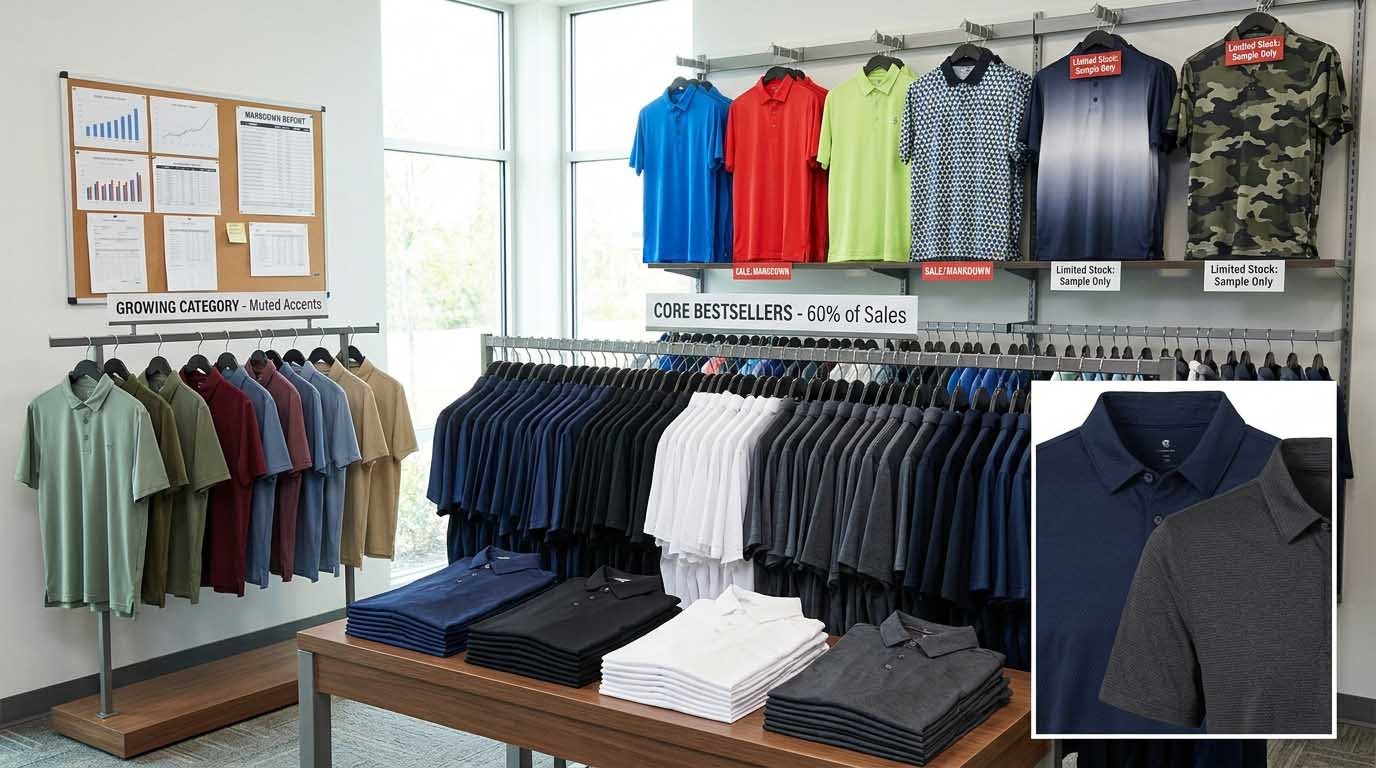
Core Neutrals Remain Important
Classic colors such as:
- navy;
- white;
- black;
- charcoal;
- light grey;
- stone
remain commercially useful because they are easy to coordinate and acceptable across a wide customer base.
They should normally remain the foundation of a golf polo range.
Muted Natural Colors Are Growing
Seasonal golf palettes increasingly include:
- olive;
- sage;
- dusty blue;
- sand;
- stone;
- muted burgundy;
- soft green;
- clay-inspired tones.
These colors feel more contemporary than traditional bright sports colors while remaining relatively easy to merchandise.
Production viability: High
This is one of the lowest-risk ways for a brand to refresh a collection.
Refined Color Blocking
Color blocking remains relevant, but current designs generally work better when the blocking is controlled.
Useful areas include:
- shoulders;
- collar;
- placket;
- side panels;
- chest sections.
Production viability: Medium
Simple blocking is relatively easy.
Complex asymmetric designs introduce more:
- pattern pieces;
- seams;
- matching requirements;
- cutting complexity.
The visual benefit should justify the added manufacturing work.
Which Pattern Trends Are Worth Watching?
Prints remain important, but they should be treated differently from core solid polos.
Micro and Tonal Prints
Small patterns can create interest while remaining wearable.
Common directions include:
- micro geometrics;
- tonal dots;
- small abstract repeats;
- subtle golf-related motifs.
Production viability: High
These work especially well when the print supports the brand rather than dominating the entire garment.
Depending on artwork and fabric, buyers can consider Screen Printing or Sublimation Printing.
Bold Prints
Large florals, geometric prints, and high-contrast graphics can work for specific audiences.
The main risk is often commercial rather than technical.
A large print has a narrower customer base than:
navy + white + tonal texture.
Production viability: Medium
Use bold graphics when the brand already understands its customer.
Gradient and Ombre Effects
Gradient graphics can create strong visual impact.
However, they often require:
- more artwork preparation;
- accurate color control;
- larger printed areas;
- careful panel matching.
Production viability: Medium
They work better as hero products or limited capsules than as the foundation of an entire range.
Which Golf Polo Trends Carry the Highest Production Risk?
Some trends attract attention because they are unusual.
But unusual designs usually need more development work.
Laser-Cut Ventilation
Laser-cut details can create a modern technical appearance.
Possible problems include:
- edge stability;
- deformation after washing;
- inconsistent opening size;
- additional finishing requirements.
Risk level: High
Where possible, engineered mesh or knit ventilation may be easier to control.
Complex Multi-Panel Construction
Asymmetric panels can create strong visual impact.
But each additional panel can increase:
- pattern complexity;
- seam count;
- cutting work;
- alignment risk.
Risk level: Medium–High
Simple color blocking often creates similar visual differentiation with lower production risk.
Over-Engineered Collars
Adding extra layers, hidden closures, unusual supports, and complicated internal construction does not automatically create a better collar.
Instead, it can introduce:
- stiffness;
- asymmetry;
- bulk;
- inconsistent shape.
Risk level: Medium–High
Complexity should support a clear design goal.
Too Many Trends in One Polo
One of the most common development mistakes is stacking too many features together.
For example:
stretch + cooling + UPF + anti-odor + ventilation + jacquard + complex collar + gradient graphics
may look impressive in a product brief.
But it can also increase:
- sourcing difficulty;
- sample revisions;
- cost;
- lead time;
- QC complexity.
A better product question is:
What is the one feature customers should remember about this polo?
How Do You Evaluate Whether a Golf Polo Trend Is Production-Viable?
This is where a trend moves from inspiration to product development.
Four checks are particularly useful.
1. Sampling Stability
Ask:
Can the design be reproduced consistently?
A successful first prototype is not enough.
The feature should remain stable through:
- revised samples;
- size sets;
- pre-production approval;
- bulk production.
2. Cost Control
Ask:
Does the trend fit the target product price?
A premium material or construction feature only makes sense when the target customer is willing to pay for it.
3. Lead-Time Compatibility
Ask:
Does the feature require special fabric, new trims, custom pattern work, or additional processing?
More customized features usually require earlier development.
4. Quality Repeatability
Ask:
Can the design be produced consistently across a bulk order?
Important checks may include:
- shrinkage;
- shade consistency;
- collar shape;
- seam quality;
- artwork placement;
- stretch recovery;
- garment measurements.
This production perspective is what separates a good trend idea from a commercially reliable product.
How Should Brands Apply Golf Polo Trends?
Different brands need different levels of trend adoption.
A practical framework is:
| Brand Positioning | Recommended Approach |
|---|---|
| Entry / Volume | Performance basics + reliable fit + core colors |
| Mid-Market | Stretch + seasonal muted colors + restrained contrast |
| Premium | Tonal texture + verified performance + premium trims |
For new golf brands, a controlled approach is usually more effective than trying to use every new trend.
Example: Core Polo
- moisture-management fabric;
- clean fit;
- navy, white, or charcoal;
- simple branding.
Example: Elevated Polo
- stretch fabric;
- muted seasonal color;
- contrast collar or placket.
Example: Premium Polo
- tonal jacquard;
- performance finish;
- engineered ventilation;
- premium trim details.
This creates a clear product hierarchy while keeping development manageable.
5 Questions Before Adopting a Golf Polo Trend
Before adding a trend to your next polo collection, ask:
- Does it fit our target golfer?
- Does it improve performance, appearance, or brand differentiation?
- Can it be sampled consistently?
- Does the additional cost fit our target price?
- Can the factory reproduce it reliably in bulk?
If the answer to several of these questions is unclear, the trend probably needs more sampling before production.
Final Takeaway
Modern golf polo design is moving toward a more refined combination of:
- performance;
- softness;
- stretch;
- texture;
- versatility;
- muted color;
- and controlled visual differentiation.
As brands develop late-2026 and 2027 collections, some of the most relevant directions include:
- soft-touch performance fabrics;
- stretch and breathability;
- tonal jacquard;
- natural and muted colors;
- refined color blocking;
- subtle premium collars;
- lifestyle-oriented silhouettes;
- and clean course-to-everyday styling.
But a trend is only commercially valuable when it can survive the full development process:
Design → Fabric Selection → Sampling → Fit Review → Testing → Approval → Bulk Production
That is why golf apparel brands should evaluate every trend from two perspectives:
Does the customer want it?
and
Can it be manufactured reliably?
When both answers are yes, a trend becomes more than design inspiration.
It becomes a viable product.
If you are developing a new golf polo collection, you can explore FUWAY's Custom Golf Shirts, Fabric Sourcing, and Private Label services, or contact FUWAY with your tech pack, reference sample, or design concept.